
- Why Culture Fit Matters: Skills can get you hired, but misaligned norms and values drive disengagement, underperformance, and early exits even for strong performers.
- Research Before You Interview: Use review patterns, public communications, news context, and conversations with current or former employees to validate what the company claims.
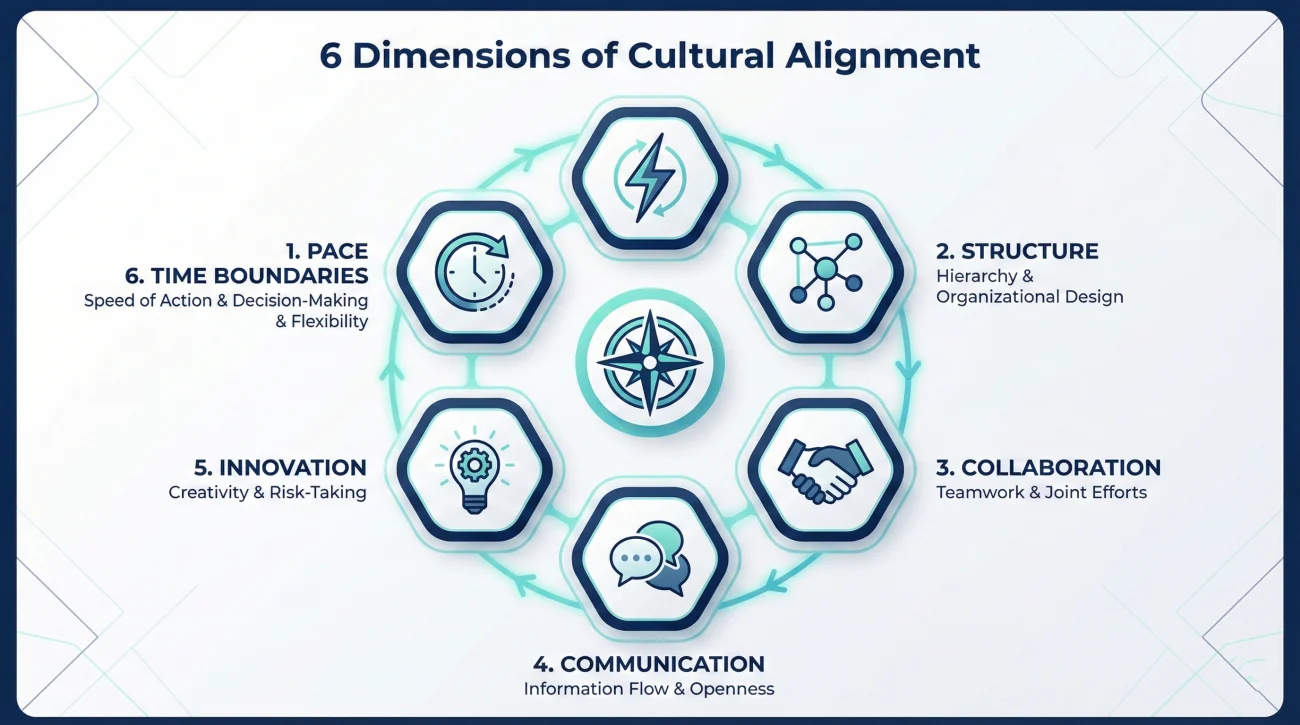
- Evaluate The Right Dimensions: Check pace, autonomy, structure, collaboration, communication transparency, risk tolerance, time boundaries, and growth philosophy.
- Do Honest Self-Assessment: Identify where you thrive, your real dealbreakers, and your adaptation limits so you do not “sell yourself” into a job you cannot sustain.
- Test Culture During Interviews: Watch behavioral signals and ask questions that surface reality, then compare consistency across interviewers to spot gaps or red flags.
Why Culture Fit Determines Long-Term Success
Technical qualifications get you hired but company culture fit determines whether you thrive or struggle despite impressive credentials. Organizations increasingly recognize that talented employees in misaligned cultures underperform, disengage, and exit prematurely – wasting hiring investments while disrupting team dynamics. Culture encompasses unwritten norms, decision-making processes, communication styles, and values priorities that shape daily work experience more powerfully than job descriptions suggest.
The most damaging career mistakes involve accepting offers without genuine culture assessment, assuming compensation or title outweigh environmental alignment, or claiming perfect fit during interviews without honest evaluation. Poor culture matches create frustration regardless of salary, limit advancement despite performance, and force eventual departure after investing years building expertise that doesn’t transfer effectively. Understanding culture fit prevents these costly misalignments while identifying organizations where your work style, values, and preferences enable genuine flourishing rather than constant adaptation struggle.
Researching Culture Before Interviews
Effective cultural fit assessment begins long before interview conversations through systematic research revealing authentic organizational realities rather than marketing narratives.
Employee Review Analysis
Platforms like Glassdoor and Indeed aggregate employee experiences providing unfiltered culture insights companies won’t share directly. Look for consistent themes across reviews rather than isolated complaints – patterns about work-life balance, management style, decision-making transparency, or growth opportunities signal genuine cultural characteristics. Pay particular attention to reviews from people in similar roles or departments since culture varies significantly across organizations. Former employee perspectives often prove most honest since they lack incentive to protect employer reputation.
| Research Source | What It Reveals | How to Interpret |
|---|---|---|
| Employee reviews | Authentic experience patterns, recurring themes | Focus on consistent feedback, not outlier complaints |
| Company communications | Stated values, public priorities, leadership tone | Compare promises to employee experience reports |
| Social media presence | Public personality, content priorities, engagement style | Assess authenticity versus performative values |
| News coverage | External reputation, crisis handling, industry standing | Evaluate actions during pressure, not just good times |
| Interview observations | Real-time behavior, office environment, team dynamics | Notice gaps between stated culture and visible practices |
Company Communications Assessment
Analyze how organizations present themselves through careers pages, social media, press releases, and leadership communications. Values companies emphasize, language they use, transparency level, and priorities they highlight reveal cultural orientation. However, treat these as aspirational statements requiring verification through employee experiences rather than accepting them as accurate culture descriptions. Sophisticated organizations market attractive cultures that don’t match operational reality.
Network-Based Intelligence
Connect with current and former employees through professional networks, alumni groups, or mutual connections for candid culture insights. Ask specific questions about decision-making processes, work-life norms, advancement criteria, and what frustrated them most about the environment. These private conversations reveal information companies won’t share and review sites can’t capture fully – nuances about unwritten rules, political dynamics, and cultural shifts following leadership changes.
Expert advice: The most reliable culture information comes from former employees who’ve gained perspective on how organizational reality compared to their initial impressions – they have no incentive to mislead you.
Key Culture Dimensions to Evaluate
Understanding organizational culture alignment requires evaluating multiple dimensions that collectively determine daily work experience and long-term satisfaction.
Work Pace and Intensity
Some organizations operate at relentless pace with constant urgency while others maintain sustainable rhythms allowing deep work. Neither proves universally superior – your thriving depends on matching preference to reality. High-intensity environments energize some professionals while burning out others. Relaxed paces enable focus for some but bore those craving constant stimulation. Assess your genuine preference during previous roles rather than claiming adaptability to every pace.
Decision-Making and Autonomy
Cultural approaches to decisions range from highly centralized approval requirements to distributed authority with individual judgment trust. Some people flourish with clear direction and approval processes while others feel stifled without autonomy. Determine whether you prefer structured guidance or independent problem-solving, then evaluate whether organizational decision-making matches your preference. Misalignment here creates daily frustration regardless of other cultural factors.
- ⚡ Pace: Constant urgency vs sustainable rhythms vs variable intensity
- 🎯 Structure: Rigid processes vs flexible approaches vs minimal guidelines
- 🤝 Collaboration: Highly collaborative vs balanced vs independent work
- 📊 Communication: Transparent information vs need-to-know vs selective sharing
- 🚀 Innovation: Risk-taking encouraged vs calculated vs risk-averse
- ⏰ Time boundaries: Strict hours vs flexible vs always-on expectations
Growth and Development Philosophy
Organizations differ dramatically in how they approach employee development – structured programs versus sink-or-swim learning, promotion-from-within versus external hiring, clear advancement paths versus emergent opportunities. Your career trajectory depends partially on whether organizational growth philosophy matches your learning style and advancement expectations. Some thrive in structured development environments while others prefer discovering opportunities through initiative and networking.
💡 Pro tip: During interviews, notice whether teams seem energized or exhausted, collaborative or siloed, innovative or procedural – these real-time observations often reveal more than stated culture descriptions.
Conducting Honest Self-Assessment
Effective evaluating company culture requires equal investment in understanding yourself as researching organizations – many culture mismatches stem from poor self-awareness rather than inadequate research.
Identifying Your Actual Preferences
Review previous work experiences identifying when you thrived versus struggled, which environments energized versus drained you, what cultural factors you initially undervalued then discovered mattered significantly. These patterns reveal authentic preferences often differing from what you think you should want or what sounds impressive during interviews. Someone might claim loving fast-paced environments while track record shows better performance in structured, predictable settings.
| Self-Assessment Question | Why It Matters |
|---|---|
| When have I performed best in previous roles? | Reveals environmental factors enabling peak performance |
| What frustrations led me to leave past positions? | Identifies cultural dealbreakers despite other positives |
| What energizes me versus drains energy daily? | Determines sustainable work style versus temporary tolerance |
| Where do I fall on structure vs autonomy needs? | Predicts fit with decision-making and management approaches |
| What values must organizational culture reflect? | Establishes non-negotiable alignment versus nice-to-haves |
Distinguishing Dealbreakers from Preferences
Not all culture dimensions matter equally – some represent absolute requirements while others prove negotiable given sufficient compensation or growth opportunity. Identify your true dealbreakers versus factors you can accommodate productively. Perhaps work-life boundaries prove non-negotiable while preference for collaboration versus independence remains flexible. This clarity prevents accepting offers with fundamental misalignment while avoiding rejection of good-fit opportunities over minor preference gaps.
Understanding Adaptation Limits
Everyone claims adaptability during interviews, but sustained culture mismatch creates stress that eventually overwhelms accommodation efforts. Assess honestly how much daily adaptation you can maintain without exhaustion or resentment. Temporary culture compromise during career transitions differs from accepting permanent misalignment hoping attitudes will change. Organizations rarely transform culture to suit individual preferences – you adapt or exit.
Claiming perfect cultural alignment with every prospective employer signals either poor self-awareness or dishonesty – both undermine your credibility and lead to poor job matches.
Assessing Culture During Interview Process
Interview interactions provide real-time culture observation opportunities revealing information no amount of external research can uncover.
Reading Behavioral Signals
Notice how interviewers treat you, interact with each other, describe challenges, and respond to your questions. Rushed, distracted interviewers may signal always-on culture. Defensive responses to culture questions suggest problems they’re hiding. Interviewer excitement about mission versus focus on compensation priorities reveals values emphasis. These behavioral patterns often prove more honest than scripted culture descriptions.
Strategic Culture Questions
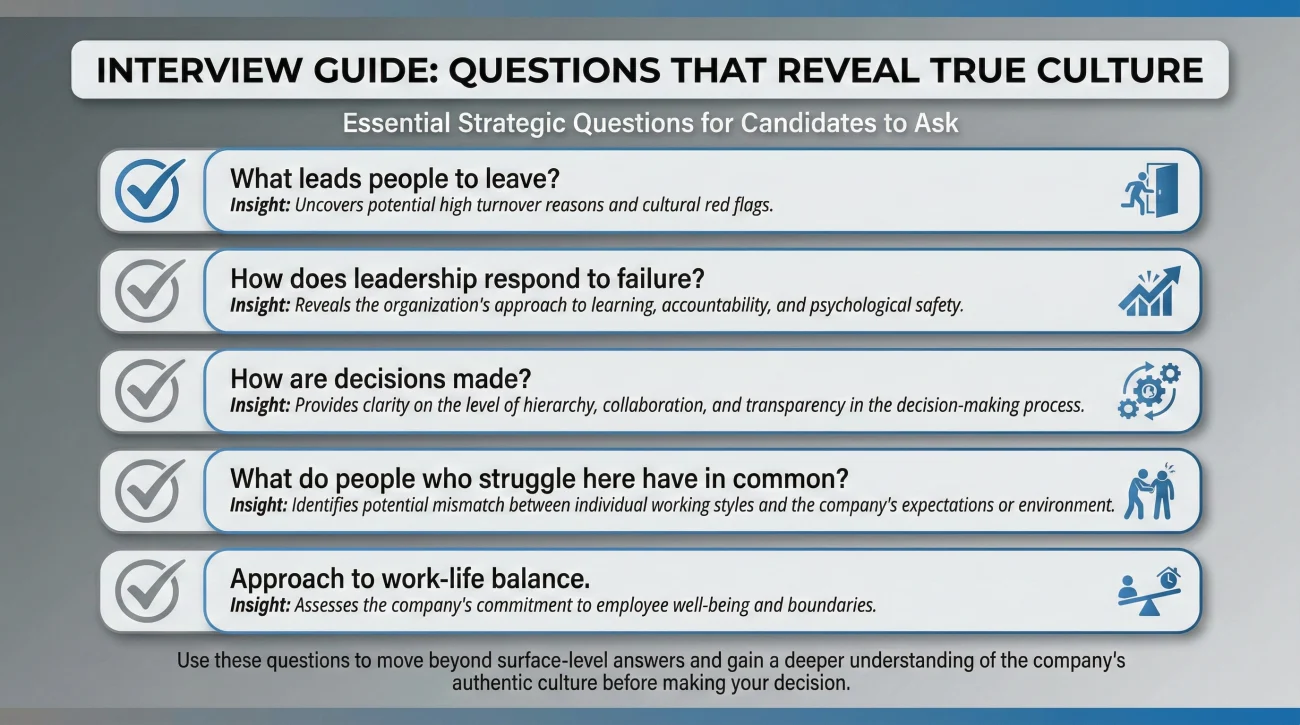
Ask questions revealing authentic culture beyond marketing narratives: “What leads people to leave this team?” “Describe a recent failure and how leadership responded.” “How do decisions get made when stakeholders disagree?” These questions generate unscripted responses exposing real norms around failure tolerance, decision processes, and retention challenges. Compare answers across multiple interviewers noting consistency versus contradictions suggesting culture confusion or transition.
- What do people who struggle here have in common?
- How has culture changed over the past year?
- Describe your team’s approach to work-life balance
- What happens when someone misses a deadline?
- How does leadership communicate priorities and changes?
❓ FAQ
🎯 Should I claim perfect culture fit even if uncertain?
No, honest assessment serves both parties better than false claims. Express genuine alignment areas while acknowledging questions requiring more information. This authenticity signals maturity while gathering data for informed decision-making if offered the role.
💼 How important is culture fit versus compensation?
Culture misalignment creates dissatisfaction no salary compensates for long-term. Short-term financial needs may justify temporary compromise, but accepting permanent poor culture fit for compensation typically leads to eventual departure after wasting years in misaligned environment.
⏰ Can I change company culture after joining?
Rarely, especially as individual contributor. Culture changes through sustained leadership commitment over years, not individual preferences. Join organizations whose existing culture aligns with your needs rather than expecting transformation to suit you.
📋 What if I need the job despite poor culture fit?
Accept it as temporary stepping stone with exit strategy rather than permanent position. Use the role to build skills and network while actively searching for better-aligned opportunities. Don’t rationalize staying in fundamental misalignment hoping circumstances improve.
✨ How do I assess culture fit in remote interviews?
Ask about remote work norms, observe virtual interaction patterns, request informal team calls, and thoroughly research employee reviews discussing remote culture. Virtual settings make assessment harder but patterns still emerge through consistent observation and questioning.
Final Thoughts
Career satisfaction depends as much on cultural alignment as role responsibilities or compensation levels – perhaps more so since daily environment shapes work experience more powerfully than occasional raises or promotions. Organizations increasingly recognize that hiring talented individuals into misaligned cultures creates expensive problems no training can solve, making culture fit a mutual evaluation priority rather than one-sided employer assessment.
Mastering company culture fit assessment requires equal investment in researching organizational realities and understanding your authentic preferences rather than claiming adaptability to every environment. The professionals who build sustainable careers conduct honest culture evaluation before accepting offers, identify dealbreakers versus negotiable preferences, and prioritize long-term alignment over short-term compensation or title appeal. This discipline prevents costly mistakes that derail careers and create years of frustration in fundamentally incompatible environments.
Approach culture fit conversations during interviews as genuine mutual exploration rather than performance where you claim perfect alignment regardless of actual assessment. Use research, behavioral observation, strategic questioning, and honest self-awareness to evaluate whether organizational culture enables your thriving or creates daily adaptation struggle. Remember that no amount of skill development or effort compensates for sustained work in misaligned culture – the smartest career move involves finding environments where your natural work style, values, and preferences align with organizational norms rather than fighting constant upstream battle against cultural currents.
⚠️ Disclaimer: The interview strategies, sample answers, and negotiation tips provided in this guide are for educational purposes only. Hiring decisions are subjective and vary by company and industry. While these strategies are based on professional HR standards, they do not guarantee a specific job offer or result.