
More Than Just Working Harder
When interviewers ask about going above and beyond, many candidates describe working long hours or doing extra tasks. These answers miss the point. Staying late isn’t inherently valuable. What matters is the impact of what you did during those hours and whether you demonstrated genuine ownership rather than just activity.
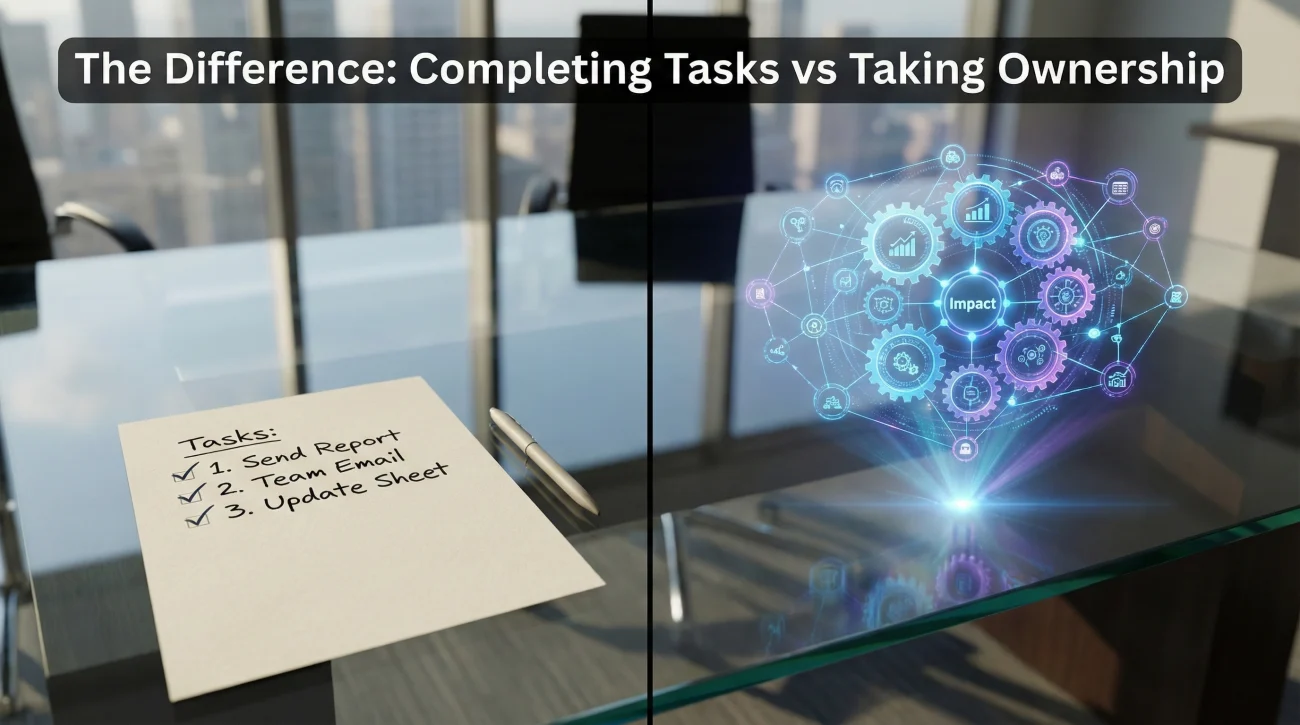
True above-and-beyond behavior involves seeing something that needs doing without being asked, taking initiative to address it, and creating value that wouldn’t have existed otherwise. It’s about ownership mentality: treating the organization’s problems as your own rather than limiting yourself to your job description.
A director I worked with distinguished between two types of employees: renters and owners. “Renters do exactly what’s required and go home. Owners see something wrong and fix it whether it’s their job or not. When I ask about going above and beyond, I’m trying to identify owners.”
The Ownership Mentality
Ownership mentality means taking responsibility for outcomes, not just completing assigned tasks. People with this mindset don’t stop at the boundaries of their role. When they see problems affecting the team or organization, they act even when nobody asked them to.
Seeing What Needs Doing
Above-and-beyond contributors notice problems others ignore or accept as normal. They question inefficient processes everyone else has habituated to. They identify gaps nobody is addressing. This awareness is the first step because you can’t go beyond if you don’t see the opportunity.
Acting Without Being Asked
Noticing isn’t enough. The differentiation comes from taking action. Some people see problems and wait for someone to assign them. Owners see problems and start solving them. They ask forgiveness rather than permission when the situation warrants it.
Creating Lasting Impact
The best above-and-beyond stories involve changes that persist. Fixing a one-time problem is good. Building a system that prevents similar problems forever is better. Creating documentation that helps future employees is better still. Lasting impact multiplies the value of your initiative.
| Average Performance | Above and Beyond |
|---|---|
| Complete assigned tasks | Identify and address unassigned needs |
| Work within defined scope | Expand scope to solve broader problems |
| Meet expectations | Exceed expectations in meaningful ways |
| Wait for direction | Take initiative when direction is absent |
| Fix immediate issues | Build systems that prevent future issues |
Above and Beyond Stories That Demonstrate Impact
Building Systems Nobody Asked For
“I noticed our team spent significant time each month compiling the same reports manually. Everyone accepted it as just part of the job. It wasn’t my responsibility to fix, but the inefficiency bothered me.
I spent evenings over two weeks building an automated system that pulled data from our various sources and generated the reports automatically. I tested it quietly before presenting it to my manager.
The automation saved approximately fifteen hours per month across the team. My manager was surprised I’d done it without being asked. She said most people would have either ignored the problem or complained about it rather than just solving it. That system is still in use two years later.”
Solving Customer Problems Beyond Requirements
“A customer called with what seemed like a simple billing question. I could have answered their immediate question and closed the ticket in five minutes. Instead, I noticed patterns in their account that suggested a larger issue.
I spent an additional hour analyzing their usage and discovered they were on a plan that cost them significantly more than necessary given their actual usage patterns. I proactively recommended a plan change that would save them money.
The customer was grateful and specifically mentioned my initiative in a review. More importantly, they became a long-term customer when they might have churned due to cost concerns. Sometimes going above and beyond means solving problems customers don’t know they have.”
Stepping Up During Organizational Need
“Our company went through a difficult period when we lost several experienced team members in quick succession. Projects were at risk, and remaining staff were overwhelmed just maintaining their own responsibilities.
I volunteered to temporarily take on coordination responsibilities for a project outside my normal scope. This meant longer hours and learning new areas quickly, but the alternative was project failure that would have affected the whole department.
For three months, I essentially did two jobs. The project delivered successfully, and my efforts during that period directly led to my promotion the following cycle. Sometimes going above and beyond means being willing to sacrifice personal comfort for organizational need.”
Common thread: Each story involves identifying a need, taking initiative without being asked, and creating value that wouldn’t exist otherwise. The hours involved matter less than the impact created.
Crafting Your Answer

Choose Stories With Clear Impact
Select examples where your initiative created measurable or observable value. “I worked late to finish a report” is weak because anyone can work late. “I noticed a process problem, built a solution on my own initiative, and saved the team fifteen hours monthly” demonstrates genuine above-and-beyond contribution.
Emphasize Initiative Over Effort
Focus on the fact that you acted without being asked, not on the hours you put in. The story should highlight that you saw something, decided it mattered, and took action independently. This distinguishes ownership from simply working hard on assigned tasks.
Quantify When Possible
Numbers make impact concrete. “Saved the team approximately fifteen hours monthly” is stronger than “improved efficiency.” “The customer’s recommendation led to three referrals” is stronger than “the customer was happy.” Where you can quantify, do so.
Stay Humble
Above-and-beyond stories can sound like bragging if delivered wrong. Focus on the problem you solved rather than how great you are for solving it. Acknowledge others who helped or benefited. Let the impact speak rather than explicitly claiming heroism.
For more strategies on demonstrating initiative, explore our comprehensive interview preparation resources.
What to Avoid

Defining Above and Beyond as Hours
“I regularly stay until seven or eight PM to finish my work.”
Working long hours might indicate dedication, poor time management, or an unreasonable workload. It doesn’t inherently demonstrate going above and beyond. Focus on impact and initiative, not time spent.
Describing Basic Job Requirements
“I always meet my deadlines and produce quality work.”
Meeting expectations is baseline, not above-and-beyond. Your example should involve doing something beyond what was expected or required.
Sounding Like a Martyr
Avoid stories where you sacrificed excessively while others benefited without acknowledgment. These can suggest poor boundaries or resentment. Frame your contribution positively, as something you chose to do because you cared about the outcome.
Making It About Recognition
If your story focuses heavily on the recognition you received rather than the problem you solved, it suggests you’re motivated by praise rather than impact. Mention recognition briefly if relevant, but emphasize the work itself.
❓ FAQ
🎯 What if my role has strict boundaries that prevent initiative?
Even in highly defined roles, there are usually opportunities to improve processes, help colleagues, or suggest improvements. Going above and beyond doesn’t require violating boundaries. It means maximizing contribution within your scope and advocating for improvements through appropriate channels.
💼 How do I go above and beyond without burning out?
Above-and-beyond behavior should be strategic, not constant. Focus extra effort on high-impact opportunities rather than working harder at everything. The goal is creating outsized value through targeted initiative, not exhausting yourself through unsustainable effort.
⏰ Should I only describe work-related examples?
Professional examples are generally most relevant. However, if you have compelling volunteer or personal project examples that demonstrate initiative and ownership, they can work. Connect them to professional contexts when possible.
📋 What if my initiative wasn’t recognized or appreciated?
Focus on the impact created rather than recognition received. Lack of recognition doesn’t diminish the value of what you did. You can briefly mention that the contribution wasn’t formally recognized while emphasizing the actual outcome.
✨ How is this different from “tell me about a time you exceeded expectations”?
These questions are essentially the same. Going above and beyond means exceeding expectations. Both ask for examples of delivering more value than required. Prepare one or two strong stories that can answer either question.
Ownership Creates Opportunity
Answering questions about going above and beyond means demonstrating ownership mentality through specific examples. Choose stories where you identified a need nobody assigned you, took initiative to address it, and created measurable impact. Focus on the problem solved and value created rather than hours worked or recognition received. When interviewers see someone who takes ownership of outcomes beyond their job description, they see someone worth investing in because that mentality creates value everywhere it goes.
⚠️ Disclaimer: The interview strategies, sample answers, and negotiation tips provided in this guide are for educational purposes only. Hiring decisions are subjective and vary by company and industry. While these strategies are based on professional HR standards, they do not guarantee a specific job offer or result.