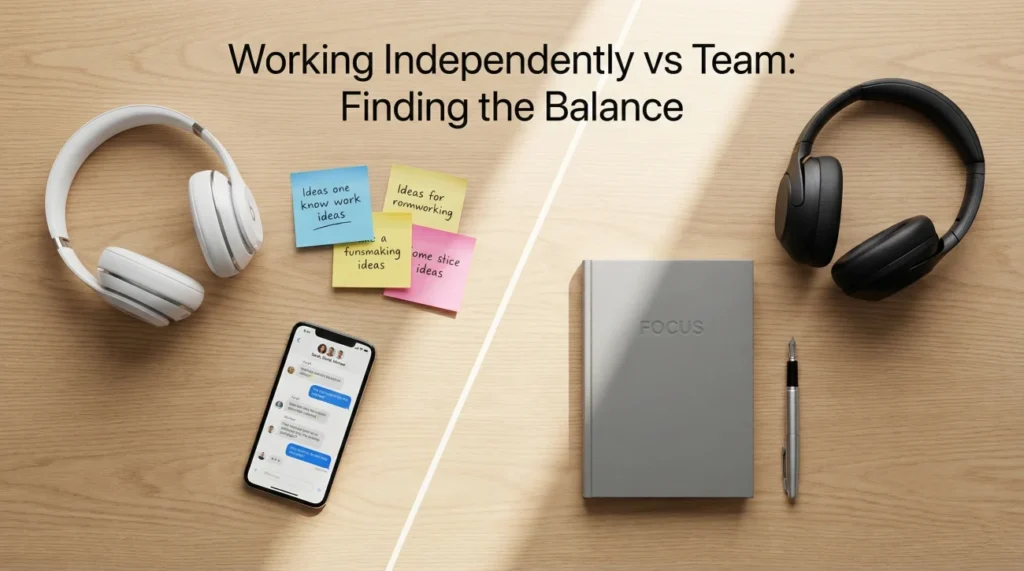
The Trick Question That Isn’t
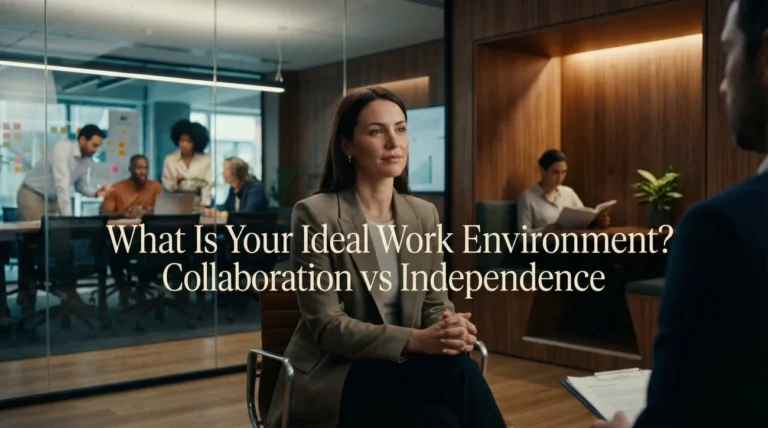
When interviewers ask whether you prefer working independently or as part of a team, candidates often try to guess which answer is “correct.” Is this a team-oriented company that wants collaborators? Or do they value autonomous workers who don’t need supervision?
The truth is that nearly every professional role requires both. Software engineers collaborate on architecture but write code alone. Salespeople work with teams on strategy but conduct client meetings independently. Project managers coordinate groups but also do individual analysis and planning. The question isn’t really asking which you prefer. It’s assessing whether you understand that effective work requires both and whether you can do both well.
A marketing director told me she uses this question to identify inflexible candidates. “Anyone who says they strongly prefer one over the other raises concerns. If someone only wants to collaborate, I wonder if they can do focused individual work. If someone only wants independence, I wonder if they can collaborate effectively. The people who succeed here move fluidly between both modes.”
Why Both Modes Matter
The Value of Team Collaboration
Teams bring diverse perspectives that individuals lack. Complex problems benefit from multiple viewpoints, different expertise, and collective experience. Collaboration catches errors, generates creative solutions, and builds shared understanding. Teams also provide accountability, support, and the energy that comes from working toward shared goals.
Projects requiring coordination across functions depend on collaboration. Decisions affecting multiple stakeholders benefit from input before implementation. Learning accelerates when you can tap colleagues’ knowledge rather than figuring everything out alone.
The Value of Independent Work
Some work simply can’t be done in groups. Writing, coding, analysis, and deep thinking require uninterrupted focus that meetings and collaboration don’t allow. Creative work often needs solitude to develop ideas before sharing them. Execution frequently happens faster individually than by committee.
Independent work also develops ownership. When you’re solely responsible for something, you engage more deeply than when responsibility is diffused across a group. Personal accountability drives thoroughness that group accountability sometimes lacks.
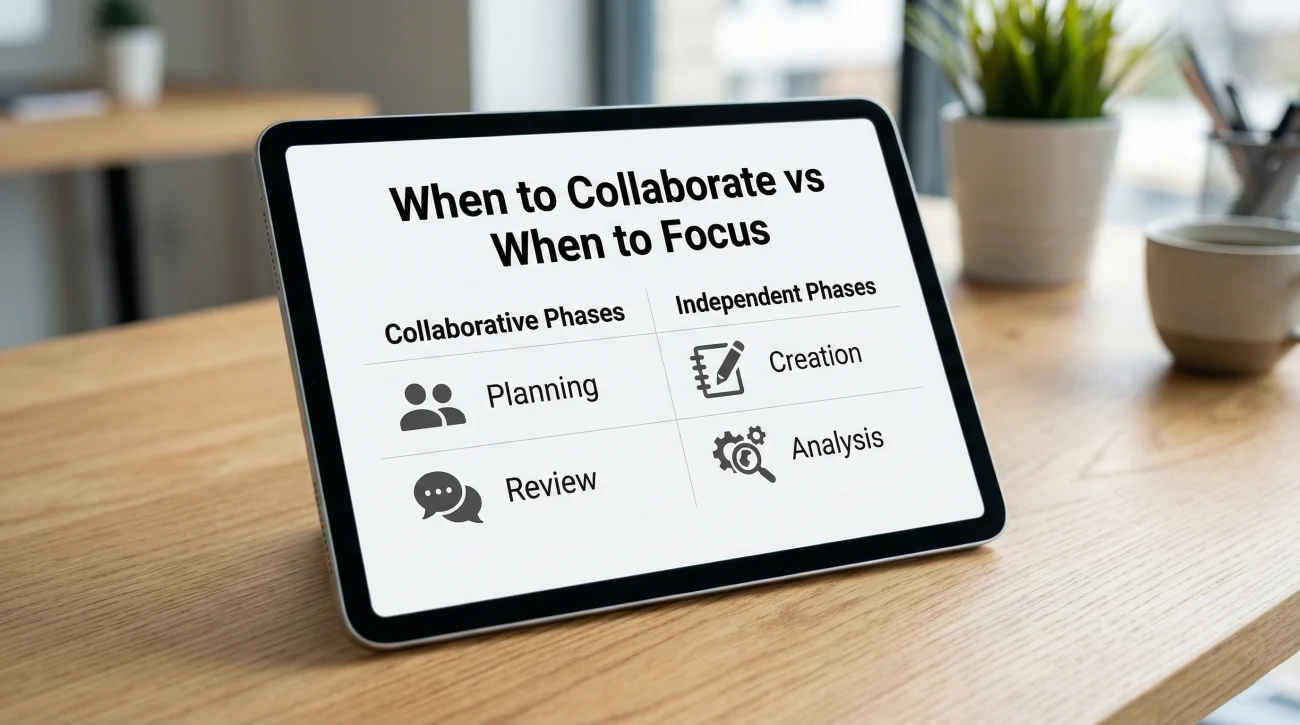
| Work Phase | Often Better Collaborative | Often Better Independent |
|---|---|---|
| Planning | Strategy, requirements, prioritization | Detailed scheduling, personal organization |
| Creation | Brainstorming, design critique | Writing, coding, building |
| Problem solving | Complex issues with multiple angles | Focused debugging, analysis |
| Review | Quality checks, feedback | Self-review before sharing |
| Learning | Knowledge sharing, mentoring | Deep study, skill practice |
Crafting the Balanced Answer
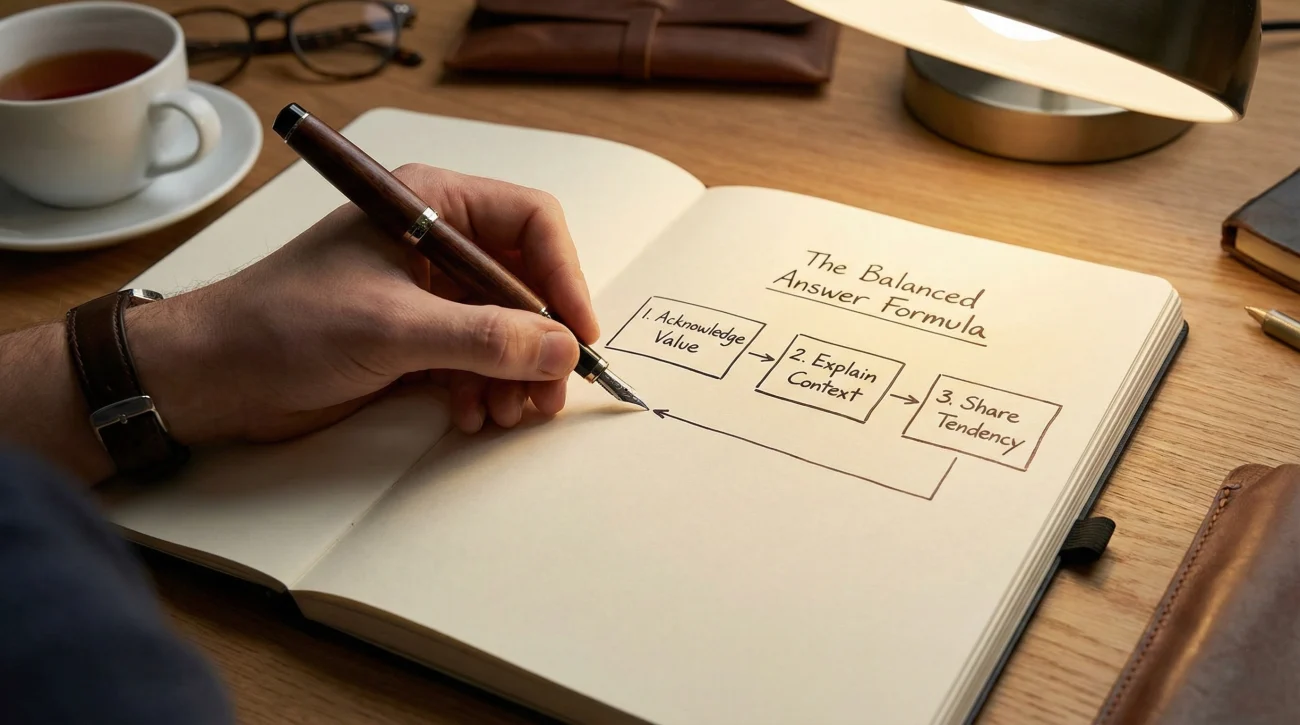
Acknowledge Both Have Value
Start by recognizing that effective work requires both modes. This demonstrates professional maturity and sets up a nuanced answer rather than a simplistic preference.
Explain When You Use Each
Describe specific situations where you work collaboratively and others where you work independently. This shows you understand context rather than applying one approach to everything.
Share Your Natural Tendency
After establishing you can do both, you can share which feels more natural to you. This is honest and helps with fit assessment. The key is framing your preference as a tendency, not a limitation.
Connect to the Role
If you’ve researched the position, connect your answer to its actual requirements. “I noticed this role involves both collaborative design sessions and independent implementation, which matches how I work best.”
Example Answers
Balanced Answer
“I work effectively both independently and with teams, and I’ve found that most good work requires both. My approach is matching the mode to what the task needs. For planning, problem solving, and getting diverse input, I seek out collaboration because multiple perspectives genuinely improve outcomes. For execution, analysis, and deep thinking, I need focused independent time because that’s when I produce my best work.
In my current role, mornings are typically my independent work time when I tackle tasks requiring concentration. Afternoons tend toward meetings and collaboration. This rhythm lets me contribute to team efforts while also having space for individual productivity.”
Team Tendency Answer
“I thrive in collaborative environments. I find that working with others energizes me, and I genuinely believe teams produce better outcomes than individuals working in isolation. Some of my best ideas have come from riffing off colleagues’ suggestions in brainstorming sessions.
That said, I’m absolutely capable of independent work and understand it’s necessary. I block time for focused individual tasks and can work autonomously when that’s what a project needs. But if I’m being honest about where I do my best work, it’s in collaborative contexts where I can learn from others and contribute to shared goals.”
Independence Tendency Answer
“I do my deepest thinking and most focused work independently. I’m someone who processes internally before sharing ideas, and I produce my best output when I have uninterrupted time to concentrate. My preference is having clear objectives and autonomy to achieve them in my own way.
At the same time, I value collaboration and understand its importance. I actively seek input on decisions that affect others, I contribute meaningfully in team discussions, and I build strong working relationships with colleagues. I just tend to do my best actual production work in independent mode.”
For more on demonstrating workplace flexibility, explore our comprehensive interview preparation resources.
Reading the Role Requirements
Before answering, consider what the specific role actually requires. Some positions lean heavily toward collaboration. Others emphasize independent work. Tailor your emphasis accordingly while staying honest.
Collaboration-Heavy Roles
Customer success, project management, sales, and any role with “coordinator” in the title typically require extensive collaboration. For these, emphasize your collaborative capabilities while briefly noting you can work independently when needed.
Independence-Heavy Roles
Research positions, technical specialist roles, writing, and analyst positions often involve significant independent work. For these, emphasize your capacity for focused individual work while showing you can collaborate effectively when necessary.
Mixed Roles
Most professional roles genuinely require both. Software developers collaborate on design but code independently. Consultants work with teams on strategy but produce individual deliverables. For mixed roles, the balanced answer demonstrating comfort with both modes is strongest.
Pro tip: Listen to how the interviewer describes the role. If they emphasize team culture and collaboration, lean into your collaborative side. If they mention autonomy and self-direction, emphasize your independent capabilities. Match your emphasis to their emphasis while remaining honest.
Answers That Raise Concerns
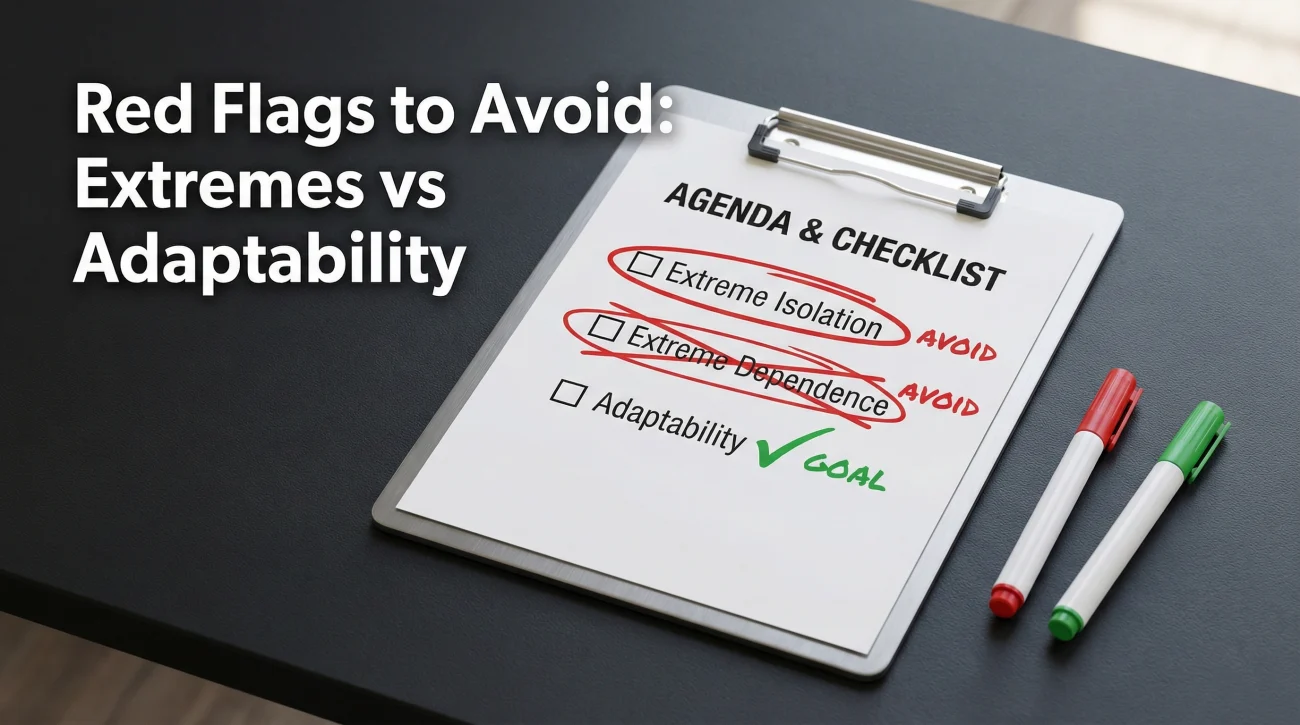
Extreme Preferences
“I strongly prefer working alone. I find collaboration inefficient and distracting.”
This signals potential teamwork problems. Even if independent work is your strength, dismissing collaboration raises red flags.
“I really need to be around people constantly. I can’t work alone.”
This signals inability to focus independently. Most roles require at least some individual work.
Generic Non-Answers
“I’m equally comfortable with both.”
Without elaboration, this sounds like avoiding the question. Add specifics about how and when you use each mode.
❓ FAQ
🎯 What if I genuinely strongly prefer one over the other?
Be honest but show you can operate in both modes. Share your preference as a tendency while providing evidence that you’ve worked effectively in the other mode. The question is whether you can do both, not whether you love both equally.
💼 Should I ask about the role’s balance first?
You can, and it shows thoughtfulness. “Could you tell me more about how much of this role is collaborative versus independent work?” gives you information to tailor your answer while demonstrating genuine interest in understanding the position.
⏰ How do I show I’m a team player without seeming unable to work alone?
Give specific examples of both. Describe collaborative successes, then describe independent accomplishments. Evidence in both modes proves you’re not limited to either.
📋 What if the job seems to require mainly one mode?
Emphasize your strength in that mode while briefly demonstrating capability in the other. Even heavily collaborative roles have independent components, and even heavily independent roles require some collaboration.
✨ Is this question testing for introversion/extroversion?
Partially, but it’s really about work effectiveness. Introverts can collaborate well, and extroverts can focus independently. The question is about your actual work capabilities, not personality type.
Flexibility Wins
Answering questions about working independently versus in a team requires showing you understand that professional success demands both. Demonstrate your ability to collaborate effectively while also delivering strong independent work. Share your natural tendency honestly while emphasizing flexibility. Connect your answer to the specific role’s requirements when possible. The candidates who succeed are those who can move fluidly between modes depending on what the work needs, and your answer should prove you’re one of them.
⚠️ Disclaimer: The interview strategies, sample answers, and negotiation tips provided in this guide are for educational purposes only. Hiring decisions are subjective and vary by company and industry. While these strategies are based on professional HR standards, they do not guarantee a specific job offer or result.