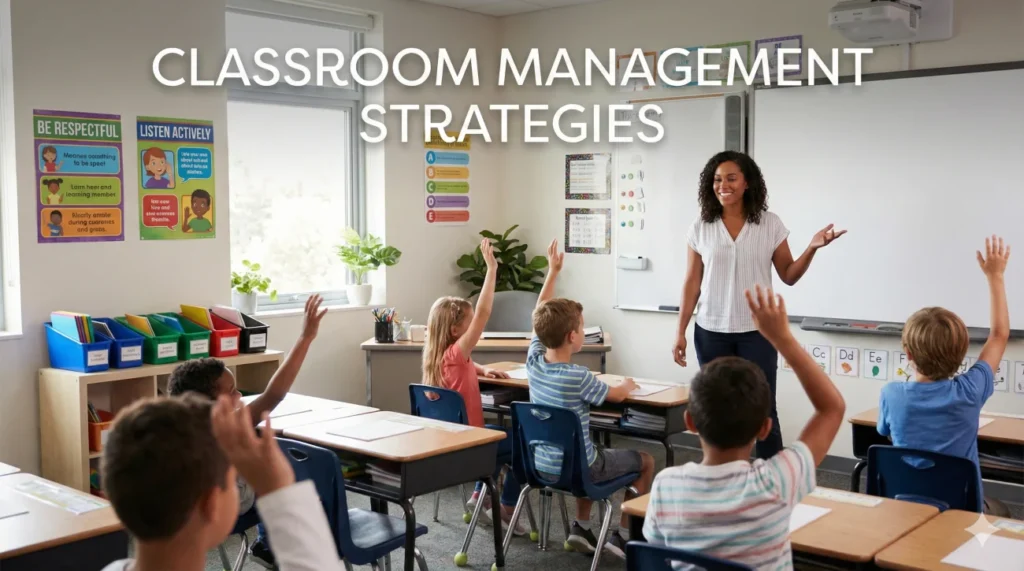
- Why it matters: Classroom management is what makes learning possible, because great lessons collapse in a chaotic room with unclear expectations.
- Prevention first: Teach routines and behavior expectations early, practice them until automatic, and stay consistent so students stop testing random boundaries.
- Relationships do the heavy lifting: Build trust without trying to be a friend, correct privately when possible, and show steady respect so students feel safe following your lead.
- Intervene with a ladder: Start with subtle cues, escalate only when needed, and keep consequences fair and predictable so discipline does not turn into a power show.
- Adapt to the class: Match your approach to student age and context, avoid public battles, reset the whole room when it drifts, and document patterns before looping in parents or admin.
Why Management Determines Teaching Success
Even exceptional content expertise proves worthless without effective classroom management strategies creating environments where learning can occur. New teachers consistently underestimate management complexity, assuming subject knowledge and good intentions suffice for productive classrooms. Reality reveals that students won’t access brilliant lessons delivered in chaotic environments where disruptions prevent engagement, unclear expectations create confusion, and inconsistent responses erode respect for boundaries.
Strong classroom management isn’t about control through fear or rigid authoritarianism but rather establishing structures, relationships, and routines enabling all students to feel safe, supported, and ready to learn. Understanding interview preparation matters, but implementing proven management techniques determines whether you thrive or struggle once hired. The difference between teachers who flourish versus those who burn out often traces back to foundational management competencies rather than pedagogical knowledge or subject expertise.
Proactive Prevention Over Reactive Discipline
Understanding effective classroom management begins with recognizing that prevention strategies prove far more effective than reactive interventions addressing problems after they escalate.
Establishing Clear Expectations
Students can’t meet expectations they don’t understand. Effective management starts with explicitly teaching behavioral expectations for different contexts: whole-group instruction, independent work, collaborative activities, transitions, and special situations. Don’t assume students automatically know how to participate appropriately. Model desired behaviors, practice routines repeatedly, and provide specific feedback reinforcing expectations. This upfront investment prevents confusion that generates unnecessary disruptions.
| Proactive Strategy | Implementation | Why It Works |
|---|---|---|
| Clear Expectations | Explicitly teach, model, practice behavioral norms for all contexts | Eliminates confusion causing accidental misbehavior |
| Consistent Routines | Predictable procedures for entry, transitions, materials, dismissal | Reduces downtime where disruptions breed |
| Engaging Instruction | Active participation, varied activities, appropriate challenge | Prevents boredom-driven behavioral issues |
| Physical Environment | Strategic seating, minimal distractions, accessible materials | Supports focus and reduces friction points |
| Relationship Building | Know students individually, show genuine care, build trust | Creates motivation to meet expectations |
Routine and Consistency
Predictable routines for classroom entry, materials distribution, transitioning between activities, and dismissal reduce wasted time where management problems proliferate. Students thrive with clear structures they can navigate independently without constant teacher direction. Consistency in routines and consequences proves equally critical. When responses to behaviors vary based on teacher mood or student identity, students learn that expectations don’t really matter and testing boundaries makes sense.
Expert advice: The most effective classroom management invests heavily in teaching procedures during the first weeks, practicing routines until they become automatic habits requiring minimal ongoing monitoring or correction.
Relationship Building as Management Strategy
Implementing classroom discipline techniques proves far more effective when grounded in genuine relationships where students feel known, valued, and supported rather than merely controlled.
Creating Individual Connections
Learning students’ interests, strengths, challenges, and lives outside school builds investment in meeting your expectations. When students recognize you genuinely care about them as individuals, they work harder to please you and feel more accountable when disappointing you. This doesn’t mean being their friend but rather demonstrating authentic interest in their success. Brief individual conversations, celebrating small wins, and remembering personal details create connection that purely authoritarian approaches cannot achieve.
Cultivating Mutual Respect
Respect flows both directions. Treat students with dignity even when addressing misbehavior, avoid sarcasm or public humiliation, acknowledge your own mistakes, and follow through on commitments. Students mirror the respect you model. Authoritarian teachers who demand respect without earning it through their own respectful behavior create resentment fueling resistance. When students feel disrespected, they escalate conflicts unnecessarily and disengage from learning as passive-aggressive protest.
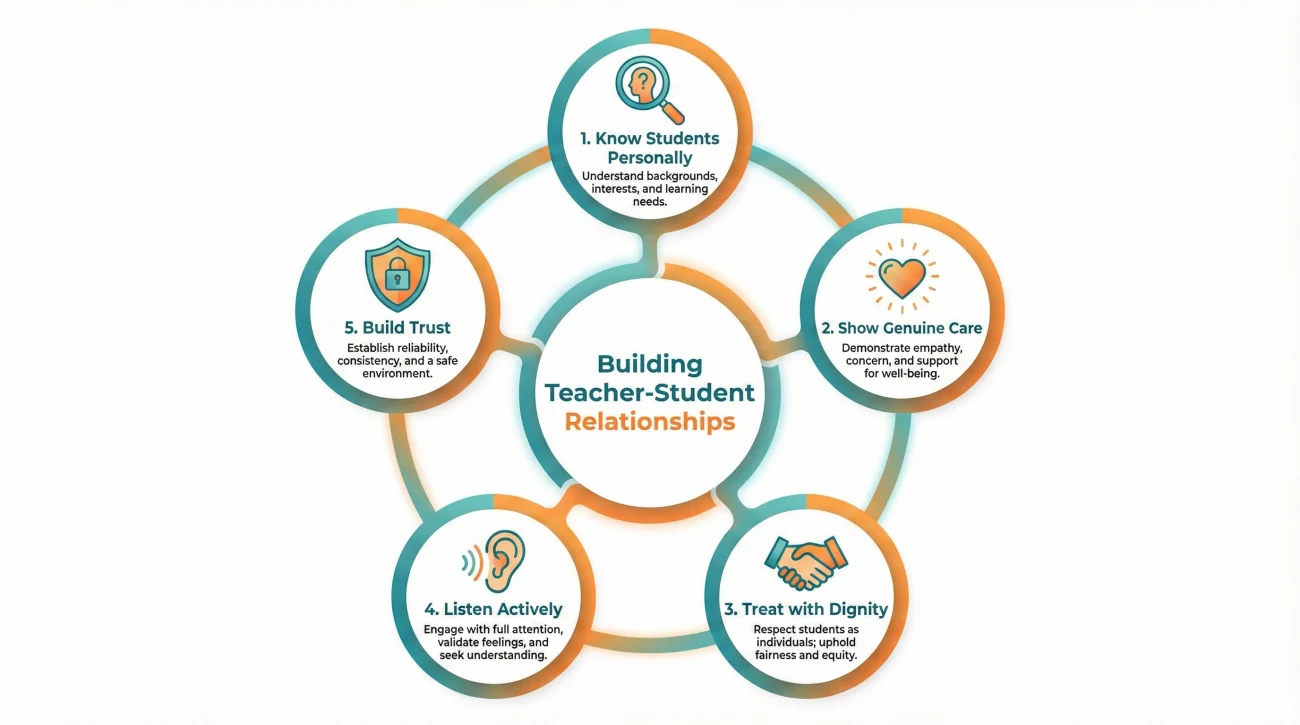
- 💚 Know students personally: Interests, strengths, challenges, family context
- 🎯 Show genuine care: Celebrate successes, support through difficulties
- 🤝 Treat with dignity: Respectful language, private corrections, acknowledge feelings
- 📢 Listen actively: Student perspective matters, even when consequences follow
- ✨ Build trust: Follow through, admit mistakes, maintain confidentiality
💡 Pro tip: Greet students individually at the door, making brief eye contact and using names; this small investment builds connection while allowing you to assess mood and energy before potential issues arise.
Strategic Intervention Approaches
Despite excellent prevention, disruptions still occur requiring effective student behavior management responses that address issues without derailing learning for others.
Least Intrusive First
Start with minimal interventions before escalating. Physical proximity, brief eye contact, or gentle redirection often suffice without interrupting instruction flow. Only escalate when subtle approaches fail. Public confrontation should be last resort since it gives misbehaving students audience and often intensifies conflicts. Handle serious issues privately when possible, addressing behavior without embarrassing students or creating power struggles in front of peers.
| Intervention Level | Techniques | When to Use |
|---|---|---|
| Minimal (Level 1) | Proximity, eye contact, pause, nonverbal cue | Minor off-task behavior, brief distraction |
| Subtle (Level 2) | Quiet verbal reminder, redirect to task, choice offering | Continued minor issues, repeated off-task |
| Direct (Level 3) | Clear direction, consequence statement, brief conference | Persistent disruption, defiance, rule violation |
| Intensive (Level 4) | Removal from situation, parent contact, administrative involvement | Severe disruption, safety concerns, repeated serious issues |
Consistent and Fair Consequences
Consequences must connect logically to misbehavior when possible and apply consistently across students and situations. If consequences seem arbitrary or unfair, students reject them as illegitimate. Follow through every time expectations are violated, or students learn testing boundaries carries no real cost. However, consistency doesn’t mean rigidity. Consider context and intent while maintaining accountability. A student having genuinely bad day deserves compassion alongside consequences, but patterns of misbehavior require escalating responses.
Never deliver consequences in anger or use sarcasm when addressing misbehavior; this models poor emotional regulation and damages relationships while making students defensive rather than reflective about their choices.
Adapting to Developmental Stages
Effective management strategies must align with students’ developmental capabilities and typical behavioral patterns for their age rather than expecting maturity beyond realistic levels.
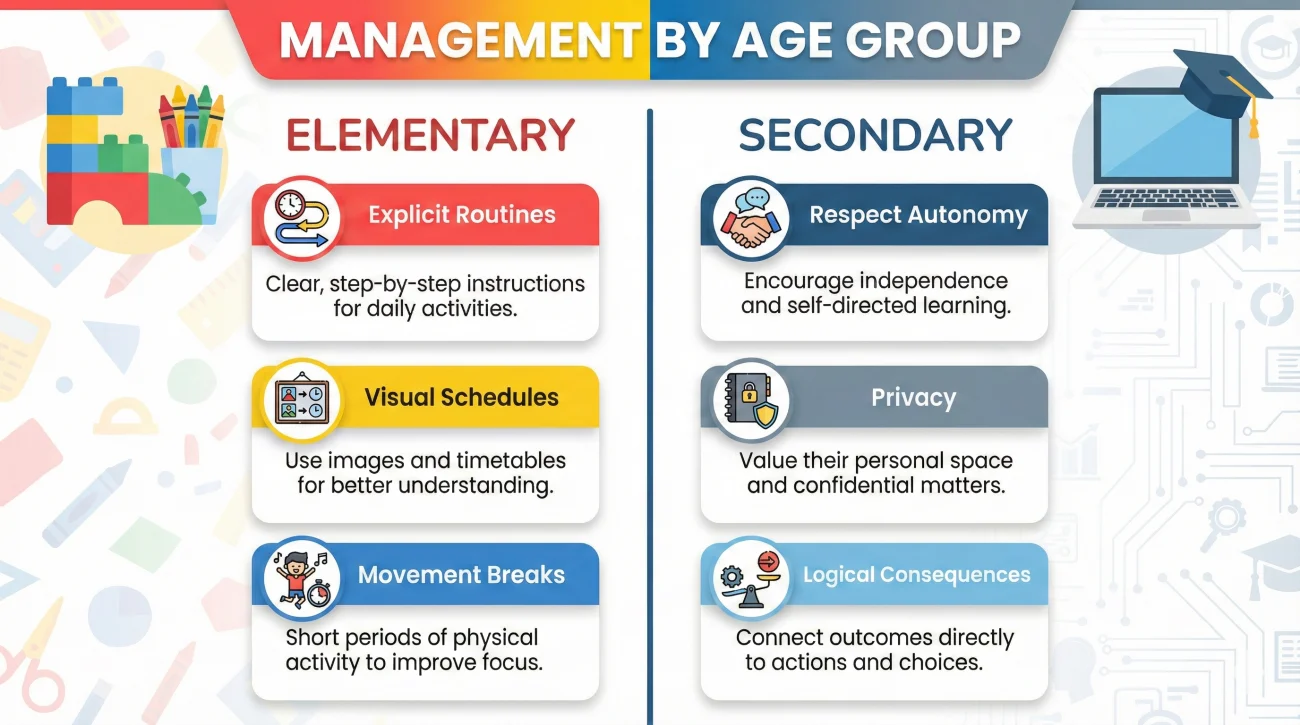
Elementary Considerations
Young students need more explicit teaching of behavioral expectations, shorter activity periods before transitions, and frequent positive reinforcement. Their limited impulse control means more gentle redirections and patience with mistakes. Visual schedules, consistent routines, and concrete consequences work better than abstract discussions about responsibility. Movement breaks prevent restlessness-driven disruptions natural at this developmental stage.
Secondary Adaptations
Adolescents require approaches respecting their developing autonomy and peer influence. Management through relationship and mutual respect proves more effective than pure authority assertion. They need authentic reasons behind rules rather than “because I said so” justifications. Privacy when addressing issues, opportunities for input on classroom structures, and logical consequences respecting their maturity create more cooperative environments than elementary-style reward charts or public behavior tracking.
❓ FAQ
🎯 How do I establish authority without being mean?
Authority comes from consistent boundaries, clear expectations, and following through on consequences, not harsh demeanor. Be warm but firm, friendly but not friends. Students respect teachers who care about them while maintaining high standards consistently.
💼 What if students don’t respond to consequences?
Ineffective consequences suggest either misalignment with the behavior, inconsistent application, or underlying issues requiring different approaches. Assess whether consequences connect logically, whether you’re following through consistently, and whether relationship or engagement issues need addressing first.
⏰ How long does it take to establish good management?
Invest heavily in the first two to three weeks teaching and practicing routines until they become habitual. Strong foundation pays dividends all year, while rushed starts create problems requiring constant correction. The upfront time investment saves exponentially more time throughout the year.
📋 Should I involve parents for minor behavior issues?
Handle minor issues independently through classroom management. Contact parents for repeated problems, serious disruptions, or when you need partnership addressing patterns. Document issues before contacting parents so you can provide specific examples rather than vague concerns.
✨ What if I lose my temper with students?
Acknowledge it honestly, apologize genuinely, and commit to better self-regulation. Students respect teachers who admit mistakes more than those who pretend perfection. Use the moment to model accountability and emotional repair, demonstrating the behavior you expect from them.
Final Thoughts
Effective teaching depends fundamentally on classroom management competency creating environments where learning can occur. The most brilliant lessons fail in chaotic classrooms where disruptions prevent engagement, while mediocre content delivered in well-managed environments still produces learning. New teachers must prioritize developing management skills recognizing that pedagogical expertise proves worthless without foundational ability to establish productive learning spaces.
Mastering classroom management strategies requires understanding that prevention through clear expectations, consistent routines, and genuine relationships proves far more effective than reactive discipline addressing problems after escalation. Build strong foundations during initial weeks, maintain consistency in expectations and consequences, treat students with dignity while holding firm boundaries, and adapt approaches to developmental stages. This investment in proactive management creates classroom environments where all students feel safe, supported, and ready to learn rather than surviving through authoritarian control or allowing chaos that prevents anyone from thriving.
⚠️ Disclaimer: The interview strategies, sample answers, and negotiation tips provided in this guide are for educational purposes only. Hiring decisions are subjective and vary by company and industry. While these strategies are based on professional HR standards, they do not guarantee a specific job offer or result.