The Question That Tests Your Professionalism
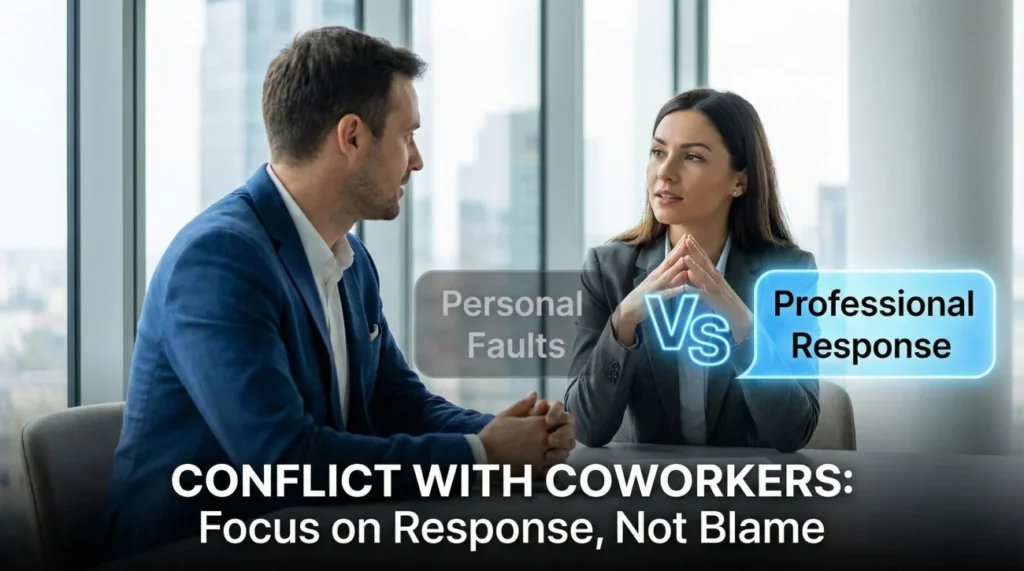
In over twelve years of interviewing candidates, I have heard hundreds of answers to the conflict with coworker question. The pattern that predicts failure is unmistakable: candidates who spend more time describing the other person’s faults than their own response almost never get hired.
Last year, I interviewed two candidates for the same senior analyst position. The first spent four minutes explaining how his coworker was “passive-aggressive” and “impossible to work with.” The second described a genuine disagreement about project methodology, then focused entirely on how she approached the conversation, found common ground, and built a better working relationship. Same question, completely different impressions. The second candidate got the offer.
The Right Mindset for Peer Conflicts
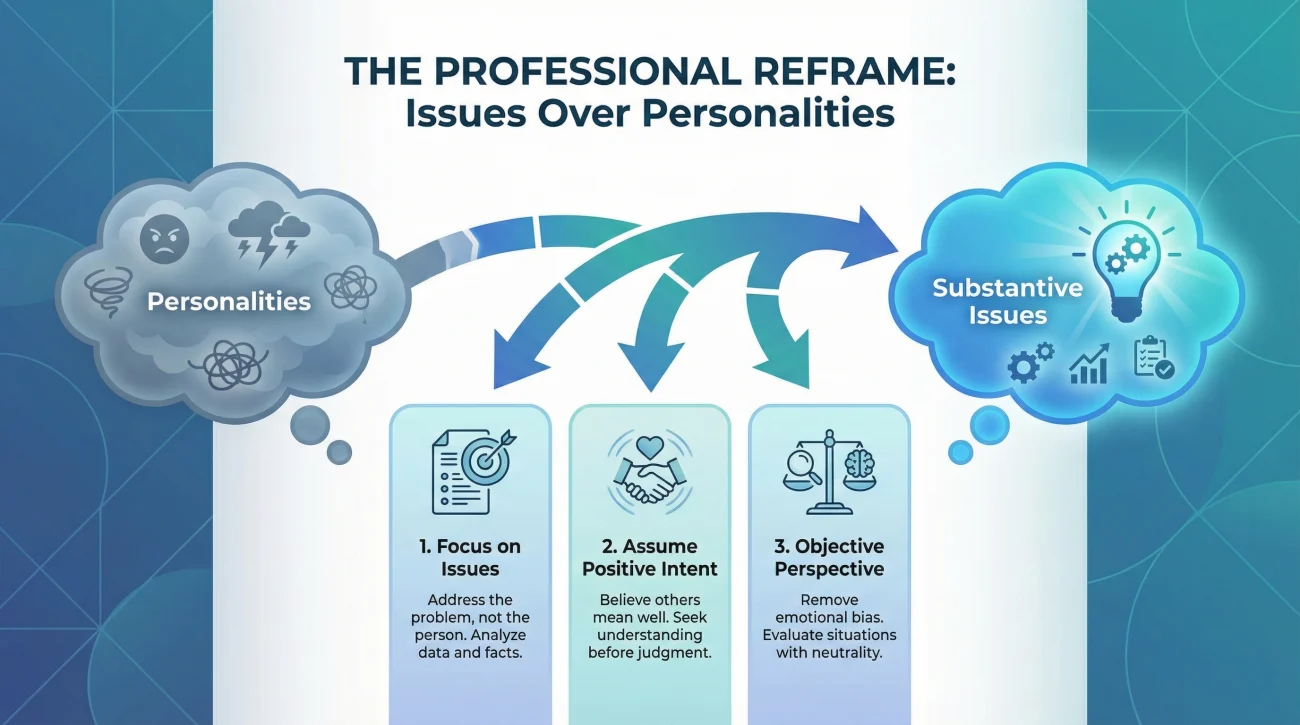
Focus on Issues, Not Personalities
Every workplace conflict has two layers: the substantive disagreement and the interpersonal tension. Strong answers acknowledge both but emphasize the substantive issue. Instead of “my coworker was stubborn,” explain “we had different views on the technical approach.” This subtle reframe shows maturity.
Interviewers know that every story has multiple perspectives. When you describe a colleague negatively, they wonder what that person’s version would sound like. When you describe a legitimate disagreement between reasonable professionals, you demonstrate the objectivity they want on their team.
Assume Positive Intent
Frame your colleague’s position as reasonable even when you disagreed. Perhaps they had different priorities, different information, or different risk tolerance. Acknowledging that smart people can disagree shows intellectual humility and collaborative potential.
Consider this real scenario: Marcus, a product manager at a fintech startup, clashed with a developer who kept pushing back on feature requests. His first instinct was frustration. But when he asked questions, he discovered the developer had seen a similar feature crash production at his previous company. The “resistance” was actually valuable risk awareness. Marcus now opens his answer with: “I learned my colleague wasn’t being difficult. He was protecting the product from a mistake I almost made.”
Saying “she prioritized speed while I prioritized thoroughness” respects both perspectives.
Real Stories From the Interview Room
After twelve years of interviewing candidates across industries, I have heard hundreds of coworker conflict answers. Here are three that stuck with me, for very different reasons.
The Marketing Clash That Became a Partnership
A candidate named James told me about his conflict with a colleague over a product launch campaign. His colleague wanted aggressive social media spending while James advocated for influencer partnerships. The disagreement became heated in a team meeting, and both left frustrated.
What impressed me was what James did next. Instead of lobbying their manager separately, he invited his colleague to lunch and said: “We both want this launch to succeed. Can we figure out what’s really driving our different views?” Turns out his colleague had data showing their target demographic responded well to paid social, while James had case studies from similar product launches where influencer content outperformed.
They ended up proposing a hybrid approach: allocate sixty percent to influencer partnerships with built-in paid amplification of that content. The campaign exceeded targets by forty percent. James got the job because he showed me the exact behavior I wanted on my team.
The Developer Who Destroyed His Chances
Contrast that with a senior developer I interviewed at a fintech company. When I asked about coworker conflict, he spent four minutes describing how his colleague “couldn’t write clean code to save his life” and “constantly pushed bugs to production.” He detailed every mistake this person made over two years.
When I asked how he handled it, he said he “documented everything and sent it to their manager.” No direct conversation. No attempt to understand. Just surveillance and reporting. I ended the interview early. That candidate would have been a cancer on any team.
The Sales Rep Who Saved a Relationship
One of my favorite answers came from a sales rep named Priya. She clashed with an account manager over a client renewal. The AM wanted to offer a steep discount to close quickly, while Priya knew from her conversations that the client actually valued service improvements more than price cuts.
Rather than escalating, Priya asked the AM to join her on a client call. She let the client explain their priorities directly. Hearing it firsthand changed the AM’s approach completely. They collaborated on a proposal emphasizing service upgrades with a modest discount, and the client renewed at higher total value than the previous contract.
Priya told me: “I realized we weren’t really disagreeing. We just had different information. Once we shared what we knew, the right answer was obvious.” That insight alone told me she understood collaboration at a deep level.
Resolution Steps That Impress
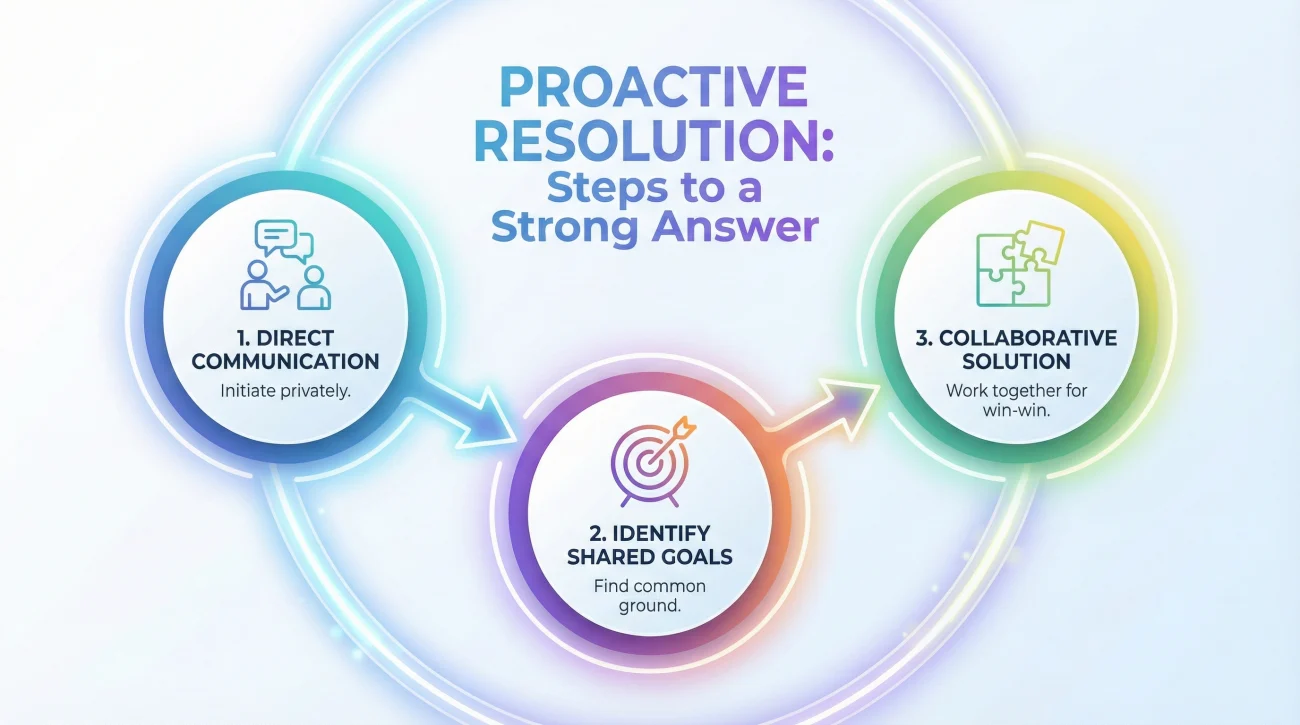
Start with Direct Communication
The best conflict stories begin with you taking initiative to address the issue directly rather than avoiding it or escalating immediately. Describe how you approached your colleague privately, asked questions to understand their perspective, and looked for common ground.
Interviewers value people who handle interpersonal issues themselves before involving management. Going straight to your boss signals that you either lack courage or create unnecessary drama.
Identify Shared Goals
Most workplace conflict between peers stems from different approaches to shared objectives rather than fundamentally opposed interests. Demonstrating that you found alignment on the ultimate goal before addressing tactical disagreements shows strategic thinking.
For example: “We both wanted the project to succeed. Once we agreed on that, we could discuss which approach would get us there most effectively.”
Reach a Collaborative Solution
The strongest answers describe solutions where both parties contributed rather than one person simply winning. Perhaps you incorporated elements of both approaches, divided responsibilities based on strengths, or found a third option neither had initially considered.
| Weak Resolution | Strong Resolution |
|---|---|
| I convinced them I was right | We combined our approaches and both learned something |
| Management sided with me | We worked it out ourselves and presented a unified solution |
| They eventually came around | We found a compromise that addressed both concerns |
Sample Answer Structure
A colleague and I disagreed on how to handle a client deliverable. She wanted to ship quickly even though we knew there were limitations, while I pushed for additional testing. The deadline was tight, and both of us were feeling the pressure.
I needed to resolve the disagreement in a way that protected the client relationship and kept our partnership strong, since we’d be working together again on future projects.
I suggested we step away from the immediate deadline pressure and talk it through over coffee. I opened by asking her to walk me through her reasoning first. That helped me understand her main fear wasn’t “testing doesn’t matter,” it was that missing the deadline would hurt client trust.
I shared my own concern from the same angle: shipping something buggy could damage trust just as quickly. Once we named the underlying priorities, it was clear we were aiming at the same outcome, maintaining client confidence, we just disagreed on what would risk it more.
From there, we got practical. We listed the tests we wanted, separated “critical to avoid a client-facing failure” from “nice-to-have,” and built a plan that protected the essentials while still hitting the deadline. We agreed on what would be tested before release and what would be scheduled immediately after as follow-up hardening.
We delivered on time with the critical functionality tested and stable. The client was satisfied, and the structured “critical vs nice-to-have” approach became a better template for future projects.
Just as importantly, my colleague and I built mutual respect through the process and became much more effective collaborators on subsequent work.
Expert advice: Notice how this answer never suggests the colleague was wrong or difficult. It presents a legitimate professional disagreement resolved through communication.
What to Avoid
- Character attacks: “She was always negative” or “He never listened” make you look unprofessional
- Victim positioning: Presenting yourself as the reasonable one dealing with an unreasonable person
- Escalation as first resort: Going straight to management without attempting direct resolution
- Unresolved conflicts: Stories that end with ongoing tension or avoidance
- Trivial examples: Minor disagreements that do not demonstrate real conflict resolution
For more strategies on answering questions about workplace dynamics, explore our comprehensive guides.
❓ FAQ
🎯 What if the conflict was genuinely the other person’s fault?
Even when someone else caused the problem, focus on how you responded rather than what they did wrong. Interviewers evaluate your behavior, not your ability to identify others’ faults. You can acknowledge the challenge without assigning blame.
💼 Should I pick a minor or major conflict?
Choose a conflict significant enough to demonstrate real resolution skills but not so severe it raises concerns. A substantial professional disagreement works better than either a trivial annoyance or a dramatic blowup.
⏰ What if I have never had a workplace conflict?
Everyone has experienced professional disagreements. Reframe your thinking: conflict does not require shouting matches. A respectful disagreement about approach, priorities, or methods counts. Academic or volunteer experiences also work for entry-level candidates.
📋 How do I describe someone difficult without badmouthing them?
Describe behaviors and their impact rather than character judgments. Instead of “she was controlling,” say “she preferred to make decisions independently, which sometimes created coordination challenges.” The description is factual without being pejorative.
✨ Should I mention if management got involved?
If management involvement was appropriate and necessary, you can include it. However, stories where you resolved the issue directly before escalating are generally stronger. If management did get involved, show that you had already attempted direct resolution.
Demonstrate Professional Maturity
Answering questions about conflict with coworker situations effectively shows you can disagree professionally, resolve issues directly, and maintain productive relationships even through difficult moments. Choose an example that highlights your communication skills and emotional intelligence, and you will demonstrate exactly the kind of teammate every manager wants to hire.
⚠️ Disclaimer: The interview strategies, sample answers, and negotiation tips provided in this guide are for educational purposes only. Hiring decisions are subjective and vary by company and industry. While these strategies are based on professional HR standards, they do not guarantee a specific job offer or result.