- Why it feels brutal: Sales rejection stacks up fast, and if you treat every “no” like a personal verdict, confidence drops and burnout follows.
- Reality check: Most sales motions fail by design, so the winners are the ones who keep activity high and emotions steady, not the ones who “avoid rejection.”
- Recover in the moment: After a rough call, interrupt the rumination, reset your body and attention, then do a few easy next actions to regain momentum.
- Build resilience long-term: Track rejection as a progress metric, separate self-worth from outcomes, and lean on process identity so your mood is not tied to quota swings.
- Protect against the worst days: Handle hostility and ghosting with clear rules, debrief briefly with team support, and set real recovery boundaries so the job stays sustainable.
Why Sales Rejection Breaks Most People
Sales roles guarantee constant rejection. Prospects ignore outreach. Customers say no repeatedly. Clients cancel meetings, ghost conversations, or deliver harsh criticism. Understanding dealing with sales rejection separates successful salespeople from those who burn out within months. The rejection itself doesn’t determine career outcomes – how quickly you recover and maintain motivation through setbacks predicts long-term success more than natural charisma or product knowledge.
Most people underestimate the emotional toll of repeated rejection. Hearing “no” dozens of times daily wears down confidence even for naturally optimistic personalities. Harsh client interactions leave emotional residue that compounds over time. Without deliberate resilience strategies, this accumulation leads to burnout, avoidance behaviors, or leaving sales entirely. When discussing career preparation through interview questions, sales roles require unique emotional preparation that other careers don’t demand at the same intensity or frequency.
The Mathematics of Sales Rejection
Understanding handling sales rejection starts with accepting the statistical reality that most sales attempts fail. Top performers face rejection rates of 80-95% depending on role and industry. The difference between success and failure isn’t avoiding rejection – it’s maintaining activity levels and emotional equilibrium despite constant setbacks.
Typical Rejection Rates by Role
Different sales roles experience different rejection patterns. Cold outreach faces the highest rejection rates. Inbound qualified leads convert better but still reject most offers. Understanding typical rates for your role prevents personalizing normal rejection patterns.
| Sales Activity | Typical Success Rate | Rejection Rate |
|---|---|---|
| Cold calls answered | 2-5% | 95-98% |
| Cold emails getting response | 5-10% | 90-95% |
| Discovery calls to demo | 30-50% | 50-70% |
| Demos to proposals | 40-60% | 40-60% |
| Proposals to closed deals | 20-30% | 70-80% |
💡 Pro tip: Track your rejection rates against role benchmarks rather than expecting universal acceptance. A 3% cold call connection rate might feel terrible but actually indicates strong performance if industry average is 2%.
Why Sales Is a Volume Game
The mathematical reality of rejection rates means success requires maintaining high activity levels despite constant setbacks. If you need 100 outreach attempts to generate 5 conversations that produce 1 deal, then making only 20 attempts guarantees failure regardless of pitch quality. Rejection resilience directly enables the activity volume that produces results.
- 📊 More activity: Higher rejection volume produces more opportunities
- ⚡ Emotional management: Prevents rejection from stopping activity
- 🎯 Consistent effort: Success comes from sustained activity over time
- 💪 Resilience skills: Enable maintaining volume despite emotional toll
Immediate Recovery Strategies
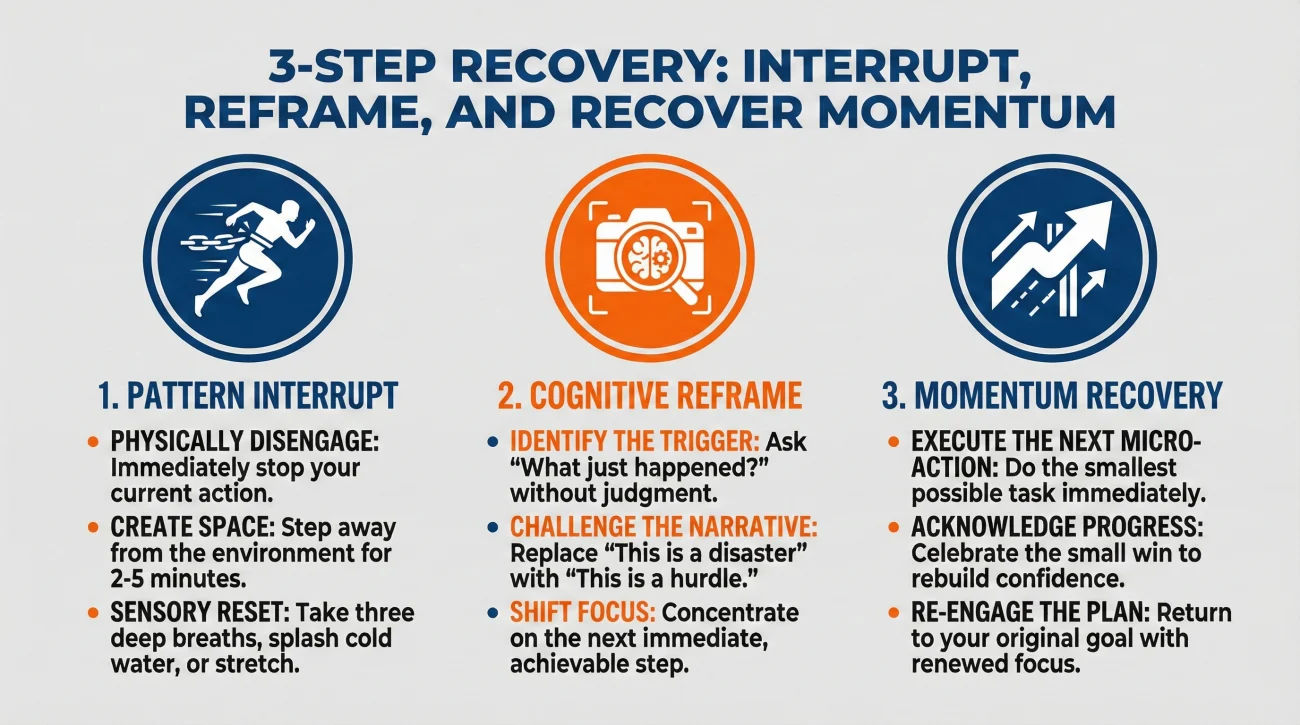
Understanding sales resilience strategies requires techniques for recovering emotionally from difficult interactions quickly enough to maintain productivity. The goal isn’t eliminating negative emotions but processing them efficiently so they don’t compound or derail your day.
Pattern Interrupt Techniques
After harsh rejection, your mind replays the interaction seeking what you could have done differently. This rumination prevents moving forward. Pattern interrupt techniques break the rumination cycle by forcing attention elsewhere before emotional reactions solidify into lasting mood states.
Expert advice: Immediately after difficult calls, take 60 seconds to do something completely different – walk around the block, do pushups, listen to music. Physical activity interrupts rumination patterns before they establish. Then deliberately make three easy outreach attempts to regain momentum before the emotional residue hardens.
Cognitive Reframing
How you interpret rejection determines its emotional impact. Viewing rejection as personal failure creates devastating emotional consequences. Reframing rejection as necessary steps toward eventual success makes each “no” feel productive rather than defeating.
| Destructive Frame | Productive Frame |
|---|---|
| “I’m terrible at sales” | “I got 10 rejections closer to my next deal” |
| “That prospect hated me” | “That wasn’t a good fit, moving on” |
| “I’ll never hit quota” | “I’m building pipeline through consistent activity” |
| “Everyone says no to me” | “I’m filtering to find qualified buyers” |
| “This deal was my only chance” | “I have 15 other opportunities in pipeline” |
Processing Without Dwelling
Acknowledging emotions without ruminating requires deliberate practice. After rejection, name the emotion briefly, accept it as normal given the circumstances, then redirect attention to controllable next actions. This acknowledgment-and-redirect pattern processes feelings efficiently without dwelling.
Building Long-Term Rejection Resilience
Understanding overcoming rejection sales for the long term requires systems that prevent cumulative emotional damage rather than just recovering from individual incidents. Daily rejection creates compound effects that sudden strategies can’t address.
Track Rejection as Progress Metric
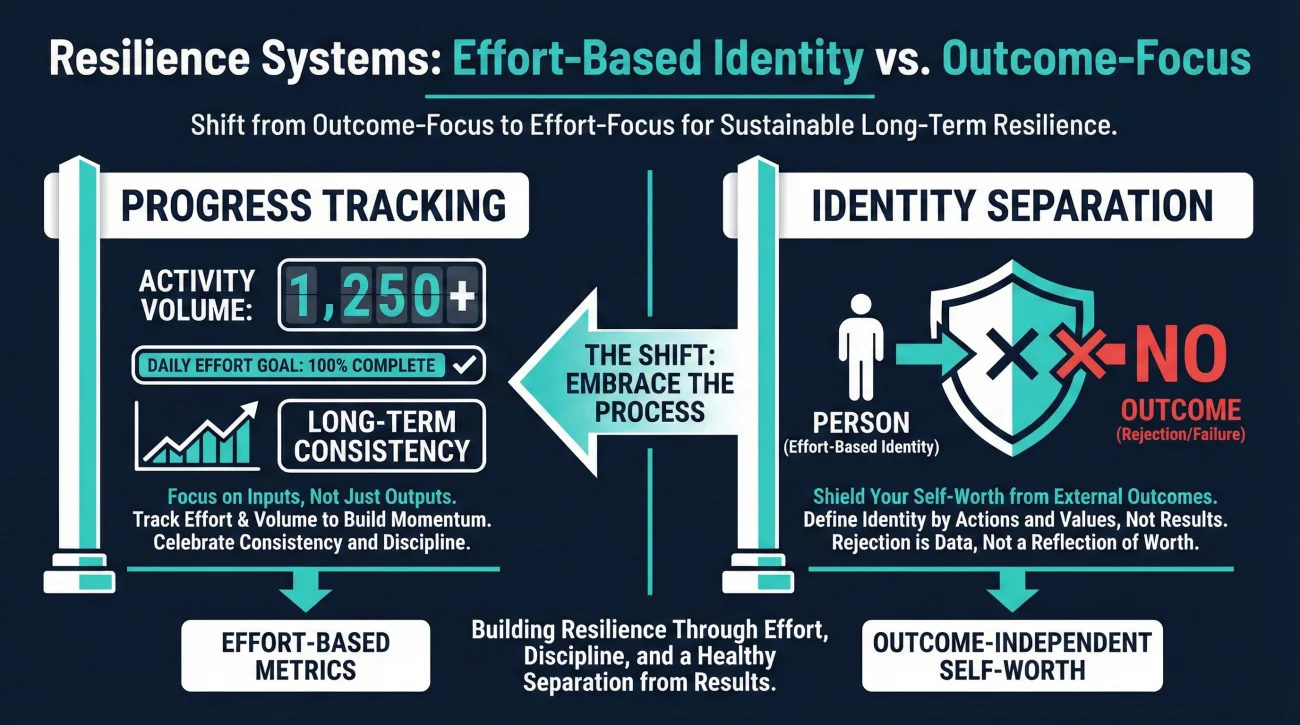
Redefine rejection as leading indicator of eventual success rather than failure metric. Track total outreach volume and rejection count as progress toward goals. This mental shift makes rejection feel productive – each “no” represents activity moving you toward statistical success.
- Count total outreach attempts as primary metric, not just acceptances
- Celebrate rejection milestones: 100 calls, 500 emails, 50 demos
- View rejection rate against benchmarks rather than absolute measure
- Focus on maintaining activity volume despite emotional difficulty
If rejection causes you to reduce activity, the emotional damage compounds as reduced effort produces worse results that feel like validation of negative beliefs. Breaking this cycle requires forcing activity maintenance even when emotionally difficult.
Separate Identity from Outcomes
Sales rejection feels personal because prospects reject you directly. Building resilience requires separating your sense of self-worth from sales outcomes. You’re not a failure because prospects say no – you’re a professional executing a numbers game where most attempts fail by design.
Expert advice: Develop identity around effort and process rather than outcomes. Instead of “I’m a great salesperson because I hit quota,” think “I’m a disciplined professional who maintains consistent activity.” Process-focused identity remains stable through rejection while outcome-focused identity fluctuates destructively.
Handling Particularly Harsh Interactions
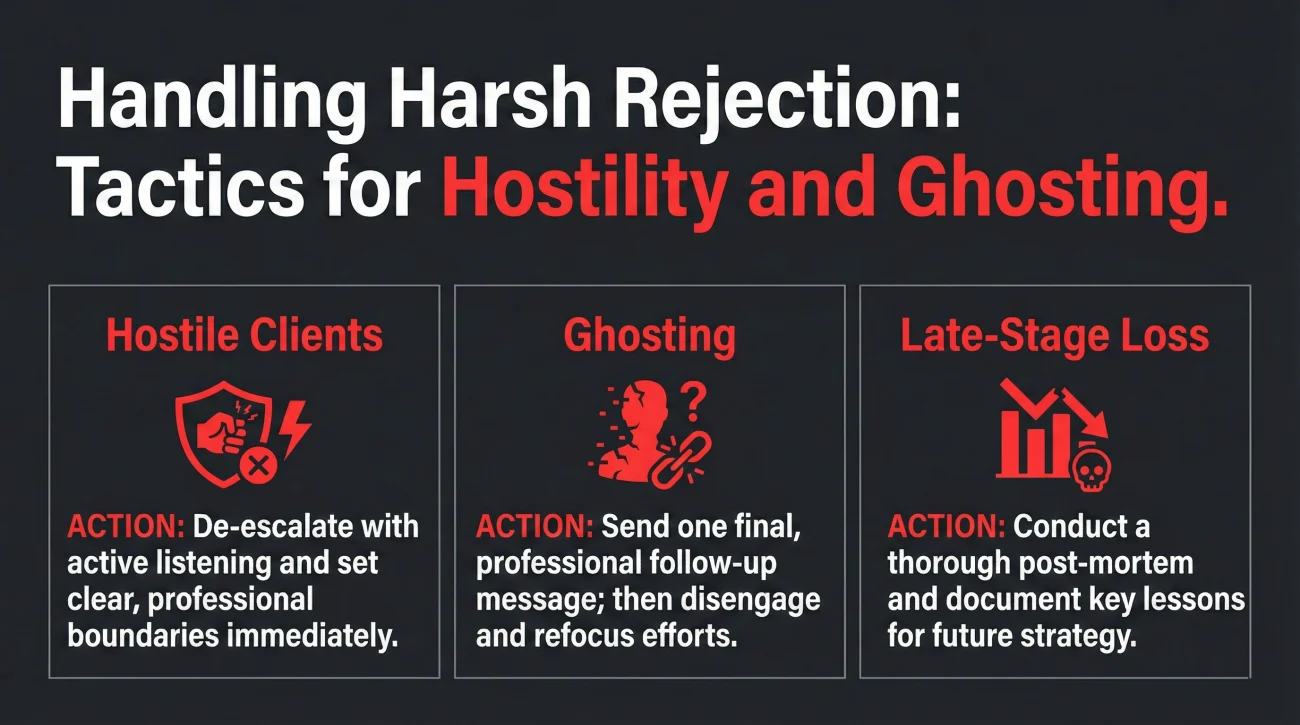
Understanding bouncing back from rejection includes strategies for interactions that go beyond simple “no” responses into personally aggressive or hostile territory. These encounters require special handling since they create disproportionate emotional damage.
When Prospects Get Hostile
Occasional prospects respond with personal attacks, insults, or aggressive rejection. These interactions hurt more than polite refusals because they feel like character judgments rather than business decisions. Remember that hostile reactions usually reflect the prospect’s stress or frustration, not your actual performance.
- 🛡️ Don’t internalize: Hostility reflects their state, not your value
- ⚡ End quickly: Don’t try to salvage hostile conversations
- 💬 Debrief briefly: Share with colleagues to process, then move on
- 🎯 Double activity: Make extra calls to regain emotional equilibrium
Dealing with Ghosting and Last-Minute Cancellations
Passive rejection through ghosting or repeated cancellations creates unique frustration because it wastes time and leaves opportunities in limbo. The uncertainty compounds emotional impact beyond straightforward rejection. Develop clear policies for how long you’ll pursue non-responsive prospects before moving on.
Recovering from Late-Stage Deal Loss
Losing deals after significant investment hurts more than early rejection because of sunk cost and raised expectations. Late-stage losses require deliberate recovery since they often trigger broader questioning of abilities. Process the loss through structured debrief, extract specific lessons, then force pipeline-building activity to regain momentum.
Leveraging Team and Manager Support
Sales rejection resilience doesn’t require handling everything alone. Strong sales teams provide structures that help individuals process rejection and maintain motivation through difficult stretches.
Peer Debriefing Rituals
Sharing difficult interactions with colleagues normalizes rejection and provides emotional processing without dwelling. Brief debriefs – 2-3 minutes describing what happened, getting validation it was objectively difficult, then moving on – help process emotions efficiently while preventing isolation.
💡 Pro tip: Establish team norms where sharing rejection stories is celebrated as evidence of activity rather than failure. Teams that normalize rejection openly create psychologically safer environments where individuals recover faster from setbacks.
Manager Coaching Through Slumps
Good sales managers help team members reframe rejection and maintain activity during slumps. They provide perspective that individual rejection feels devastating but represents normal statistical variation. They prevent activity reduction by focusing on maintaining process rather than forcing immediate results.
Preventing Burnout Before It Starts
Long-term rejection resilience requires preventing cumulative damage rather than just recovering from individual incidents. Daily practices that maintain emotional reserves prevent the gradual depletion that leads to burnout.
Setting Boundaries for Recovery
Sales culture often glorifies constant hustle, but sustainable performance requires recovery time. Establish clear work boundaries that allow emotional processing and regeneration. Evenings spent ruminating about rejection don’t constitute recovery – genuine disconnection does.
| Burnout Accelerator | Resilience Builder |
|---|---|
| Working 12+ hours daily without breaks | Structured work hours with genuine recovery time |
| Checking email and Slack constantly | Designated disconnection periods for mental reset |
| Ruminating about rejection during off-hours | Pattern interrupts that prevent work thoughts at home |
| Skipping exercise and sleep for work | Non-negotiable physical health habits |
| Isolating socially due to work stress | Maintaining relationships outside work context |
Celebrating Small Wins
Rejection dominates attention naturally, so deliberately tracking and celebrating wins prevents negativity bias from distorting reality. Keep visible records of positive outcomes – closed deals, good calls, positive feedback – that counterbalance the psychological weight of rejection.
❓ FAQ
🎯 How do I stop taking rejection personally?
Recognize that prospects reject your offer, not you as a person. They’re making business decisions based on budget, timing, and priorities you can’t control. Practice cognitive reframing immediately after rejection: “That wasn’t a fit” rather than “I failed.” Track rejection as progress metric rather than failure indicator. Over time, consistent reframing makes rejection feel less personal.
💼 What if rejection makes me want to quit sales entirely?
This signals either poor role fit or insufficient resilience strategies, not personal weakness. First, implement recovery techniques consistently for 30 days before making career decisions. If rejection still feels unbearable despite using resilience strategies, sales might not align with your temperament. Not everyone thrives in high-rejection environments, and recognizing that sooner prevents prolonged misery.
⏰ How long should it take to recover from harsh rejection?
Aim to process difficult interactions within 15-30 minutes through pattern interrupts and reframing. Allowing rejection to derail entire days compounds damage unnecessarily. Practice immediate recovery techniques – physical activity, cognitive reframing, forcing next activity – until recovery becomes faster. With practice, even harsh interactions can be processed in minutes rather than hours.
📋 Should I analyze every rejection to improve?
Extract quick lessons from patterns, not individual rejections. After each rejection, ask briefly “was there something I could have done differently?” If yes, note it and adjust. If no, move on immediately. Avoid extended post-mortems on individual rejections – this rumination masquerades as improvement but actually reinforces negative emotions without producing useful insights.
✨ How do top performers handle constant rejection?
They view rejection as necessary filtering toward eventual success rather than personal failure. They maintain activity volume despite emotional difficulty because they trust the statistical process. They process rejection quickly through cognitive reframing and pattern interrupts. Most importantly, they separate identity from outcomes – defining success by effort and process rather than individual results.
Final Thoughts
Mastering dealing with sales rejection separates successful salespeople from those who burn out quickly because rejection itself doesn’t determine outcomes – recovery speed and maintained motivation through setbacks predict long-term success. The mathematical reality of sales means top performers face rejection rates of 80-95% depending on role, making emotional resilience more critical than natural charisma or product knowledge for sustaining the activity volume that produces results.
Immediate recovery strategies prevent individual rejections from compounding into lasting mood states. Pattern interrupt techniques break rumination cycles through physical activity or attention shifts. Cognitive reframing transforms rejection from personal failure into necessary filtering toward eventual success. Processing emotions through brief acknowledgment-and-redirect patterns allows moving forward without dwelling or suppressing feelings that emerge later.
Long-term resilience requires systems preventing cumulative damage rather than just recovering from incidents. Track rejection as progress metric demonstrating activity toward statistical success. Separate identity from outcomes by defining yourself through effort and process rather than results. Establish boundaries allowing genuine recovery, celebrate small wins deliberately, and leverage team support for normalizing rejection experiences. Sustainable sales performance comes from building emotional infrastructure that processes constant rejection efficiently while maintaining the consistent activity levels that eventually produce success.
⚠️ Disclaimer: The interview strategies, sample answers, and negotiation tips provided in this guide are for educational purposes only. Hiring decisions are subjective and vary by company and industry. While these strategies are based on professional HR standards, they do not guarantee a specific job offer or result.