- Why most pitches die fast: Prospects decide in seconds, and feature lists or “about us” intros make you sound self-focused.
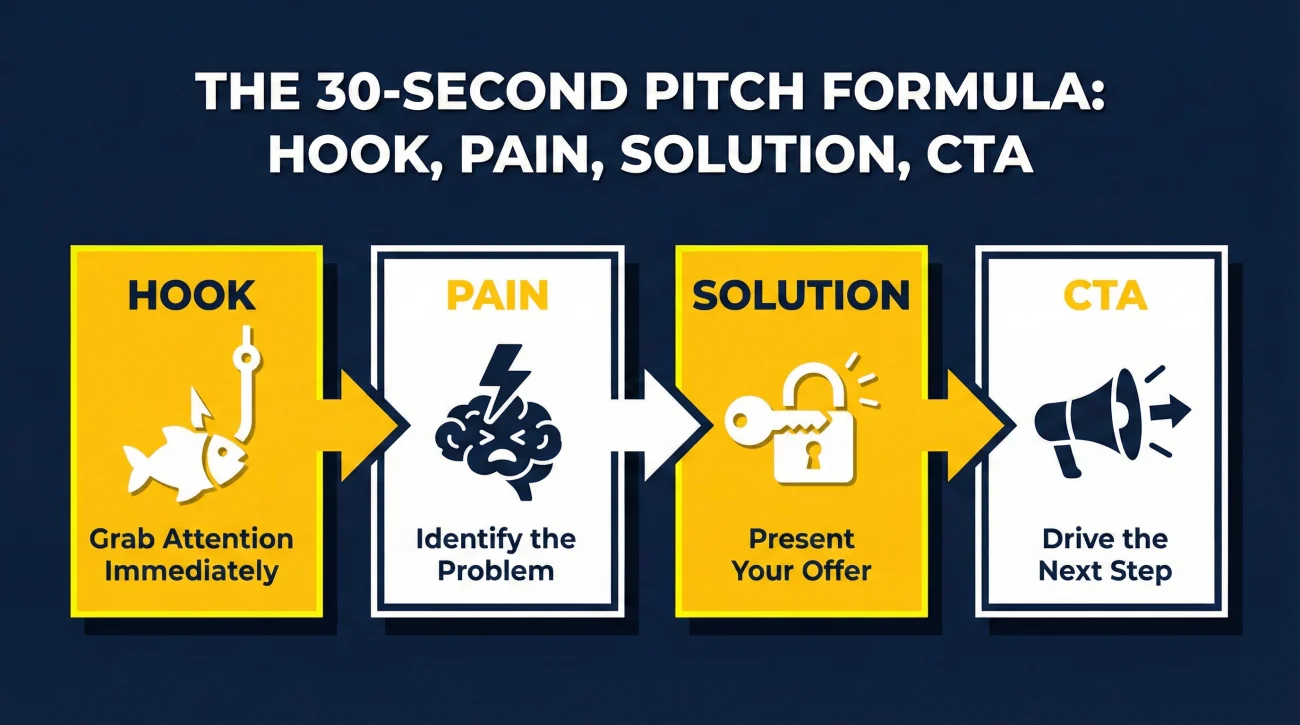
- The core framework: Use Hook, Pain, Solution, CTA so your first 30 seconds feel immediately relevant and easy to follow.
- Say outcomes, not features: Translate what you do into clear “after” results so they instantly see the payoff.
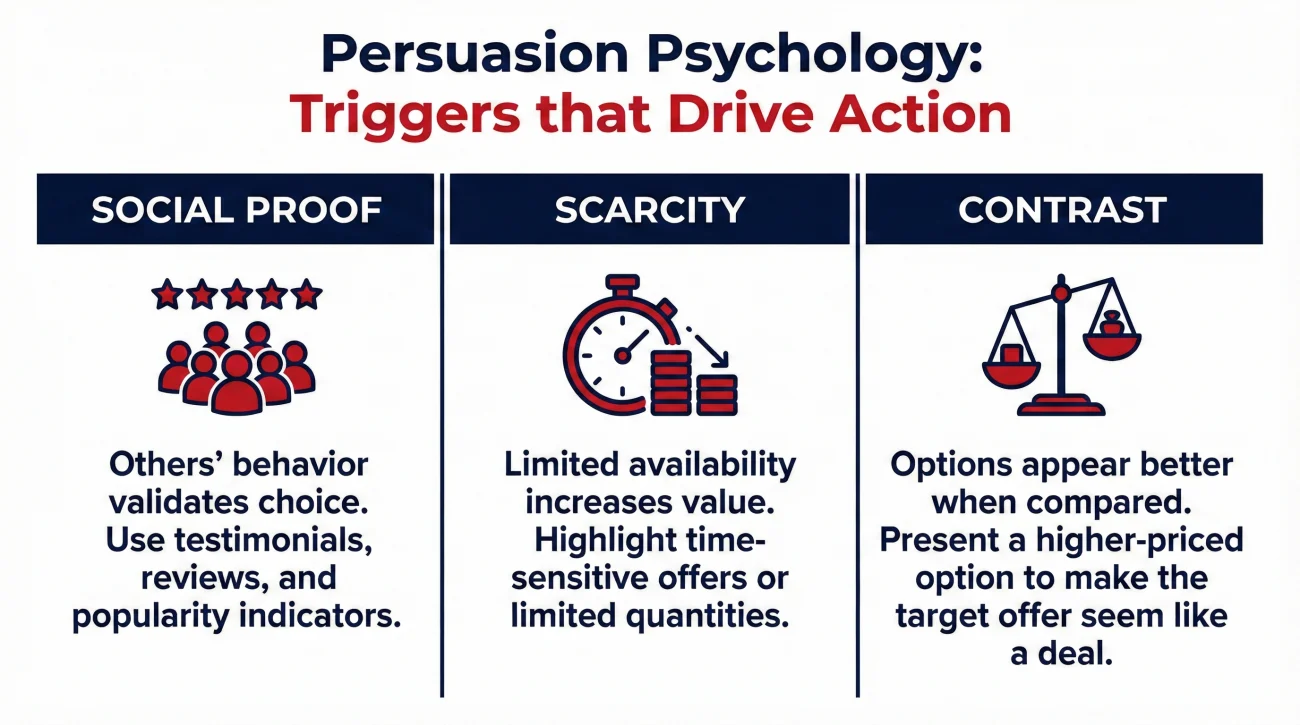
- Persuasion that actually helps: Lean on specific social proof, real urgency, and smart contrast like cost of the problem vs cost of change.
- Practice like a pro: Internalize the structure, record yourself, test different hooks and CTAs, and refine based on what gets engagement.
Why Most Sales Pitches Fail in 10 Seconds
Prospects decide whether to engage within seconds of hearing your pitch. Most salespeople waste this critical window with feature lists, company history, or self-focused rambling that signals “I’m here to talk at you about what I want to sell.” Understanding sales pitch tips requires recognizing that effective pitches aren’t about your product – they’re about the prospect’s problem and whether you can solve it quickly enough to warrant continued conversation. The difference between pitches that engage and those that get dismissed comes down to structure, focus, and understanding persuasion psychology.
Traditional sales training teaches lengthy product presentations, but modern attention spans demand immediate relevance. Prospects have too many demands on their time to listen politely while you build to your point. They need to know instantly whether continuing this conversation serves their interests. When exploring broader interview questions preparation, sales roles particularly emphasize pitch structure since the interview itself requires selling yourself effectively within tight time constraints using the same principles that work with prospects.
The Hook-Pain-Solution-CTA Formula
Understanding elevator pitch structure requires a proven framework that moves prospects from attention to engagement within 30 seconds. This four-component formula works because it follows natural persuasion psychology – grab attention, establish relevance, offer solution, prompt action.
Hook: The Pattern Interrupt
Your opening must break through mental autopilot and capture attention immediately. Generic introductions like “Hi, I’m calling from XYZ Company” get ignored because prospects hear variations hundreds of times. Effective hooks create curiosity, surprise, or immediate relevance that makes prospects want to hear more.
- ❌ Weak hook: “I’m calling to tell you about our software”
- ✅ Strong hook: “Companies like yours waste $50K annually on this problem”
- ❌ Weak hook: “We’re a leading provider of marketing solutions”
- ✅ Strong hook: “Your competitors just cut customer acquisition cost by 40%”
💡 Pro tip: Test whether your hook would make you personally curious if someone said it to you. If you’d tune out, prospects will too. Strong hooks create immediate questions in the listener’s mind that your pitch answers.
Pain: Establishing Relevance
After grabbing attention, demonstrate you understand the specific problem they face. Generic pain statements fail because they don’t feel personally relevant. Effective pain articulation shows you understand their specific situation deeply enough that they recognize themselves in your description.
Expert advice: The best pain statements come from customer research, not your assumptions. Interview existing customers about their problems before your solution. Use their actual language when describing pain to prospects. When prospects hear their own words reflected back, they feel understood and stay engaged.
Solution: The Outcome Focus
Describe what changes when they work with you, not how your product works. Prospects don’t care about features – they care whether you can eliminate the pain you just articulated. Your solution statement should paint the “after” picture clearly while keeping technical details minimal.
| Feature-Focused (Weak) | Outcome-Focused (Strong) |
|---|---|
| “We have automated workflow features” | “You eliminate 10 hours of manual work weekly” |
| “Our platform integrates with 50+ tools” | “Your team stops switching between 6 different systems” |
| “We offer real-time analytics dashboards” | “You see exactly which campaigns drive revenue instantly” |
| “Our AI uses machine learning algorithms” | “You predict customer churn before it happens” |
CTA: The Specific Next Step
End with clear, low-commitment next action. Asking for purchase decisions in initial pitches creates resistance. Effective CTAs remove friction by requesting small next steps that move the conversation forward – 15-minute calls, quick demos, or specific information sharing.
- “Can I show you a 3-minute demo of how this works?”
- “Would you be open to a 15-minute call next Tuesday?”
- “Can I send you a one-page case study from a similar company?”
- “Does it make sense to have a brief conversation about your situation?”
Crafting Your 30-Second Pitch
Understanding 30-second sales pitch construction requires ruthless editing. Most people try cramming too much information into short timeframes, overwhelming prospects rather than intriguing them. The goal isn’t telling everything – it’s saying just enough to earn more time.
Time Allocation Guidelines
Within 30 seconds, budget approximately 5-7 seconds per component. This forces discipline about what matters most. If you can’t explain each element in under 10 seconds, you haven’t distilled it enough.
| Component | Time Budget | Purpose |
|---|---|---|
| Hook | 5-7 seconds | Break pattern, grab attention |
| Pain | 7-10 seconds | Establish relevance, show understanding |
| Solution | 7-10 seconds | Paint outcome picture |
| CTA | 5-7 seconds | Request specific next step |
If your pitch regularly exceeds 45 seconds, you’re providing too much detail too early. Prospects who stay engaged will ask questions. Those who don’t engage won’t suddenly care after hearing more features. Keep it tight.
Complete Pitch Examples
Seeing the formula in action across different contexts helps internalize the pattern. Notice how each example follows the same structure while adapting language to specific audiences and pain points.
Expert advice: Write your pitch, then cut it in half. Then cut the remaining version in half again. This forces you to identify what actually matters. The first draft always includes too much. Effective pitches say the minimum necessary to provoke curiosity, not the maximum possible.
Persuasion Psychology That Works
Understanding effective sales pitch design requires applying proven persuasion principles that influence decision-making. These psychological patterns work reliably across contexts when applied appropriately.
Using Social Proof Strategically
People follow others’ behavior when uncertain. Mentioning that competitors, peers, or industry leaders use your solution creates implicit endorsement. The key is specificity – “3 of the top 5 companies in your industry” works better than vague claims about “thousands of customers.”
- 🏆 Specific numbers: “217 marketing teams like yours”
- 🎯 Named companies: “Including [recognizable brand]”
- 📊 Metrics: “95% of users see results in 30 days”
- ⭐ Awards: “Rated #1 by [credible source]”
Creating Appropriate Urgency
Scarcity and urgency motivate action, but artificial pressure backfires. Legitimate urgency – limited spots, time-sensitive offers, or consequences of delay – accelerates decisions. Manufactured urgency damages trust. Focus on real costs of inaction rather than fabricated deadlines.
The Contrast Principle
How prospects perceive value depends on context. Comparing your solution’s investment against the cost of the problem makes pricing seem reasonable. Presenting before/after scenarios emphasizes the change you create. Contrast works because human brains evaluate options relatively, not absolutely.
Adapting Pitches to Different Situations
Understanding pitch persuasion techniques includes knowing when and how to modify your core pitch for different contexts. The formula remains consistent, but execution varies based on situation and audience.
Cold Outreach vs Warm Introductions
Cold pitches require more attention-grabbing hooks since prospects have zero context. Warm introductions let you reference the connection and move faster to pain and solution. Adapt hook intensity to match how much attention you’ve already earned.
| Cold Pitch Approach | Warm Pitch Approach |
|---|---|
| Strong pattern interrupt needed | Can reference mutual connection |
| Must establish credibility fast | Borrowing credibility from referrer |
| Lower initial engagement likelihood | Higher engagement probability |
| Focus on immediate relevance | Can expand slightly on context |
Adjusting for Audience Seniority
Executive audiences demand faster value articulation with strategic focus. Individual contributors engage with tactical detail. Modify language complexity, business impact framing, and time sensitivity based on who you’re pitching. Senior stakeholders want bottom-line impact; practitioners want workflow improvements.
Channel-Specific Adaptations
Phone, email, and in-person pitches require different approaches despite following the same core structure. Phone pitches need vocal variety and pace management. Email pitches use formatting and brevity differently. In-person pitches allow body language and visual aids. Master your core pitch first, then adapt delivery to channel constraints.
Practice and Continuous Refinement
Even perfect pitch structure fails without confident delivery. Effective pitches sound natural and conversational despite following scripted frameworks. This naturalness requires deliberate practice and ongoing refinement based on what actually works.
Memorization vs Internalization
Memorizing word-for-word scripts makes you sound robotic. Instead, internalize the structure and key points so you can deliver naturally using different words each time while hitting the same beats. This flexibility lets you adapt to prospect reactions in real-time.
💡 Pro tip: Record yourself delivering your pitch 10 times. Listen for robotic phrasing, verbal tics, or unclear sections. Each recording should differ slightly in words used while maintaining the same structure and key points. This builds natural delivery.
A/B Testing Your Pitch Elements
Systematically test different hooks, pain statements, and CTAs to identify what resonates best with your audience. Change one element at a time and track engagement rates. What you think sounds compelling might fall flat while seemingly minor variations convert significantly better.
Expert advice: Track pitch performance metrics ruthlessly. What percentage of prospects engage past the hook? Which pain statements generate “that’s exactly my problem” reactions? Which CTAs get acceptance? Data reveals what works regardless of what you think should work.
Incorporating Prospect Feedback
Pay attention to where prospects interrupt with questions, where their energy drops, and what language they use describing their situation. These signals guide refinement. Prospects interrupting to ask questions means you’ve created curiosity – note what triggered it. Energy drops indicate irrelevant sections – cut them.
❓ FAQ
🎯 How do I know if my pitch is too long?
Time yourself delivering it naturally. If it consistently exceeds 45 seconds, you’re including too much detail. Ask someone unfamiliar with your product to summarize what you do after hearing your pitch. If they can’t or they mention features instead of outcomes, simplify. Strong pitches leave prospects wanting more information, not overwhelmed by details.
💼 Should I customize my pitch for every prospect?
Keep the structure consistent but adjust pain and hook specificity based on what you know about the prospect. Full customization for every call doesn’t scale. Instead, develop 3-4 variations targeting your main customer segments. Within these templates, personalize the hook with specific details about their company when possible.
⏰ What if prospects interrupt my pitch?
Interruptions often indicate you’ve created curiosity – that’s good. Answer their question briefly, then ask whether they’d like you to continue or if they have other questions. Never fight to complete your scripted pitch if they’re already engaged. The pitch’s goal is earning their attention; once you have it, follow their lead.
📋 How do I transition from pitch to discovery?
If they accept your CTA, immediately ask discovery questions rather than continuing to pitch. Your goal is understanding their situation deeply so you can position your solution effectively. The pitch earns permission to have a real conversation. Once earned, shift from talking to listening and asking strategic questions.
✨ What if my product is complex and hard to explain simply?
Focus on the outcome it produces rather than how it works. Complex products often provide simple outcomes – time savings, cost reduction, risk mitigation. Lead with the outcome, let interested prospects ask how. If you can’t articulate your product’s value simply, you don’t understand it well enough yet or you’re selling to the wrong audience.
Final Thoughts
Mastering sales pitch tips centers on recognizing that effective pitches follow the Hook-Pain-Solution-CTA formula because it aligns with natural persuasion psychology. Prospects decide engagement within seconds, making immediate relevance critical. Strong hooks create pattern interrupts that grab attention through curiosity or surprise rather than generic introductions. Pain statements demonstrate understanding of their specific situation using language they recognize. Solution descriptions focus on outcomes rather than features, painting clear before/after pictures. CTAs request low-commitment next steps that remove friction from forward movement.
The 30-second constraint forces ruthless prioritization about what actually matters. Most salespeople try cramming too much information into short timeframes, overwhelming prospects rather than intriguing them. Effective pitches say the minimum necessary to provoke curiosity, not the maximum possible. Time allocation of roughly 5-10 seconds per component creates discipline. If explanations consistently exceed these limits, the content needs further distillation until only essential elements remain.
Natural delivery requires internalizing structure rather than memorizing scripts word-for-word. Practice until the framework becomes instinctive while allowing flexibility in exact wording. Test different elements systematically to identify what resonates with your specific audience. Track metrics ruthlessly – engagement rates, question triggers, and CTA acceptance reveal what works regardless of assumptions. Continuous refinement based on prospect reactions and performance data transforms basic pitches into persuasive tools that consistently earn attention and advance conversations toward eventual sales.
⚠️ Disclaimer: The interview strategies, sample answers, and negotiation tips provided in this guide are for educational purposes only. Hiring decisions are subjective and vary by company and industry. While these strategies are based on professional HR standards, they do not guarantee a specific job offer or result.