
- Why these interviews feel different: Revenue roles get tougher scrutiny because the wrong hire costs real money fast.
- Sales vs marketing is not the same game: Sales proves persuasion, rejection resilience, and closing, marketing proves strategy, channel judgment, and customer psychology.
- Numbers are non negotiable: Sales needs quota %, deal size, win rate, cycle length, marketing needs ROI, CPL, MQL to SQL, CAC, and revenue influenced.
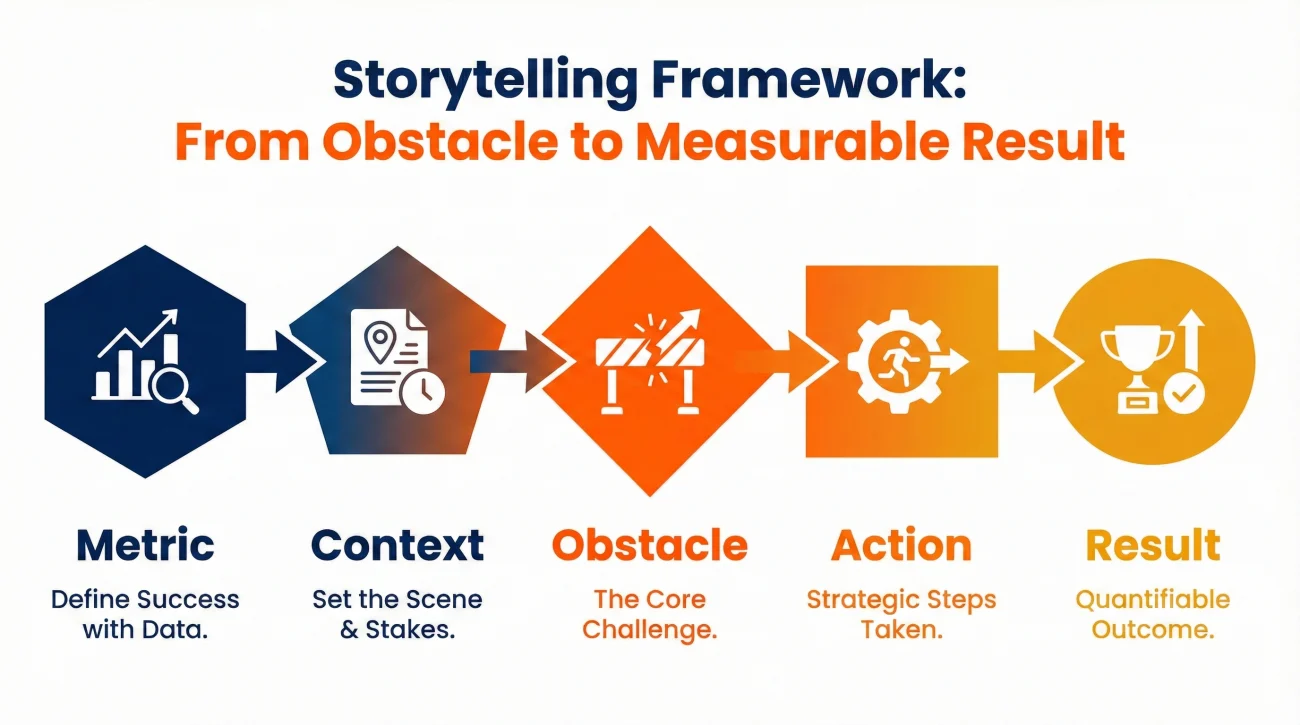
- Stories have to sell without sounding fake: Lead with a metric, add context, name the obstacle, then explain what you did and what changed.
- Prep should match the exact role level: Build examples for your track, and include one setback story that shows what you learned and how you improved.
Why Sales and Marketing Questions Differ From Other Interviews
Revenue-generating roles face unique interview scrutiny because hiring mistakes directly impact the bottom line. Understanding sales and marketing interview questions requires recognizing that interviewers evaluate not just past performance but future revenue potential. Poor engineers cost time and technical debt. Bad salespeople cost immediate revenue and damaged client relationships. This high-stakes reality shapes how companies assess candidates throughout the hiring process.
Sales and marketing interviews differ fundamentally in what they measure. Sales conversations focus on persuasion skills demonstrated in real-time, resilience in handling rejection, and proven ability to close deals. Marketing interviews evaluate strategic thinking, campaign measurement skills, and understanding of customer psychology across channels. Both domains require quantifiable results, but sales proves impact through direct revenue while marketing demonstrates value through lead generation, brand awareness, and campaign ROI. Exploring broader interview questions helps understand general preparation, but revenue roles demand specialized approaches addressing their unique evaluation criteria.
Sales vs Marketing: Different Skills, Different Questions
Understanding sales interview preparation versus marketing preparation requires recognizing fundamental differences in how these roles generate value. Sales involves direct customer interaction, immediate feedback loops, and measurable revenue attribution. Marketing operates through campaigns, longer feedback cycles, and distributed attribution across multiple touchpoints.
Core Competency Differences
Sales roles prioritize one-on-one persuasion, objection handling, and relationship building that directly leads to closed deals. Marketing roles emphasize understanding customer segments, creating compelling messaging at scale, and optimizing campaigns based on data. Both require strategic thinking and results orientation, but the tactical execution differs dramatically.
| Sales Focus | Marketing Focus |
|---|---|
| One-to-one customer conversations | One-to-many audience communication |
| Direct revenue attribution | Distributed multi-touch attribution |
| Immediate win/loss feedback | Campaign performance over time |
| Relationship depth with accounts | Brand awareness across segments |
| Objection handling in real-time | Addressing concerns through content |
💡 Pro tip: Sales candidates must demonstrate resilience and persuasion in the interview itself. Marketing candidates showcase strategic thinking through campaign examples and analytical frameworks. The interview process mirrors the job requirements.
What Interviewers Look For
Sales interviewers evaluate whether you can handle rejection, persist through long sales cycles, and close deals despite obstacles. They want evidence of quota achievement, deal sizes, and pipeline management. Marketing interviewers assess your understanding of customer psychology, ability to measure campaign effectiveness, and strategic thinking about channel optimization.
- 📊 Sales proof: Quota attainment, deal size, conversion rates
- 📈 Marketing proof: Campaign ROI, lead quality, conversion rates
- 💰 Sales stories: Specific deals closed despite challenges
- 🎯 Marketing stories: Campaigns that moved key metrics
Speaking in Numbers: The Non-Negotiable Requirement
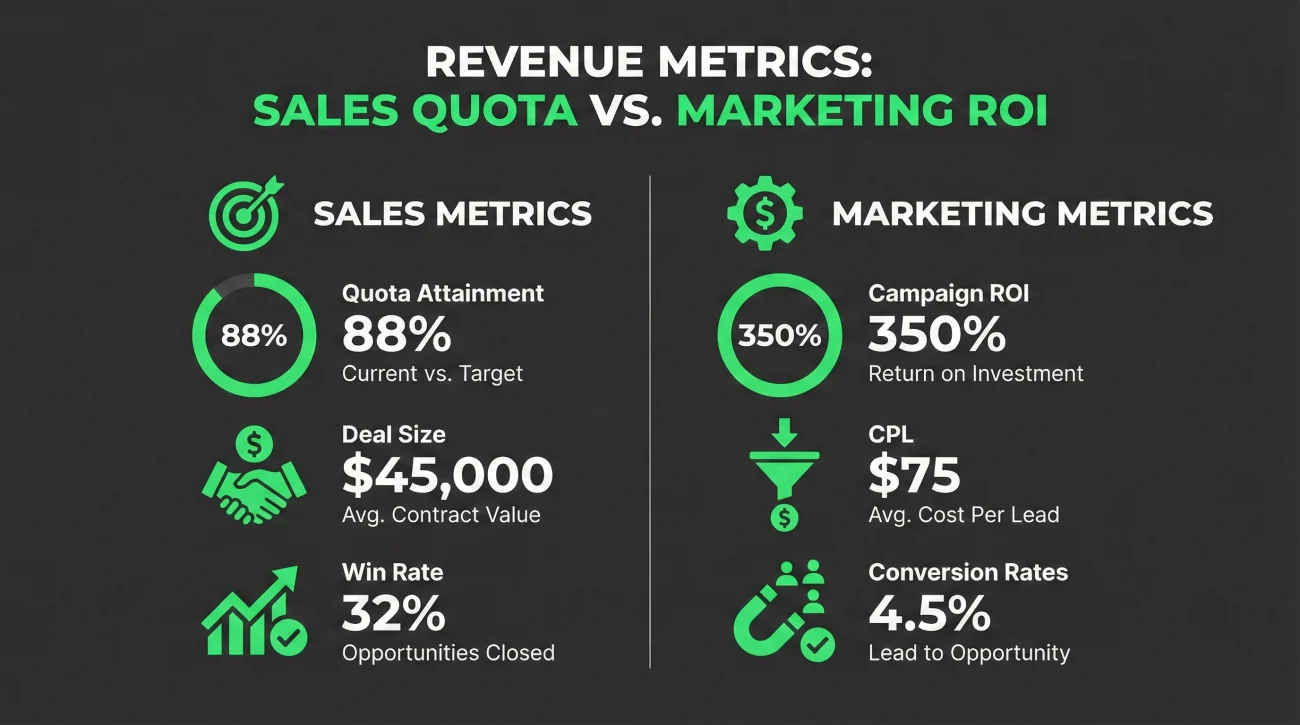
Revenue roles demand quantifiable results more than any other function. Vague claims about “contributing to team success” or “helping with campaigns” fail immediately. Every answer requires specific metrics demonstrating your direct impact on revenue, pipeline, or measurable marketing outcomes.
Essential Sales Metrics
Sales candidates must articulate quota attainment percentages, average deal sizes, sales cycle length, and win rates. Interviewers want to understand not just that you hit quota but by how much, in what context, and how you overcame specific obstacles. Numbers without context mean little, but context without numbers means nothing.
Expert advice: When discussing sales achievements, follow this pattern: metric → context → obstacle → action → result. “I achieved 127% of quota ($2.3M vs $1.8M target) in a down market by pivoting to a new vertical where our solution addressed urgent pain points.”
Essential Marketing Metrics
Marketing candidates need specific numbers around campaign performance, lead generation, conversion rates, and ROI. Talk about cost per lead, marketing qualified lead (MQL) to sales qualified lead (SQL) conversion rates, customer acquisition cost (CAC), and revenue influenced by marketing. These metrics prove you understand how marketing drives business outcomes.
| Weak Answer | Strong Answer |
|---|---|
| “I ran successful campaigns” | “I ran 3 campaigns generating 847 MQLs at $42 CPL, 23% below target” |
| “I exceeded my sales quota” | “I hit 142% of $1.2M quota, ranking #2 of 15 reps” |
| “I improved our SEO performance” | “I increased organic traffic 67% YoY, driving 340 additional MQLs” |
| “I built strong client relationships” | “I maintained 95% renewal rate across $3.2M book of business” |
Storytelling That Sells Your Value
Understanding marketing interview tips and sales preparation includes mastering storytelling that demonstrates competence without sounding arrogant. Revenue roles require confidence balanced with authenticity – you must prove you can sell without appearing like you’re constantly “on.”
Sales Story Structure
Sales stories should follow the challenge-action-result framework with emphasis on how you navigated obstacles. Interviewers want to see resilience, strategic thinking, and persuasion in action. Every story needs a specific deal, clear obstacles, your creative approach, and measurable outcomes.
- Start with specific context: deal size, prospect, timeline
- Describe the obstacle that made this challenging
- Explain your strategic approach and key actions
- Close with specific results: deal closed, revenue, impact
Marketing Story Structure
Marketing stories demonstrate strategic thinking through campaign examples. Show how you identified opportunity, developed strategy, executed tactically, and measured results. Interviewers evaluate your analytical thinking and ability to optimize based on data.
Avoid stories where success came easily or luck played a major role. Revenue roles reward problem-solving under pressure. Stories without obstacles sound fabricated or fail to demonstrate the resilience these roles require.
Demonstrating Resilience and Growth Mindset
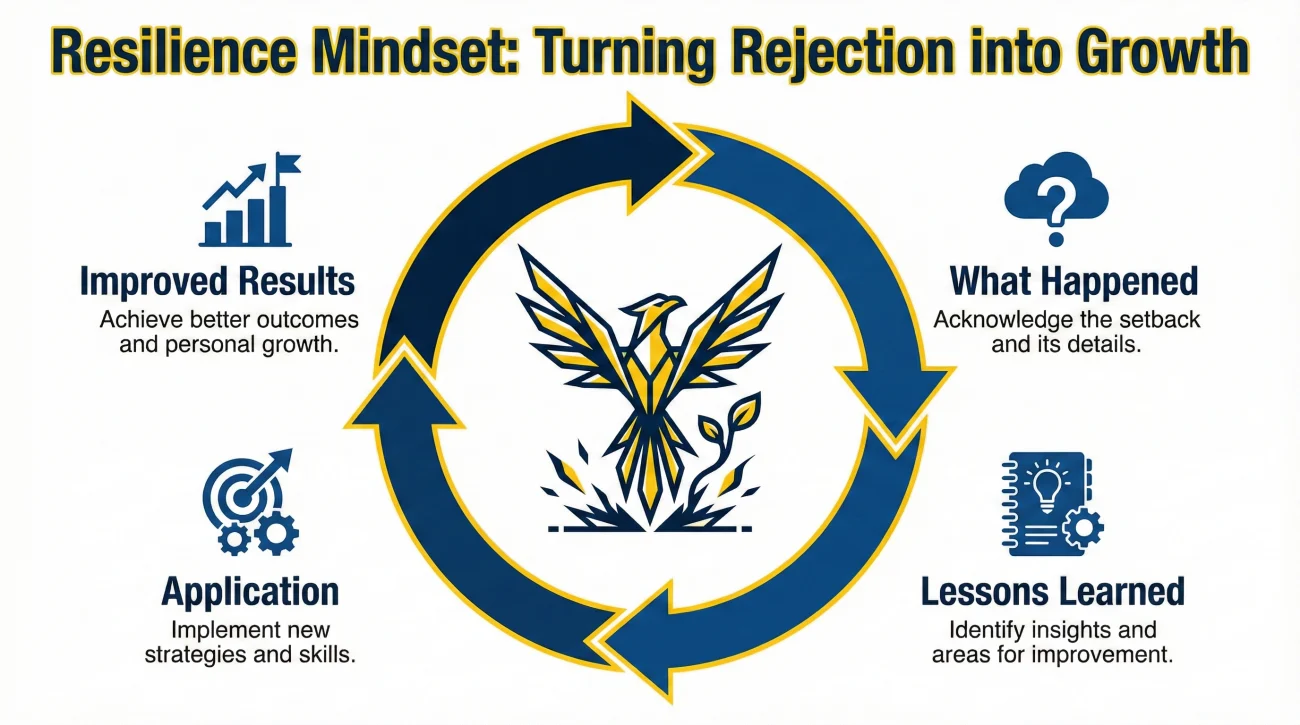
Revenue roles guarantee rejection, failed campaigns, and lost deals. Interviewers assess how you handle setbacks because they predict whether you’ll persist through inevitable challenges or quit when facing obstacles.
Turning Losses Into Learning
The best answers about failures demonstrate self-awareness, accountability, and specific changes you made based on lessons learned. Avoid blaming external factors exclusively or claiming you’ve never experienced significant setbacks. Both approaches damage credibility.
Expert advice: When discussing failures or lost deals, use this structure: what happened → what you could have done differently → what you learned → how you applied that lesson → improved results. This shows growth mindset rather than defensiveness.
Role-Specific Preparation Paths
Different sales role questions and marketing positions require distinct preparation approaches. Entry-level sales focuses on prospecting and pipeline building. Senior sales emphasizes complex negotiations and strategic account management. Marketing generalists cover broad strategy while specialists dive deep into specific channels.
Sales Career Tracks
Sales roles follow predictable progression paths with different skill emphases at each level. SDRs focus on prospecting and qualification. Account Executives handle full sales cycles and closing. Account Managers farm existing relationships. Sales leadership requires coaching, forecasting, and team development. Understanding these distinctions helps you prepare relevant examples for specific roles.
Marketing Career Tracks
Marketing splits between generalist strategy roles and specialist execution roles. Marketing Managers develop broad strategies and manage budgets. Digital Marketing Specialists execute campaigns across channels. Content, SEO, and PPC roles demand deep tactical expertise in specific domains. Product Marketing bridges product and go-to-market strategy. Brand management focuses on positioning and perception.
Explore Specific Sales and Marketing Roles
Once you understand the fundamental differences between sales and marketing interviews, dive into specific role preparation guides that address unique requirements for each position:
Foundation Skills & Mindset
| Article | Focus |
|---|---|
| Dealing with Sales Rejection | Mindset & resilience after rejection |
| Sales Pitch Tips | 30-second elevator pitch structure |
| Marketing Portfolio Guide | Case study presentation & data visualization |
Sales Roles
| Article | Focus |
|---|---|
| Sales Representative Interview Questions | Entry-level prospecting & cold calling |
| Account Executive Interview Questions | B2B closing & contract negotiation |
| Sales Manager Interview Questions | Team leadership & forecasting |
| Business Development Manager Interview Questions | Strategic partnerships & market expansion |
| Customer Success Manager Interview Questions | Post-sale retention & upselling |
| Inside Sales Interview Questions | Remote selling & CRM mastery |
| Outside Sales Interview Questions | Field sales & territory management |
| Sales Engineer Interview Questions | Technical demos & solutions |
| Account Manager Interview Questions | Client relationships & renewals |
| Real Estate Agent Interview Questions | Property listings & closing |
| Sales Associate Interview Questions | Retail service & merchandising |
Marketing Roles
| Article | Focus |
|---|---|
| Marketing Manager Interview Questions | Strategy & budget management |
| Digital Marketing Interview Questions | SEO, SEM & analytics |
| Social Media Manager Interview Questions | Engagement & viral content |
| SEO Specialist Interview Questions | On-page & link building |
| Content Marketing Interview Questions | Storytelling & content funnels |
| Product Marketing Manager Interview Questions | GTM strategy & positioning |
| Brand Manager Interview Questions | Brand identity & equity |
| Email Marketing Interview Questions | Automation flows & segmentation |
| PPC Specialist Interview Questions | Google Ads & ROAS optimization |
| Public Relations Specialist Interview Questions | Media relations & crisis management |
| Event Manager Interview Questions | Corporate event logistics & planning |
| Copywriter Interview Questions | Persuasion & conversion writing |
| Market Research Analyst Interview Questions | Data collection & trend analysis |
❓ FAQ
🎯 How do I demonstrate sales ability if I lack direct experience?
Translate transferable skills from other contexts. Persuading stakeholders in project management uses similar skills to sales. Customer service experience demonstrates relationship building. Any role requiring negotiation, objection handling, or influencing others develops sales competencies. Focus on measurable outcomes from those experiences using the same metric-driven approach sales roles require.
💼 What metrics matter most for entry-level marketing roles?
Entry-level marketing focuses on execution metrics: campaign performance, engagement rates, lead generation numbers, and conversion rates. You don’t need to own entire marketing strategies yet, but you must demonstrate understanding of how your tactical execution drives business outcomes. Show you can measure, analyze, and optimize based on data.
⏰ Should I bring a portfolio to sales interviews?
Sales roles rarely require portfolios like marketing does. However, bringing a one-pager with key metrics (quota attainment, deal sizes, conversion rates) organized clearly can help structure conversations. Focus on telling compelling stories rather than presenting slide decks. Your ability to persuade through conversation matters more than visual materials.
📋 How technical should marketing candidates be?
This varies by role. Digital marketing specialists need strong technical skills in analytics platforms, SEO tools, and advertising systems. Marketing managers need strategic understanding of channels without necessarily executing tactics themselves. Always match technical depth to role requirements, but demonstrate comfort with data analysis regardless of specialization.
✨ What separates good from great candidates in revenue roles?
Great candidates demonstrate resilience through specific examples of overcoming rejection or failed campaigns, speak naturally in metrics without sounding robotic, show strategic thinking about why approaches worked rather than just what happened, and balance confidence with authenticity. They prove competence without constant self-promotion and show genuine curiosity about the company’s challenges.
Final Thoughts
Mastering sales and marketing interview questions requires understanding that revenue-generating roles face unique scrutiny because hiring mistakes directly impact the bottom line. Sales interviews evaluate real-time persuasion skills, resilience in handling rejection, and proven closing ability through direct revenue attribution. Marketing interviews assess strategic thinking, campaign measurement capabilities, and understanding of customer psychology demonstrated through distributed attribution across multiple touchpoints.
Every answer demands quantifiable results. Sales candidates must articulate quota attainment, deal sizes, and conversion rates with specific context about obstacles overcome. Marketing candidates need campaign ROI numbers, lead generation metrics, and evidence of optimization based on data analysis. Vague claims about contributing to success fail immediately in revenue roles where impact must be measured and attributed clearly.
Success in these interviews requires storytelling that demonstrates competence balanced with authenticity. Sales stories follow challenge-action-result patterns emphasizing how you navigated obstacles and closed deals despite setbacks. Marketing stories showcase strategic thinking through campaign examples that moved key metrics. Both domains reward candidates who prove resilience through specific examples of learning from failures, speak naturally in numbers without sounding robotic, and demonstrate genuine curiosity about solving company challenges rather than just landing the job.
⚠️ Disclaimer: The interview strategies, sample answers, and negotiation tips provided in this guide are for educational purposes only. Hiring decisions are subjective and vary by company and industry. While these strategies are based on professional HR standards, they do not guarantee a specific job offer or result.