What Social Media Manager Interviews Test
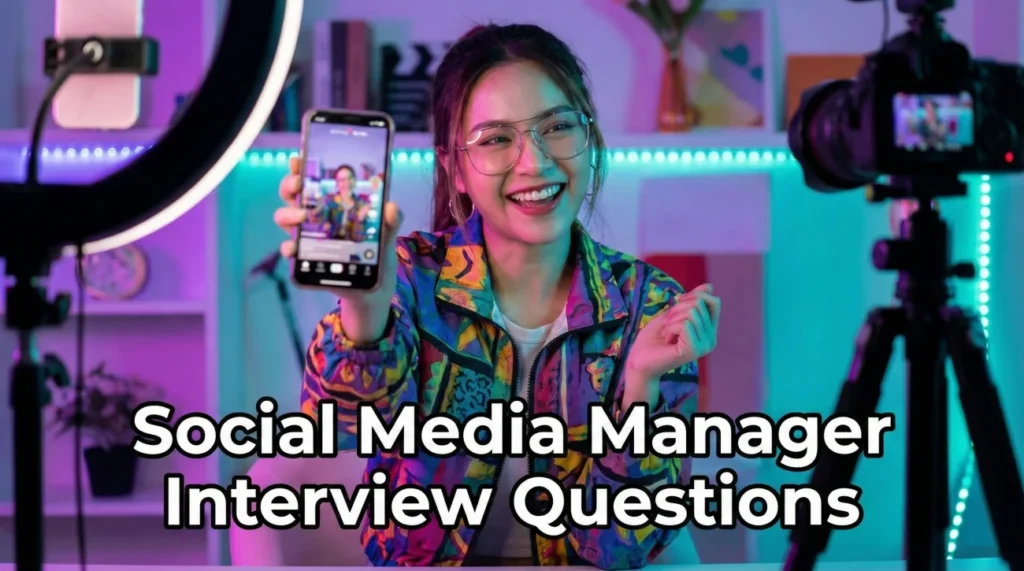
Social media manager interview questions assess your ability to build engaged communities, create viral content, and measure platform performance. Interviewers test strategic thinking, creative execution, and crisis response capabilities. This article covers viral content strategies, community engagement tactics, platform-specific algorithms, analytics interpretation, and managing brand reputation across social channels.
Community Engagement & Growth
Q: How do you build an engaged community, not just followers?
Community building requires consistent interaction beyond broadcasting content. I respond to comments within the first hour of posting, when engagement signals boost algorithmic distribution. Responses go beyond “thanks for sharing” to ask follow-up questions that continue conversations and make community members feel heard.
I create content that invites participation. Polls, Q&A sessions, and user submission features transform passive audiences into active contributors. When community members see their content featured or ideas implemented, they develop ownership and become brand advocates who defend us in comments and share our content organically.
Analytics inform community strategy. I track not just follower growth but conversation depth, repeat commenters, and share-to-like ratios that indicate genuine engagement. A thousand highly engaged followers deliver more business value than ten thousand passive ones.
Q: What metrics prove social media success beyond vanity numbers?
I focus on business-aligned KPIs rather than follower counts. Website traffic from social, measured through UTM parameters, shows whether content drives desired actions. Conversion rates from social visitors compared to other channels reveal quality of audience engagement. Cost per acquisition from social campaigns benchmarked against paid search and display advertising demonstrates ROI.
Engagement quality metrics include saves and shares, which algorithms weight higher than likes. Comment sentiment analysis identifies whether conversations support or damage brand perception. Follower demographics compared to target customer profiles ensure we’re attracting the right audience, not just any audience.
For upper-funnel goals, I measure brand lift through surveys asking how audiences discovered us, and track share of voice compared to competitors within our industry conversations.
Q: How do you handle negative comments or trolls?
I distinguish between legitimate criticism and bad-faith attacks. Constructive complaints receive public acknowledgment and private resolution, demonstrating we value customer feedback. This often turns critics into advocates when handled transparently.
For trolls or inflammatory comments, I assess whether engagement amplifies or diminishes their reach. Sometimes ignoring is correct; other times a well-crafted response that maintains brand voice while addressing concerns resonates with silent observers. I never delete criticism unless it violates clear community guidelines around hate speech or harassment.
Escalation protocols matter. I brief customer service teams on viral complaints so responses align across channels, and I maintain crisis communication templates for rapid response when situations require executive involvement.
Q: Describe a time you grew a social channel from zero.
I launched a TikTok account for a B2B software company by identifying an underserved content gap: technical tutorials delivered with humor rather than corporate polish. Instead of chasing follower counts immediately, I focused on creating ten exceptional videos that solved specific problems our ICP faced.
I engaged authentically with adjacent communities by commenting on competitor content and participating in relevant hashtag conversations. This drove initial followers who were genuinely interested in our niche. Collaborating with niche creators in our space often provides more authentic reach than expensive macro-influencer partnerships.
Over time, we built a meaningful follower base with strong engagement relative to our niche. More importantly, sales reported that social became a consistent discovery source, proving community quality over quantity.
💡 Pro tip: Use social listening to monitor unbranded keywords your audience searches, not just mentions of your company name. This reveals pain points and content opportunities competitors miss.
Platform Analytics & Performance Optimization
What tools do you use to manage and measure social media performance?
I use Sprout Social for unified analytics across platforms because it connects engagement data to business outcomes better than native dashboards. For scheduling and collaboration, Hootsuite provides strong team workflows, though its analytics require add-ons for deeper insights. Buffer works well for smaller teams focused on publishing efficiency.
Platform-native analytics still matter. TikTok Analytics shows traffic sources and follower activity patterns that third-party tools miss. Instagram Insights reveals story completion rates and carousel engagement depth. Google Analytics with UTM parameters tracks the full conversion path from social click to purchase.
For content creation, I rely on Canva for rapid design iteration and Later for visual calendar planning. Social listening through Hootsuite Streams or Sprout’s listening tools identifies conversation trends and sentiment shifts before they appear in engagement metrics.
How do you optimize content based on algorithm changes?
Algorithms reward user satisfaction signals, so I focus on metrics platforms prioritize. Instagram’s algorithm emphasizes saves and shares, so I create educational content worth revisiting. TikTok values watch time and completion rate, requiring hooks within the first frame and pacing that holds attention through the last second.
I run systematic tests. When Meta announced prioritization of original Reels over reposts, I A/B tested native uploads versus cross-posted TikToks and found native content consistently reached more people. These experiments inform strategy adjustments before competitors catch on.
Platform updates require flexibility. When LinkedIn reduced reach for external links, I shifted to document posts with slide-style images that kept users on-platform, then included links in the first comment to reduce friction and keep the post focused on value.
Walk me through how you analyze a campaign that underperformed.
I start with funnel analysis. Did content fail to reach the audience, reach them but not resonate, or drive clicks without conversions? Low impressions indicate distribution problems, maybe algorithm penalties from previous content or posting during low-activity windows. High impressions with low engagement mean creative didn’t connect, requiring messaging or format adjustments.
I compare performance against similar content that succeeded. If carousel posts typically drive saves but this one didn’t, I examine copy hooks, visual quality, and value proposition clarity. Audience feedback in comments often reveals misalignment between what we promised and delivered.
Attribution matters. A campaign might show low direct ROI but strong assist metrics, meaning it plays a support role in the customer journey even if it doesn’t drive final conversions. I adjust success criteria based on campaign objectives rather than applying universal metrics to every initiative.
Crisis Management & Brand Protection
Q: Describe how you handled a social media crisis.
A product defect complaint went viral on Twitter and spread to a large audience within hours. I immediately assembled our crisis team: legal to review what we could say, product to understand the issue, and customer service to handle individual cases. We acknowledged the problem publicly quickly, before speculation filled the information vacuum.
Our response explained what happened, what we were doing to fix it, and how affected customers could get support. We pinned this statement and responded individually to everyone who tagged us, converting a reputation threat into a demonstration of accountability. The founder posted a video taking responsibility, which humanized our response beyond corporate speak.
Post-crisis, I analyzed sentiment trends to confirm recovery and implemented monitoring alerts for similar issues. The incident actually increased brand trust because we handled it transparently instead of deleting comments or deflecting blame.
Q: How do you prepare for potential PR issues before they happen?
I maintain crisis playbooks with pre-approved response templates for common scenarios: product recalls, employee controversies, customer safety issues, and data breaches. These templates include holding statements for the first hour, detailed FAQs once we have information, and escalation chains showing who approves what level of response.
We conduct quarterly crisis simulations where I present a hypothetical disaster and teams practice response protocols under time pressure. This identifies gaps in approval processes and ensures everyone knows their role when real issues hit.
Social listening alerts flag potential problems early. When negative sentiment spikes around specific keywords or complaint volume increases, we investigate before it reaches crisis levels. Sometimes a proactive blog post or customer outreach prevents escalation entirely.
Q: What’s your approach to moderating community content?
Clear community guidelines set expectations for acceptable behavior. I publish these prominently and apply them consistently, whether comments come from loyal customers or first-time visitors. Inconsistent enforcement damages credibility faster than strict rules do.
I distinguish between removing content that violates guidelines and censoring criticism. We delete hate speech, harassment, and spam, but we leave negative feedback visible and respond to it constructively. This builds trust because communities see we don’t hide from problems.
For borderline cases, I favor transparency. If we remove a comment, I explain why publicly so the community understands our reasoning. This educates other members about boundaries and reduces future violations.
Q: How do you maintain brand voice during controversial moments?
Brand voice must adapt to context while maintaining core values. During crises, corporate enthusiasm feels tone-deaf, so I shift to empathetic and informative communication. The voice stays authentic to our brand personality but matches the seriousness of the situation.
I avoid performative activism unless we have genuine commitment behind statements. If we take a stance on social issues, I ensure it aligns with company actions, not just marketing trends. Audiences research whether brands practice what they post, and hypocrisy destroys credibility permanently.
Test Your Social Media Strategy Knowledge
20 Practice Questions
1. Which early signal best suggests a post is resonating?
- Total impressions alone
- Strong engagement quality (shares, saves, meaningful comments)
- Follower count growth only
- How many hashtags you used
2. What is the clearest sign content is worth revisiting?
- Likes
- Saves and shares
- Profile visits
- Impressions
3. What makes a short-form video hook effective?
- A slow build with a long intro
- Immediate clarity on why the viewer should keep watching
- A brand slogan first
- A full product explanation upfront
4. If a post gets reach but low engagement, what is a likely issue?
- You posted too many times
- The creative or message did not match audience intent
- Your account is permanently shadowbanned
- You need more hashtags
5. What should social listening include?
- Only branded mentions
- Only competitor names
- Both branded and unbranded industry terms
- Only trending hashtags
6. What is the safest way to decide whether to join a trend?
- Join every trend quickly
- Check alignment with brand, audience, and value you can add
- Only copy what competitors do
- Avoid trends entirely
7. What do UTM parameters help you measure?
- Algorithm ranking
- Follower growth
- Traffic source and conversion attribution
- Comment sentiment
8. In a crisis, what is the priority in the first response?
- Delete all negative comments
- Acknowledge, share what you know, and set expectations for updates
- Argue with critics to defend the brand
- Wait until every detail is confirmed before saying anything
9. What format often performs well on LinkedIn for B2B audiences?
- External link posts only
- Native documents or carousel-style posts
- Polls only
- Hashtag-only posts
10. Which metric is most helpful for judging brand perception shifts?
- Total posts published
- Comment sentiment and recurring themes
- Follower count
- Post length
11. What is a good guardrail for UGC campaigns?
- Require professional photography
- Ask permission before reposting and credit creators
- Delete all critical submissions
- Allow anything to maximize participation
12. When should negative comments be removed?
- Whenever they disagree with the brand
- When they get too many likes
- Only when they violate clear community guidelines
- Always leave everything up
13. What is the best way to keep brand voice consistent across a team?
- Let each person write however they want
- Use a voice guide plus examples and review loops
- Only use canned replies
- Avoid responding publicly
14. What is a strong way to test algorithm changes?
- Change everything at once
- Run controlled tests and compare to similar baselines
- Follow rumors as strategy
- Ignore updates until they hurt performance
15. Which outcome best reflects a healthy community, not just a large audience?
- High impressions with no conversation
- Repeat commenters, shares, and members defending the brand
- One viral post with no follow-up
- Only follower growth
16. What should a content calendar help you manage?
- Only design templates
- Cadence, themes, launches, and team handoffs
- Only hashtags
- Only paid campaigns
17. If a campaign underperforms, what should you diagnose first?
- How many posts you published
- Where the funnel broke: distribution, resonance, or conversion
- Whether the logo was visible enough
- Whether competitors copied you
18. What makes creator partnerships work best?
- A strict brand script with no flexibility
- Creators who fit the audience and can integrate naturally
- Only choosing the biggest accounts
- Avoiding measurement to protect authenticity
19. What’s the main difference between reach and impressions?
- They measure the same thing
- Reach counts unique users; impressions count total views
- Impressions count unique users; reach counts total views
- Reach is only for paid content
20. Authenticity in social content means prioritizing what?
- High production value
- Celebrity endorsements
- Genuine moments and clear value over overly polished corporate content
- Professional photography only
❓ FAQ
🎯 What certifications help social media manager candidates stand out?
Hootsuite Social Marketing Certification and Meta Blueprint certification demonstrate platform expertise. Google Analytics certification shows you can connect social efforts to business outcomes. These prove you understand both creative strategy and data-driven optimization.
📊 How many social platforms should a manager actively handle?
Quality over quantity. Managing a focused set of platforms well usually delivers better results than spreading too thin across many. Focus on where your audience actively engages rather than maintaining presence everywhere for appearance sake.
💰 What salary range should social media managers expect?
Compensation varies widely by company, market, seniority, and responsibilities. The best way to answer this in an interview is to anchor on scope (ownership, channels, team size, and analytics expectations) and reference local market context.
🔄 How often should social media strategies be updated?
Review metrics weekly, adjust tactics monthly, and revise overall strategy quarterly. Platform algorithm changes require immediate response, while brand positioning evolves more gradually. Stay flexible without chasing every trend that doesn’t align with your goals.
🤝 Should social media managers handle customer service inquiries?
It depends on team structure. Managers should handle first-line triage and brand-voice responses, then route complex issues to dedicated support teams. Clear handoff protocols prevent customers from falling through cracks between departments.
Final Thoughts
Social media manager interview questions test your ability to balance creative strategy with data-driven execution. Prepare examples demonstrating viral content creation, community growth, crisis management, and platform optimization. Strong candidates connect social metrics to business outcomes rather than chasing vanity numbers.
For comprehensive preparation across marketing positions, explore behavioral and technical interview strategies.
⚠️ Disclaimer: The interview strategies, sample answers, and negotiation tips provided in this guide are for educational purposes only. Hiring decisions are subjective and vary by company and industry. While these strategies are based on professional HR standards, they do not guarantee a specific job offer or result.