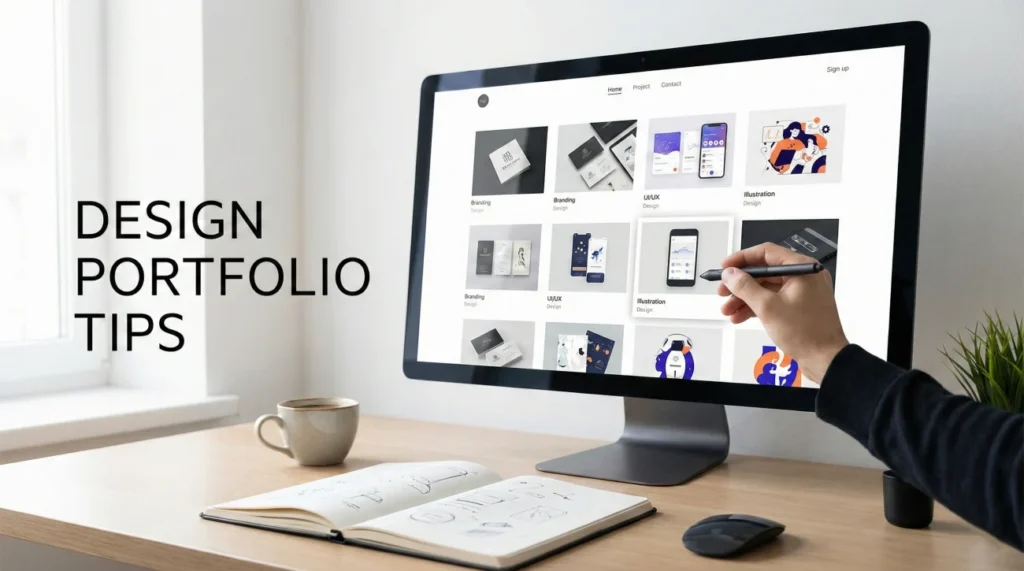
- Why portfolios fail: Most get ignored because they show pretty finals without strategy, context, or proof of how you think.
- Curation rules: Keep 5-7 strong pieces, tailor to the role, balance variety with a consistent voice, and cut anything you hesitate to defend.
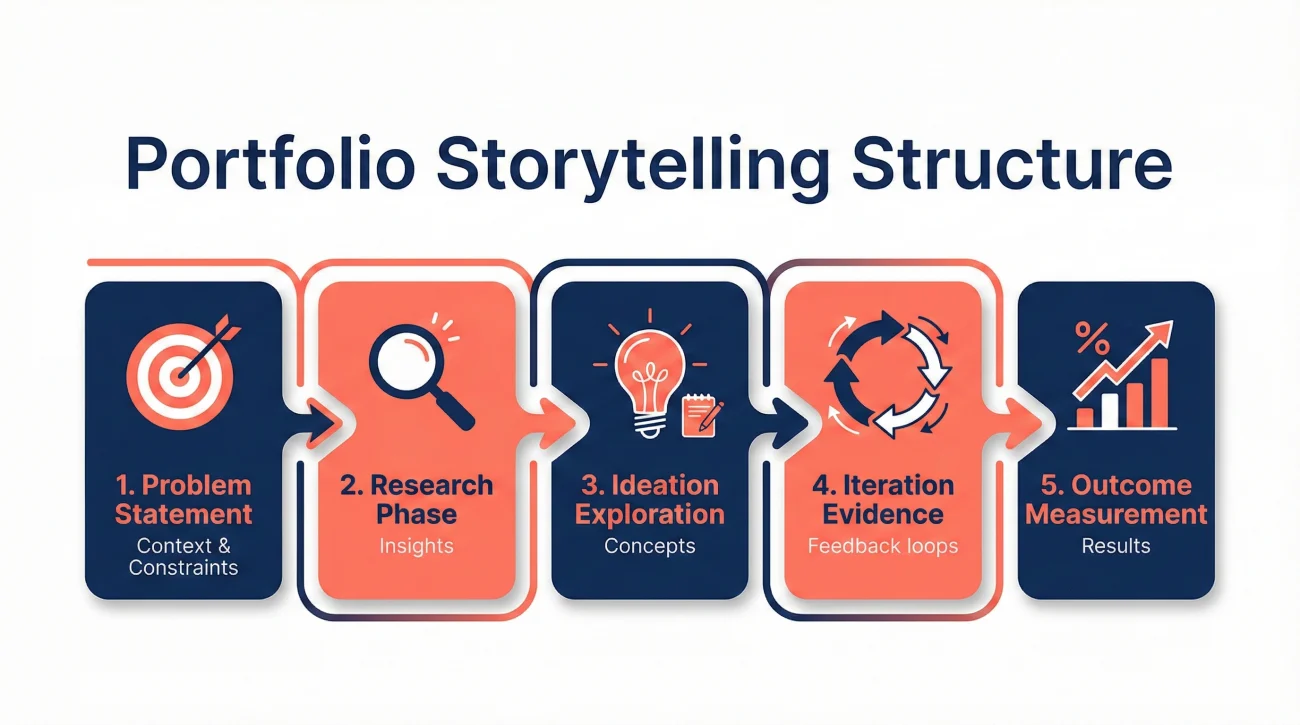
- Tell the case study: For each project, explain the problem, constraints, research, key iterations, and the outcome so reviewers can judge your decisions.
- Presentation quality: Choose the right formats (site, PDF, platforms), keep navigation obvious, and make performance and image clarity feel effortless.
- Common hurdles: Respect NDAs, label personal work honestly, clarify team contributions, and refresh quarterly so your portfolio always reflects your current level.
Why Most Portfolios Fail to Impress
Strong design portfolio tips begin with understanding that most portfolios fail not from lack of talent but from poor curation, weak storytelling, or focusing on aesthetics while ignoring strategic thinking that separates professional designers from hobbyists. Hiring managers review dozens of portfolios weekly, developing keen instincts for spotting superficial polish without substance, derivative work mimicking trends without innovation, or beautiful finals lacking process documentation revealing how you actually think and solve problems.
The portfolios that consistently secure interviews and offers tell coherent stories about your work, demonstrate diverse capabilities relevant to target roles, show process alongside polished finals, and articulate clear rationale for design decisions. Understanding interview preparation fundamentals provides baseline knowledge, but portfolio excellence requires specific strategies for curation, presentation, and storytelling that transform collections of pretty images into compelling evidence of professional design capability worth hiring.
Strategic Portfolio Curation
Understanding portfolio curation strategies means recognizing that selecting which work to include matters as much as the quality of individual pieces themselves.
Quality Trumps Quantity Always
Including every project you’ve completed dilutes impact of strong work while exposing weaknesses unnecessary to reveal. Five exceptional pieces demonstrating diverse capabilities prove infinitely more valuable than twenty mediocre examples showing you produce volume without consistent excellence. Curate ruthlessly, keeping only work that genuinely represents your best thinking and execution. If questioning whether to include something, that hesitation signals it probably weakens rather than strengthens your portfolio overall.
| Curation Principle | Implementation | Why It Matters |
|---|---|---|
| Quality over Quantity | 5-7 strong pieces maximum, ruthless editing | Prevents weak work from undermining strong examples |
| Relevance Focus | Tailor selection to target role and organization | Shows understanding of position requirements |
| Diversity Balance | Different project types, skills, challenges | Demonstrates versatility and breadth of capability |
| Recency Emphasis | Primarily recent work showing current skills | Proves you’re improving, not stagnating |
| Story Coherence | Work connects to create narrative about you | Reveals consistent sensibility and growth trajectory |
Tailoring to Target Opportunities
Generic portfolios treating all opportunities identically miss chances to emphasize most relevant capabilities. Research target organizations understanding their style, challenges, and values, then curate portfolio emphasizing work demonstrating alignment. If pursuing startups, showcase scrappy problem-solving and rapid iteration. Corporate roles benefit from seeing systematic processes and stakeholder management. Agency work requires showing diverse styles and client collaboration. This strategic tailoring proves you understand what they need rather than hoping generic showcase somehow fits.
Demonstrating Versatile Capabilities
Balance showing focused expertise with versatile capability. If all portfolio pieces look identical, you signal one-trick execution rather than adaptable thinking. Include projects demonstrating different challenges, styles, media, or constraints while maintaining cohesive sensibility revealing your unique design voice. This balance proves you can adapt to varying requirements without losing distinctive perspective that makes your work recognizable and valuable.
Expert advice: The most effective portfolio curation removes everything that doesn’t actively strengthen your narrative, recognizing that including mediocre work to show volume actually weakens overall impression more than having fewer exceptional pieces.
Compelling Portfolio Storytelling
Strong creative portfolio building requires transforming individual projects into coherent narratives revealing your thinking, process, and growth rather than merely displaying finished aesthetics.
Providing Clear Context
Every portfolio piece needs context explaining the challenge, constraints, target audience, and objectives before showcasing solutions. Without this framing, viewers can’t assess whether your work appropriately addressed actual needs or just looks pretty without strategic grounding. Describe client goals, user problems, business constraints, timeline pressures, or technical limitations that shaped your approach. This context transforms arbitrary aesthetics into strategic solutions demonstrating professional design thinking.
Showing Process Not Just Finals
Polished final deliverables prove you can execute but not necessarily that you can think. Include research, sketches, wireframes, iterations, alternative concepts, and explain why you chose specific directions. This process documentation reveals how you approach problems, handle ambiguity, incorporate feedback, and arrive at solutions through disciplined creative thinking rather than lucky accidents. Hiring managers value seeing your process as much or more than finished products because process transfers to new challenges while specific solutions don’t.
- 🎯 Problem statement: Clear articulation of challenge and constraints
- 🔍 Research phase: User insights, competitive analysis, inspiration sources
- 💡 Ideation exploration: Sketches, concepts, alternatives considered
- 🔄 Iteration evidence: How feedback shaped refinements
- 📊 Outcome measurement: Results, metrics, impact assessment
Articulating Design Decisions
Don’t assume viewers understand why you made specific choices. Explain rationale for typography selections, color palettes, layout decisions, interaction patterns, or material choices. Connect aesthetic decisions to functional purposes, user needs, brand requirements, or technical constraints rather than treating design as purely subjective art. This articulation demonstrates intentional professional thinking versus random styling based on personal preference without strategic grounding.
💡 Pro tip: For each portfolio piece, write brief case study including problem, process, solution, and outcome; this preparation makes verbal portfolio walkthroughs smoother while providing written content for online portfolios.
Presentation Format and Platform
Effective design work showcase requires thoughtful decisions about presentation format, platform selection, and technical execution that support rather than distract from your work.
Choosing Presentation Platform
Online portfolios provide accessibility and dynamic content but require maintaining updated sites. PDF portfolios offer control and offline access but lack interactivity. Physical portfolios create tangible impression but limit distribution. Most designers need multiple formats: online site for initial screening, PDF for email sharing, and potentially physical portfolio for in-person interviews. Ensure all versions present consistent visual identity while leveraging each format’s strengths appropriately.
| Format | Best Use | Key Considerations |
|---|---|---|
| Online Portfolio Site | Primary showcase, initial screening | Mobile responsive, fast loading, easy navigation |
| PDF Portfolio | Email attachments, offline viewing | Reasonable file size, clear page flow, embedded fonts |
| Platform Sites (Behance, Dribbble) | Community presence, discovery | Active participation, consistent posting, engagement |
| Physical Portfolio | In-person interviews, tactile work | Professional binding, consistent quality, easy handling |
Ensuring Technical Quality
Poor technical execution undermines strong creative work. Ensure images display clearly at appropriate resolutions, colors render accurately, typography remains legible, navigation functions intuitively, and loading times don’t frustrate viewers. Test across devices and browsers for online portfolios. For PDFs, check file sizes remain reasonable while maintaining quality. Physical portfolios require consistent printing, proper binding, and durable materials. These technical details signal professionalism as much as creative excellence itself.
Creating Intuitive Navigation
Don’t make viewers hunt for your work or struggle understanding project relationships. Provide clear navigation allowing quick access to specific projects while supporting sequential flow for those reviewing comprehensively. Include obvious contact information, brief bio, and any relevant credentials or recognitions. Remove friction preventing viewers from engaging with your work fully because confusing navigation or missing information creates abandonment before they appreciate your capabilities.
Addressing Common Portfolio Challenges
Strong portfolio presentation techniques include strategies for handling predictable complications like NDA restrictions, limited experience, or collaborative work attribution.
Managing NDA-Protected Projects
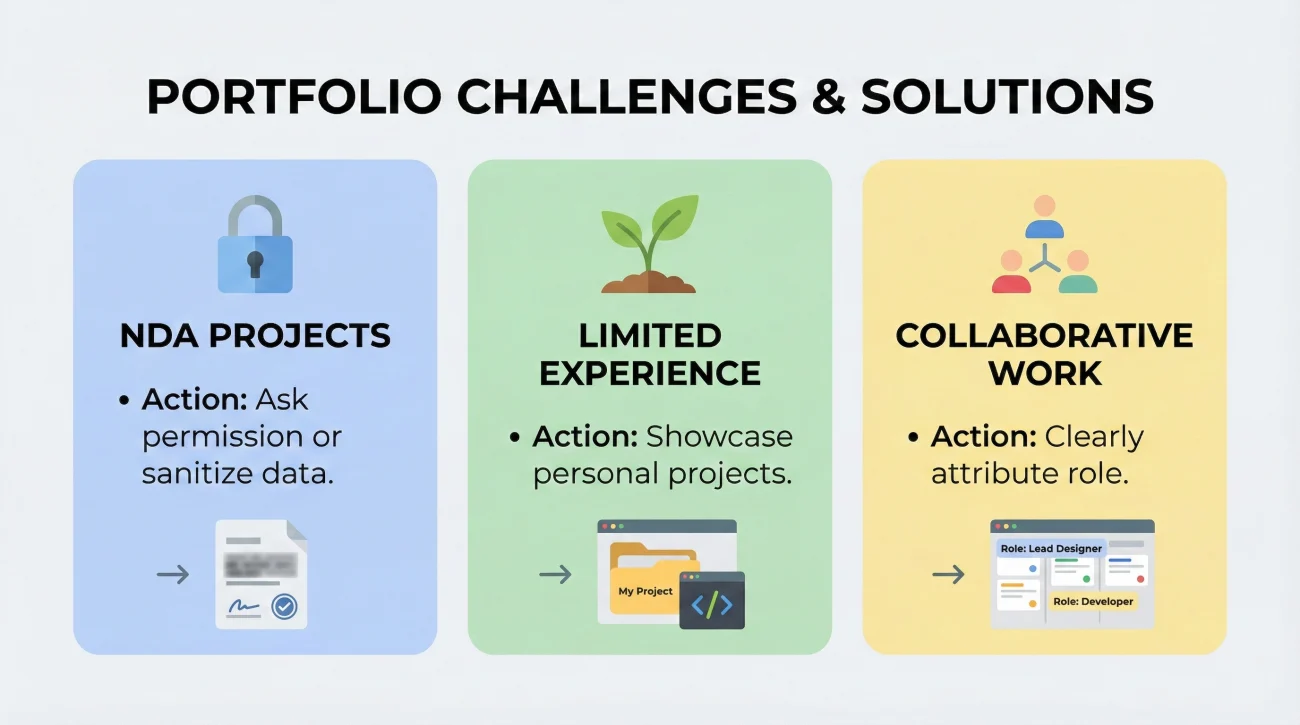
Respect NDAs absolutely; your integrity matters more than any single portfolio piece. Request permission from clients to share work publicly, create sanitized versions removing confidential elements, or prepare verbal case studies explaining process without showing protected visuals. Most employers respect NDA compliance recognizing it demonstrates professional trustworthiness they want in their own employees. Never risk legal issues or reputation damage by sharing protected work without explicit permission.
Building Portfolio With Limited Professional Work
Early career designers lack extensive professional projects but can showcase capability through personal work, spec projects, redesign concepts, or volunteer contributions. Clearly label personal versus client work to maintain honesty while demonstrating initiative and passion. Strong personal projects showing strategic thinking and execution quality can impress more than mediocre professional work completed to minimal specifications. Focus on demonstrating skills rather than apologizing for experience gaps.
- Clearly attribute collaborative work explaining your specific contributions
- Include process for team projects showing your individual thinking
- Respect confidentiality by obtaining permissions before sharing client work
- Use personal projects to fill gaps while pursuing professional opportunities
- Update portfolio regularly removing outdated work as skills improve
Never present others’ work as your own or obscure actual contributions in team projects; creative industries are small and dishonesty destroys careers permanently once discovered through inevitable exposure.
Maintaining and Evolving Your Portfolio
Portfolio development never finishes; strong designers continuously refine presentations as skills improve, career focus shifts, or target opportunities change.
Continuous Refinement
Review portfolio quarterly, removing pieces no longer representing your best work and adding stronger recent projects. As skills improve, yesterday’s portfolio highlights become tomorrow’s embarrassments requiring removal. This ongoing curation ensures portfolio always reflects current capabilities rather than outdated work that misrepresents your present skill level. Don’t let attachment to past achievements prevent showcasing genuine growth.
Seeking External Perspective
Request honest portfolio feedback from mentors, peers, or professionals in target fields. Fresh eyes spot weaknesses you’ve become blind to through familiarity and identify strengths you undervalue. Incorporate constructive criticism thoughtfully, distinguishing between valuable insights requiring action versus misguided opinions you can safely ignore. This external perspective prevents portfolio stagnation while revealing improvement opportunities invisible from your limited vantage point.
❓ FAQ
🎯 How many projects should I include in my portfolio?
Quality over quantity; 5-7 exceptional pieces prove more valuable than 20+ mediocre examples. Curate ruthlessly keeping only work genuinely representing your best thinking and execution. If questioning whether to include something, that hesitation signals it probably weakens your portfolio.
💼 Should I include personal projects or only professional work?
Include strong personal projects that demonstrate relevant skills, especially early career with limited professional experience. Clearly label them as personal versus client work. Excellent personal projects showing initiative can impress more than mediocre professional pieces completed to minimal specifications.
⏰ How do I showcase process without overwhelming viewers?
Balance process documentation with finals by showing key phases rather than exhaustive detail. Include initial concepts, major iterations, and final solutions with brief explanations. Online portfolios can offer expandable process sections; PDFs should integrate process naturally without dominating presentation.
📋 What if all my work is under NDA?
Request client permission to share work publicly, create sanitized versions removing confidential elements, prepare verbal case studies, or develop strong personal projects filling portfolio gaps. Most employers respect NDA compliance as evidence of professional integrity they value in their own employees.
✨ How often should I update my portfolio?
Review quarterly, removing outdated work and adding stronger recent projects as skills improve. Portfolio should always reflect current capabilities, not outdated work misrepresenting your present skill level. Continuous refinement prevents portfolio stagnation while showcasing genuine growth trajectory.
Final Thoughts
Portfolio excellence determines creative career trajectory more powerfully than credentials, years of experience, or where you studied because portfolios provide tangible evidence of capabilities that resumes merely claim. The portfolios that consistently open doors curate ruthlessly prioritizing quality over quantity, tell coherent stories revealing thinking alongside aesthetics, demonstrate diverse capabilities through strategic project selection, and show process documentation proving you can think systematically rather than relying on lucky inspiration.
Mastering design portfolio tips requires ongoing commitment to curation refinement, storytelling improvement, and presentation polish as your skills evolve and career focus shifts. Remove work no longer representing your best capabilities, add stronger recent projects demonstrating growth, provide clear context and rationale for design decisions, and maintain technical excellence across all presentation formats. This continuous evolution ensures your portfolio remains powerful career asset rather than outdated collection of past work that misrepresents your current professional value and creative capabilities worth investing in through hiring or collaboration opportunities.
⚠️ Disclaimer: The interview strategies, sample answers, and negotiation tips provided in this guide are for educational purposes only. Hiring decisions are subjective and vary by company and industry. While these strategies are based on professional HR standards, they do not guarantee a specific job offer or result.