When Helpfulness Becomes a Problem
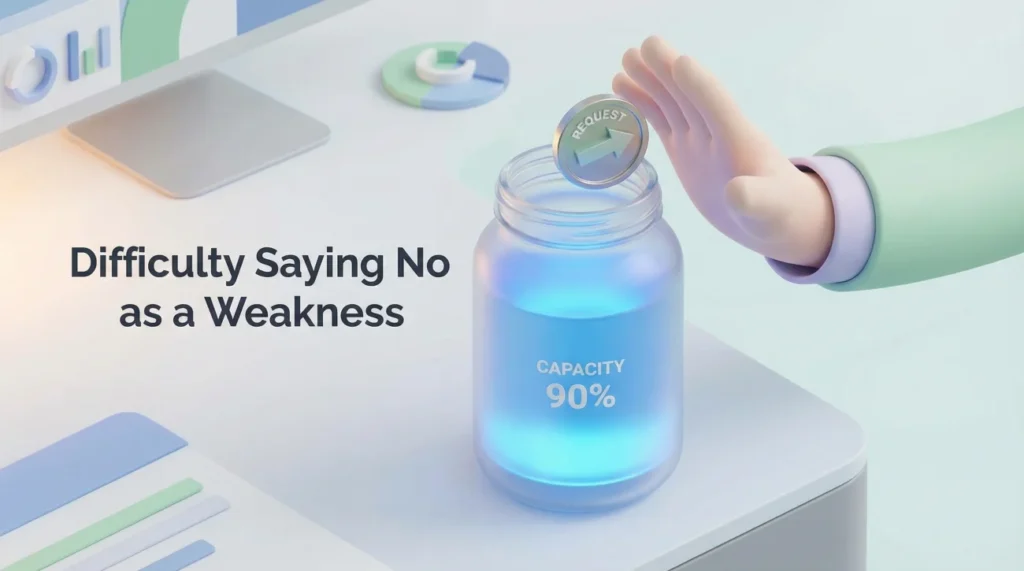
Presenting difficulty saying no as a weakness works well because it implies positive qualities while representing a genuine limitation. The inability to decline requests suggests you’re helpful, collaborative, and eager to contribute. But when helpfulness leads to overcommitment, burnout, or unreliable delivery, it becomes a real weakness worth addressing.
This weakness is particularly common among high performers who built early careers by being the person who always said yes. That approach works until capacity limits are reached. Learning to set boundaries while maintaining collaborative relationships is a skill many people struggle to develop.
The Analyst Who Overloaded Herself
A business analyst shared her experience:
“My greatest weakness is difficulty saying no when colleagues ask for help. I want to be seen as collaborative and reliable, so my instinct is always to say yes. The problem is that I’ve taken on more than I could realistically handle, which affected my core responsibilities.”
“Last year, I was supporting so many side projects that my primary deliverables started slipping. My manager had to intervene and help me prioritize.”
“I’ve since developed a system: when someone asks for help, I tell them I’ll check my capacity and get back to them within a day. That pause lets me evaluate realistically instead of reflexively agreeing. I’ve also learned that saying no to one thing means saying yes to something I’ve already committed to.”
This answer shows real consequences and a specific system for managing the tendency.
The Developer Who Protected His Reputation
A software developer described his growth:
“My weakness is overcommitting because I hate disappointing people. Early in my career, I would say yes to every request and then work excessive hours trying to deliver everything. When that became unsustainable, I started missing commitments, which hurt my reputation more than saying no would have.”
“A senior engineer taught me that reliable delivery is more valuable than availability. She said: ‘I’d rather have you say no and know your yes means something than have you say yes to everything and become unreliable.'”
“I now protect my capacity more carefully. When I commit to something, people know it will get done. That reliability is worth more than being the person who agrees to everything.”
Key reframe: Saying no protects the value of your yes.
The Manager Who Learned Tradeoff Language
A marketing manager described her approach:
“Saying no is my greatest weakness, especially to leadership. When executives ask for something, my instinct is to figure out how to make it happen rather than evaluating whether it should happen. I’ve taken on projects that weren’t strategic priorities because someone senior asked.”
“I’ve learned to respond differently. Now I say: ‘I can take this on, but here’s what I would need to deprioritize. Which matters more?’ This puts the tradeoff decision where it belongs.”
“I’m not saying no directly, but I’m making the cost visible so we can make informed choices together. It’s still uncomfortable, but I’ve stopped quietly sacrificing important work for urgent requests.”
Why This Weakness Works
| What You’re Admitting | What Interviewers Hear |
|---|---|
| I want to help everyone | You’re collaborative and service-oriented |
| I sometimes take on too much | You’re eager and hardworking |
| I’m learning to set boundaries | You’re self-aware and developing |
| I now evaluate before committing | You’re becoming more strategic |
This weakness suggests you’re fundamentally helpful while being honest that helpfulness needs management to be sustainable. For strategies on presenting yourself authentically, see our guide to handling tough interview questions.
❓ FAQ
🎯 Does this weakness suggest I’m a pushover?
Not if framed correctly. Emphasize that you’ve developed strategies for managing this tendency. The weakness is about wanting to help, not about lacking assertiveness.
💼 What if the role requires lots of collaboration?
Collaboration requires sustainable contribution, not unlimited availability. Emphasize that boundary-setting makes you more reliable, not less helpful.
⏰ How do I show I can still say yes when needed?
Emphasize that your strategies help you say meaningful yeses rather than reflexive ones. You’re not becoming unhelpful; you’re becoming reliable.
📋 Is this appropriate for customer-facing roles?
Yes, with careful framing. Customer-facing roles still require realistic commitments. Emphasize learning to manage expectations and deliver reliably.
✨ What if I’m still really bad at saying no?
Start developing strategies now. Even early efforts like pausing before responding demonstrate awareness and initiative.
Make Your Yes Mean Something
Presenting difficulty saying no as a weakness shows you understand why boundaries matter for sustainable performance. Describe your tendency to overcommit, name the real consequences, and explain specific strategies for managing your capacity. When interviewers see someone genuinely helpful who has learned to be reliably helpful rather than unsustainably available, they see someone ready for professional environments.
⚠️ Disclaimer: The interview strategies, sample answers, and negotiation tips provided in this guide are for educational purposes only. Hiring decisions are subjective and vary by company and industry. While these strategies are based on professional HR standards, they do not guarantee a specific job offer or result.