- Core Goal: Turn a real weakness into proof of self-awareness, initiative, and measurable improvement instead of defensive excuses or fake humblebrags.
- Sandwich Method: Admit the limitation clearly, explain the specific actions you took, then close with concrete progress evidence without claiming total mastery.
- Growth Arc Story: Share the moment you recognized the issue, the steps and adjustments you made over time, and where you are now with ongoing development.
- Pick The Right Weakness: Choose something fixable and not a core job requirement, tailor the framing for skill gaps, behavioral patterns, or experience gaps.
- Delivery And Pitfalls: Keep it 60–90 seconds, sound confident not apologetic, use specifics and metrics, and avoid clichés, deal-breakers, rambling, or listing multiple weaknesses.
Reframing Limitations as Growth Opportunities
Successfully turning weaknesses into strengths during interviews requires more than claiming you’re “working on it.” Interviewers recognize empty platitudes instantly. The strategic approach transforms genuine limitations into compelling narratives demonstrating self-awareness, initiative, and measurable improvement – qualities employers value more than perfection.
The weakness answer framework most candidates use fails because it either sounds defensive (“That’s not really a weakness”) or highlights unfixable problems (“I just hate details”). Effective frameworks acknowledge real limitations honestly while demonstrating you’re actively addressing them with concrete progress. This balance shows professional maturity – you recognize development areas without undermining your candidacy.
This guide breaks down proven methods for structuring weakness answers that impress rather than concern interviewers, with specific examples showing how to apply each framework to common development areas.
The Sandwich Method Framework
The Sandwich Method structures weakness answers in three layers: acknowledge the limitation (bread), describe improvement efforts (filling), demonstrate measurable progress (bread). This framework prevents dwelling on negatives while emphasizing growth and results.
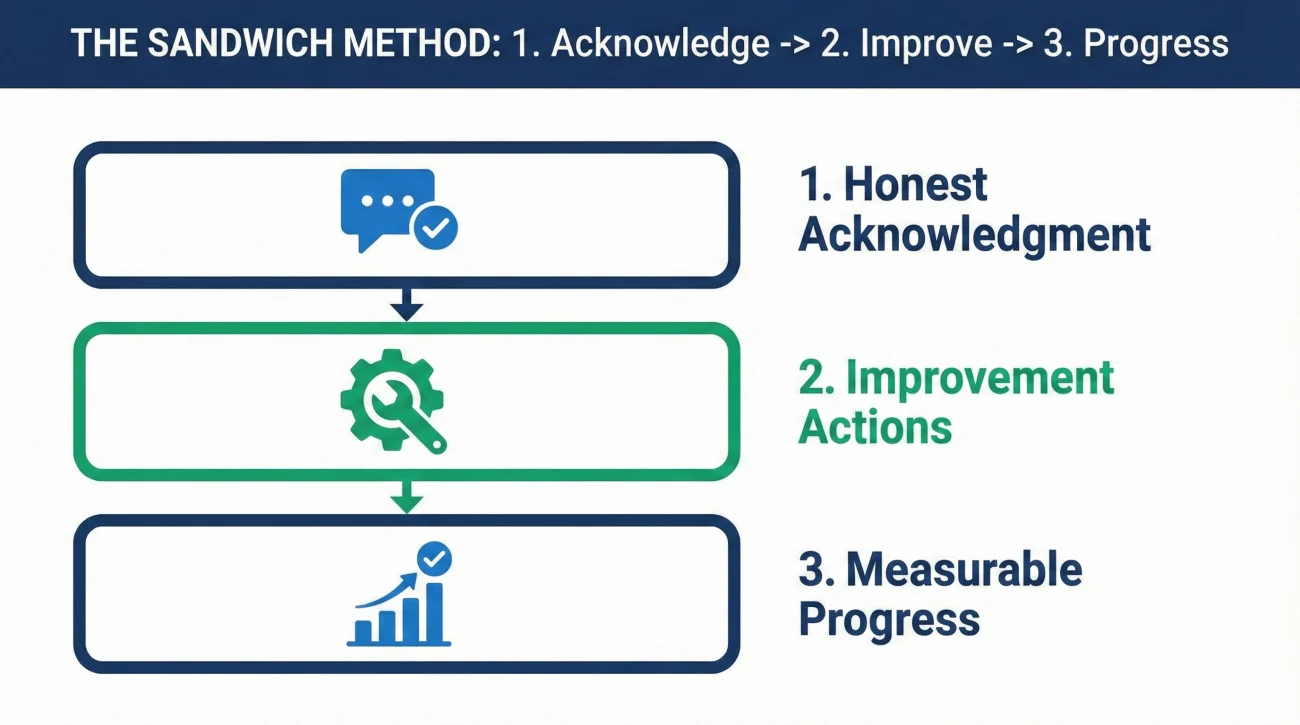
Layer One: Honest Acknowledgment
Start with direct, specific acknowledgment of a genuine weakness. Avoid hedging, minimizing, or disguised bragging. The limitation should be real but fixable, relevant but not fatal to job performance.
- ✅ Specific: “Early in my career, I struggled with delegating tasks to team members”
- ✅ Genuine: “I tend to over-research decisions before committing to action”
- ✅ Contextual: “When I transitioned to management, I found giving critical feedback uncomfortable”
- ❌ Vague: “I sometimes work too hard” (not specific or genuine)
- ❌ Bragging: “My biggest weakness is caring too much” (obvious humblebrag)
- ❌ Fatal: “I struggle with deadlines” (disqualifying for most roles)
💡 Pro tip: Frame weaknesses in past tense when possible. “I struggled with…” or “I used to…” signals you’ve moved beyond the limitation rather than currently battling it daily.
Layer Two: Improvement Actions
The middle layer describes specific, concrete steps you’ve taken to address the weakness. This demonstrates initiative and growth mindset – you don’t accept limitations passively but work actively to overcome them.
| Action Type | Examples | Why It Works |
|---|---|---|
| Formal education | Courses, certifications, degree programs, workshops | Shows serious investment in skill development |
| Structured practice | Toastmasters for public speaking, mock presentations, role-playing exercises | Demonstrates deliberate skill-building effort |
| Mentorship/coaching | Working with mentor, hiring coach, seeking feedback from experienced colleagues | Signals humility and willingness to learn from others |
| Process implementation | Creating systems, checklists, or frameworks to compensate for limitation | Shows strategic thinking about sustainable improvement |
| Behavioral changes | Modified habits, new routines, intentional practice in real situations | Indicates sustained effort beyond one-time fixes |
Expert advice: Specificity matters tremendously in this layer. “I’m working on communication skills” is meaningless. “I joined Toastmasters six months ago, attend weekly meetings, and have delivered five prepared speeches plus multiple impromptu talks” provides concrete evidence of commitment.
Layer Three: Measurable Progress
Close with specific evidence demonstrating improvement. This proves your efforts produced results rather than just keeping you busy. Quantify whenever possible – percentages, timeframes, concrete outcomes.
- Before/after comparisons showing measurable improvement
- Specific achievements that would have been impossible before development
- Feedback from others noting visible progress
- Expanded responsibilities reflecting new capabilities
- Problems solved that previously would have defeated you
Don’t claim complete mastery. Saying “Now I’m great at public speaking” after six months sounds unrealistic. Instead: “I’m much more comfortable presenting – I recently delivered our quarterly results to 50+ stakeholders and received positive feedback, though I continue developing this skill.”
The Growth Arc Narrative
The growth arc narrative structures weakness answers as transformation stories with clear beginning, middle, and end. This storytelling approach engages interviewers emotionally while demonstrating your development trajectory.
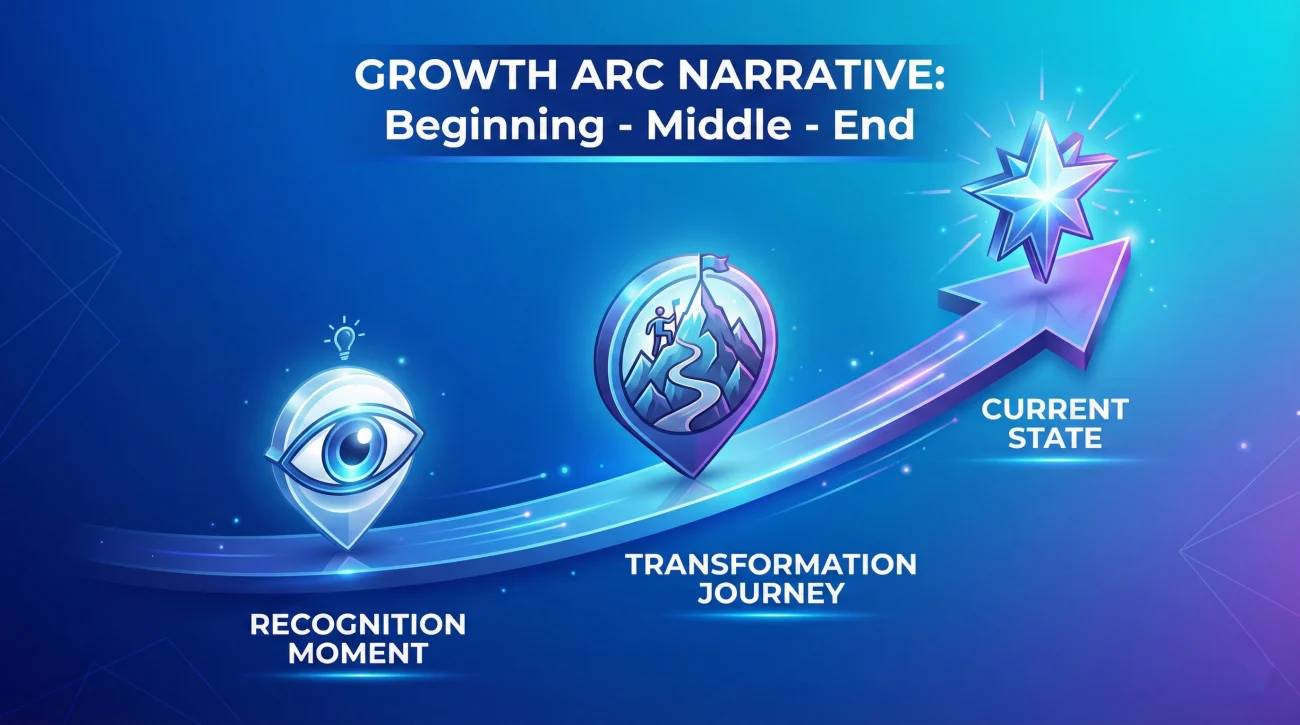
Beginning: The Recognition Moment
Start by describing when and how you recognized this weakness. This origin story demonstrates self-awareness – you didn’t need others to point out the limitation, or you responded constructively when they did.
Strong recognition moments come from specific situations that exposed the weakness clearly. “During a project presentation, I realized my tendency to dive into technical details lost the executive audience” provides context while showing awareness.
Middle: The Transformation Journey
Describe your improvement efforts as a journey with specific milestones. This creates narrative tension and demonstrates sustained effort rather than quick fixes.
| Journey Stage | What to Include | Example |
|---|---|---|
| Initial struggles | First attempts, challenges faced, setbacks encountered | “My first delegation attempt failed because I didn’t provide clear expectations” |
| Learning adjustments | Changes made based on early experiences, new approaches tried | “I created delegation templates specifying deliverables, deadlines, and decision authority” |
| Breakthrough moments | When improvement became visible, specific successes achieved | “A delegated project completed ahead of schedule with quality exceeding my expectations” |
| Ongoing development | Current practices maintaining and building on progress | “I now delegate first and adjust only when necessary, trusting team capability” |
End: The Current State and Ongoing Growth
Conclude by describing your current capability level and commitment to continued improvement. This demonstrates humility (you’re not perfect) while emphasizing progress (you’re substantially better).
💡 Pro tip: Connect your current state to the target role. “This improvement in delegation skills prepared me for the team leadership responsibilities this position requires” shows you’ve developed capabilities specifically relevant to the opportunity.
Applying Frameworks to Common Weaknesses
Different weakness types require slightly different framework applications. Understanding these variations helps you structure answers that feel natural rather than formulaic.
Skill-Based Weaknesses
Missing technical or soft skills provide excellent weakness material because they’re clearly fixable through training, practice, or experience. Structure these answers emphasizing the specific development path you’ve followed.
- 📚 Technical skills: Acknowledge gap → Describe training/practice → Demonstrate application
- 🗣️ Communication skills: Recognize limitation → Join programs/seek feedback → Show improvement instances
- 👥 Leadership skills: Admit inexperience → Pursue mentorship/opportunities → Highlight early wins
- 🎯 Organizational skills: Confess struggles → Implement systems/tools → Quantify efficiency gains
Example: “I lacked data visualization skills when I started my current role. I completed a Tableau certification course, practiced by recreating existing reports, and now produce dashboards our executives use for decision-making. My visualizations reduced the time stakeholders spend interpreting data by roughly 40%.”
Behavioral Pattern Weaknesses
Ingrained habits or tendencies require different framing since they’re harder to change than learnable skills. Emphasize awareness of the pattern, conscious effort to modify behavior, and systems that support new habits.
| Behavioral Weakness | Transformation Approach |
|---|---|
| Perfectionism / over-preparation | Implement time-boxing, set “good enough” criteria, practice shipping imperfect work |
| Difficulty saying no / overcommitment | Establish workload assessment process, practice boundary-setting language, track capacity |
| Impatience with slower-paced colleagues | Develop empathy through perspective-taking, adjust communication style, celebrate diverse working styles |
| Avoiding conflict / difficult conversations | Learn conflict resolution frameworks, practice with low-stakes situations, seek feedback on approach |
| Too self-critical | Implement self-compassion practices, celebrate wins consciously, maintain achievement log |
Expert advice: For behavioral weaknesses, describe the system or trigger you’ve implemented to catch yourself falling into old patterns. “I now notice when I’m researching beyond useful depth and force myself to make a decision” shows metacognitive awareness interviewers value.
Experience Gap Weaknesses
Missing experience in specific areas becomes weakness material when the gap could affect performance. Frame these around transferable skills, accelerated learning, or creative compensation strategies.
Example: “I haven’t managed remote teams before, but I’ve researched best practices extensively, set up weekly one-on-ones with clear agendas, and implemented async communication protocols. In my first three months managing our distributed team, we’ve maintained productivity while improving engagement scores.”
Timing and Delivery Considerations
Even perfectly structured weakness answers fail when delivered poorly. Timing, tone, and confidence matter as much as content.
Controlling Answer Length
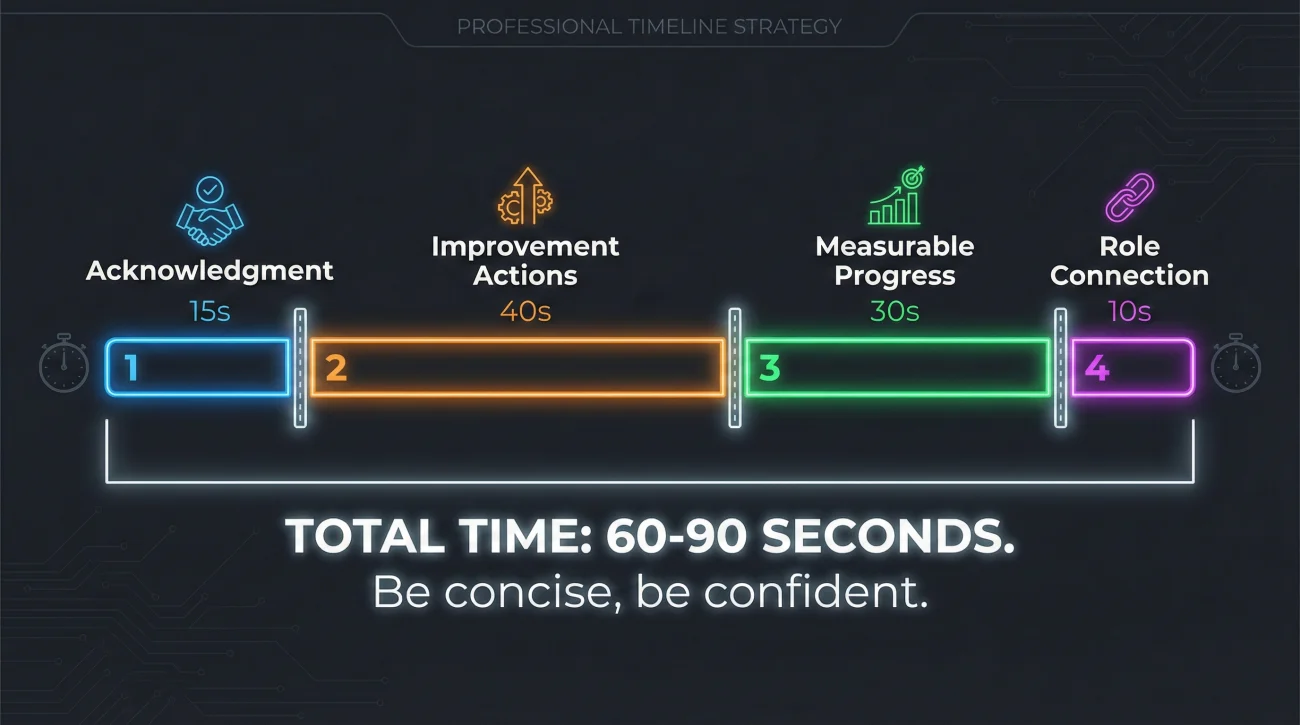
Weakness answers should run 60-90 seconds maximum. Longer answers dwell unnecessarily on negatives. Shorter answers lack the substance proving genuine development effort.
- Acknowledgment layer: 10-15 seconds stating the weakness clearly
- Improvement layer: 30-40 seconds describing specific actions taken
- Progress layer: 20-30 seconds demonstrating measurable results
- Optional connection: 10 seconds linking improvement to role requirements
💡 Pro tip: Practice your weakness answer out loud multiple times before interviews. This prevents rambling when nervous and helps you find natural, conversational phrasing that doesn’t sound rehearsed.
Maintaining Confident Tone
Deliver weakness answers with the same confidence you bring to strength discussions. Apologetic, defensive, or self-deprecating tone undermines otherwise strong content. You’re discussing professional development, not confessing sins.
| Tone to Avoid | Better Approach |
|---|---|
| Apologetic: “I’m really sorry, but I struggle with…” | Matter-of-fact: “Earlier in my career, I found [skill] challenging…” |
| Defensive: “It’s not really a weakness, but…” | Direct: “One area I’ve actively developed is…” |
| Self-deprecating: “I’m terrible at…” | Growth-focused: “I recognized I needed to improve…” |
| Minimizing: “This is barely a problem…” | Honest: “This limitation affected my performance, so…” |
Transitioning Forward
After completing your weakness answer, move conversation forward naturally. Don’t dwell, over-explain, or invite follow-up questions by appearing uncertain. A confident finish signals you’ve addressed the topic thoroughly.
For comprehensive strategies on handling various professional development stories during interviews, explore behavioral interview resources covering additional question types and response frameworks.
Advanced Transformation Techniques
Beyond basic frameworks, sophisticated candidates use additional techniques to make weakness answers particularly compelling.
Strategic Context Reframing
Frame weaknesses within context that makes them more understandable or even advantageous in certain situations. This doesn’t excuse the limitation but helps interviewers see it as natural rather than problematic.
- 🎯 Career stage context: “Early in my career” suggests you’ve since developed beyond this limitation
- 🔄 Transition context: “When I moved from individual contributor to manager” explains why new weakness emerged
- ⚡ Strength flip-side: “My attention to detail sometimes led to over-analysis” connects weakness to strength
- 📊 Industry norm context: “In highly technical environments, I focused more on code than communication” shows common pattern
Incorporating Third-Party Validation
Reference external validation of your improvement to add credibility. Manager feedback, peer recognition, or measurable outcomes provide objective proof beyond self-assessment.
Example: “After six months of focused improvement, my manager noted in my review that my presentation skills had advanced significantly. She specifically mentioned my recent board presentation as evidence of this growth.”
Demonstrating Ongoing Commitment
Even after demonstrating substantial improvement, mention continued development efforts. This shows you view growth as ongoing rather than a one-time fix.
Avoid suggesting you’ve completely conquered the weakness. “I’ve totally mastered public speaking now” sounds unrealistic and arrogant. Better: “I’m now comfortable with presentations and continue developing this skill through regular practice.”
Common Mistakes to Avoid
Even candidates who understand these frameworks make predictable errors that undermine otherwise strong answers.
| Mistake | Why It Fails | Better Approach |
|---|---|---|
| Choosing cliché weaknesses | “Perfectionism” and “working too hard” sound fake and rehearsed | Select genuine, specific development areas unique to your experience |
| Admitting deal-breakers | Some weaknesses disqualify you from roles immediately | Never mention limitations that contradict core job requirements |
| Providing no evidence | “I’m working on communication” without specifics sounds hollow | Include concrete actions, timeframes, and measurable results |
| Dwelling too long | 2-3 minute weakness answers emphasize negatives excessively | Keep answers to 60-90 seconds, balanced across all three layers |
| Fake transformation claims | Claiming complete mastery in short timeframe sounds dishonest | Acknowledge ongoing development while demonstrating real progress |
| Multiple weaknesses | Listing 3-4 weaknesses when asked for one signals poor judgment | Provide one well-developed weakness answer unless specifically asked for more |
❓ FAQ
🎯 Can I use the same weakness answer for multiple interviews?
Yes, if it remains relevant and you update the progress section with new developments. A good weakness answer can serve you across many interviews – just ensure you’re actually continuing development efforts so you have fresh examples of improvement to share.
💼 Should I choose a weakness related to the job or unrelated?
Choose weaknesses tangentially related but not core requirements. For software engineering roles, admitting you’re developing public speaking skills (useful but not critical) works better than confessing debugging challenges (core skill). Show awareness of job needs while selecting interview weakness strategy carefully.
⏰ What if I genuinely haven’t made progress on my weakness yet?
Choose a different weakness where you have demonstrated improvement. Interviewers need evidence of actual development, not just good intentions. If you’re still in early stages of addressing a limitation, select another area where you can point to concrete progress.
📋 How do I handle follow-up questions about my weakness?
Prepare additional examples or details you didn’t include in initial answer. If asked “How else has this weakness affected you?” or “What other steps are you taking?”, provide supplementary information that reinforces your growth narrative without contradicting your original answer.
✨ What if the interviewer asks for a weakness I haven’t overcome?
This variant tests honesty and self-awareness differently. Choose a genuine development area, explain why it persists despite efforts, and describe how you work around it or minimize its impact. Still demonstrate awareness and active management even without complete transformation.
Final Thoughts
Successfully turning weaknesses into strengths during interviews requires more than memorizing a formula. The Sandwich Method and Growth Arc frameworks provide structure, but authenticity makes them work. Choose genuine development areas you care about improving, describe real actions you’ve taken, and demonstrate measurable progress you can discuss naturally and confidently.
The most compelling weakness answers don’t just satisfy the question – they actively strengthen your candidacy by demonstrating professional maturity, growth mindset, and self-directed development. Interviewers want coworkers who recognize limitations, take initiative to improve, and follow through until achieving results. Your weakness answer provides concentrated evidence of exactly these qualities.
Invest time crafting weakness answers as thoughtfully as you prepare strength responses. Practice delivery until the story flows naturally without sounding rehearsed. Update progress sections regularly as you continue developing. These preparation efforts transform a question most candidates dread into an opportunity to showcase the growth-oriented professional mindset that separates strong hires from merely qualified ones.
⚠️ Disclaimer: The interview strategies, sample answers, and negotiation tips provided in this guide are for educational purposes only. Hiring decisions are subjective and vary by company and industry. While these strategies are based on professional HR standards, they do not guarantee a specific job offer or result.