A Founder’s Confession
I built a company from an idea on a napkin. Made every decision that mattered. Answered to no one except customers who voted with their wallets and investors who wrote checks. Worked eighty-hour weeks not because someone told me to, but because I wanted to see what I could build.
Now I’m sitting in an interview for a director position at an established company. I’ll have a boss. I’ll need approvals for things I used to decide in seconds. I’ll follow processes I didn’t design and might not agree with.
The interviewer across the table is wondering one thing: Can this person actually do that?
This is the core challenge when facing entrepreneur to employee interview questions. You’re not just proving you can do the job. You’re proving you can shift from running everything to being part of something larger. From independence to interdependence. From controlled chaos to structured process. From answering to no one to answering to someone every day.
What Employers Actually Fear
Hiring managers have seen founders fail as employees. Maybe they’ve experienced it directly. They worry about specific patterns that tend to emerge when entrepreneurial personalities enter organizational environments.
| Their Fear | What They Imagine Happening |
|---|---|
| Can’t take direction | Arguments with managers, ignoring guidance, doing things their own way |
| Won’t follow process | Breaking rules, going rogue on decisions, creating chaos |
| Will get bored quickly | Leaving within a year when the next startup idea strikes |
| Will overstep boundaries | Acting like the CEO when they’re not, undermining leadership |
| Can’t genuinely collaborate | Steamrolling teammates, lone wolf behavior, taking over meetings |
| Will be frustrated by pace | Complaining about bureaucracy, impatient with consensus-building |
Your job in the interview is addressing each of these concerns with evidence, not just reassurance. Saying “I can definitely take direction” means nothing. Showing you’ve done it successfully means everything.
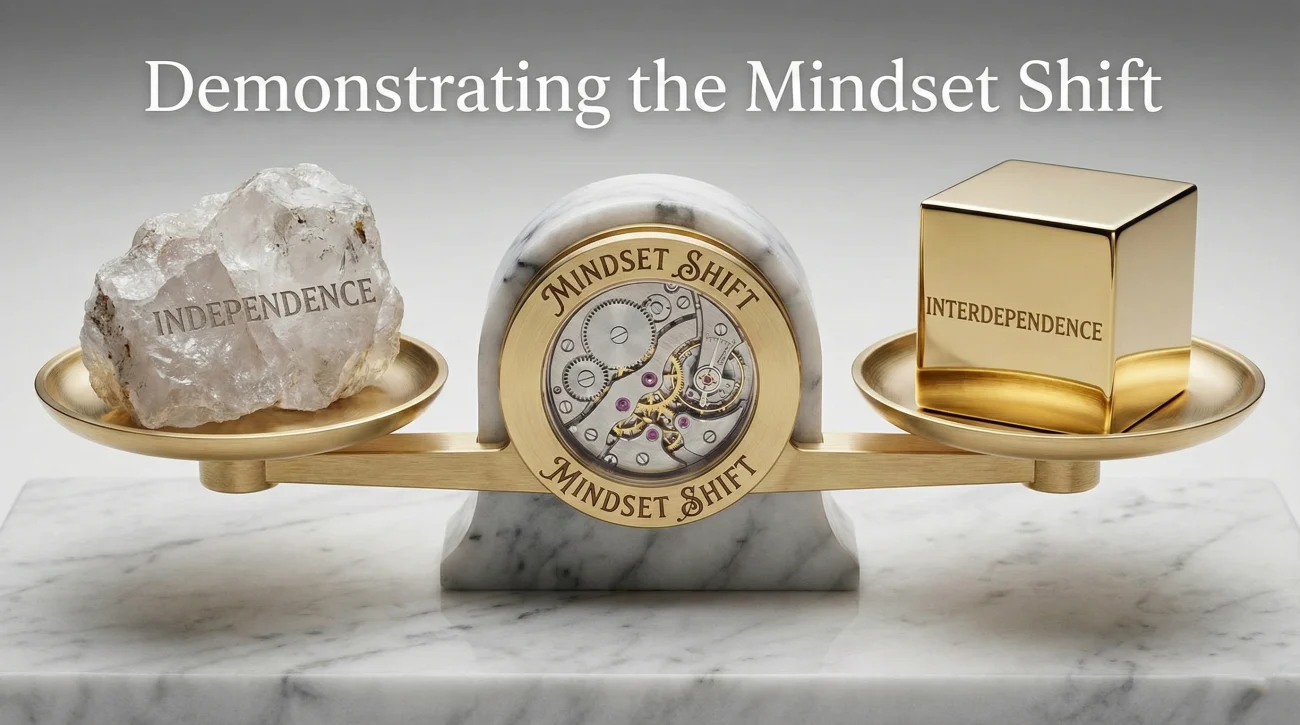
Demonstrating the Mindset Shift
You need to prove you’ve genuinely thought about what’s different between founding companies and working in them, and that you’ve made peace with those differences deliberately.
Finding Value in Structure
Structure has benefits that entrepreneurship lacks: resources, specialized expertise, established relationships, stable infrastructure, scale. Show you understand why people choose employment over founding companies, and why that choice sometimes makes sense for you too.
“Running a startup taught me to value what larger organizations provide: teams with deep specialized expertise, established processes that don’t have to be invented from scratch, and resources to execute at scale. I’ve experienced both environments now, and I see the genuine advantages of each.”
Genuine Collaboration Interest
Founders often operate alone or in very small teams where they drive most decisions. Demonstrate you can genuinely collaborate rather than just direct. Show enthusiasm for working alongside others as peers.
“As a founder, I made decisions quickly because I had to. But I also learned that my best decisions came when I sought input from advisors, team members, and customers before acting. I’m actually looking forward to having more of that collaborative dynamic built into my daily work.”
Proven Ability to Follow
This is the critical proof point. Can you take direction from someone else when you’ve been the one giving direction?
“I’ve had investors and board members I reported to throughout my founder experience. I learned to advocate strongly for my perspective while ultimately respecting decisions that weren’t mine to make. When my board decided against a direction I believed in, I executed their decision fully. That’s the same dynamic in any organization.”
Patience With Organizational Pace
Startups move fast because they must. Large organizations move deliberately because they have more at stake. Show you understand why and can adapt.
“I won’t pretend startups and corporations move at the same speed. But I’ve learned that the slower pace of larger organizations often produces better outcomes. More perspectives get heard. More risks get identified. More stakeholders get aligned. That thoroughness has value even when it feels slow.”
Why Make This Move Now

Your motivation matters enormously. Employers want to understand why you’re choosing employment after experiencing the autonomy of entrepreneurship.
Motivations That Work
- Depth over breadth: Wanting to go deep on one thing rather than managing everything surface-level
- Scale and resources: Seeking the infrastructure to create bigger impact than a small company could achieve
- Sustainable pace: Ready for challenge without the all-consuming nature of founder life
- Learning opportunity: Wanting to see how successful organizations operate from the inside
- Specific company interest: Genuine attraction to this particular company’s mission, product, or team
- Career evolution: Recognizing that this is the right next chapter for your professional development
Motivations to Frame Carefully
Startup failure: Acknowledge it briefly without dwelling. Focus on lessons learned and why this opportunity makes sense regardless of what happened before.
Founder burnout: Frame as seeking sustainable challenge rather than fleeing difficulty. You want work that engages you fully without consuming everything else in your life.
Financial stability: Valid but shouldn’t be your primary stated reason. Employers want people who want to work there, not people who need a paycheck and this was available.
For broader guidance on presenting your background, visit our self-introduction framework.
Founder Experience as Competitive Advantage
After addressing concerns, highlight what you bring that traditional employees typically don’t have. Your founder background isn’t just something to explain away. It’s a source of capabilities that create genuine value.
Ownership Mentality
Founders think like owners because they are owners. You’re not waiting to be told what to do. You’re scanning for problems to solve and opportunities to capture. That proactive mentality drives results that passive employees don’t produce.
Resourcefulness
Startups operate with less than they need. You’ve learned to accomplish goals without perfect resources, complete information, or ideal circumstances. That scrappiness is valuable in any organization facing constraints.
Ambiguity Tolerance
Most employees freeze when facing unclear situations. Founders live in ambiguity constantly. You’ve developed the ability to move forward productively without perfect clarity about what to do.
Business Acumen
Running a company teaches business fundamentals that employees in specialized roles never learn: unit economics, customer acquisition, pricing strategy, operational efficiency, cash flow management. You understand how businesses actually work.
Bias Toward Action
Startups die from moving too slowly. You’ve developed the habit of deciding and executing rather than analyzing indefinitely. That urgency, properly channeled, accelerates organizational outcomes.
| Founder Capability | How It Creates Value in Organizations |
|---|---|
| Ownership mentality | Drives results without needing constant direction |
| Resourcefulness | Accomplishes goals even with imperfect resources |
| Ambiguity tolerance | Functions effectively in unclear situations |
| Business acumen | Understands how decisions affect company outcomes |
| Bias toward action | Accelerates progress, reduces analysis paralysis |
| Customer focus | Keeps external value creation central to decisions |
❓ FAQ
🎯 Won’t they worry I’ll leave to start another company?
Yes, so address it directly. Explain what you’re looking for in this role and why employment makes sense for this chapter of your career. If you genuinely might leave for another startup, be honest with yourself about whether employment is right for you now.
💼 How do I explain a failed startup without sounding like a failure?
Most startups fail. Sophisticated employers understand this. Focus on what you learned, what you’d do differently, and how that experience makes you more effective now. Failure that produces learning isn’t shameful. It’s education.
⏰ Should I downplay my founder experience?
No. Own it fully. Downplaying suggests you’re embarrassed or hiding something. Present your founder experience confidently while also demonstrating genuine readiness to work within organizational structure. Both can be true.
📋 What if I’ll be working for someone less experienced than me?
This is common when founders enter organizations. Your manager may be younger or have less overall experience. If you can’t handle that dynamic maturely, you shouldn’t take the job. If you can, it doesn’t need to be discussed in the interview.
✨ How do I show I can collaborate when I’ve been the decision-maker?
Find examples from your founder experience where you genuinely collaborated: with co-founders, advisors, board members, key employees, or partners. Even solo founders typically had situations where they had to incorporate others’ perspectives meaningfully.
From Building to Belonging
Successfully navigating entrepreneur to employee interview questions means proving you’ve genuinely processed what’s different about organizational work and chosen it deliberately. Address the specific fears employers have about founder hires with concrete evidence rather than reassurance. Explain your motivation in positive terms that make this role make sense as your next chapter. Then leverage your founder experience as competitive advantage rather than liability. The ownership mentality, resourcefulness, and business acumen you developed building companies create value that traditional employees often can’t match. You’re not settling for employment. You’re choosing it because it’s right for what you want to accomplish now.
⚠️ Disclaimer: The interview strategies, sample answers, and negotiation tips provided in this guide are for educational purposes only. Hiring decisions are subjective and vary by company and industry. While these strategies are based on professional HR standards, they do not guarantee a specific job offer or result.