The Delicate Dance
Internal transfers are politically complex in ways external job searches aren’t. You’re not just interviewing for a new position. You’re navigating relationships that will continue regardless of the outcome. Your current manager might feel betrayed. The hiring manager might wonder about your loyalty. Colleagues might question your commitment to shared work. HR is watching how you handle everything.
When facing internal transfer interview questions, you’re simultaneously proving you’re right for the new role while demonstrating you’re not abandoning the old one irresponsibly. You need the hiring team to want you while preserving relationships with people you’ll continue working alongside, whether you get the transfer or not.
This balance requires careful thought about what you say, how you say it, and who might eventually hear it. The same career ambition that looks great in an external interview can look like disloyalty when the interviewer shares a building with your current boss and they might discuss you at lunch tomorrow.
Informing Your Current Manager First
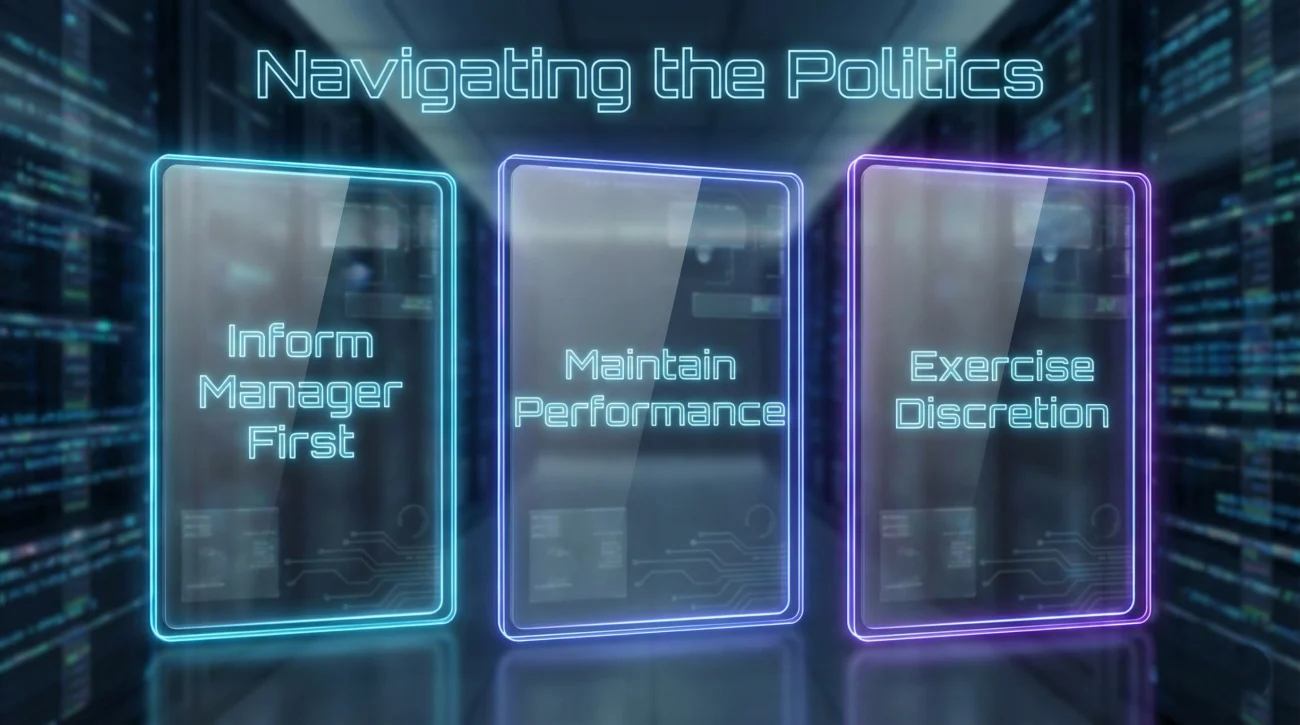
In most organizations, you should tell your current manager before applying internally or at least before your application becomes visible to others. Finding out through the grapevine that you’re trying to leave damages trust and makes you look sneaky. The conversation is awkward but necessary.
Frame it as career development rather than escape. “I’ve seen this opportunity posted and I’m interested in exploring it. I wanted you to hear from me directly rather than finding out another way. I value what I’ve learned here and want to handle this respectfully.” Most reasonable managers appreciate the transparency even if they’re disappointed by the news.
Exceptions exist. If your manager is abusive, if telling them would genuinely put your job at risk, or if company policy specifically protects confidential internal applications, adjust accordingly. But in healthy environments, transparency almost always works better than secrecy.
Serving Two Masters Temporarily
During the internal interview process, you’re performing for two audiences simultaneously. Your current team needs to see you’re still committed while the process plays out. The potential new team needs to see you’re genuinely interested in joining them and not just testing the waters.
Don’t mentally check out of your current role while interviewing. Continue performing fully. Maintain relationships. Deliver on all commitments. If the transfer doesn’t happen, you’ll still be working with these people. If it does happen, you want to leave your current team on good terms rather than having burned bridges on your way out.
Assume Everything Gets Shared
Assume anything you say during internal interviews might reach people in your current department. The company is smaller than you think. Interviewers talk to each other. HR notes get filed. Managers compare notes. Don’t say anything about your current role, manager, or colleagues that would embarrass you if quoted directly to them later.
This isn’t paranoia. It’s recognition that internal moves happen within a web of existing relationships. Discretion protects you regardless of outcome.
Explaining Why You Want to Move
This is the central question of any internal transfer interview. Your answer must explain your motivation clearly without criticizing your current role, team, or management.

Growth and Development
The safest explanation frames the move as pursuing growth rather than fleeing problems. You’re seeking new challenges, developing different skills, or expanding your experience within the company.
“I’ve learned enormously in my current role and I’m genuinely grateful for that foundation. Now I’m looking to develop capabilities in a different area, and this role offers exactly the learning opportunity I’ve been seeking. I want to grow my career here at this company, and this move supports that goal.”
Genuine Interest in the New Function
Passion for what the new team does makes sense as motivation and is easy to present positively. Show you’re pulled toward something exciting, not pushed away from something unpleasant.
“I’ve been interested in product management since I joined the company. I’ve sought opportunities to collaborate with the product team on cross-functional projects, and those experiences confirmed this is where I want to focus my career. When this role opened, it felt like the right moment to pursue that direction.”
Better Skills Alignment
Sometimes your skills genuinely fit better elsewhere in the organization. That’s not criticism of your current role; it’s recognition of where you can contribute most effectively.
“My analytical background is valuable in my current role, but I believe it would create even more impact applied to the data challenges your team is solving. This feels like a better match for my core capabilities and where I can add the most value to the company.”
What You Should Never Say
“My current manager doesn’t develop me and I’m not learning anything new.”
“The work in my department is boring and repetitive.”
“There’s no future for me in my current team so I need to get out.”
Even if these statements contain truth, they sound like complaints. They make you look negative and raise immediate questions about whether you’ll complain about the new team the same way once the novelty wears off. Find positive framing for your transition motivation, even if private frustrations also exist.
Your Unique Internal Advantages
As an internal candidate, you have advantages external candidates can’t match. Make sure interviewers recognize what you bring from inside the organization.
Organizational Knowledge
You understand how the company actually works. The culture, the unwritten rules, the key relationships, the decision-making patterns. External candidates will spend months learning what you already know.
“I understand our company culture and how to get things done here. I know who to talk to for different needs, how decisions really get made, and what approaches work in our environment. That organizational knowledge means I can contribute immediately rather than spending months figuring out how things work.”
Existing Relationships
You already have relationships across the organization. Cross-functional collaboration starts from established trust rather than from zero.
“I’ve built relationships with people across departments through my current role. I’ve worked with members of your team on several projects already. Those connections mean I can hit the ground running with collaboration rather than building relationships from scratch.”
Proven Track Record
Your performance here is known and verifiable. External candidates bring claims; you bring evidence from inside the same organization.
“You don’t have to take my word for my capabilities. My performance reviews, my project outcomes, and my colleagues’ experiences with me are all accessible. I have a proven track record in this organization, not just claims from somewhere else.”
| Internal Advantage | How to Present It |
|---|---|
| Know the culture | Faster integration, immediate effectiveness |
| Existing relationships | Ready for cross-functional collaboration |
| Verifiable track record | Proven performance, not just promises |
| Company loyalty | Committed to growing career here |
| Lower risk hire | Known quantity versus unknown external |
For broader guidance on presenting yourself in interviews, visit our self-introduction framework.
The Transition Conversation
Internal transfers require thoughtful handoff planning that external moves don’t. Be prepared to discuss how you’d transition responsibilities.
Transition Timeline
Have a realistic sense of how long your current role needs to transition properly. Suggesting you could leave tomorrow looks irresponsible. Suggesting you need six months looks like you’re not serious about the move.
“I’d want to ensure a clean handoff of my current responsibilities. Depending on timing, I’d estimate needing two to four weeks to document processes, transition ongoing projects, and brief whoever takes over my work.”
Respecting Your Current Team
Show you care about not leaving your current team in a difficult position. This demonstrates character that the new team will value.
“I want to make sure my current team isn’t left scrambling. I’d work with my manager to ensure a smooth transition that doesn’t disrupt ongoing work. How I leave matters as much as where I go.”
❓ FAQ
🎯 What if my current manager is blocking my transfer?
Some organizations allow managers to block internal moves. If this is happening, understand your company’s policies and escalation options. HR may be able to help. Sometimes the block is temporary. Sometimes you may need to consider external options if internal growth is genuinely blocked.
💼 Should I apply for internal roles I’m not sure I want?
Be cautious. Internal applications are visible to current and potential managers. Applying for everything looks unfocused. Apply only for roles you’d genuinely accept if offered, to protect your reputation as a serious candidate.
⏰ How do I handle competing with a colleague for the same role?
Compete professionally without sabotaging the relationship. Focus on presenting your own strengths rather than undermining your colleague. After the decision, maintain the relationship regardless of outcome. You’ll continue working together either way.
📋 What if I don’t get the internal transfer?
Ask for feedback on what would make you a stronger candidate. Continue performing well in your current role. Look for development opportunities that address any gaps. The next internal opportunity may work out better, and you want to remain a strong candidate.
✨ How soon after joining should I seek internal transfers?
Most organizations expect at least one year in a role before transferring, though policies vary. Moving too quickly suggests you made a poor choice or can’t commit. Check your company’s policies and norms before pursuing internal moves.
Growing Within the Organization
Succeeding with internal transfer interview questions requires balancing ambition with loyalty, and enthusiasm for the new with respect for the current. Inform your manager appropriately. Frame your motivation positively without criticizing anyone. Leverage your internal advantages of organizational knowledge, relationships, and proven track record. Plan transitions thoughtfully. Navigate politics carefully, remembering that everyone involved will continue working in the same company. Internal moves, handled well, demonstrate exactly the kind of thoughtful professionalism that makes you valuable anywhere in the organization.
⚠️ Disclaimer: The interview strategies, sample answers, and negotiation tips provided in this guide are for educational purposes only. Hiring decisions are subjective and vary by company and industry. While these strategies are based on professional HR standards, they do not guarantee a specific job offer or result.