Inside the Hiring Manager’s Mind
A hiring manager looks at your resume. Four jobs in six years. Maybe five jobs in seven. The immediate thought: “Will this person leave me in eighteen months too?”
That’s the concern you’re facing with job hopping interview questions. Not that changing jobs is inherently bad, but that hiring and training you represents an investment they might lose quickly. Your task is addressing that concern directly while reframing your history as an asset.
What hiring managers often don’t say aloud: they secretly wonder if job hoppers know something others don’t. Maybe moving around is how you grow faster, earn more, and learn more. Your job is to make the case that your variety created value, and that this role is where you want to stay.
Flip the Script
Job hopping can be reframed as career strategy rather than commitment failure.
| They See | You Reframe As |
|---|---|
| Lack of commitment | Intentional growth strategy |
| Instability | Adaptability and quick ramp-up |
| Inability to stick with things | Willingness to pursue right fit |
| Problematic pattern | Diverse experience portfolio |
| Risk of leaving soon | Someone who knows what they want |
The reframe only works if you can back it up. Each move needs a coherent rationale that shows you were pursuing growth, not just escaping problems.
Variety as Competitive Advantage
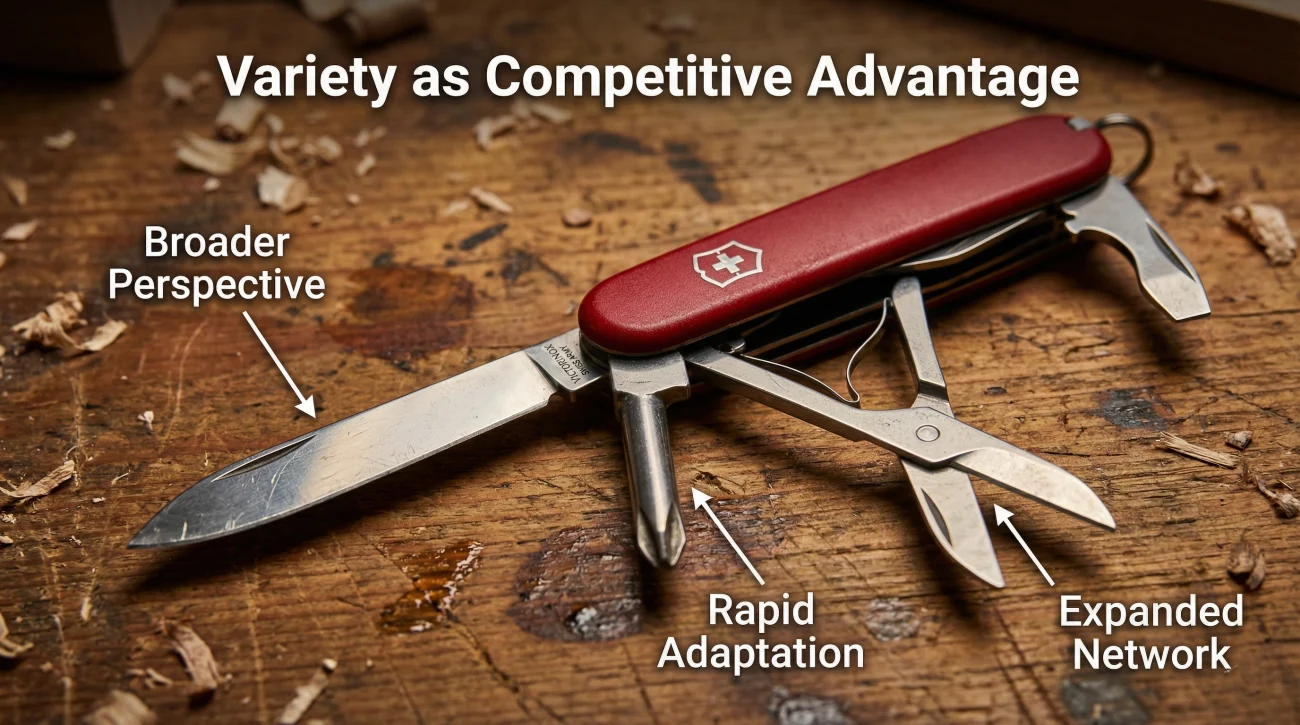
Broader Perspective
Someone who has worked in one company for ten years knows one way of doing things. Someone who has worked at four companies in that time has seen four different approaches, cultures, and systems. That breadth creates pattern recognition that depth alone doesn’t provide.
Rapid Adaptation
Each job transition requires learning new systems, building new relationships, and proving yourself quickly. Job changers develop the ability to onboard fast and contribute early. That skill matters in dynamic environments.
Expanded Network
Multiple employers mean multiple networks of colleagues, clients, and industry contacts. This broader reach has professional value that long-tenured employees at single companies don’t develop.
Tested in Different Contexts
Your skills have been validated across multiple environments. You’ve proven you can perform regardless of specific company culture. That’s evidence of portable capability.
Explaining Individual Moves
Each transition should have a positive reason, not just an escape from something bad.
Growth Opportunities
“I was offered a role with significantly more responsibility. The promotion path at my current company would have taken three more years, and I wanted to accelerate my development.”
Learning New Skills
“I wanted exposure to a different industry sector. My skills in marketing were strong, but I’d only applied them in B2B tech. Moving to consumer products expanded my capabilities.”
Better Alignment
“I learned that company’s culture wasn’t right for me. Rather than stay somewhere I wasn’t thriving, I proactively found an environment where I could contribute more fully.”
Circumstantial Reasons
“That company was acquired and my role was eliminated.”
Or:
“I relocated for family reasons and needed to find a new position.” External circumstances explain moves without suggesting you’re difficult or uncommitted.
For overall guidance on presenting your background, visit our self-introduction guide.
Making the Commitment Case
After explaining past moves, you must address the real question: Will you stay here?
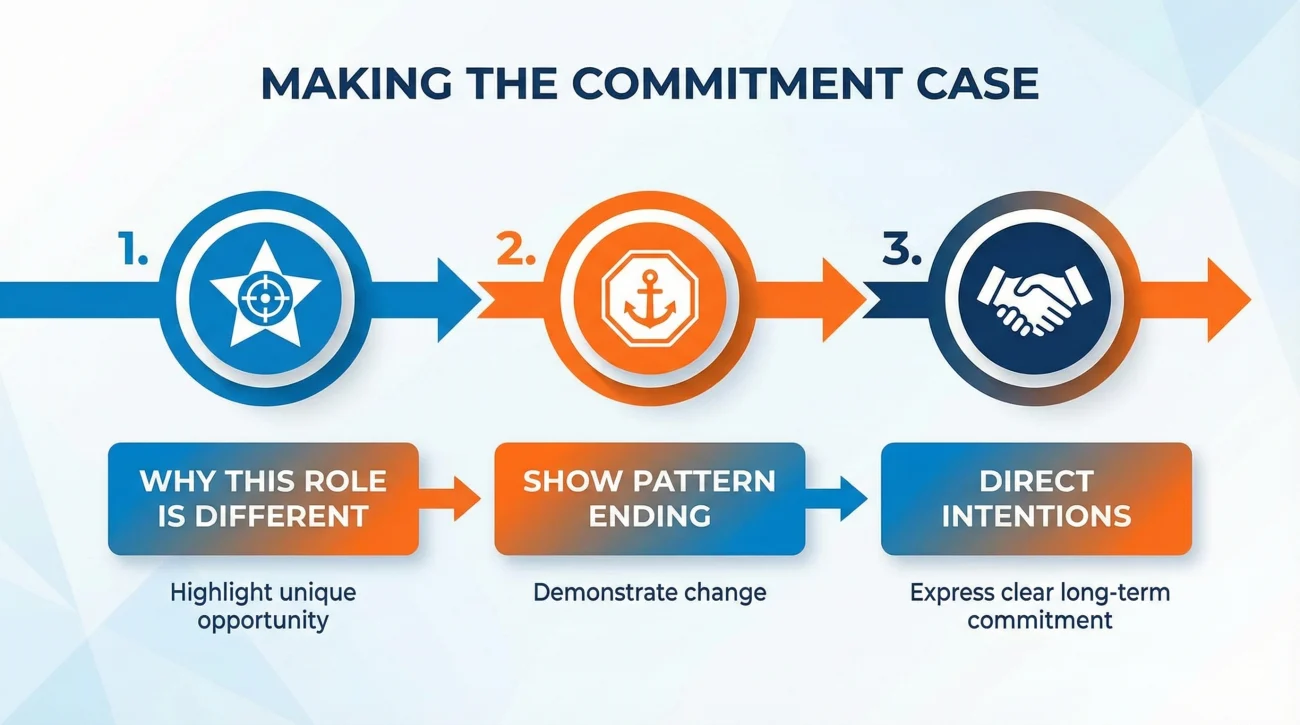
Why This Role Is Different
Articulate specific reasons this opportunity matches what you’ve been looking for. Show you’ve thought about fit rather than just needing a job.
This role combines the growth trajectory I want with a company culture that matches my working style. I’ve been intentional about finding the right place to invest long-term, and this checks the boxes that matter to me.
Show the Pattern Ending
If your moves were about finding fit, demonstrate that you’ve found it. If they were about growth, explain why this role provides the growth runway you need. The story should end with you staying.
Be Direct About Intentions
“I’m looking for a place to stay and grow for the next several years. I’ve learned what I need to thrive, and I’m confident this is the right environment. I’m not interested in continuing to move around.”
❓ FAQ
🎯 How many jobs in how many years counts as job hopping?
Rough guideline: more than three jobs in five years, or consistently staying less than two years at each role. Industry norms vary. Tech and startups accept more movement than traditional industries.
💼 Should I leave short stints off my resume?
You can omit very short roles if they don’t add value, but significant gaps or discovered omissions raise their own questions. Better to explain brief roles than get caught hiding them.
⏰ What if I keep getting laid off?
Multiple layoffs suggest circumstance rather than character. Emphasize the involuntary nature and show you’ve learned to evaluate company stability better when choosing opportunities.
📋 How do I explain moves that were about escaping bad situations?
Reframe as moving toward something better rather than away from something bad. “I sought an environment more aligned with my values” works better than “My manager was terrible.”
✨ Will job hopping always count against me?
Less than it used to. Career-long tenure at single companies is increasingly rare. Many employers now value diverse experience if you can articulate its value and demonstrate commitment to their opportunity.
Movement With Purpose
Answering job hopping interview questions effectively means reframing variety as value while addressing commitment concerns directly. Show that each move had a purpose. Highlight the breadth and adaptability your transitions created. Explain specifically why this role is where you want to stay. Job hopping is only a liability if you can’t articulate why you moved and why you’ll stop. Provide both, and your diverse background becomes an asset.
⚠️ Disclaimer: The interview strategies, sample answers, and negotiation tips provided in this guide are for educational purposes only. Hiring decisions are subjective and vary by company and industry. While these strategies are based on professional HR standards, they do not guarantee a specific job offer or result.