Trading Freedom for Something Else
You’ve had what most office workers dream about. Set your own hours. Choose your clients. Work from anywhere. Answer to no one except the people paying your invoices. Skip the commute, the meetings about meetings, the office politics.
And now you’re interviewing for a full-time position where someone will expect you at a desk, in meetings, following processes you didn’t choose. Why would anyone give up that freedom?
That’s exactly what the interviewer is wondering when asking freelance to full-time interview questions. They’ve seen freelancers struggle with organizational life. They’ve watched independent workers chafe against structure, clash with management, or leave within months once they remembered why they went freelance in the first place.
Your job is explaining why you’re making this trade deliberately and what you’re gaining that matters more to you than the independence you’re leaving behind.
The Concerns You’re Facing
Employers hiring former freelancers worry about specific patterns they’ve observed.
Can You Handle Structure?
Freelancers set their own schedules, choose their projects, define their processes. Organizations have established ways of doing things. Can you adapt to working within someone else’s system rather than creating your own?
Address it with examples of working within client constraints. Most freelance work requires meeting client requirements, following their brand guidelines, adhering to their timelines. You’ve already proven you can work within structure imposed by others.
Can You Genuinely Collaborate?
Many freelance arrangements involve working independently with limited team interaction. Organizations require constant collaboration, negotiation, and compromise. Can you function as part of something larger rather than as a solo operator?
Address it with examples of collaboration from your freelance work. Partnerships with other freelancers. Working within client teams. Coordinating with vendors or subcontractors. Find the teamwork in your independent work and highlight it.
Will You Actually Stay?
Freelancers have demonstrated they can work independently. What stops you from leaving when you miss that independence or when an attractive client appears? The fear is you’re just taking a break from freelancing, not genuinely transitioning to employment.
Address it by explaining what you’re seeking that freelancing can’t provide, and why those needs are significant enough to justify giving up independence.
Can You Be Managed?
After being your own boss, can you accept direction from someone else? Will you resist feedback? Will you struggle with organizational hierarchy?
Address it by describing how you’ve received and implemented client feedback. Freelancers who succeed long-term learn to incorporate input gracefully rather than fighting every suggestion.
| Freelance Reality | What Translates to Employment |
|---|---|
| Meeting client deadlines | Working within organizational timelines |
| Following brand guidelines | Adhering to company standards |
| Incorporating client feedback | Responding to manager direction |
| Coordinating with client teams | Collaborating with colleagues |
| Managing client relationships | Navigating organizational dynamics |
Why Leave Freelancing
Your motivation needs to be compelling and honest. Employers want to understand what drives this transition.
Going Deeper Instead of Wider
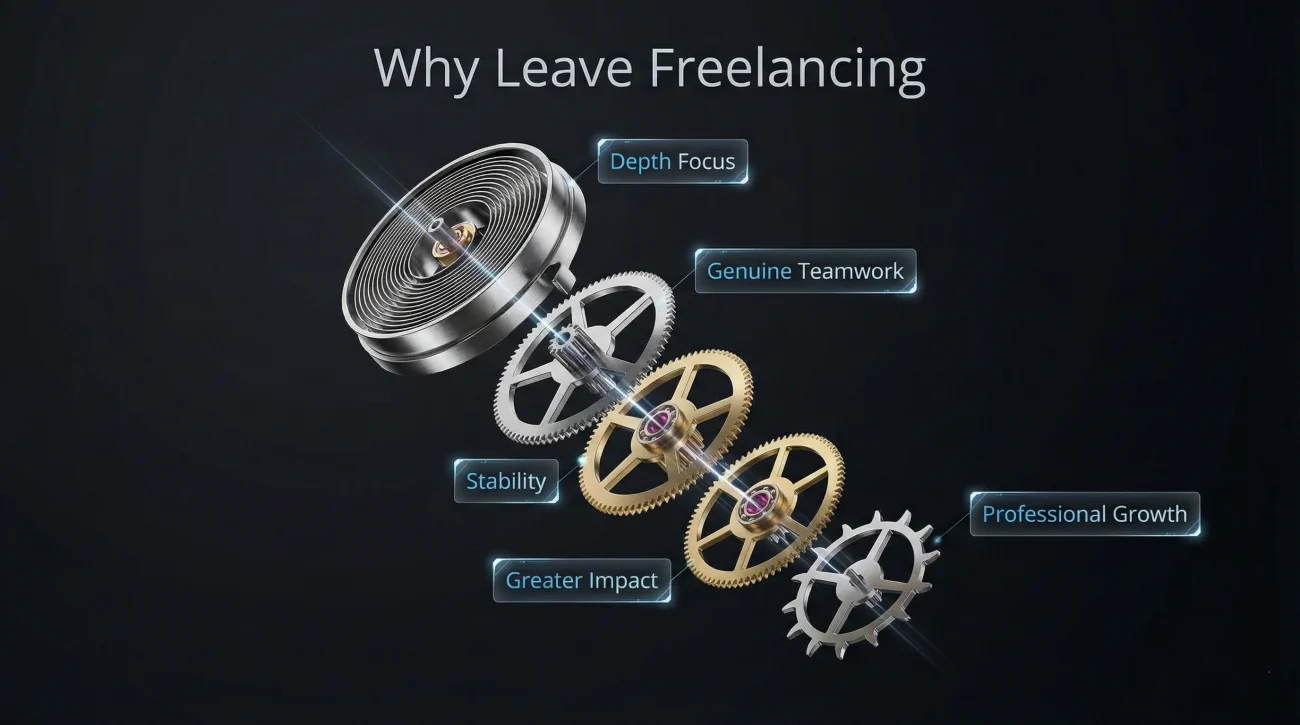
Freelancing often means breadth at the expense of depth. You move from client to client, project to project. Employment lets you go deep on one thing, see it through, watch it evolve over time.
“As a freelancer, I build something and move on before seeing its long-term impact. I want to stay with a product or project long enough to iterate, improve, and learn from what I’ve created. That sustained focus is what I’m seeking.”
Missing Genuine Teamwork
Freelancing can be isolating. If you genuinely miss being part of a team, say so. The desire for human connection and collaborative energy is compelling motivation.
“I’ve realized that what I miss most from employment is the daily collaboration with teammates. Freelancing provides variety but not the camaraderie of working toward shared goals with people I see every day.”
Valuing Stability
The freelance hustle is real. Constant client acquisition, income uncertainty, benefit gaps. Seeking stability is legitimate motivation.
“I’ve enjoyed the freedom of freelancing but I’m ready for more predictability. I want consistent income, benefits, and the ability to plan without wondering where my next project is coming from.”
Wanting Greater Impact
Individual freelancers have limited impact. Organizations provide resources and scale to accomplish things that solo practitioners can’t.
“I’ve hit the ceiling of what I can accomplish as a solo freelancer. I want access to resources, teams, and infrastructure that let me contribute to something bigger than what I can build alone.”
Seeking Professional Development
Freelancers miss structured growth opportunities, mentorship, and career paths that organizations provide.
“Freelancing taught me a lot, but I’ve also realized I want the professional development that comes from working alongside experts, receiving structured feedback, and having a clear growth trajectory.”
For guidance on presenting your complete background, see our self-introduction framework.
What You Bring From Freelancing
After addressing concerns, highlight capabilities that freelancing developed and employment will benefit from.
transferable skills from freelancing to employment
Ownership Mentality
Freelancers own everything: client relationships, project outcomes, business operations, financial results. This creates an ownership mindset that employees who’ve never run anything often lack.
“Running my freelance business taught me to think like an owner. I don’t wait for someone to tell me what to do. I see what needs to happen and I make it happen. That mentality comes with me into employment.”
Client Management Excellence
Successful freelancers master client relationships. Communication, expectation management, handling difficult situations, building trust. These skills transfer directly to stakeholder management.
“Managing multiple clients taught me to communicate proactively, set clear expectations, and handle difficult conversations professionally. My client retention rate was strong because I know how to build trust and deliver on commitments.”
Results Focus
When income depends on satisfied clients, you develop intense focus on delivering results. Freelancers don’t get paid for effort, only for outcomes.
“As a freelancer, results are everything. Clients don’t care how hard you worked, only what you delivered. That results orientation is now fundamental to how I approach any work.”
Diverse Experience
Freelancers often work across industries, company sizes, and challenge types. That diversity builds perspective that specialists lack.
“Working with dozens of clients across different industries gave me perspective that someone in a single company wouldn’t develop. I’ve seen what works in various contexts and I can draw on that range.”
Self-Direction
Freelancers don’t have managers pushing them. They’ve developed self-discipline and motivation that don’t depend on external accountability.
“I’ve been self-directed for years. No one makes me work, meet deadlines, or maintain quality. I’ve internalized those standards completely. I don’t need external pressure to perform.”
❓ FAQ
🎯 What if they ask whether I’ll go back to freelancing?
Be honest about your intentions while committing to this opportunity. “I’ve had a great freelance career, but I’m genuinely seeking employment now for the reasons I described. I’m not treating this as a temporary stop. I want to build something long-term here.”
💼 How do I present inconsistent freelance work history?
Frame freelancing as a coherent chapter rather than a gap. “From this year to that year, I ran an independent consulting practice serving clients in these industries.” Highlight significant clients and projects rather than listing every engagement.
⏰ Should I mention current clients I’d have to transition?
If you have ongoing commitments, be transparent about your transition timeline. Responsible handoff of existing clients actually demonstrates professionalism. Don’t promise availability you can’t deliver.
📋 How do I address salary expectations after variable freelance income?
Research market rates for the role, not what you earned freelancing. Freelance rates include business overhead and lack benefits. Understand the total compensation including benefits when evaluating full-time offers.
✨ What if I’m not sure employment is right for me?
If you’re uncertain, work through that before interviewing. Employers can sense ambivalence. Either commit genuinely to the transition or continue freelancing until you’re ready. Half-hearted transitions typically fail.
Independence Transformed
Answering freelance to full-time interview questions successfully means showing you’ve chosen employment deliberately for specific reasons, not defaulted to it because freelancing failed. Address concerns about structure, collaboration, and commitment with evidence from your freelance experience. Explain compelling motivation for the transition. Then present freelance-developed capabilities as assets the organization gains by hiring you. The independence you cultivated as a freelancer transforms into ownership mentality, client skills, and results focus that benefit your new employer. You’re not abandoning freelancing in defeat. You’re evolving toward what you need for this chapter of your career.
⚠️ Disclaimer: The interview strategies, sample answers, and negotiation tips provided in this guide are for educational purposes only. Hiring decisions are subjective and vary by company and industry. While these strategies are based on professional HR standards, they do not guarantee a specific job offer or result.