
Gaps Are Normal Now
Seventy percent of professionals will experience at least one significant career gap. Economic downturns, industry shifts, personal circumstances, and deliberate career pivots have made resume gaps unremarkable. Yet candidates still panic when asked about them, often making the situation worse with defensive or evasive answers.
The anxiety around how to explain employment gaps typically exceeds the actual concern interviewers have. Most hiring managers care less about the gap itself and more about two things: what you did during that time, and whether you’re ready to perform now. Address both directly, and the gap becomes a non-issue.
Three Pillars of a Strong Gap Explanation
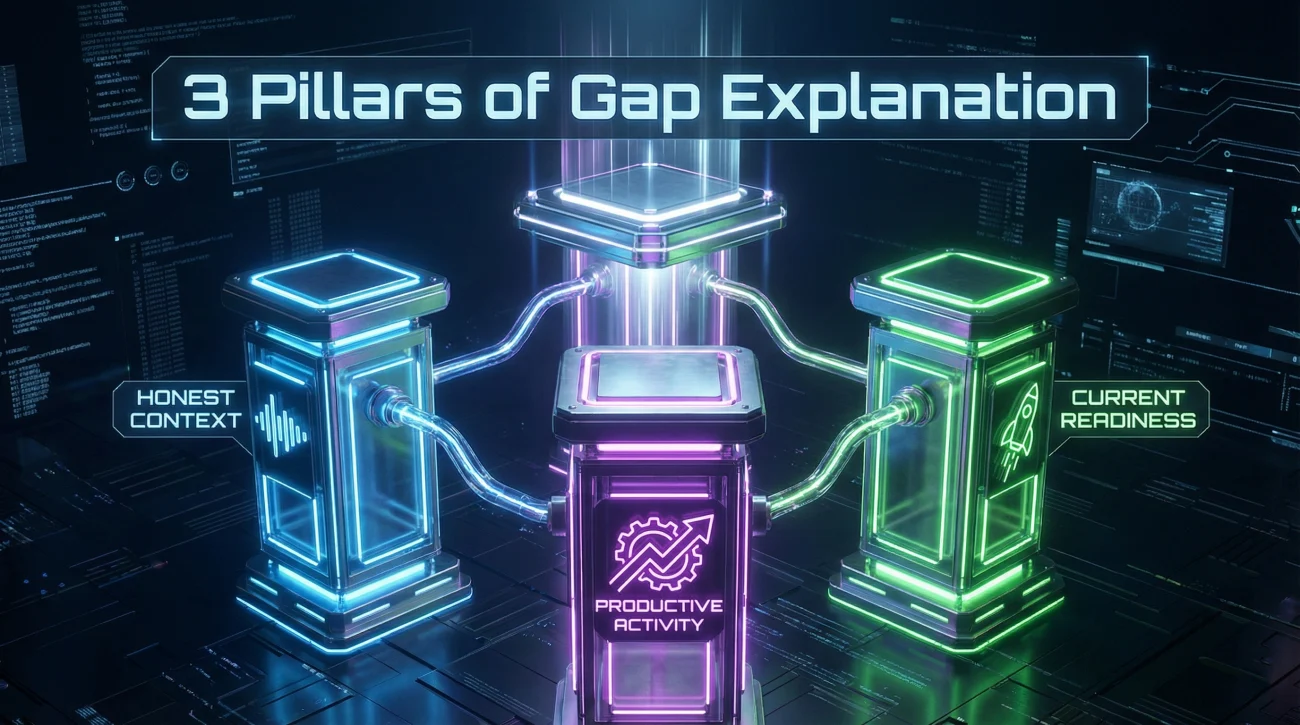
Pillar One: Honest Context
State the reason for your gap simply and without excessive detail. You don’t owe anyone your life story. A brief, factual explanation establishes context without inviting unnecessary follow-up questions.
I took time off to handle a family health situation that required my full attention.
Well, it’s complicated, but basically my mother got sick and then there were insurance issues and the whole thing just dragged on longer than expected…
The first version is complete. The second invites more questions and sounds defensive. Brief honesty works better than elaborate justification.
Pillar Two: Productive Activity
Show that you used the time intentionally. Even during difficult circumstances, most people do something that demonstrates initiative. Identify those activities and present them confidently.
Productive activities during gaps include:
- Online courses or certifications
- Freelance or consulting projects
- Volunteer work
- Personal projects relevant to your field
- Industry reading and skill maintenance
- Caregiving responsibilities (yes, this counts)
Even if your primary activity was caregiving or health recovery, you likely did something that kept you connected to professional development. Find it and mention it.
Pillar Three: Current Readiness
End by confirming you’re fully ready to return. Whatever caused the gap is resolved. Your energy and focus are available for work. This forward-looking close is what interviewers actually need to hear.
That situation is fully resolved now, and I’m ready to commit my full attention to the right opportunity.
Gap Length Changes the Conversation
How you address a gap depends partly on how long it lasted.
| Gap Length | Interviewer Concern Level | Your Approach |
|---|---|---|
| Under 6 months | Minimal | Brief mention, focus on readiness |
| 6 to 12 months | Moderate | Context + productive activities |
| 1 to 2 years | Higher | Clear narrative + skill currency proof |
| Over 2 years | Significant | Detailed explanation + recent upskilling |
Longer gaps require more evidence that your skills remain current. Recent certifications, freelance work, or volunteer roles in your field address this concern directly.
Common Gap Scenarios
Extended Job Search
Sometimes finding the right role takes longer than expected. Frame this as selectivity rather than failure.
“I was searching for the right fit rather than taking the first offer. During that time, I completed two certifications and did some consulting work to stay sharp. I’m glad I waited because this role aligns much better with my goals.”
Personal Development
Deliberate time off for education, travel, or personal growth is increasingly common and accepted.
“I took a planned break to complete my MBA while I could focus on it full-time. It was a deliberate investment in my long-term career trajectory.”
Life Circumstances
Health issues, family responsibilities, or other personal matters don’t require detailed explanation.
“I dealt with a personal situation that required my attention for about eight months. It’s fully resolved, and I used part of that time to stay current through online courses in data analytics.”
For guidance on structuring your overall narrative, see our self-introduction framework.
Gap Explanation Checklist

Before your interview, confirm your gap explanation covers these elements:
- ✅ Brief, honest reason for the gap
- ✅ At least one productive activity during the gap
- ✅ Evidence of current skill relevance
- ✅ Clear statement of readiness to return
- ✅ Forward-looking energy, not backward-looking apology
- ❌ No excessive detail or justification
- ❌ No negative framing or self-criticism
- ❌ No lying or significant omission
❓ FAQ
🎯 Should I bring up the gap first or wait to be asked?
Generally wait to be asked. If the gap is very obvious, you can briefly address it in your introduction to control the narrative, but usually let the interviewer raise it.
💼 What if I didn’t do anything productive during the gap?
Look harder. Reading industry publications counts. Informal skill practice counts. Caregiving responsibilities demonstrate transferable skills. Almost everyone did something. If truly nothing, at least show recent activity that proves current readiness.
⏰ How long should my gap explanation be?
Thirty seconds to one minute maximum. Brief context, productive activity mention, readiness confirmation. Longer explanations suggest defensiveness or that the gap is a bigger issue than it probably is.
📋 Can I hide short gaps by adjusting dates on my resume?
Using years instead of months is acceptable formatting. Outright lying about employment dates is not. Background checks catch discrepancies, and discovered dishonesty ends candidacies.
✨ What if the real reason is embarrassing?
You’re entitled to privacy. A general statement like “personal circumstances” or “family situation” is sufficient. You don’t need to disclose health details, relationship issues, or other private matters.
The Gap Is Not the Story
Mastering how to explain employment gaps means keeping the gap in perspective. It’s one part of your history, not a defining characteristic. Provide honest context, demonstrate you used time productively, confirm current readiness, then redirect to your qualifications for this role. The interviewer wants to hire someone great. Help them focus on the reasons to say yes rather than dwelling on a period when you weren’t working.
⚠️ Disclaimer: The interview strategies, sample answers, and negotiation tips provided in this guide are for educational purposes only. Hiring decisions are subjective and vary by company and industry. While these strategies are based on professional HR standards, they do not guarantee a specific job offer or result.