The Question You Dread
What do you say when the truth is you were fired?
Not laid off. Not part of a restructuring. Terminated for cause. Let go because something went wrong between you and that employer.
This is the career question candidates fear most. The temptation to minimize, deflect, or lie is overwhelming. Yet the path forward requires the opposite: ownership. Mastering how to explain being fired from a job means accepting what happened, demonstrating genuine learning, and proving you’ve grown beyond it.
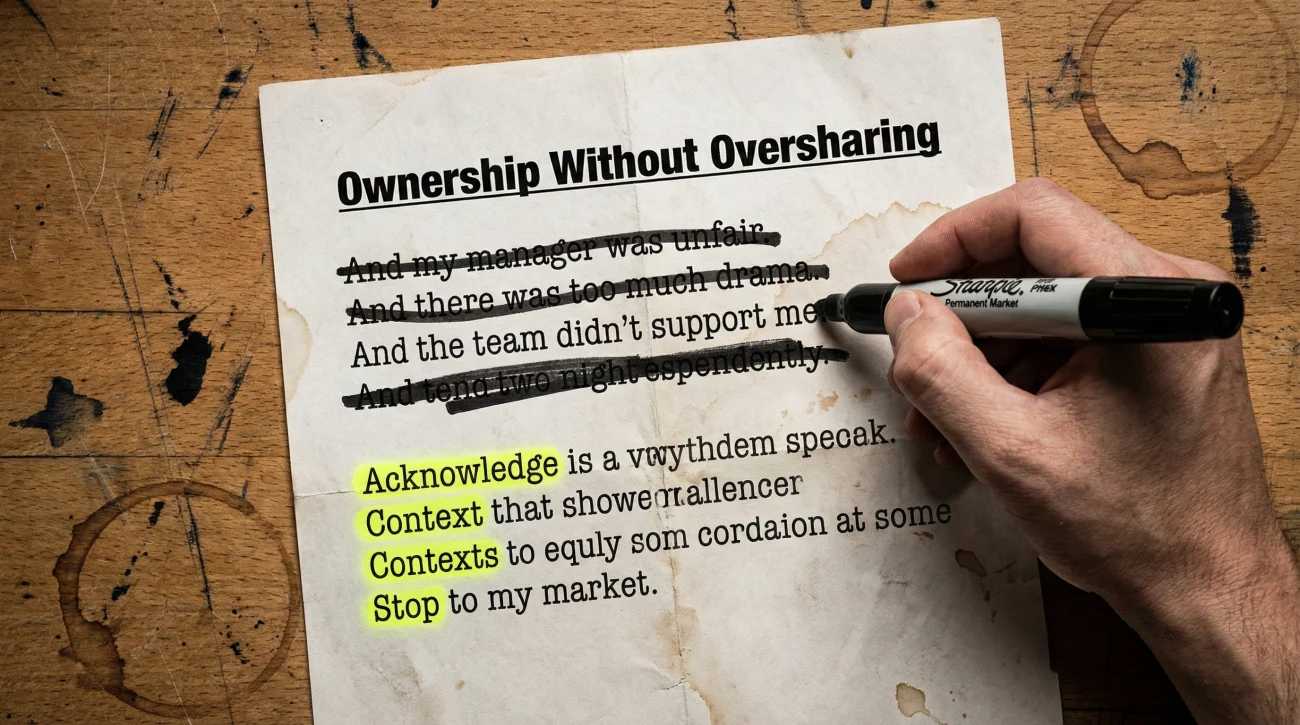
Ownership Without Oversharing
Taking ownership doesn’t mean confessing every detail. It means accepting appropriate responsibility without excuses, blame, or victim positioning.
Acknowledge What Happened
Don’t try to disguise a firing as something else. If asked directly, confirm it honestly. Hiring managers can often verify employment circumstances. Getting caught in a lie is worse than any truth.
Provide Brief Context
You can explain circumstances without making excuses. “The role wasn’t a good fit” or “There was a disagreement about expectations” provides context while maintaining accountability.
Know When to Stop
Give enough information to address the concern, then stop. Over-explaining suggests you’re still defensive or haven’t fully processed the experience.
The Lesson Matters Most

Interviewers asking about a termination want to know: Have you learned from it? Will this happen again?
Your answer must demonstrate genuine reflection. What did you understand about yourself? What would you do differently? How has this experience changed your approach?
Situation
I was terminated from my previous role after about fourteen months. The core issue was a mismatch between my working style and what the company needed during a critical growth phase.
Task
I needed to understand what went wrong rather than just blaming the situation, because the same pattern could repeat if I didn’t learn from it.
Action
I asked my former manager for honest feedback and listened without defending myself. I talked with mentors about the situation. I realized I had been resistant to changing direction quickly when priorities shifted. I preferred to finish what I started even when the business needed me to pivot. That preference for completion over flexibility hurt me in a fast-changing environment.
Since then, I’ve worked specifically on adaptability. In my consulting projects over the past year, I’ve deliberately practiced shifting priorities rapidly and communicating proactively when I have concerns about changing direction.
Result
I’m genuinely grateful for what that experience taught me. I’m more self-aware now about my tendencies and better at adapting to changing needs. My recent client feedback specifically mentions flexibility as a strength, which would not have been said about me two years ago.
Different Firing Scenarios
Performance Issues
If you were fired for not meeting performance expectations, acknowledge the gap between what was needed and what you delivered. Focus on what you’ve done to address the underlying issue.
“I wasn’t meeting the targets for that role. Looking back, I should have asked for help earlier and been more proactive about the skills gap I was facing. Since then, I’ve invested heavily in developing those capabilities.”
Culture or Fit Issues
Sometimes terminations result from style or culture mismatch rather than capability failure. Present this neutrally without criticizing the former employer.
“My working style didn’t align with what that particular team needed. They valued consensus-driven decisions, and I tended to move forward independently. I’ve learned to better assess cultural fit before accepting roles.”
Interpersonal Conflict
If conflict with a manager or colleague led to termination, take your share of responsibility without detailing the conflict.
“There was a significant disagreement with leadership about approach. I handled the situation poorly by not finding a constructive path forward. I’ve since worked on my conflict resolution skills and learned to address disagreements earlier and more productively.”
Approaches That Backfire
- ❌ Blaming others entirely: “My manager had it out for me” removes your agency and suggests you’ll blame others in the future
- ❌ Claiming it was mutual: If you were fired, don’t pretend you chose to leave
- ❌ Excessive detail about the conflict: You’ll sound like you’re still fighting the battle
- ❌ Pretending it didn’t affect you: Some acknowledgment that it was difficult shows appropriate self-awareness
- ❌ Showing ongoing resentment: Any bitterness signals you haven’t moved forward
For guidance on presenting your overall career narrative, see our self-introduction framework.
❓ FAQ
🎯 Do I have to disclose that I was fired?
If asked directly why you left a role, answer honestly. If you’re simply asked to introduce yourself, you don’t need to volunteer it. But never lie. Background checks and references can reveal the truth.
💼 What if the firing was unfair?
Even if you believe the termination was unfair, interviews are not the place to litigate it. Focus on what you learned rather than arguing your case. You can acknowledge disagreement briefly while still demonstrating growth.
⏰ How long until being fired stops mattering?
It diminishes with time and subsequent positive employment. After you’ve had another successful role or two, the firing becomes a smaller part of a larger career story. Recent firings require more explanation.
📋 Should I address it in my cover letter?
Generally no. Cover letters should focus on your qualifications and interest in the role. Save the explanation for when it comes up in conversation. Proactively mentioning it can seem defensive.
✨ What if I was fired for something serious?
If the termination involved serious misconduct, consult with a career counselor or attorney about how to address it. Some situations require more careful handling than general advice can provide.
Failure That Teaches
Knowing how to explain being fired from a job means converting failure into demonstration of growth. Own what happened without excessive detail. Show genuine learning and changed behavior. Demonstrate the self-awareness that makes future failure less likely. Everyone stumbles. The professionals who recover and improve are exactly who thoughtful employers want to hire.
⚠️ Disclaimer: The interview strategies, sample answers, and negotiation tips provided in this guide are for educational purposes only. Hiring decisions are subjective and vary by company and industry. While these strategies are based on professional HR standards, they do not guarantee a specific job offer or result.