The Hardest Transition in Professional Life
Becoming a manager for the first time is one of the most difficult transitions in any career. You must fundamentally redefine how you create value: from doing work yourself to enabling others to do work. You must build new skills: giving feedback, setting priorities for others, having difficult conversations. And often, you must navigate the awkward reality of managing people who were recently your peers.
When interviewers ask first time manager interview questions, they’re evaluating whether you understand these challenges and have strategies for navigating them. Candidates who seem naive about the difficulties ahead raise concerns. Those who’ve thought seriously about the transition demonstrate readiness for leadership.
I’ve coached dozens of first-time managers through this transition. The ones who succeed share common characteristics: they recognize that management is a different job requiring different skills, they understand that relationships will change, and they approach the transition with humility rather than assuming past success guarantees future success.
Common First Time Manager Questions
“Why Do You Want to Be a Manager?”
This question tests motivation. Poor answers focus on status, title, or compensation. Strong answers focus on enabling others and creating larger impact through team success.
Strong answer elements: Genuine interest in developing people, desire to shape direction and priorities, recognition that individual contribution has limits, specific experiences that sparked interest in leadership.
“How Will You Handle Managing Former Peers?”
This question tests self-awareness about the most common first-time manager challenge. Candidates who dismiss this as easy haven’t thought it through. Those who acknowledge the difficulty and describe strategies demonstrate maturity.
Strong answer elements: Acknowledgment that relationships will change, commitment to consistent treatment, plan for addressing issues directly, willingness to have difficult early conversations about new dynamics.
“How Will You Give Feedback to Someone Who Used to Be Your Equal?”
This tests ability to have difficult conversations despite relationship history. Many first-time managers avoid feedback to preserve friendships, which leads to team dysfunction.
Strong answer elements: Commitment to feedback as part of the role, techniques for making feedback constructive, understanding that avoiding feedback isn’t kindness but neglect, willingness to accept discomfort for team success.
“What Do You Anticipate Will Be Most Difficult?”
This tests self-awareness about personal development areas. Generic answers like “time management” are weak. Specific, honest assessments of your particular challenges demonstrate genuine reflection.
Strong answer elements: Honest identification of specific development areas, strategies for addressing them, examples of how you’ve developed similar skills previously, openness to feedback and coaching.
| Question Theme | What It Really Asks | Red Flag Answers |
|---|---|---|
| Why management? | Are you motivated by enabling others or by status? | “I want to advance my career” or “I deserve the title” |
| Managing peers | Do you understand the relationship challenges? | “It won’t be a problem” or “Nothing will change” |
| Giving feedback | Will you have difficult conversations? | Avoiding the topic or excessive focus on positive feedback |
| Anticipated challenges | Are you self-aware about development needs? | Generic answers or claiming to have no challenges |
The transition from peer to manager is the most frequently mentioned challenge in new manager interview answers. Understanding the dynamics and having strategies ready demonstrates leadership maturity.
Why This Transition Is Hard
Yesterday you complained about decisions together. Today you make those decisions. Yesterday you could criticize leadership together. Today you represent leadership. Yesterday you were equals competing for the same promotions. Today you evaluate their performance. These shifts strain relationships even when everyone tries to handle them well.
Some former peers will support your promotion genuinely. Others will harbor resentment they may not express openly. Some will test boundaries to see if friendship means special treatment. Others will distance themselves because the dynamic feels awkward. All of these responses are normal, and you need strategies for each.
Address the Elephant Directly
The worst approach is pretending nothing changed. Have explicit conversations with each team member about how the relationship is evolving. Acknowledge the awkwardness rather than ignoring it.
A conversation might include: “I know this is a shift for both of us. I value our relationship and want to maintain the respect we’ve built. But my role is different now, which means some things will change. I’ll need to give you feedback, make decisions you might disagree with, and hold you accountable in ways that might feel different. I’ll try to do this fairly and respectfully, but I won’t avoid difficult conversations to preserve comfort.”
Be Scrupulously Consistent
Any perception of favoritism will destroy your credibility and team cohesion. Apply policies consistently. Give feedback consistently. Make decisions based on merit, not friendship. You may need to be harder on friends initially to establish that you won’t give them special treatment.
Establish New Boundaries
Some relationships will need to change boundaries. You probably shouldn’t be the person former peers vent to about work frustrations anymore. Social dynamics may need adjustment. This doesn’t mean you can’t maintain genuine relationships, but the nature of those relationships evolves.
Honest truth: Some peer friendships won’t survive the transition to management, even if you handle everything well. People who wanted the role themselves, or who can’t adapt to the new dynamic, may need to leave or may become adversarial. This is painful but sometimes unavoidable.
The Identity Shift: Doer to Enabler
Beyond relationship challenges, first-time managers must fundamentally redefine their professional identity. This shift is psychologically harder than most people anticipate.
Your Old Identity
Before management, your value came from personal output: problems you solved, deliverables you produced, expertise you demonstrated. You were rewarded for being the best at your functional role. Your professional identity was built around individual excellence.
Your New Identity
As a manager, your value comes from enabling others’ output: people you develop, teams you build, capability you create. You’re rewarded for making others successful, not for being the best yourself. Your professional identity must shift from individual excellence to team excellence.
Why This Shift Is Hard
The skills that earned your promotion are different from the skills that make you successful in the new role. You may feel like you’re not contributing because you’re not producing the same way. Watching someone struggle with a task you could do quickly feels inefficient. Letting someone make mistakes when you could prevent them feels irresponsible.
But doing the work yourself doesn’t scale, doesn’t develop your team, and isn’t your job anymore. Learning to enable rather than do is the fundamental challenge of managing former colleagues and managing anyone.
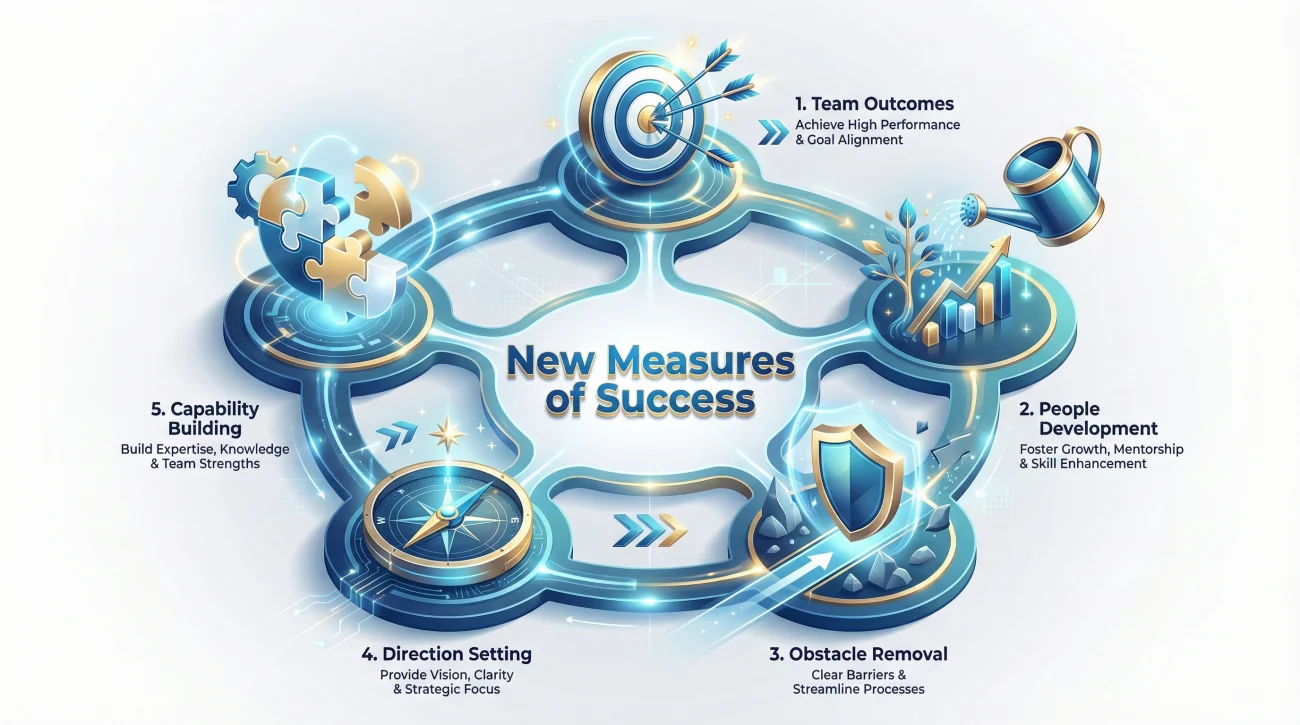
New Measures of Success
Redefine how you measure your contribution:
- 🎯 Team outcomes: What did your team accomplish together?
- 📈 People development: Who grew because of your support?
- 🔧 Obstacle removal: What blockers did you clear for others?
- 🧭 Direction setting: Did the team pursue the right priorities?
- 🌱 Capability building: Is the team stronger than when you started?
For more leadership preparation resources, explore our behavioral interview strategies.
Common First-Time Manager Mistakes
Interviewers often ask what mistakes you anticipate making or what you’ve seen others struggle with. Knowing these patterns demonstrates preparation.
Trying to Stay Friends With Everyone
Wanting to be liked leads to avoiding difficult conversations, inconsistent standards, and weak accountability. Effective managers are respected more than liked. The attempt to maintain friendship above all else usually results in losing both friendship and respect.
Continuing to Do the Old Job
Many new managers keep doing individual contributor work because it’s comfortable and feels productive. This creates bottlenecks, prevents team development, and avoids the harder work of actually managing. You were promoted to do a different job, not to do your old job plus management.
Avoiding or Softening Feedback
Especially with former peers, new managers often avoid feedback or soften it so much it loses meaning. This denies people information they need to improve and allows problems to compound. Kind directness serves people better than comfortable avoidance.
Overclaiming or Underclaiming Authority
Some new managers become authoritarian to establish their new role. Others defer constantly to avoid seeming power-hungry. Neither extreme works. Effective authority is claimed appropriately: making decisions in your scope, escalating what’s above your scope, and involving people in decisions that affect them.
❓ FAQ
🎯 What if a former peer is openly resentful of my promotion?
Address it directly and privately. Acknowledge their feelings without apologizing for your promotion. Clarify expectations for professional behavior. If resentment continues to affect work or team dynamics, treat it as a performance issue that requires management intervention.
💼 How do I give constructive feedback to someone I used to complain with?
Be direct about the role change. You might say: “I know we used to vent together, and this feels different. But part of my job now is giving you feedback to help you succeed. This isn’t me judging you as a friend; it’s me trying to help you grow as your manager.” Then give the feedback clearly and constructively.
⏰ Should I still socialize with former peers?
Some social relationship is fine and helps maintain connection. But boundaries matter. Avoid situations where you’re privy to complaints about management or where alcohol might lead to conversations that complicate your role. When in doubt, keep social interaction professional rather than personal.
📋 What if I’m younger or less experienced than people I’ll manage?
Lead with respect for their expertise while being clear about your role. You don’t need to know everything they know; you need to enable them to apply their expertise effectively. Ask questions, acknowledge their knowledge, and focus on how you can help them succeed rather than trying to prove you know more.
✨ How long does the awkward transition period last?
Typically three to six months before new dynamics feel normal. Some relationships settle quickly; others take longer. The transition goes faster when you address changes directly rather than avoiding them and when you establish consistency early.
Prepare for the Real Challenges
Answering first time manager interview questions effectively means demonstrating awareness of the genuine challenges ahead. Acknowledge that managing former peers is difficult and describe specific strategies for navigating the transition. Recognize that your identity must shift from individual contributor to enabler of others. Anticipate common mistakes and explain how you’ll avoid them. When interviewers see a candidate who has thought seriously about these challenges, they see someone ready for leadership rather than someone who will struggle with surprises.
⚠️ Disclaimer: The interview strategies, sample answers, and negotiation tips provided in this guide are for educational purposes only. Hiring decisions are subjective and vary by company and industry. While these strategies are based on professional HR standards, they do not guarantee a specific job offer or result.