The Pizza Party Problem
A technology company I consulted for couldn’t figure out why their engagement scores kept dropping despite increasing their “motivation budget.” They had added pizza parties, gift cards, employee appreciation days, and quarterly bonuses. Turnover actually increased after each initiative.
The problem wasn’t the rewards themselves. The problem was that rewards had become substitutes for addressing what actually demotivated people: unclear priorities, meaningless meetings, a manager who took credit for others’ work, and no connection between daily tasks and company impact. When I asked employees what would make work better, nobody mentioned pizza. They mentioned wanting to know their work mattered.
When interviewers ask how do you motivate a team, they’re testing whether you understand this distinction. Leaders who rely primarily on external rewards create temporary spikes in satisfaction. Leaders who connect work to meaning, provide autonomy, and recognize genuine contribution create sustained engagement that survives difficult periods.
The Science Behind Sustainable Motivation
Research consistently shows that once basic compensation needs are met, additional external rewards have diminishing returns for motivation. What actually drives sustained performance are intrinsic factors: a sense of purpose, autonomy over how work gets done, opportunities for mastery and growth, and feeling connected to something larger than oneself.
This doesn’t mean external rewards don’t matter. Fair compensation is essential. Recognition feels good. Bonuses can reinforce specific achievements. But these extrinsic motivators work best as supplements to intrinsic engagement, not replacements for it.
The Four Pillars of Intrinsic Motivation
| Pillar | What It Means | How Leaders Enable It |
|---|---|---|
| Purpose | Connecting work to meaningful outcomes | Share customer impact, explain the “why” behind tasks, celebrate outcomes not just outputs |
| Autonomy | Control over how work gets done | Define outcomes, let people determine methods, avoid micromanagement |
| Mastery | Opportunity to develop and grow | Provide stretch assignments, give feedback, invest in development |
| Connection | Belonging to something meaningful | Build team identity, foster relationships, create shared experiences |
Your team motivation interview answer should demonstrate understanding of these pillars and specific ways you activate them.
Motivation Stories From Fifteen Years of Leadership
Connecting Engineers to Customer Impact
My most powerful motivation lesson came from leading a platform engineering team building infrastructure that users never saw directly. The team was technically excellent but increasingly disengaged. They joked about being “plumbers in the basement” that nobody appreciated.
I arranged for our customer success team to present three stories about clients who were struggling with the old platform and how the new infrastructure would help them. One story involved a small business owner who had lost significant revenue due to system outages the old infrastructure couldn’t prevent.
The shift was immediate and dramatic. Engineers who had been watching the clock started asking how they could accelerate the timeline. They weren’t doing different work, but the work now had visible meaning. One engineer told me later: “I always knew this stuff mattered technically. I didn’t know it mattered to real people’s businesses.”
I learned that motivation often isn’t about changing what people do. It’s about connecting what they already do to outcomes that matter to them.
The Team That Designed Their Own Process
When I took over an operations team with low engagement, I discovered they had no input into how they worked. Every process had been handed down from management. People followed procedures without understanding or ownership.
I tried something different. I presented our performance targets and constraints, then asked the team to design their own workflow for meeting them. My only requirements were hitting the targets and staying within budget. How they organized themselves was up to them.
The process they designed was better than anything I would have created. More importantly, they owned it. When problems arose, they fixed them proactively because it was their system. Engagement scores increased significantly, and we exceeded our targets for the first time in two years.
The lesson: People are more motivated executing their own plans than following someone else’s, even when the plans are similar.
Learning That Motivation Is Personal
Early in my leadership career, I assumed everyone was motivated by the same things I was: challenging problems, public recognition, advancement opportunities. I was wrong in ways that cost me good employees.
I lost a talented analyst because I kept pushing her toward leadership roles she didn’t want. She wanted to become a deeper technical expert, not manage people. I lost a sales rep because I recognized him publicly when he actually found that embarrassing. He wanted quiet acknowledgment and more interesting accounts, not applause at company meetings.
I learned to ask people directly: “What energizes you about your work? What drains you? What would make this role ideal for you?” Then I actually listened and tried to create conditions aligned with their answers, not my assumptions about what should motivate them.
Key insight: Motivation isn’t something you do to people. It’s conditions you create for people to motivate themselves. Your job is understanding what those conditions are for each individual.
Practical Motivation Strategies
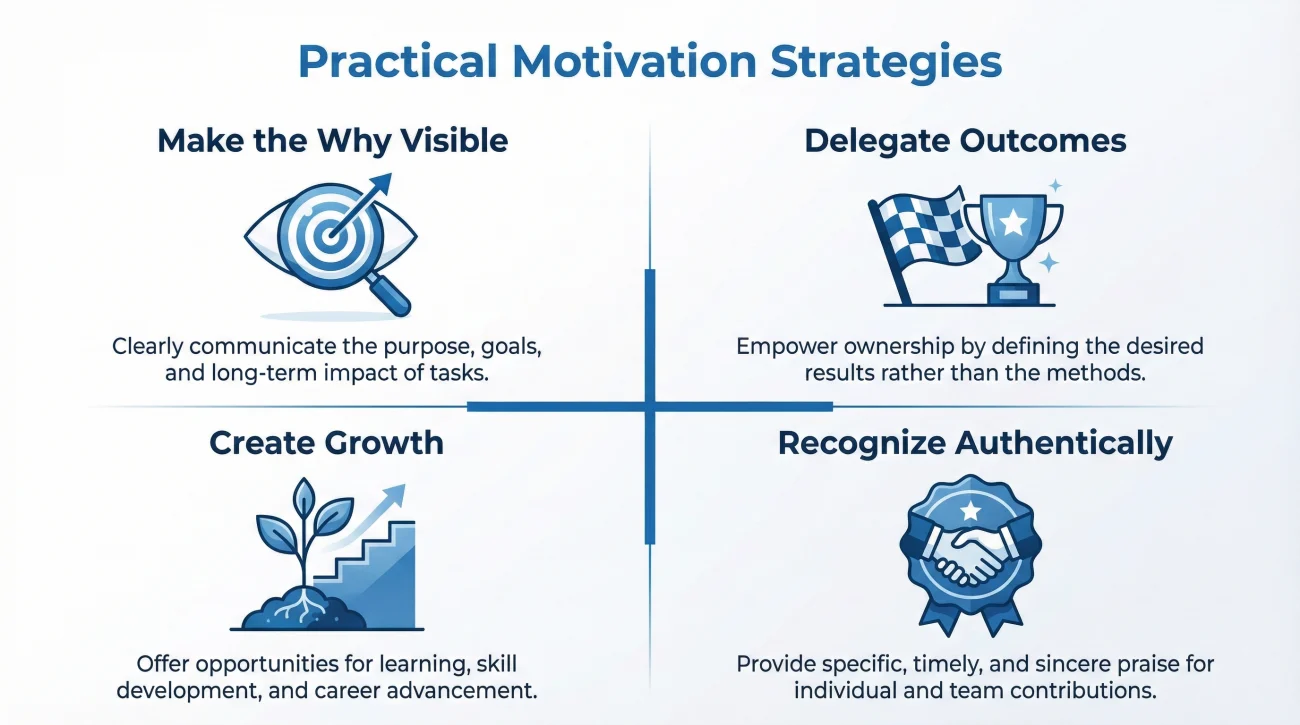
Make the “Why” Visible
Connect daily tasks to meaningful outcomes at every opportunity. Share customer feedback, both positive and constructive. Explain how individual contributions fit into larger goals. When assigning work, explain why it matters, not just what needs to be done.
This doesn’t require elaborate ceremonies. It can be as simple as forwarding a customer email that mentions the team’s work, or starting a project kickoff with the problem we’re solving for real users.
Delegate Outcomes, Not Tasks
When possible, define what success looks like and let people determine how to achieve it. This requires trusting your team’s judgment and accepting that their approach might differ from yours. The investment in autonomy pays off in engagement and often in better solutions.
Not everything can be delegated this way. Some tasks have compliance requirements or established best practices. But when genuine flexibility exists, offering it signals trust and enables ownership.
Create Growth Opportunities
People are motivated by developing new capabilities, not just using existing ones repeatedly. Look for opportunities to stretch team members beyond their current roles. Assign projects that build new skills. Provide coaching and feedback that accelerates development. Invest in training that opens future possibilities.
Recognize Contribution Authentically
Recognition matters, but it must be genuine and appropriately delivered. Some people want public acknowledgment. Others prefer private appreciation. Some value written recognition they can reference later. Others want recognition in the form of increased responsibility or interesting assignments.
Generic recognition programs often fail because they assume everyone wants the same thing. Effective recognition requires knowing your people well enough to acknowledge them in ways that actually feel meaningful to them.
- 🎯 Be specific: “Your analysis of the customer churn data identified the root cause” beats “Great work on the project”
- ⏰ Be timely: Recognition delivered when the contribution is fresh has more impact
- 👤 Be personalized: Deliver recognition in the format each person actually values
- 📊 Be connected: Link recognition to impact, not just activity
Motivating Through Difficult Periods
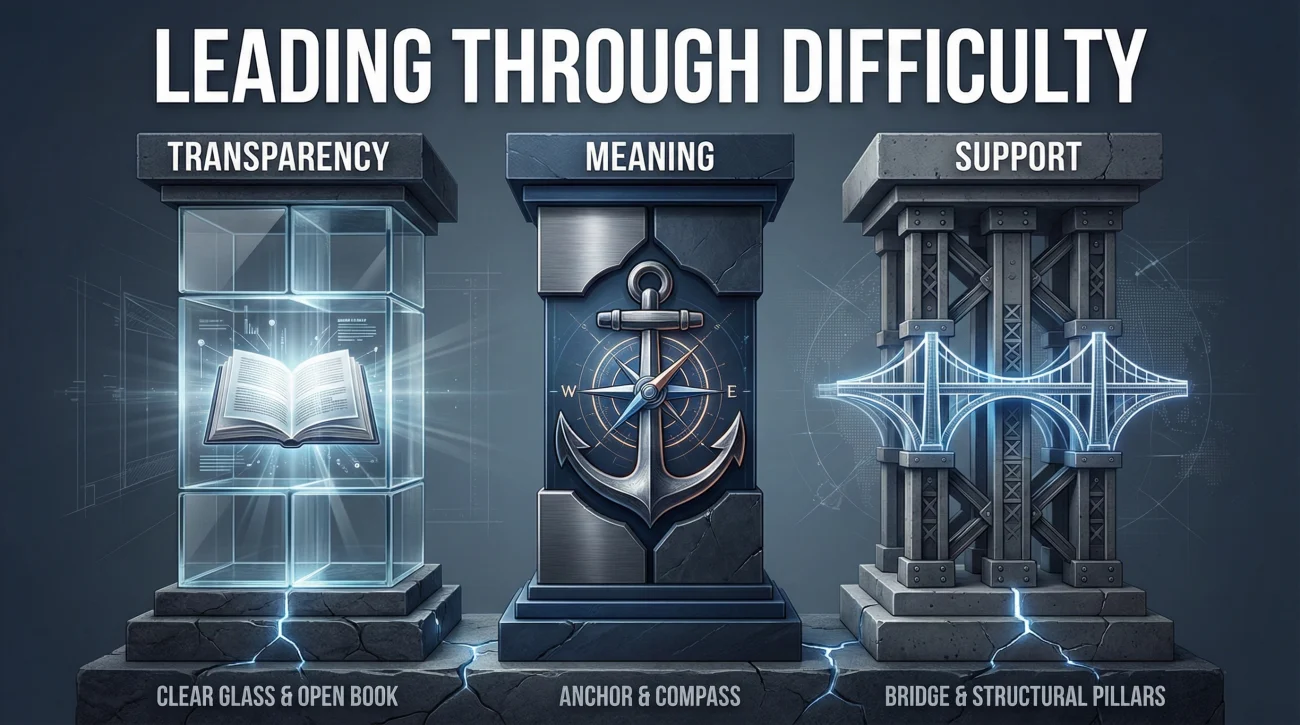
The true test of a leader’s motivation capabilities comes during difficulty: layoffs, failed projects, organizational uncertainty, or extended pressure periods. External rewards feel hollow when people are anxious about their jobs or exhausted from sustained intensity.
Transparency Over False Optimism
When times are hard, don’t pretend they aren’t. Teams see through false positivity, and it damages trust. Instead, be honest about challenges while focusing on what people can control. “Here’s what we know, here’s what we don’t know, and here’s what we’re doing about it” is more motivating than manufactured cheerfulness.
Double Down on Meaning
Meaning matters more during difficulty than during good times. When everything feels uncertain, connection to purpose provides stability. Remind people why their work matters. Celebrate small wins that demonstrate progress. Help people see their contribution to navigating the challenge.
Increase Support Without Micromanaging
Difficult periods require more leadership presence but not more control. Check in more frequently to understand how people are doing. Remove obstacles more proactively. Provide more context about decisions and direction. But don’t respond to stress by taking away the autonomy that makes work feel meaningful.
For more on leading teams through challenges, see our guide to demonstrating leadership in interviews.
Structuring Your Interview Answer
Purpose-Centered Answer
“I motivate teams primarily by connecting their work to meaningful outcomes. People want to know their effort matters beyond just completing tasks. I regularly share customer feedback, business impact data, and stories that make our work’s effect visible. When someone understands why their task matters, not just what needs to be done, they bring more energy and creativity. I also invest in understanding what motivates each individual because people are energized by different things. Some want recognition, others want challenge, others want stability or growth. I try to create conditions aligned with what each person actually needs to do their best work.”
Autonomy-Centered Answer
“My motivation approach centers on ownership and autonomy. I’ve found that people are most engaged when they’re solving problems rather than following instructions. I share goals and constraints, then give people significant freedom to determine how to achieve them. This requires trusting your team’s judgment and accepting that their approach might differ from yours. The payoff is people who are genuinely invested in outcomes because it’s their solution, not just their assignment. I balance this with support: I’m available for guidance, I remove obstacles, and I provide feedback. But I try to enable rather than direct.”
❓ FAQ
🎯 What about team members who seem unmotivated no matter what?
First, verify it’s actually a motivation problem. Sometimes what looks like low motivation is actually confusion about priorities, obstacles you don’t see, or poor role fit. Have an honest conversation about what’s happening before concluding someone is unmotivated. If it’s genuinely a motivation issue despite good conditions, it may indicate the person isn’t in the right role or organization.
💼 How do I motivate during layoffs or uncertainty?
Transparency and purpose become even more important. Be honest about what you know and don’t know. Focus on what people can control. Increase connection and support without micromanaging. Help people see how their work contributes to navigating the challenge. Avoid false optimism that damages trust.
⏰ Don’t financial rewards matter?
Fair compensation is essential and inadequate pay definitely demotivates. But once compensation is adequate, additional money has diminishing returns for sustained motivation. Meaning, autonomy, and growth often matter more than marginal pay increases for ongoing engagement. The research on this is consistent across decades of studies.
📋 How do I discover what motivates each person?
Ask directly in one-on-one conversations: “What energizes you? What drains you? What would make this role ideal?” Observe what tasks they gravitate toward and which they avoid. Notice when they seem most engaged. Pay attention to what they mention wanting more of. Then actually incorporate their answers into how you lead them.
✨ Can motivation strategies be learned or are some people naturally better?
Motivation skills can absolutely be developed. Understanding intrinsic drivers, practicing empathy, learning to connect work to meaning are all improvable with intention and practice. The foundation is genuinely caring about your team members’ experience and success.
Create Conditions, Don’t Push Harder
Answering how do you motivate a team effectively means showing you understand the difference between temporary incentives and sustainable engagement. Leaders don’t motivate people directly. They create conditions where people can motivate themselves: connecting work to purpose, providing meaningful autonomy, enabling growth, and recognizing contribution authentically. When you demonstrate this understanding with specific examples from your experience, interviewers see someone who builds teams that perform consistently, not just when rewards are offered.
⚠️ Disclaimer: The interview strategies, sample answers, and negotiation tips provided in this guide are for educational purposes only. Hiring decisions are subjective and vary by company and industry. While these strategies are based on professional HR standards, they do not guarantee a specific job offer or result.