

Leadership Stories Beyond Job Titles
When interviewers ask tell me about a time you led a team, many candidates panic because they’ve never been formal managers. They apologize, explain they haven’t had direct reports, and offer weak substitutes. This response misses what interviewers actually want to hear.
Leadership happens constantly without titles. You lead when you coordinate a cross-functional project. You lead when you rally colleagues around solving a problem. You lead when you step up during a crisis that needs someone to create order from chaos. You lead when you mentor a struggling peer or champion an initiative nobody assigned you. These stories often demonstrate leadership capability more convincingly than stories about managing direct reports, because they show you can lead without relying on positional authority.
I’ve interviewed hundreds of candidates for leadership positions. The most impressive answers often came from individual contributors who led significant initiatives without any formal authority. Their stories demonstrated pure leadership ability, the kind that creates followership through vision and competence rather than organizational hierarchy.
What Makes a Leadership Story Compelling
Strong leadership stories share specific characteristics that separate them from generic project descriptions. Understanding these elements helps you select and shape your story for maximum impact.
Meaningful Stakes
The situation should involve something that genuinely mattered: business outcomes, customer impact, team welfare, or significant risk. Leading a low-stakes project competently is less impressive than navigating a high-stakes challenge. If your story doesn’t have natural stakes, you might need a different example.
Genuine Challenges
Easy leadership proves nothing. The obstacles you faced make the story interesting: conflicting priorities, limited resources, resistant stakeholders, team dysfunction, tight timelines, or technical complexity. These challenges create the context where leadership actually matters.
Clear Leadership Actions
This is where most candidates fail. They describe what the team accomplished but not what they specifically did to enable it. Your story must clearly show your leadership contribution: aligning people, removing obstacles, making decisions, providing direction, coaching others, or creating structure.
Collective Outcomes
Leadership is measured by results achieved through others, not personal heroics. Your story should emphasize what the team accomplished together while being clear about your role in making that possible.
| Story Element | Weak Version | Strong Version |
|---|---|---|
| Stakes | “We had a project to complete” | “Our largest customer threatened to leave if we didn’t solve their integration issues within sixty days” |
| Challenge | “It was complicated” | “Engineering and sales blamed each other, and nobody owned the solution” |
| Leadership action | “I helped the team” | “I created a joint task force, facilitated daily standups, and made the difficult call to delay another feature to prioritize this” |
| Outcome | “We finished the project” | “We delivered the solution in forty-five days. The customer renewed and expanded their contract by forty percent” |
Leadership Stories That Impressed Me
Cross-Functional Project Without Authority
A senior analyst interviewing for a management role told this story:
“I led a cross-functional initiative to redesign our customer onboarding process even though I wasn’t anyone’s manager. The project had stalled for months because engineering, design, customer success, and product couldn’t agree on priorities. Each team had different metrics they were optimizing for, and meetings devolved into arguments about whose requirements mattered most.”
“I volunteered to coordinate because I saw the impasse hurting customers. I started by meeting with each stakeholder individually to understand their constraints and concerns. I discovered that most disagreements stemmed from people not understanding each other’s pressures, not from fundamentally incompatible goals.”
“I created a shared framework that mapped how improvements would affect each team’s metrics, making trade-offs visible and discussable. I facilitated weekly working sessions focused on specific decisions rather than general debate. When we hit impasses, I proposed compromises and, when needed, escalated to leadership with clear options and recommendations.”
“We launched the redesigned onboarding in four months, reducing time-to-value for new customers by sixty percent. Customer satisfaction scores for onboarding increased from 3.2 to 4.4. Three people on the project told me afterward it was the most productive cross-functional work they’d experienced.”
This story demonstrates leadership through influence, facilitation, and stakeholder management rather than positional authority. The specific metrics and stakeholder feedback provide credible evidence of impact.
Crisis Leadership Emergence
A software engineer described an unexpected leadership moment:
“Our production system went down during our biggest sales event of the year. Our team lead was on vacation and unreachable. I had the most system knowledge among the people available, so I stepped into the coordination role even though I was relatively junior.”
“The first thing I did was establish structure. I divided us into investigation tracks based on the most likely failure points. I designated one person to communicate status updates to the business every fifteen minutes so they could manage customer expectations. I made myself the decision point for what we would try next, so we weren’t debating while the system was down.”
“We identified the root cause, a memory leak triggered by the traffic spike, within forty minutes and had service restored in ninety minutes total. After the incident, I led the post-mortem discussion that resulted in three architectural changes to prevent similar issues.”
“My director later told me that how I organized the response impressed him more than the technical fix. He said anyone could have found the bug eventually, but not everyone could have created that level of clarity during chaos.”
This story shows leadership emergence during crisis: the ability to step up when leadership is needed regardless of formal role.
Team Turnaround
A manager shared a more traditional but equally compelling story:
“I inherited a team that had missed deadlines for three consecutive quarters. Morale was terrible, turnover was high, and leadership was considering disbanding the team entirely. They gave me one quarter to show improvement before making that decision.”
“I spent my first two weeks just listening. I had one-on-ones with every team member and asked what was working, what wasn’t, and what they would change if they could. The pattern was clear: the team had no mechanism for prioritizing conflicting requests from multiple stakeholders. They were trying to do everything simultaneously and completing nothing.”
“I implemented three changes. First, I established a weekly prioritization review with all key stakeholders present, so trade-offs were visible and agreed upon rather than made ad-hoc by overwhelmed team members. Second, I created a visible board showing exactly what we were and weren’t working on, with explicit explanations of what was deprioritized and why. Third, I started protecting the team from ad-hoc requests by routing all asks through the prioritization process.”
“We hit our commitments for the first time that quarter. By the second quarter, we were considered one of the most reliable teams in the department. Turnover stopped completely. Two team members who had been planning to leave told me they changed their minds because work finally felt manageable.”
Pattern to notice: Each of these stories involves specific leadership actions the candidate took, not just team accomplishments. The interviewer can see exactly what the candidate contributed to the outcome.
Structuring Your Answer Using STAR
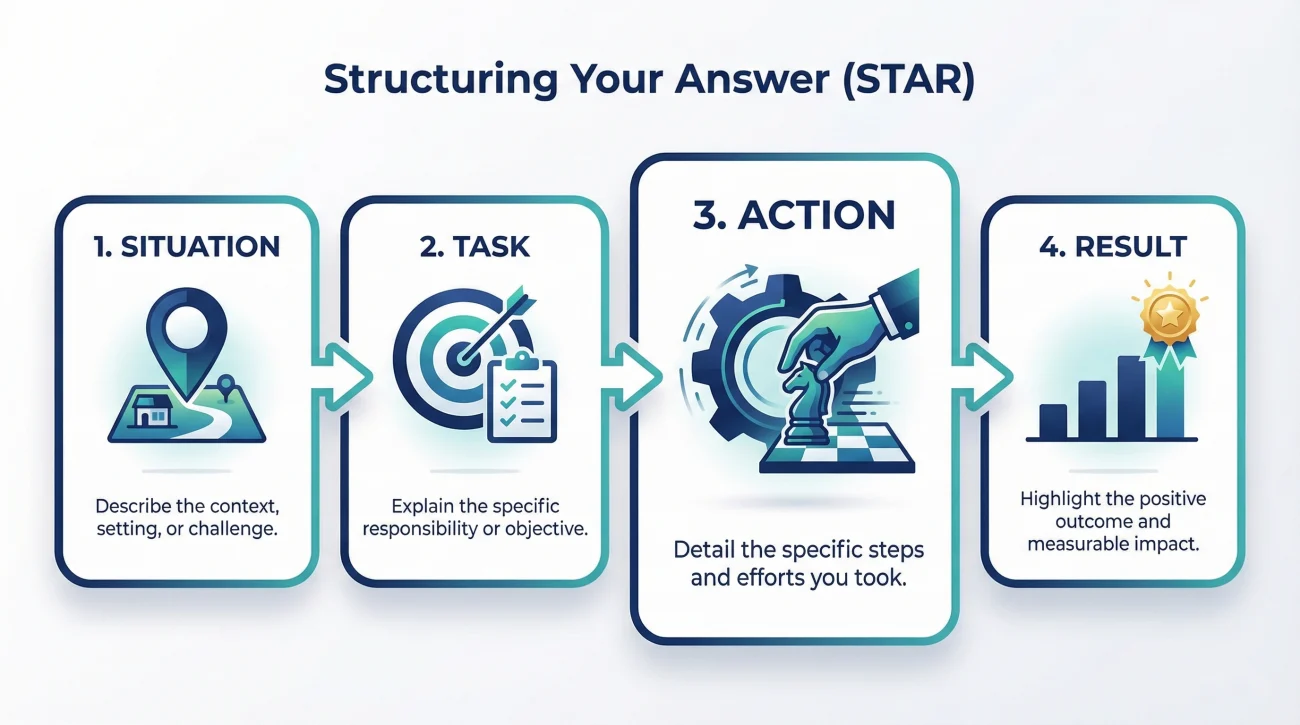
The STAR framework (Situation, Task, Action, Result) provides a reliable structure for leadership stories. Customize the emphasis based on what your specific story demonstrates best.
Situation
Set the Context Efficiently
I use the Situation section to set context efficiently, explaining what was happening and why it mattered. I include just enough detail to make the stakes clear without spending excessive time on background. I aim for two to three sentences that create context for everything that follows.
Task
Clarify Your Role
In the Task section, I clarify my specific role. I explain why I was leading, whether through formal assignment, volunteering, or an emerging need, and I distinguish what I was responsible for versus what the team owned. This prevents confusion about my personal contribution.
Action
Show Leadership Behaviors
The Action section gets the most airtime because it shows leadership behaviors. I focus on what I specifically did to enable the team’s success, using “I” statements for my actions while still acknowledging the team for collective work.
I emphasize leadership behaviors such as aligning people, setting direction, removing obstacles, making decisions, and developing others. The goal is to make my impact concrete and easy to follow, not just describe activity.
Result
Quantify Collective Achievement
In the Result section, I quantify what the team achieved, using numbers where possible. I connect the outcomes back to my leadership actions to show a clear cause-and-effect relationship.
I also include recognition, feedback, or lasting impact when available, because it validates the success and shows the work had continued value beyond the immediate moment.
For more on structuring behavioral interview answers, see our interview preparation guide.
Leadership Stories Without Management Experience
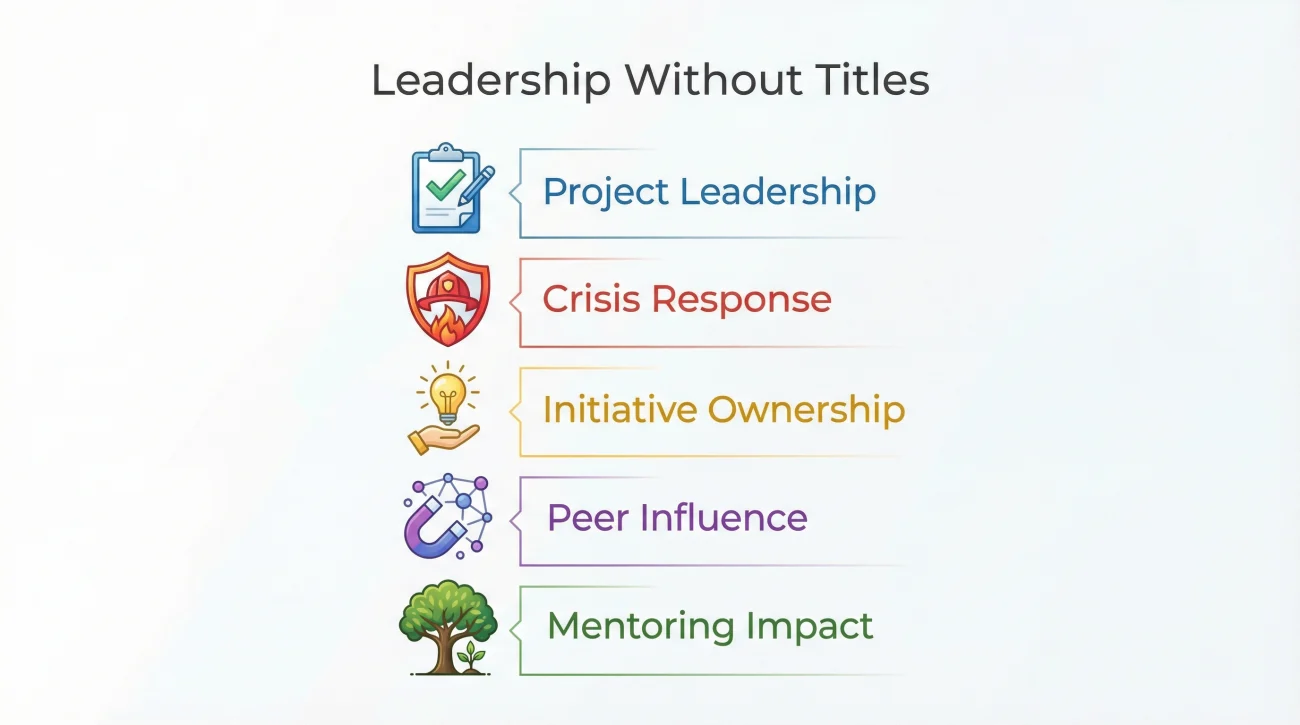
If you haven’t been a formal manager, focus your story on one of these leadership contexts:
- 🎯 Project leadership: Coordinating cross-functional work toward shared goals
- 🔥 Crisis response: Stepping up when someone needed to create order
- 💡 Initiative ownership: Championing and driving change nobody assigned you
- 👥 Peer influence: Rallying colleagues around solving problems together
- 🌱 Mentoring impact: Developing others’ capabilities through guidance and support
Frame your story around the leadership behaviors you demonstrated rather than apologizing for lack of formal authority. Many interviewers specifically value stories of leading without authority because they demonstrate leadership that doesn’t depend on position power.
❓ FAQ
🎯 What if I’ve never been a manager?
Leadership happens without titles. Focus on times you coordinated projects, influenced peers, mentored colleagues, or stepped up during challenges. These stories often demonstrate leadership capability more convincingly than managing direct reports because they show you can lead without positional authority.
💼 Should I mention conflicts or challenges in my story?
Yes, challenges make stories compelling. Leadership is tested through obstacles. Describe how you handled disagreements, resource constraints, or unexpected problems. The challenge demonstrates your leadership more than smooth sailing would.
⏰ How do I show leadership without claiming too much credit?
Use language that distinguishes your contribution from team accomplishments. “I facilitated alignment and the team delivered” or “My role was removing obstacles so the team could focus on execution” shows leadership while honoring collective achievement. Be specific about what you did while crediting the team for outcomes.
📋 Can I use a story where the project failed?
Only if you can demonstrate strong leadership despite the outcome and genuine learning. Failed projects with clear leadership contribution and honest reflection can work, but successful outcomes are generally safer for this question. Save failure stories for questions specifically about learning from mistakes.
✨ How recent should my example be?
Within three to five years ideally. Recent examples demonstrate current capability. Much older examples may suggest you haven’t had leadership opportunities recently, which raises questions about your recent experience and growth.
Lead the Story With Your Actions
Answering tell me about a time you led a team effectively means showing exactly how you enabled collective success. Choose a story with meaningful stakes and real challenges. Be specific about your leadership actions: the decisions you made, the direction you provided, the obstacles you removed, the alignment you created. Credit the team for outcomes while being clear about your distinct contribution. The best leadership stories make your specific role unmistakably clear while honoring the collective achievement.
⚠️ Disclaimer: The interview strategies, sample answers, and negotiation tips provided in this guide are for educational purposes only. Hiring decisions are subjective and vary by company and industry. While these strategies are based on professional HR standards, they do not guarantee a specific job offer or result.