The Character Test You Can’t Fake
Integrity interview questions are different from other interview questions because they probe character rather than capability. Interviewers aren’t testing whether you can do the job. They’re testing whether you can be trusted to do it ethically. They want to know if you’ll do the right thing when nobody is watching, when doing wrong would be easier, or when honesty carries a cost.
These questions are hard to fake because they require specific examples. Claiming to have integrity is meaningless. Everyone claims that. Describing a concrete situation where you demonstrated integrity, where you told an uncomfortable truth or sacrificed personal benefit for ethical reasons, is what separates genuine integrity from claimed integrity.
A compliance officer told me she specifically looks for candidates who describe situations where integrity was genuinely difficult. “If someone’s example is easy, like returning a lost wallet, I’m not learning much. I want to hear about times when being honest cost them something. That’s when you see real character.”
Common Integrity Questions and What They Test
“Tell Me About a Time You Had to Be Honest Even When It Was Difficult”
This tests whether you’ll tell uncomfortable truths or hide them. Interviewers want evidence you’ll surface problems rather than bury them, admit mistakes rather than cover them up, and give honest feedback rather than empty praise.
“Describe an Ethical Dilemma You Faced at Work”
This tests your moral reasoning process. How do you navigate situations where right and wrong aren’t obvious? Do you consider multiple perspectives? Do you have principles that guide decisions?
“Have You Ever Been Asked to Do Something You Felt Was Wrong?”
This tests whether you’ll stand up for ethical behavior or go along with problematic requests. Can you push back professionally? Will you compromise your values for authority or convenience?
“Tell Me About a Time You Made a Mistake and How You Handled It”
This tests accountability. Do you own your errors or blame others? Do you hide mistakes or address them transparently? Taking responsibility for failures demonstrates integrity under pressure.
| Question Type | What They’re Assessing | Strong Answer Includes |
|---|---|---|
| Difficult honesty | Willingness to tell uncomfortable truths | Specific cost you paid for honesty |
| Ethical dilemma | Moral reasoning process | How you thought through competing values |
| Pressure to compromise | Courage to maintain standards | How you pushed back professionally |
| Handling mistakes | Accountability and ownership | Taking responsibility without excuses |
Integrity Stories That Demonstrate Character
Admitting a Costly Mistake
“I once made an error in a financial model that led to us underbidding a project by about fifteen percent. I discovered the mistake the day after we won the contract. Nobody else knew. I could have stayed quiet and hoped we’d make it work.
Instead, I immediately told my manager what happened. It was one of the hardest conversations I’ve had. She was understandably upset, and it affected my performance review that cycle. But she also told me later that my willingness to own the mistake immediately, rather than letting it become a bigger problem, actually increased her trust in me.
We ended up renegotiating the contract with the client by being honest about the error. They respected our transparency, and the project ultimately succeeded. If I’d hidden the mistake, it would have become someone else’s problem to discover later.”
Pushing Back on Unethical Pressure
“My manager once asked me to adjust numbers in a report to make our department’s performance look better than it was. He framed it as just ‘presenting the data more positively,’ but the adjustments he wanted would have been misleading to leadership making decisions based on that data.
I told him I wasn’t comfortable doing that. I explained that I understood the pressure he was under but that I couldn’t put my name on numbers I knew were misrepresenting reality. He was frustrated initially, but I offered to help find legitimate ways to improve how we presented our actual results.
It was uncomfortable for a few weeks. But I couldn’t have lived with myself if leadership made decisions based on false information I provided. Ultimately, he respected my position even if he didn’t like it in the moment.”
Transparency When It Would Have Been Easier to Hide
“I was managing a vendor relationship where I discovered the vendor had been overcharging us due to a contract ambiguity that worked in their favor. Legally, we probably could have gotten refunds. But I also realized that our team had approved invoices for months without catching it, and our own processes were partly responsible.
Rather than just demanding refunds and blaming the vendor, I disclosed the full situation to my leadership, including our internal failures. I proposed fixing our approval process while working with the vendor to resolve the billing issue fairly.
Some colleagues thought I should have just pursued maximum refunds without admitting our role. But I believed transparency about our own failures was important for actually solving the problem and maintaining a constructive vendor relationship.”
Pattern to notice: Each story involves a situation where hiding information or avoiding responsibility would have been easier. The integrity shows in choosing the harder path.
Principles That Guide Integrity
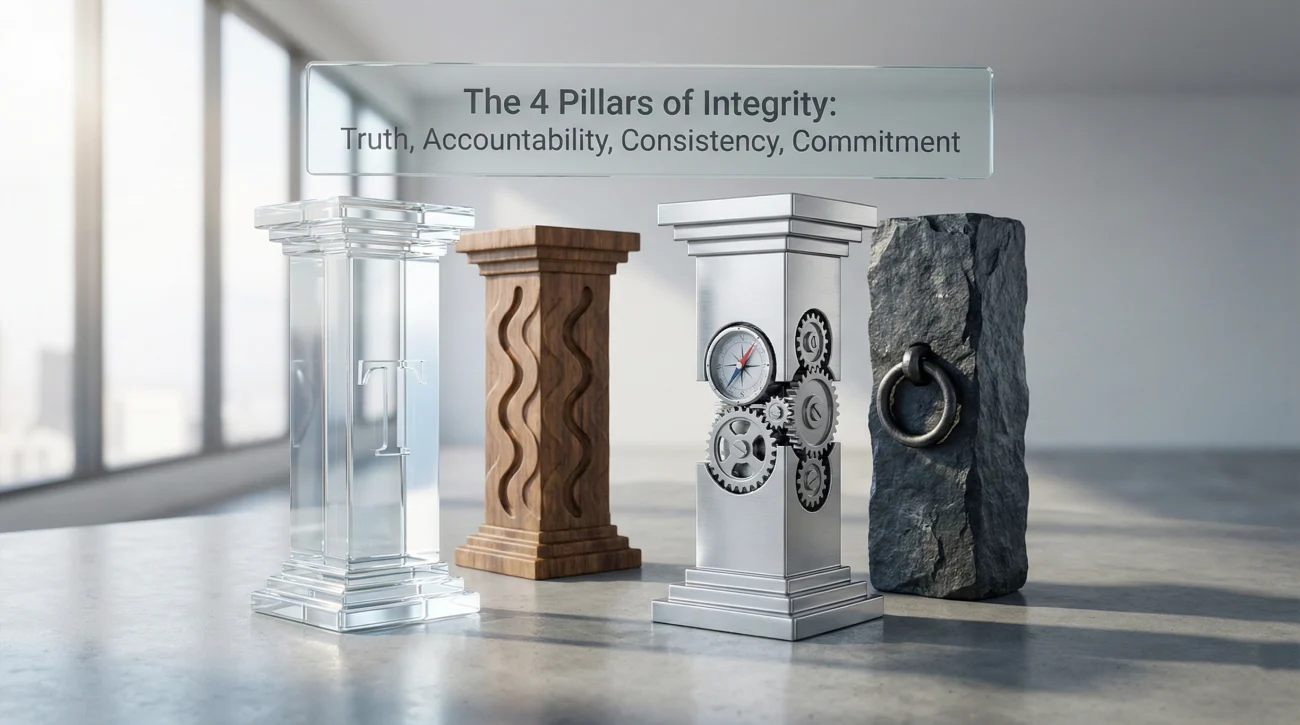
Beyond specific stories, interviewers may explore your underlying principles. Having a framework for ethical decision-making demonstrates that your integrity is systematic rather than situational.
Default to Truth
Honest people don’t evaluate each situation to decide whether to be truthful. They default to honesty and only consider exceptions in extreme circumstances. This principle shows up in proactively sharing information, admitting uncertainty, and giving direct feedback.
Own Your Actions
Taking responsibility for outcomes, including negative ones, demonstrates integrity. This means admitting mistakes without excuses, accepting consequences without deflection, and focusing on solutions rather than blame.
Behave Consistently
Integrity means behaving the same way regardless of who’s watching. The person who acts ethically only when monitored doesn’t have integrity; they have fear of consequences. Real integrity is consistent across contexts.
Keep Commitments
Following through on what you say you’ll do is a form of integrity. Being careful about making commitments, communicating early when you can’t meet them, and prioritizing keeping your word all demonstrate trustworthiness.
For more strategies on demonstrating professional character, explore our interview preparation guide.
Structuring Your Integrity Answer

Set Up the Stakes
Briefly describe the situation, emphasizing why integrity was genuinely tested. What was the temptation or pressure? What would have been the easier path? Without stakes, the story doesn’t demonstrate much.
Describe Your Choice
Explain what you did and why. What principles guided your decision? How did you navigate the difficulty? This reveals your moral reasoning, not just your behavior.
Acknowledge Any Cost
If your integrity came with a cost, mention it. This adds credibility. Integrity that’s free isn’t really tested. Integrity that costs something demonstrates genuine commitment to principles.
Share the Outcome
Describe what happened as a result of your ethical choice. Sometimes integrity leads to positive outcomes. Sometimes it doesn’t. Either story can work if the choice itself was sound.
❓ FAQ
🎯 What if I can’t think of a major integrity example?
Small examples work if they genuinely tested your honesty. Correcting a billing error in your favor, admitting you didn’t know something instead of bluffing, or giving honest feedback when flattery would have been easier all demonstrate integrity. The key is that honesty required some courage.
💼 Should I mention situations where I reported misconduct?
Be careful with whistleblowing stories. They can demonstrate courage but may also make interviewers nervous about whether you’ll report them for minor issues. Focus on your reasoning and professionalism rather than just the reporting act.
⏰ What if being honest led to a bad outcome?
Integrity stories don’t require happy endings. Sometimes honest people suffer consequences for honesty. If your story shows you chose honesty despite negative consequences, that actually demonstrates stronger integrity than stories where honesty was rewarded.
📋 How do I avoid sounding self-righteous?
Acknowledge the difficulty. Show empathy for why someone might have made a different choice. Express the decision as what you felt you needed to do rather than what everyone should do. Humility tempers what could otherwise sound like moral superiority.
✨ Can I use examples from outside work?
Professional examples are generally stronger because they’re more relevant. But if you have a compelling personal integrity story and lack a professional one, it’s better than having no story at all. Connect it to professional values when possible.
Character Under Pressure
Answering integrity interview questions requires specific stories where honesty or ethics were genuinely tested. Describe situations where the easier path would have been less ethical, explain your reasoning and choice, and acknowledge any cost your integrity carried. The best answers reveal not just that you behaved ethically, but why you did and how you think about ethical decisions. When interviewers see someone who has demonstrated integrity under genuine pressure, they trust that person to do the right thing in their organization as well.
⚠️ Disclaimer: The interview strategies, sample answers, and negotiation tips provided in this guide are for educational purposes only. Hiring decisions are subjective and vary by company and industry. While these strategies are based on professional HR standards, they do not guarantee a specific job offer or result.