- Why it matters: Manufacturing safety rules are the non-negotiable baseline that prevent life-changing injuries, deaths, and costly equipment damage, and employers look for real safety mindset in hiring.
- Core protocols: The essentials include Lockout/Tagout, correct PPE selection and fit, machine guarding that is never bypassed, hazard communication with labels and SDS access, and fall protection when working at height.
- Hazard-specific habits: Electrical work requires qualified personnel and verified isolation, chemical handling demands labeling, ventilation, and spill response, and noise plus material handling require consistent controls, not shortcuts.
- Daily behaviors: Strong safety performance comes from situational awareness, clean and organized workspaces, using the right tools correctly, and reporting incidents and near-misses immediately.
- Emergency readiness: Know routes and equipment locations, take drills seriously, respond only within your training, and keep learning and speaking up so unsafe pressure never overrides safety.
Why Safety Rules Matter Beyond Compliance
Understanding manufacturing safety rules represents the fundamental non-negotiable baseline for every production role because these protocols literally prevent deaths, catastrophic injuries, and equipment damage that careless practices create daily in factories worldwide. Safety rules aren’t bureaucratic obstacles to efficient work but rather hard-won lessons written in the blood and broken bones of workers who learned through tragedy that shortcuts kill people and destroy careers instantly.
Manufacturing environments contain inherent hazards that office settings never encounter: heavy machinery with exposed moving parts, high-voltage electrical systems, pressurized equipment, hazardous chemicals, elevated work areas, and material handling operations that injure or kill workers when safety protocols fail. During employment screening, hiring managers assess safety consciousness because genuine commitment to protocols versus lip service compliance becomes immediately apparent once you’re on the production floor where daily decisions either protect or endanger yourself and coworkers.
Essential Safety Protocol Categories
Effective factory safety protocols encompass multiple protection layers addressing different hazard types through specific procedures every manufacturing worker must understand and follow consistently.
Lockout/Tagout (LOTO) Procedures
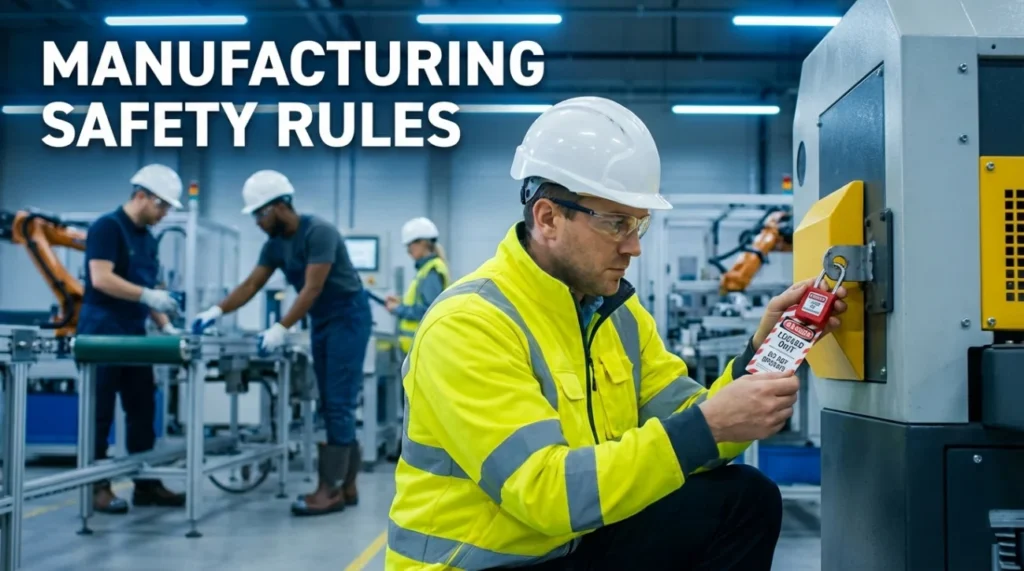
Lockout/tagout prevents machinery from starting unexpectedly during maintenance, repair, or cleaning by physically locking energy sources off and tagging them to indicate work in progress. This critical procedure prevents workers from being crushed, caught, electrocuted, or otherwise injured when equipment they’re servicing starts because someone didn’t know maintenance was occurring. LOTO requires identifying all energy sources (electrical, pneumatic, hydraulic, mechanical, thermal), shutting them down in proper sequence, physically locking them in off position, verifying zero energy state before beginning work, and maintaining locks until work completes safely.
| Safety Category | Key Requirements | Common Violations |
|---|---|---|
| Lockout/Tagout | Energy isolation, physical locks, verification, authorization | Skipping steps, inadequate isolation, unauthorized removal |
| Personal Protective Equipment | Proper selection, correct usage, maintenance, replacement | Wrong PPE type, improper fit, damaged equipment use |
| Machine Guarding | Guards in place, interlocks functional, no bypass | Removed guards, disabled interlocks, reaching past barriers |
| Hazard Communication | Chemical labeling, SDS access, training documentation | Unlabeled containers, missing SDS, inadequate training |
| Fall Protection | Guardrails, harnesses, anchorage points, training | Working without protection, improper harness use |
Personal Protective Equipment Standards
PPE provides last line of defense when engineering controls and safe work practices can’t eliminate hazards completely. Different manufacturing environments require specific PPE: safety glasses or goggles protecting eyes from flying debris and chemical splashes, hearing protection in high-noise areas, steel-toed boots preventing foot injuries from falling objects, cut-resistant gloves for sharp material handling, respirators when air quality requires protection, and specialized equipment like face shields or chemical-resistant suits for particular hazards. Critical principles include wearing appropriate PPE for specific hazards, ensuring proper fit, maintaining equipment in good condition, replacing damaged PPE immediately, and never removing required protection to increase comfort or speed work.
Machine Guarding and Point of Operation Protection
Machine guards prevent contact with moving parts, rotating equipment, cutting tools, and other mechanical hazards that amputate fingers, crush limbs, or pull workers into machinery. Guards must remain in place during operation with interlocks preventing machine startup when guards open. Never remove, disable, or bypass guards even temporarily because the convenience gained creates lethal risk. If guards interfere with necessary work, stop operations and involve supervision or engineering to modify procedures safely rather than defeating protection systems that prevent predictable injuries.
Expert advice: The most dangerous safety attitude treats protocols as suggestions to follow when convenient rather than absolute requirements that never get compromised regardless of production pressure or time constraints.
Hazard-Specific Safety Requirements
Strong manufacturing safety procedures address specific hazard categories requiring specialized protocols beyond universal safety fundamentals.
Electrical Safety Protocols
Electrical hazards kill through shock, electrocution, arc flash burns, and fires that electrical energy creates when contacted improperly. Electrical safety requires qualified electricians performing electrical work, lockout/tagout for all electrical servicing, maintaining proper clearances from energized equipment, using insulated tools rated for voltage levels, wearing appropriate PPE including arc-rated clothing when required, and treating all electrical equipment as energized until verified otherwise. Never assume wires are dead, bypass electrical protections, or work on energized equipment without proper training and authorization.
Chemical Handling and Hazard Communication
Manufacturing chemicals range from cleaning solvents to industrial acids requiring specific handling procedures. Hazard communication standards mandate proper labeling identifying contents and hazards, maintaining Safety Data Sheets (SDS) accessible to all employees, training workers on chemical hazards and protective measures, providing appropriate PPE and emergency equipment like eyewash stations, and establishing procedures for spills, exposure incidents, and safe disposal. Read labels and SDS before using unfamiliar chemicals, use only specified PPE, work in properly ventilated areas, and know emergency response procedures for the specific chemicals you handle.
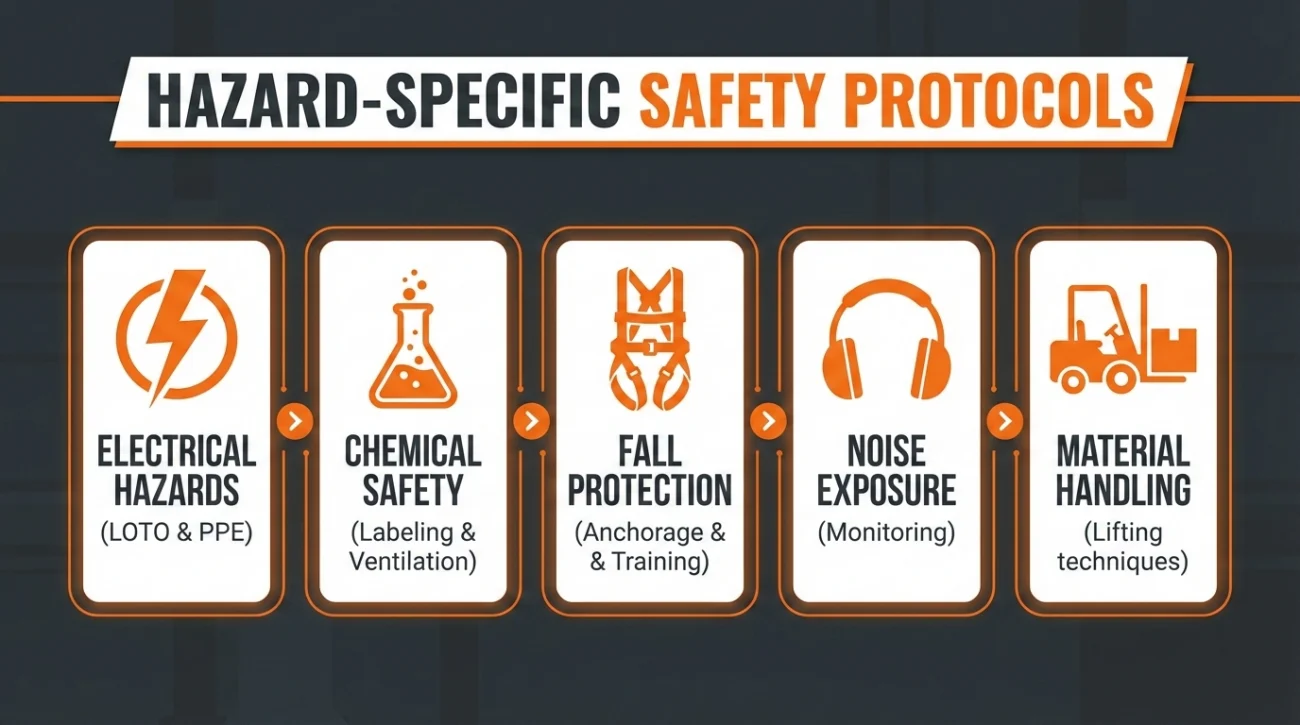
- ⚡ Electrical hazards: Lockout/tagout, qualified personnel only, proper PPE, clearance maintenance
- 🧪 Chemical safety: Labeling, SDS knowledge, ventilation, PPE, spill response
- 🏗️ Fall protection: Guardrails, harnesses, proper anchorage, training verification
- 🔊 Noise exposure: Hearing protection, exposure monitoring, audiometric testing
- 🚛 Material handling: Proper lifting, equipment inspection, load limits, pathway clearance
Fall Prevention and Protection Systems
Falls from elevation cause numerous manufacturing fatalities and serious injuries annually. Fall protection requires guardrails at all elevated work areas, personal fall arrest systems (harnesses and lanyards) when guardrails aren’t feasible, proper anchorage points capable of supporting fall arrest loads, training on equipment use and fall hazard recognition, and inspection of fall protection equipment before each use. Never work at heights without proper protection, assume untested anchorage points are adequate, or use damaged fall protection equipment hoping it still functions properly.
💡 Pro tip: If you notice unsafe conditions or practices, report them immediately through proper channels; speaking up about safety concerns demonstrates professional responsibility while silence makes you complicit in preventable injuries.
Safe Work Practices and Behavioral Expectations
Understanding workplace safety requirements extends beyond knowing rules to consistently practicing safe behaviors that protocols can’t fully specify but competent professionals demonstrate naturally.
Maintaining Situational Awareness
Pay attention to your surroundings constantly: moving equipment, overhead operations, floor hazards, changing conditions, and other workers’ activities that might create hazards. Distracted workers get injured when they walk into equipment paths, step into hazardous areas, or fail noticing dangerous situations developing around them. Put phones away on production floors, stay alert despite repetitive work, and watch for changing conditions rather than assuming environments remain static throughout shifts.
Safety Through Good Housekeeping
Poor housekeeping creates slip, trip, and fall hazards while interfering with emergency response and equipment access. Maintain clear walkways and emergency exits, clean spills immediately, store materials properly preventing tipping or blocking, dispose of waste and scrap regularly, and keep work areas organized allowing safe movement. Housekeeping isn’t just aesthetics but fundamental safety practice preventing injuries, fires, and emergency access problems that transform minor incidents into catastrophes.
| Safe Practice | Implementation |
|---|---|
| Situational Awareness | Continuous observation, distraction elimination, hazard recognition |
| Good Housekeeping | Spill cleanup, organized storage, clear pathways, regular disposal |
| Proper Tool Use | Right tool for job, good condition, manufacturer instructions |
| Incident Reporting | Immediate reporting, accurate details, near-miss documentation |
| Emergency Preparedness | Exit knowledge, assembly points, emergency procedure familiarity |
Reporting Incidents and Near-Misses
Report all injuries, illnesses, and near-miss incidents immediately regardless of severity because patterns reveal systemic problems requiring correction before serious injuries occur. Never hide incidents fearing discipline or embarrassment; reporting enables investigation identifying root causes and implementing preventive measures protecting everyone. Near-miss reporting particularly matters because these events signal hazards that haven’t caused injury yet but will eventually unless addressed. Organizations value workers who report safety concerns over those who hide problems until catastrophic failures force attention.
Emergency Preparedness and Response
Comprehensive production floor safety includes preparing for emergencies ranging from minor injuries to catastrophic events requiring building evacuation or emergency shutdown.
Knowing Emergency Procedures
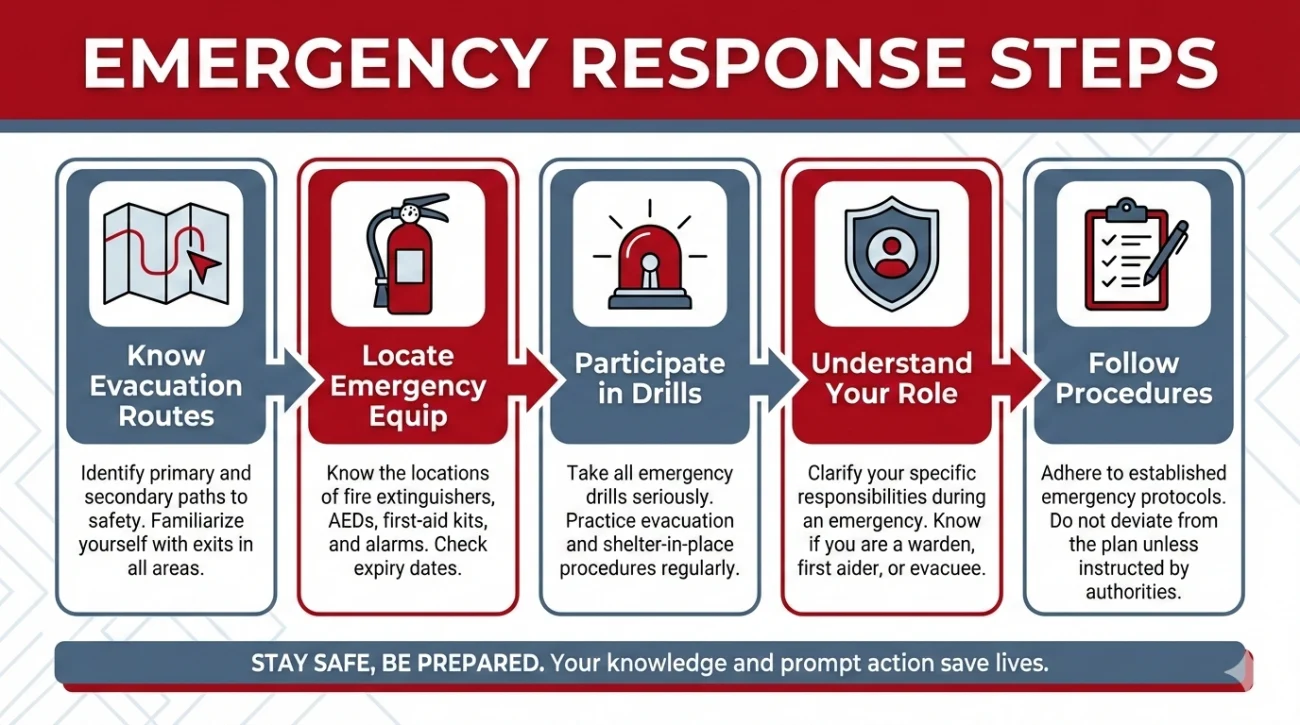
Understand evacuation routes, assembly points, emergency shutdown procedures, and your role during emergencies. Know locations of emergency equipment like fire extinguishers, eyewash stations, emergency showers, first aid kits, and emergency shutoff controls. Participate seriously in emergency drills rather than treating them as nuisances because these exercises prepare you for actual emergencies when panic and confusion interfere with clear thinking. Seconds matter during emergencies and automatic responses trained through drills save lives that hesitation costs.
First Responder Capabilities
Know your limitations regarding emergency response. If trained in first aid or emergency response, provide care within your training scope. If untrained, get help immediately rather than attempting interventions you’re unqualified to perform. For fires, only fight small fires within extinguisher capacity if trained and safe to do so; otherwise evacuate immediately and call fire department. For chemical spills, follow facility procedures and don’t attempt cleanup beyond your training level. Heroic responses often create additional victims when untrained personnel escalate situations trying to help.
- Know evacuation routes and assembly points for your work area
- Locate emergency equipment and understand proper use
- Participate actively in emergency drills and training
- Understand your role and limitations during emergencies
- Follow emergency procedures rather than improvising responses
Never ignore fire alarms, evacuation signals, or emergency announcements assuming false alarms or testing; treat every alarm as real emergency until confirmed otherwise because hesitation during actual emergencies costs lives.
Building Personal Safety Commitment
Long-term manufacturing success requires genuine safety commitment beyond merely following rules when supervised or convenient.
Taking Personal Responsibility
Safety isn’t just management’s job or someone else’s problem but every worker’s personal responsibility protecting themselves, coworkers, and equipment. Don’t assume someone else will notice hazards, report unsafe conditions, or stop dangerous practices. Speak up when you see problems, refuse unsafe work regardless of pressure, and model safe practices consistently demonstrating that production targets never justify safety compromises. Your career depends on staying healthy and uninjured more than any single production metric or deadline.
Ongoing Safety Education
Safety knowledge requires continuous updating as equipment changes, new hazards emerge, and better practices develop. Participate actively in safety training rather than treating sessions as boring obligations, ask questions when uncertain about procedures, learn from incidents and near-misses, and seek information about unfamiliar equipment or materials before working with them. The time invested learning proper safety practices proves infinitely cheaper than recovering from preventable injuries that destroy careers and lives.
❓ FAQ
🎯 What if my supervisor pressures me to skip safety procedures?
Refuse unsafe work politely but firmly, documenting the pressure and reporting through proper channels. OSHA protects workers from retaliation for refusing unsafe work. No production target justifies injury risk. Legitimate employers support workers who prioritize safety over convenience or speed.
💼 Can I be disciplined for reporting safety concerns?
No; federal law prohibits retaliation against workers reporting safety issues or refusing unsafe work. If you experience retaliation, document everything and report to OSHA. Reputable manufacturers value safety reporting as critical feedback preventing injuries, not as troublemaking requiring punishment.
⏰ What if I’m not trained on specific equipment or procedures?
Never operate equipment or perform tasks without proper training regardless of pressure. Inform supervision that you require training before proceeding safely. Employers must provide adequate training before assigning work requiring specialized knowledge or skills. Attempting untrained work creates liability for both you and employer.
📋 Should I report near-miss incidents that didn’t cause injury?
Yes; near-misses reveal hazards that will eventually cause injuries unless addressed. Reporting enables investigation and correction before someone gets hurt. Organizations value proactive safety reporting preventing future incidents over silence that allows problems to escalate into catastrophic failures.
✨ What if safety equipment is uncomfortable or slows my work?
Wear required PPE regardless of comfort or convenience; injuries are far more uncomfortable than safety equipment. If equipment truly doesn’t fit properly or interferes with work unreasonably, report to supervision requesting proper equipment rather than working without protection. Comfort never justifies removing required safety protection.
Final Thoughts
Manufacturing safety rules represent non-negotiable fundamentals that literally prevent deaths, catastrophic injuries, and career-ending incidents in production environments where inherent hazards exist regardless of experience level or skill. The workers who sustain long successful manufacturing careers demonstrate genuine safety commitment beyond mere compliance, recognizing that protocols protect everyone rather than restricting efficiency or creating bureaucratic obstacles to productive work.
Mastering manufacturing safety rules requires understanding not just what procedures mandate but why they exist and what happens when workers ignore or bypass protections that seem inconvenient. Lockout/tagout prevents unexpected equipment startup that crushes and kills workers. PPE provides critical protection when engineering controls can’t eliminate hazards completely. Machine guarding stops amputations and entanglements that destroy lives instantly. These aren’t suggestions to follow when convenient but absolute requirements that never get compromised regardless of production pressure, time constraints, or perceived inconvenience. Your commitment to safety practices demonstrates professional maturity that manufacturing employers value as much as technical competence because injured workers can’t contribute to productivity regardless of skill level they possessed before preventable incidents ended their careers.
⚠️ Disclaimer: The interview strategies, sample answers, and negotiation tips provided in this guide are for educational purposes only. Hiring decisions are subjective and vary by company and industry. While these strategies are based on professional HR standards, they do not guarantee a specific job offer or result.