
The Difference Between Fixing Symptoms and Solving Problems
A manufacturing company hired three consultants to solve their quality control issues. The first two implemented new inspection processes. Problems continued. The third consultant spent a week observing before doing anything. She discovered that defects spiked every Monday because weekend shift workers had different training than weekday staff. Same machines, same materials, different people, different results.
When you present problem solving as a strength, interviewers want to know if you’re the first two consultants or the third one. Do you fix what’s visible, or do you dig until you find what’s actually causing the problem?
What Kind of Problem Solver Are You?
| Type | Core Ability | Best For |
|---|---|---|
| Root Cause Hunter | Finding the real issue beneath symptoms | Recurring problems others can’t fix |
| Pattern Recognizer | Connecting dots across data silos | Complex systems with hidden relationships |
| Framework Builder | Creating systems that prevent problems | Scaling solutions beyond individual fixes |
| Crisis Navigator | Clear thinking under pressure | Urgent situations requiring quick decisions |
Pick the type that genuinely describes you. Each requires different proof stories.
Root Cause Analysis in Action
An operations manager told me this story:
“Our warehouse had a recurring inventory accuracy problem. Previous managers blamed staff training and implemented three different training programs over two years. The problem persisted. When I took over, I didn’t assume I knew the cause.”
“I spent two weeks on the warehouse floor, observing rather than fixing. I noticed something nobody had considered: our barcode scanners had weak signal in one section of the warehouse near the loading dock. Scans were failing intermittently, but workers didn’t notice because the scanner just beeped quietly and moved on.”
“A two-hundred-dollar signal booster solved a problem that three training programs and tens of thousands of dollars couldn’t touch. The root cause wasn’t people. It was equipment. Nobody found it before because they stopped investigating at the obvious answer.”
Key principle: When previous solutions haven’t worked, the problem is usually misdiagnosed, not unsolvable.
Connecting Patterns Across Silos
A data analyst described his analytical approach:
“Our e-commerce platform had sudden cart abandonment spikes that seemed random. Marketing blamed pricing. Engineering blamed site performance. Customer service blamed product descriptions. Each team had data supporting their theory.”
“I pulled data from all three teams and looked for correlations they hadn’t considered. The abandonment spikes correlated perfectly with one thing: when our shipping cost calculator loaded slowly. Users added items, saw a spinner for the shipping estimate, and left before seeing the actual cost.”
“The problem wasn’t price or descriptions or general performance. It was one specific calculation that timed out under certain conditions. Engineering fixed it in a day once we knew where to look. Abandonment dropped twenty-three percent.”
His strength was seeing connections that siloed teams missed because each only looked at their own data.
From Solving to Preventing
A consultant described a higher level of problem solving:
“I’m not the fastest at solving individual problems. But I’m excellent at creating systems that prevent entire categories of problems from recurring. Solving the same problem twice means the first solution failed.”
“A client had constant production quality issues. Each time, they fixed the specific defect. I analyzed eighteen months of quality incidents and found they shared three root triggers. Instead of fixing defects one by one, I helped implement upstream checkpoints that caught ninety percent of issues before they reached production.”
“Monthly problem tickets dropped from forty to six. That’s not solving problems. That’s making them not happen in the first place.”
This approach shows strategic thinking beyond tactical fixes.
Showing Your Process, Not Just Results
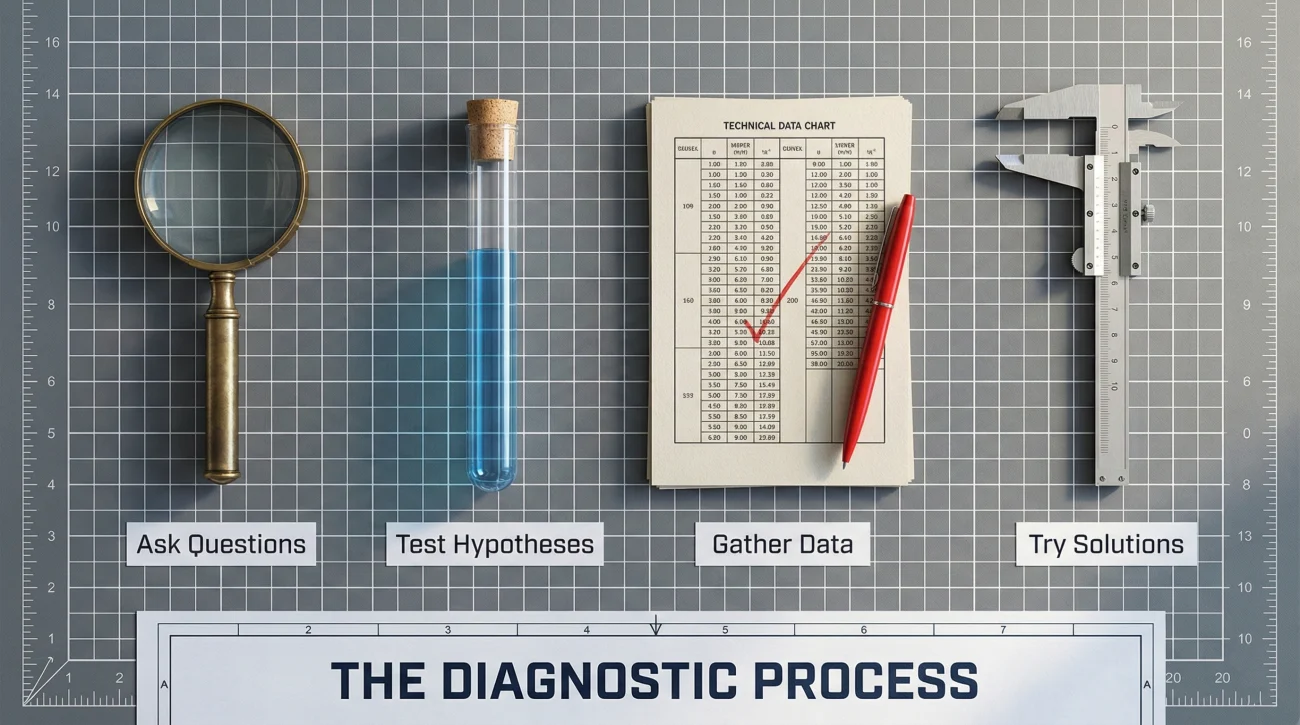
The best problem-solving answers reveal how you think, not just what you concluded. Walk through your diagnostic process:
- 🔍 What questions did you ask that others didn’t think to ask?
- 🧪 What hypotheses did you test before reaching your conclusion?
- 📊 What data did you gather that wasn’t already being examined?
- 🎯 What did you try that didn’t work before finding what did?
This visibility into your reasoning builds confidence that you can solve new problems, not just the ones you’ve seen before. For related techniques, see our behavioral interview preparation guide.
❓ FAQ
🎯 How technical should my example be?
Match the role. Technical positions warrant technical examples. General management roles need business-focused stories. The interviewer should follow your reasoning without specialized knowledge unless the role requires that expertise.
💼 What if I solved the problem as part of a team?
Clarify your specific contribution. What insight, approach, or action did you personally provide? Team context is fine, but your individual role must be clear.
⏰ Should I describe the problem in extensive detail?
Enough to establish stakes and complexity, no more. Your thinking process and solution should get most of the airtime, not lengthy context.
📋 What if my solution didn’t fully work?
Choose a different example if possible. If you must use it, focus on genuine learning and how you would approach it differently now.
✨ How do I show creativity without sounding impractical?
Connect creative approaches directly to results. Unconventional thinking only matters if it produced measurable outcomes.
Dig Deeper Than Everyone Else
Presenting problem solving as a strength means showing you think differently from people who just fix what’s visible. Share your diagnostic process. Highlight what you discovered that others missed. Explain how your solution addressed the actual cause, not just symptoms. The best problem solvers don’t just resolve issues. They understand why those issues existed in the first place.
⚠️ Disclaimer: The interview strategies, sample answers, and negotiation tips provided in this guide are for educational purposes only. Hiring decisions are subjective and vary by company and industry. While these strategies are based on professional HR standards, they do not guarantee a specific job offer or result.