
The Flexibility Promise
Almost every job posting now mentions flexibility, remote options, or hybrid arrangements. But these terms mean wildly different things at different companies. Hybrid at one organization might mean true flexibility to work wherever suits you best. At another, it means mandatory office days with remote work grudgingly tolerated.
Asking questions about remote work policy cuts through marketing language to reveal actual expectations. You learn whether flexibility is genuine or performative, how decisions about remote work are made, and what the real norms are regardless of official policy.
This matters for practical reasons. Where you work affects your commute, your living choices, your daily schedule, and your ability to focus. Understanding the real policy before accepting an offer prevents unpleasant surprises when you discover that “flexible” means something different than you assumed.
The Remote Work Spectrum
Remote policies exist on a spectrum. Understanding where a company falls helps you assess fit with your preferences.
| Policy Type | What It Typically Means |
|---|---|
| Fully Remote | Work from anywhere, no office requirement, distributed team |
| Remote First | Remote is default, offices exist for optional use |
| Flexible Hybrid | Some office presence expected, you choose when |
| Structured Hybrid | Specific days in office, specific days remote |
| Office First | Office is expected, remote is occasional exception |
| Fully On-Site | Work happens in the office, period |
The label matters less than the reality. A company calling itself “hybrid” could fall anywhere from remote-first to office-first in practice. Your questions should reveal where they actually are.
Essential Questions to Ask
The Requirement Question
“How many days per week would I be expected to work from the office? Is that flexible or fixed?”
Get a specific number. “Flexible” without definition is meaningless. Understanding whether office days are mandatory or suggested tells you how much real flexibility exists.
The Team Reality Question
“What does this specific team typically do? How many days are most people in the office?”
Company policy and team practice often differ. Some teams within a flexible company work mostly in-office; others rarely come in. The specific team you’d join matters more than company-wide policy.
The Choice Question
“Who decides which days are in-office days? Is it individual choice, team coordination, or company mandate?”
The decision-making structure affects your experience significantly. Individual choice means true flexibility. Company-mandated days mean you’re working around their schedule.
The Location Question
“For remote days, does it matter where I work from? Are there restrictions on working from different locations or time zones?”
Some remote policies restrict you to specific geographies for tax or compliance reasons. Others allow work from anywhere. If location flexibility matters to you, clarify the boundaries.
The Stability Question
“Has the remote policy changed in the past year? Are there any expected changes coming?”
Many companies are still adjusting post-pandemic policies. Understanding whether the current policy is stable or likely to change helps you assess risk. A company trending toward more office time might not offer the flexibility you expect long-term.
Going Deeper
Meeting Culture
- “How are meetings handled for remote employees? Is there hybrid meeting etiquette?”
- “Are there times when in-person presence is specifically required?”
- “How does the team ensure remote participants aren’t disadvantaged in meetings?”
Collaboration Patterns
- “How does the team collaborate when people are in different locations?”
- “What tools do you use for remote communication and collaboration?”
- “Is there an expectation to be available during specific hours?”
Career Implications
- “Are there any differences in how remote versus in-office employees are evaluated or promoted?”
- “Do you see any disadvantages for people who work remotely more often?”
- “How do leadership roles typically handle remote versus in-office time?”
For additional questions to evaluate employers, see our guide on good questions to ask interviewers.
Warning Signs
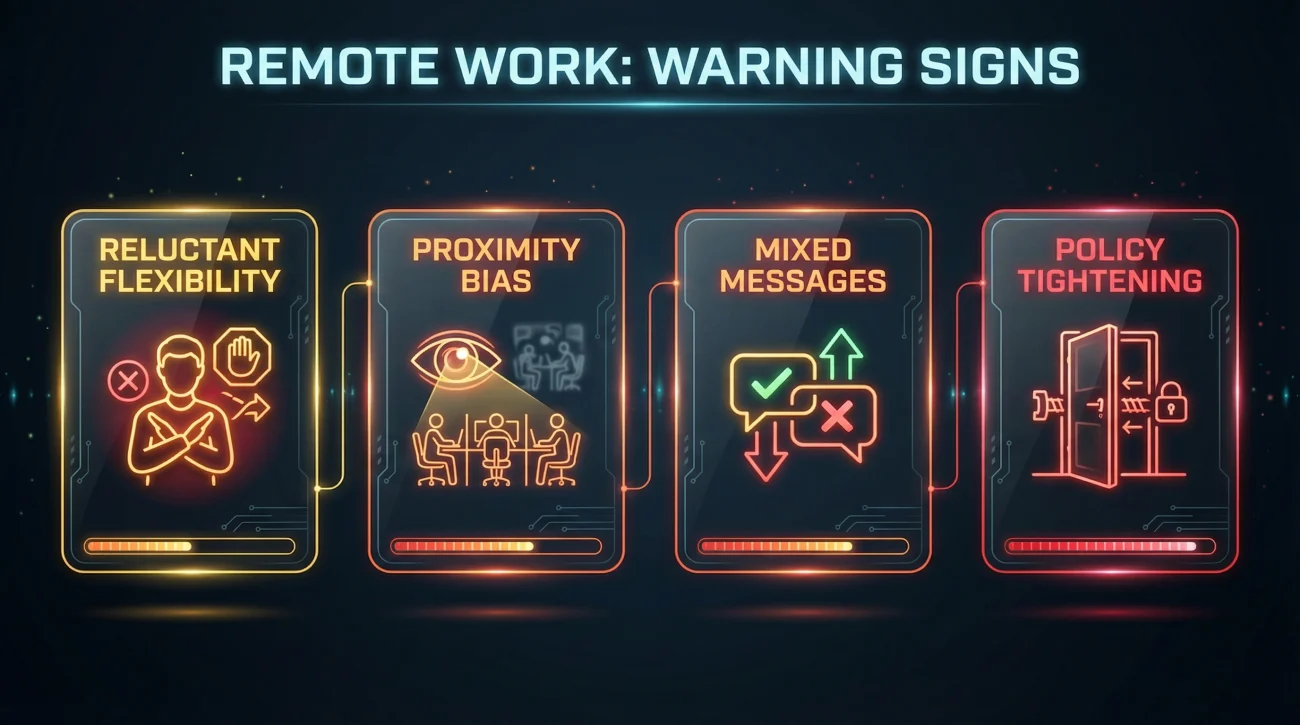
Reluctant Flexibility
If interviewers speak about remote work with obvious reluctance or as something they have to tolerate rather than embrace, expect gradual pressure to increase office presence over time.
Proximity Bias Signals
Comments suggesting that in-office employees are more visible, more valued, or more likely to advance reveal proximity bias. Even if remote work is allowed, you might be disadvantaged for using it.
Mixed Messages
If HR says one thing about remote policy and the hiring manager says another, expect confusion and inconsistent enforcement. Clarify whose interpretation would govern your situation.
Recent Policy Tightening
Companies that have recently reduced flexibility might continue that trend. Ask about the direction of change, not just current policy.
Practical Considerations
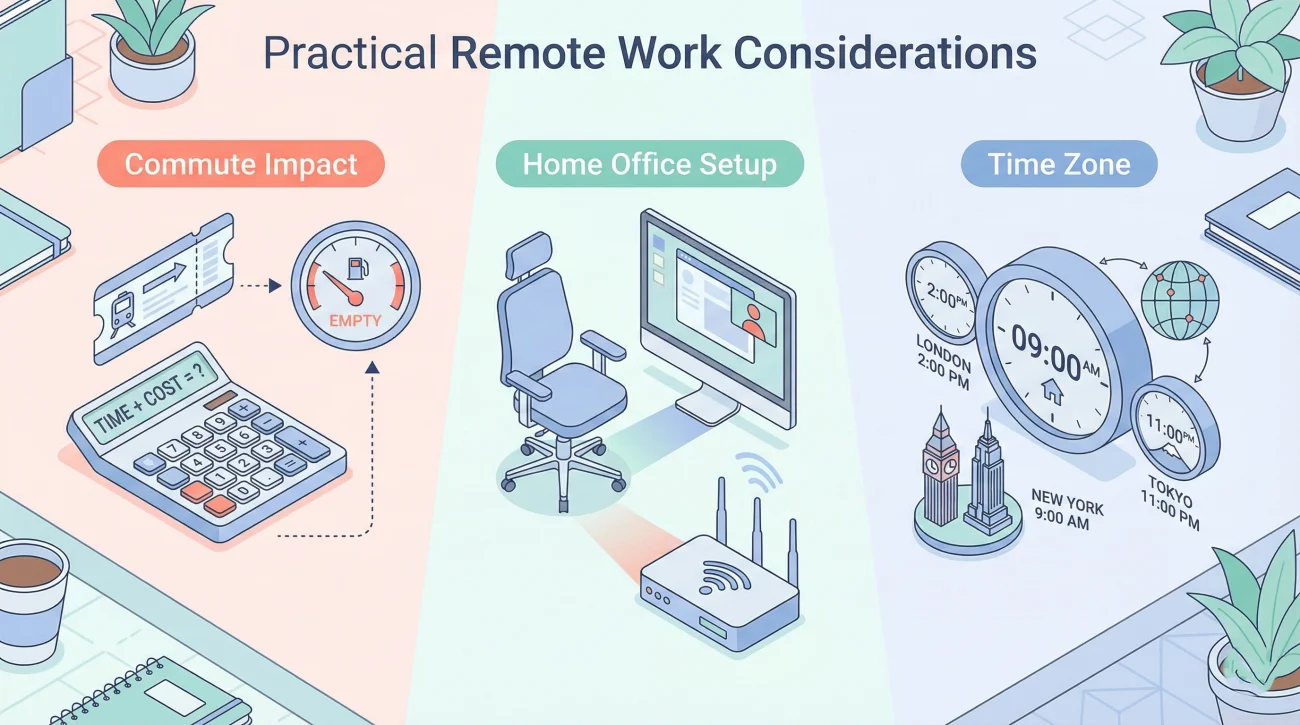
Commute Impact
Calculate your commute time for required office days. Even two days per week of long commutes adds up significantly over a year. Factor this into your total compensation calculation.
Home Office Requirements
“Is there support for home office setup? Stipends for equipment or internet?”
Some companies provide equipment, stipends, or reimbursements for home office needs. Others expect you to provide everything yourself. Understanding support available helps you budget appropriately.
Time Zone Considerations
For distributed teams, ask about time zone expectations. Will you need to be available for meetings outside your normal hours? How does the team handle time zone differences?
❓ FAQ
🎯 Should I negotiate remote flexibility as part of the offer?
Yes, if flexibility is important to you. Remote arrangements can sometimes be negotiated even when not part of standard policy. Get any agreements in writing as part of your offer letter.
💼 What if the policy is “team dependent”?
This is common. Focus your questions on the specific team you’d join. Ask the hiring manager directly about their expectations and how they manage remote work for their team.
⏰ How do I know if remote work will affect my advancement?
Ask directly about promotion patterns for remote versus in-office employees. Also observe whether leadership works remotely. If all senior people are in-office, that suggests proximity matters for advancement.
📋 What if the policy changes after I start?
Policy changes happen. Understanding the company’s general direction and philosophy about remote work helps you assess risk. Companies philosophically committed to flexibility are less likely to reverse course than those doing it reluctantly.
✨ Should I worry about asking too many remote questions?
Reasonable employers expect these questions. If they’re annoyed by legitimate questions about work arrangement, that tells you something about the culture. Better to know their attitude now than after you’ve accepted.
Clarity Before Commitment
Asking questions about remote work policy reveals whether flexibility is genuine or marketing language. Get specific about requirements, team norms, decision-making authority, and location restrictions. Watch for warning signs of reluctant flexibility or proximity bias. Understand practical implications including commute, home office support, and time zone expectations. Remote work policies significantly affect your daily life, your productivity, and potentially your career advancement. Don’t assume the label matches the reality. Ask questions that uncover what your actual experience would be.
⚠️ Disclaimer: The interview strategies, sample answers, and negotiation tips provided in this guide are for educational purposes only. Hiring decisions are subjective and vary by company and industry. While these strategies are based on professional HR standards, they do not guarantee a specific job offer or result.