How Receptionist Interviews Measure First Impressions
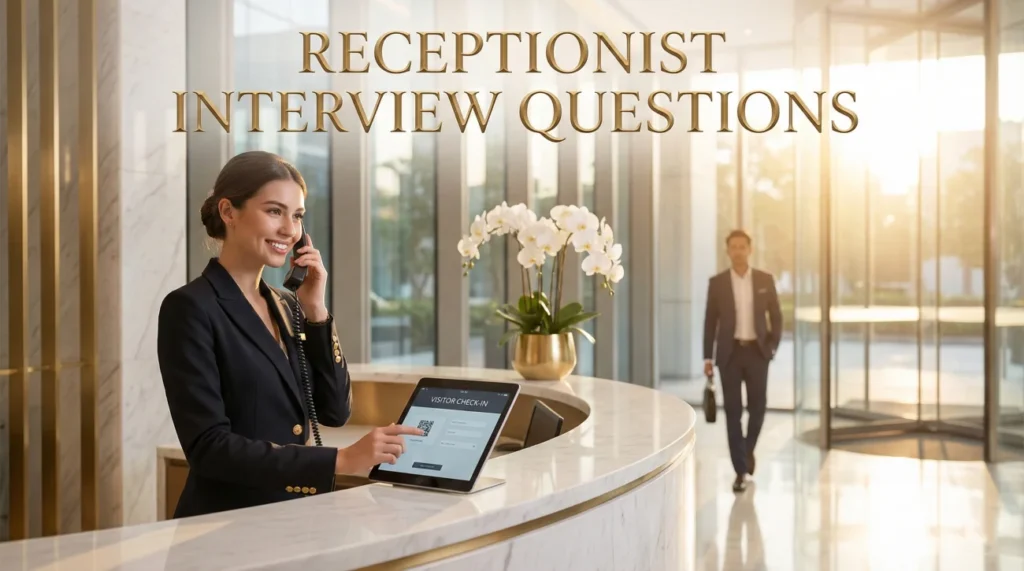
Reception work is a live performance with real stakes. Receptionist interview questions are built to see whether you can stay composed, keep the front desk flowing, and make every visitor feel guided and safe.
Interviewers listen for warmth and control at the same time. Share how you prioritize people in front of you, manage calls professionally, and follow security steps without sounding harsh.
Front Desk Operations & Multitasking
The front desk is a high-traffic zone. Interviewers want to know if you can maintain order and professionalism when things get busy.
Q: The phone is ringing, a delivery person is waiting for a signature, and a client just walked in. How do you handle it?
I prioritize the person standing in front of me while acknowledging the others. Step 1: I make eye contact with the client, smile, and say, “Welcome! I will be with you in just a moment.” Step 2: I answer the phone quickly: “Thank you for calling [Company], please hold,” and place them on hold briefly. Step 3: I sign for the delivery quickly to clear the doorway. Step 4: I give my full attention to checking in the client. Step 5: I return to the call. The key is communicating my plan so no one feels ignored.
Q: How do you keep the reception area organized and welcoming?
I view the lobby as my “stage.” I do a regular sweep to straighten magazines, fluff pillows, and ensure the coffee station is stocked and clean. I check that the visitor log (iPad or paper) is ready. I also pay attention to the atmosphere, like volume levels and overall comfort. A messy desk implies a messy company, so I keep my own workspace clutter-free, hiding personal items and organizing paperwork in drawers. I take pride in the aesthetics of the space.
Q: What is your system for managing incoming mail and packages?
I use a “Log and Notify” system. As soon as a package arrives, I log the tracking number, sender, and recipient into our internal spreadsheet (or the company’s mailroom tool). I message the recipient right away: “A package arrived for you at the front desk.” I do not let boxes pile up in the lobby; I move them to a secure holding area so the lobby stays clear and professional. For urgent legal or courier documents, I hand-deliver them to the recipient’s desk to ensure they are seen.
Q: How do you handle a visitor who refuses to sign the NDA or show ID?
I remain polite but firm on policy. I explain, “I understand it feels like a formality, but for the safety and security of everyone in the building, our policy requires a photo ID and a signed NDA for all guests. I cannot issue a visitor badge without it.” If they still refuse, I do not escalate it myself. I contact the employee they are here to see and ask them to come to the lobby to handle the situation. I never let an undocumented visitor past the reception desk.
Phone Etiquette & Communication
You are the voice of the company. Interviewers want to hear your tone and your strategy for screening calls.
Q: How do you answer the phone professionally?
I use a consistent, warm script: “Good morning, [Company Name], this is [My Name], how may I direct your call?” I speak clearly and with a “smile in my voice” because callers can hear your attitude. I avoid slang like “hang on” or “yep.” Instead, I use “one moment please” or “certainly.” If I need to put them on hold, I always ask for permission first: “May I place you on a brief hold while I check if she is available?” and I check back periodically if the wait is long.
Q: A caller asks to speak to the CEO but won’t give their name. What do you do?
I act as a polite gatekeeper. I say, “Mr. Smith is currently in a meeting. May I ask who is calling and what this is in reference to so I can pass the message along?” If they refuse or say “it’s personal,” I stick to the script: “I am unable to transfer calls without that information. However, I can give you his executive assistant’s email address, or you can leave a voicemail.” I protect the executive’s time from unsolicited sales calls without being rude to potential legitimate partners.
Q: How do you handle taking a message to ensure it is accurate?
I treat every message as critical data. I ask for the caller’s full name, company name, phone number, and a brief reason for the call. I repeat the phone number back to them to verify accuracy. I then send the message via the preferred channel of the recipient (usually Slack or Email) immediately. I include the time of the call and whether it is urgent. “Please call back” is not enough; “Please call back regarding the contract edits” allows the employee to prepare.
Security & Visitor Management
You are the first line of defense. Interviewers need to know you can spot red flags and follow emergency procedures.
Q: What is your process for checking in a visitor?
I follow a strict security protocol. 1. Greet: “Good morning, who are you here to see?” 2. Verify: I check their name against my list of expected guests. 3. Badging: I ask for ID, have them sign in (digital or paper), and issue a “Visitor” badge that must be worn visibly. 4. Notify: I call or message the host employee to come collect them. 5. Escort: I explain where the restrooms and water are while they wait. I never allow a visitor to walk into the office area unescorted.
Q: An angry person demands to see a manager and is raising their voice. What do you do?
I stay calm and seated (or stand if behind a high desk) to maintain a professional boundary. I do not match their volume. I say, “I can see you are upset, and I want to help you. Please lower your voice so we can discuss this.” If they escalate or become threatening, I use the organization’s safety protocol, such as alerting security or emergency services through the approved channel. I prioritize the safety of the staff over “customer service” in a volatile situation.
Q: What is the Receptionist’s role during a fire drill?
I am the “Captain of the Lobby.” My responsibility is to grab the visitor log (or iPad) and ensure all guests are evacuated safely. I direct people to the nearest exit calmly. Once at the assembly point, I do a roll call of the visitors to ensure everyone is accounted for and report this to the Fire Warden. I make sure the reception area is cleared after doing a quick sweep to ensure no one is left in the waiting room or restrooms.
Behavioral Scenarios & Admin Support
When the phone isn’t ringing, you are an admin. Interviewers want to see initiative and helpfulness.
You have downtime at the desk. What do you do?
I avoid spending downtime on my phone. I use downtime to support the office. I check the inventory of office supplies and kitchen snacks to see what needs reordering. I tidy the conference rooms (pushing in chairs, erasing whiteboards). I ask the Office Manager or HR team if they have data entry or envelope stuffing I can help with. I view my role as “Office Support,” so if I am not busy with guests, I am busy making the office run smoother for everyone else.
A candidate arrives well ahead of schedule for an interview. The hiring manager is busy. How do you handle it?
I make them comfortable but manage expectations. I say, “You are very prompt! Sarah is currently in a meeting, but please have a seat. Can I get you some water or coffee?” I let the hiring manager know they have arrived early but add, “I told them you are busy until the scheduled time, so no rush.” This protects the manager from feeling pressured while making the candidate feel welcome. I might offer them a company brochure or point out the guest WiFi password to keep them occupied.
Receptionist Skills Quiz
Test Your Front Desk IQ
1. The “Gatekeeper” role involves:
- Fixing the front door
- Screening calls and visitors to protect staff time
- Locking everyone out
- Holding the key to the safe
2. When placing a caller on hold, you should:
- Just press the button
- Ask for permission first and wait for an answer
- Hang up
- Sing to them
3. A “Visitor Log” is crucial for:
- Marketing data
- Security and emergency evacuation accountability
- Checking spelling
- Recruiting
4. “NDA” stands for:
- No Date Available
- Non-Disclosure Agreement
- New Desk Arrangement
- Next Day Appointment
5. If a caller is angry, the best approach is to:
- Listen calmly, empathize, and take detailed notes
- Argue back
- Hang up immediately
- Laugh at them
6. “Switchboard” refers to:
- A light switch
- A telephone system for routing multiple incoming calls
- A train track
- A type of keyboard
7. “Screening a call” means:
- Watching a movie
- Determining who is calling and why before transferring them
- Blocking the number
- Yelling at the caller
8. A “Courier” is:
- A font type
- A messenger who transports documents or packages
- A type of coffee
- A receptionist
9. “Conference Room Management” includes:
- Sleeping in the room
- Scheduling, tidying up, and managing conflicts
- Painting the walls
- Locking the door forever
10. “First Impressions” are usually formed:
- Very quickly
- Only after a long meeting
- Only after the first week
- Only after a formal review
11. A “Warm Transfer” is:
- Heating up the phone
- Speaking to the colleague first to give context before connecting the caller
- Transferring a call to a sunny place
- Blindly transferring the call
12. “Wayfinding” helps visitors:
- Find their life purpose
- Navigate the physical space (find restrooms, exits)
- Use the internet
- Buy lunch
13. “Badging” a visitor ensures:
- They look cool
- They are identified as authorized guests for security
- They get a discount
- They can open any door
14. If a suspicious package arrives, you should:
- Not touch it, isolate the area, and notify security
- Open it immediately
- Shake it
- Give it to the CEO
15. “Multi-line Phone” systems allow you to:
- Make free calls
- Handle multiple calls simultaneously (hold, transfer, conference)
- Watch videos
- Record music
16. “Concierge” mentality means:
- Ignoring guests
- Providing high-level, proactive assistance and hospitality
- Acting like a guard
- Only speaking French
17. “Confidentiality” at the front desk applies to:
- Who visits the office and what calls are received
- The lunch menu
- The weather
- Public holidays
18. “Outlook Calendar” proficiency helps with:
- Predicting the weather
- Scheduling conference rooms and appointments
- Editing photos
- Playing games
19. “Petty Cash” might be used at the front desk for:
- Paying salaries
- Tipping a delivery driver or buying emergency stamps
- Buying a car
- Personal lunch
20. If the fire alarm sounds, the receptionist must:
- Keep working
- Grab the visitor log and evacuate guests
- Hide under the desk
- Lock the doors
❓ FAQ
📞 What is the best way to describe phone etiquette?
Keep it simple: greet clearly, confirm names and numbers, ask before placing someone on hold, and close the call with the next step. The goal is a calm, professional tone.
🧍 How do I handle multiple people needing me at once?
Explain a quick priority order: acknowledge everyone, handle the fastest blocking task, then return to the next item. Communication prevents frustration.
🛡️ What should I say about security rules?
Say you follow policy consistently: visitor logs, badges, ID checks when required, and escalation to the host or security when someone refuses the process.
😠 How do I respond to an angry visitor?
You stay calm and set a boundary. Speak softly, do not match their volume, and follow the safety protocol if behavior escalates.
🧹 What do I do during downtime?
You keep the front of house sharp: tidy the lobby, restock essentials, prep meeting rooms, and look for small admin tasks that remove friction for the team.
Final Thoughts
To do well on receptionist interview questions, answer like someone who has run a busy lobby. Show how you multitask, communicate clearly, and protect the workplace with consistent protocols.
Keep your examples specific and calm, even when the situation is tense. For more practice questions, practice with more interview questions.
⚠️ Disclaimer: The interview strategies, sample answers, and negotiation tips provided in this guide are for educational purposes only. Hiring decisions are subjective and vary by company and industry. While these strategies are based on professional HR standards, they do not guarantee a specific job offer or result.