What Benefits Administrator Interviews Test
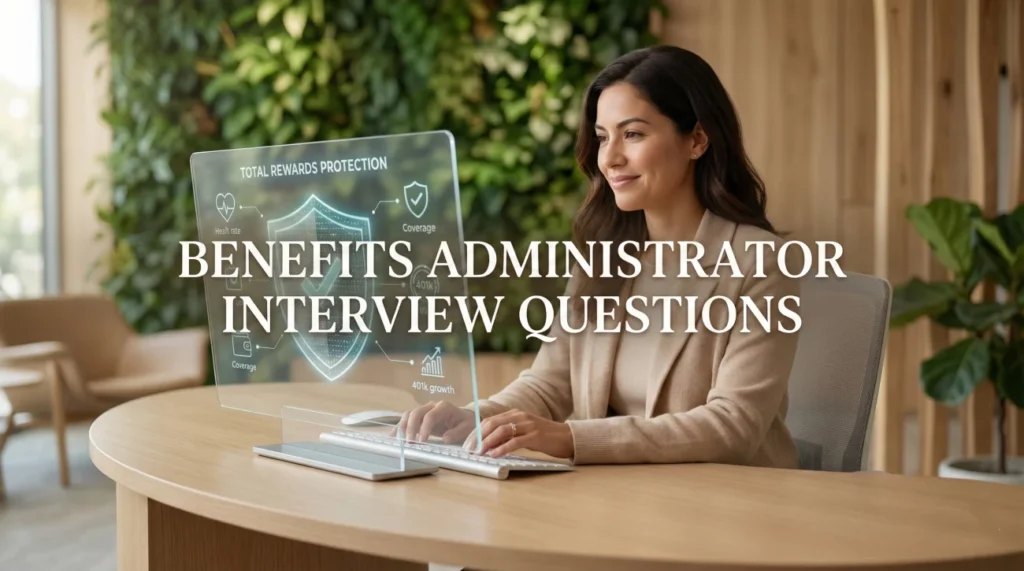
Benefits administrator interview questions sit at the intersection of compliance, cost control, and human emotion. One minute you are reconciling an invoice, the next you are explaining coverage to someone who is stressed and scared. Interviewers want proof that you can stay precise with rules and data, while still treating employees like people.
This guide covers the core areas that tend to make or break the role: open enrollment execution, claims support, ERISA and COBRA basics, and vendor management. Your best answers will sound structured, calm, and document-ready, because benefits work is where details become real money fast.
Open Enrollment & Plan Administration
Open Enrollment (OE) is the Super Bowl of benefits. Interviewers need to know you can execute this high-stakes project without a hitch.
Q: Walk me through your project plan for a successful Open Enrollment.
I start planning several months ahead. Early planning: I review plan designs with brokers and leadership to finalize rates and changes. Data and configuration: I audit the HRIS data to ensure eligibility lists are clean and configure the enrollment portal. Communication: I launch a multi-channel campaign (emails, webinars, and mailers as needed) to educate employees on changes. Go-Live: I hold regular office hours to answer questions. Post-OE: I audit the carrier files to ensure elections transferred correctly before payroll deductions begin. My goal is zero payroll errors when the new elections take effect.
Q: How do you increase participation in voluntary benefits (like HSA or Pet Insurance)?
I focus on “What’s in it for me?” storytelling. Instead of just listing “HSA” as an option, I provide case studies showing tax savings. For example, “How Sarah reduced her taxable income by using her HSA.” I use bite-sized videos and Slack messages to highlight niche benefits like pet insurance or legal plans. I also partner with the vendors to run webinars. Increasing voluntary participation boosts perceived total compensation without costing the company extra money.
Q: How do you handle a “Qualifying Life Event” (QLE) request?
I adhere strictly to the plan’s required timeframe while showing empathy. When an employee reports a marriage or birth, I verify the supporting documentation (marriage certificate, birth certificate) immediately. I guide them through the system to make the change. If they miss the deadline, I explain that changes typically have to wait until the next Open Enrollment, based on applicable plan and IRS rules. I document every interaction to ensure we are audit-proof.
Q: What is your process for reconciling monthly carrier invoices?
I never auto-approve invoices. I download the carrier’s active member list and do a VLOOKUP against our payroll deduction report. I look for variances: Are we paying for a terminated employee? Did a new hire get missed? I dispute incorrect charges immediately with the carrier and track the credit on the next month’s bill. Recovering these “leaked” funds can save the company meaningful money over a year.
Claims Resolution & Employee Advocacy
When insurance fails, employees come to you. You need to show you can fight for them against the bureaucracy.
Q: An employee calls you in tears because their surgery was denied coverage. What do you do?
I step in as their advocate. First, I calm them down and ask for the “Explanation of Benefits” (EOB) and the denial letter. Often, it is a coding error by the doctor or a missing prior authorization. I get on a three-way call with the carrier and the employee to investigate. If the denial stands, I guide the employee through the formal appeal process, helping them gather necessary medical records. I act as the translator between the confusing insurance language and the employee’s needs.
Q: How do you handle a situation where a payroll deduction for benefits was missed?
I communicate transparently and offer a payment plan. I notify the employee immediately: “Due to a system timing error, your health insurance premium wasn’t deducted last paycheck.” I calculate the total arrears. I ask the employee if they prefer to have it taken in a lump sum from the next check or spread over two pay periods to minimize the financial impact. I then fix the root cause in the payroll system to prevent recurrence.
Q: How do you explain the difference between an HMO, PPO, and HDHP to a new hire?
I use the “House” analogy. HMO: You have to stay in your neighborhood (network) and need a key (referral) from your landlord (PCP) to visit other rooms (specialists). It is cheaper but less flexible. PPO: You can go to any house in the city (network or out-of-network) without asking permission, but you pay a higher rent (premium) for that freedom. HDHP: You have a low rent, but if a pipe bursts (illness), you pay for the repairs yourself up to a certain limit (deductible), often using a tax-free savings bucket (HSA).
Compliance & Vendor Management
Benefits is a highly regulated field. One missed deadline can result in massive fines.
Q: What is your experience with COBRA administration?
I ensure strict adherence to required timelines. When an employee is terminated, I ensure the COBRA election notice is sent within the required notice timeframe (or I trigger our third-party administrator to do so). I track the election window defined by law and the plan. If they elect COBRA, I act as the liaison to reinstate their coverage with the carrier retroactively. I also audit our COBRA vendor monthly to ensure we aren’t paying for participants who have stopped paying their premiums.
Q: How do you manage ACA (Affordable Care Act) reporting?
I track employee hours proactively throughout the year to identify “variable hour” employees who might qualify for coverage based on the ACA full-time threshold. At year-end, I oversee the generation of Forms 1095-C for employees and the 1094-C transmittal to the IRS. I validate the applicable offer and safe-harbor codes to demonstrate we offered compliant coverage, avoiding employer mandate penalties.
Q: A vendor is consistently making errors with enrollments. How do you handle it?
I put them on a Performance Improvement Plan. I document every error (missed enrollments, wrong terminations) in a log. I schedule a meeting with our Account Manager to review the data trend. I demand a root cause analysis and a timeline for a fix. If performance doesn’t improve, I prepare an RFP (Request for Proposal) to replace them at the next renewal. I treat vendors as partners, but partners who must deliver.
Behavioral Scenarios
An executive demands a special exception to the 401(k) plan rules. How do you respond?
I hold the line on ERISA compliance. I explain, “The 401(k) plan document is a legally binding contract regulated by the IRS/DOL. Making an exception for one person, regardless of rank, could disqualify the entire plan for all employees and trigger audits.” I offer to look for alternative solutions within the rules, such as a non-qualified deferred compensation plan (NQDC) if they are hitting contribution limits, but I will not bend the plan rules.
You notice a trend of employees complaining about mental health coverage. What do you propose?
I turn anecdotal complaints into data-driven strategy. I review our EAP utilization rates and claims data for behavioral health. If access is the issue (e.g., in-network therapists are full), I might propose adding a digital mental health partner or expanding provider options. I present a business case to leadership that connects better access to lower absenteeism and fewer disability claims, and I frame it as an investment in productivity.
Benefits Administration Quiz
Test Your Benefits Knowledge
1. “FSA” funds typically adhere to the rule:
- Roll over forever
- Use it or lose it (with some exceptions)
- Can be invested in stocks
- Are taxable
2. Which plan allows for a “Triple Tax Advantage”?
- 401(k)
- HSA (Health Savings Account)
- FSA
- PPO
3. “COBRA” generally allows coverage continuation for:
- Only if the employer wants to
- For a limited period defined by law, if eligibility requirements are met
- Until the employee starts a new job
- For life
4. An “Explanation of Benefits” (EOB) is:
- A bill you must pay immediately
- A statement from the insurer showing what was covered and what you owe
- A prescription
- A referral slip
5. “ERISA” governs:
- Traffic laws
- Private sector pension and health plans
- Government employees
- Military benefits
6. A “Deductible” must be met before:
- You can see a doctor
- The insurance company starts paying their share (coinsurance)
- You pay your premium
- You get a job
7. “Short-Term Disability” (STD) typically replaces income for:
- A short, temporary period after a qualifying event
- Until retirement
- Only for a single day
- As long as you stay employed
8. “Open Enrollment” is the only time to change benefits unless:
- You experience a Qualifying Life Event (QLE)
- You ask nicely
- You get a promotion
- It is your birthday
9. A “Defined Contribution” plan example is:
- Pension
- Social Security
- 401(k)
- Medicare
10. “Wellness Programs” aim to:
- Force employees to diet
- Improve employee health to reduce long-term insurance costs
- Sell gym memberships
- Track employee location
11. “Out-of-Pocket Maximum” is:
- The most you can spend on lunch
- The cap on what you pay for covered services in a plan year
- The monthly premium
- The cost of a copay
12. “Form 1095-C” proves:
- Income tax paid
- Offer of health coverage by the employer (ACA)
- 401(k) balance
- Life insurance value
13. “Imputed Income” applies to:
- Cash bonuses only
- The taxable value of certain employer-provided benefits above IRS exclusion limits
- Travel expenses
- Office supplies
14. A “Summary Plan Description” (SPD) must be given to:
- Shareholders
- Plan participants (employees)
- The CEO only
- The press
15. “FMLA” provides job-protected unpaid leave up to:
- A defined amount set by law, if eligibility requirements are met
- Unlimited time off for any reason
- Only one day per year
- Only paid leave
16. “Vestibule Period” or “Waiting Period” is:
- Time spent in the lobby
- The time a new hire must wait before benefits coverage begins
- Time before a meeting
- Time for lunch
17. “Portable Benefits” means:
- Benefits you carry in a bag
- Benefits you can take with you when you leave the job (e.g., HSA)
- Benefits only for travel
- Temporary benefits
18. “Dependent Care FSA” is for:
- Pet sitting
- Childcare or eldercare expenses allowing you to work
- Medical bills for kids
- School tuition
19. “Form 5500” is filed with:
- The SEC
- The DOL/IRS regarding employee benefit plans
- The FBI
- The FDA
20. “Copay” is:
- A shared payment
- A fixed flat fee paid for a specific service
- The monthly bill
- A discount code
❓ FAQ
📆 How far ahead should I plan Open Enrollment?
Start early enough to confirm plan changes, rates, and timelines, then work backward from the go-live date. Mention a clear sequence: data cleanup, portal configuration, communication, office hours, and a post-enrollment audit before deductions hit payroll.
🧾 What is a good approach to carrier invoice reconciliation?
Describe a consistent comparison routine: match eligibility and deductions to the carrier file, flag variances, dispute quickly, and track credits. The interviewer wants to hear that you do not auto-approve and that you keep a log of issues.
🧑⚕️ How do I handle an emotional claim issue without overpromising?
Lead with empathy, then move to steps. Ask for the denial details, contact the carrier or vendor, and explain the appeal path in plain language. Make it clear you will advocate, but you will also be accurate and document what happens.
⚖️ Which compliance areas do benefits interviews focus on most?
Expect questions around ERISA awareness, COBRA timing, eligibility rules, and safe handling of sensitive information. You do not need to sound like a lawyer, but you should sound timeline-driven and careful with documentation.
🤖 Does HRIS or vendor tool experience matter a lot?
It helps, but process discipline matters more. If you have worked in any system, describe how you keep data clean and how you verify changes. Tools change; good reconciliation habits and clear communication do not.
Final Takeaways for Benefits Administrators
To land Benefits administrator interview questions, balance two signals: compliance discipline and employee advocacy. Your best answers show that you document, verify, and follow timelines, while still communicating with patience when people are stressed. That combination is what makes benefits administration trustworthy.
Close by highlighting how you prevent recurring issues: clean eligibility data, invoice reconciliation habits, and vendor accountability. For more role-based practice, get more interview questions and answer patterns and rehearse scenarios that match your environment.
⚠️ Disclaimer: The interview strategies, sample answers, and negotiation tips provided in this guide are for educational purposes only. Hiring decisions are subjective and vary by company and industry. While these strategies are based on professional HR standards, they do not guarantee a specific job offer or result.