When Your Gut Knows Before Your Mind Does
You walk out of the interview room and something feels off. The conversation ended abruptly. The interviewer seemed distracted. Nobody mentioned next steps.
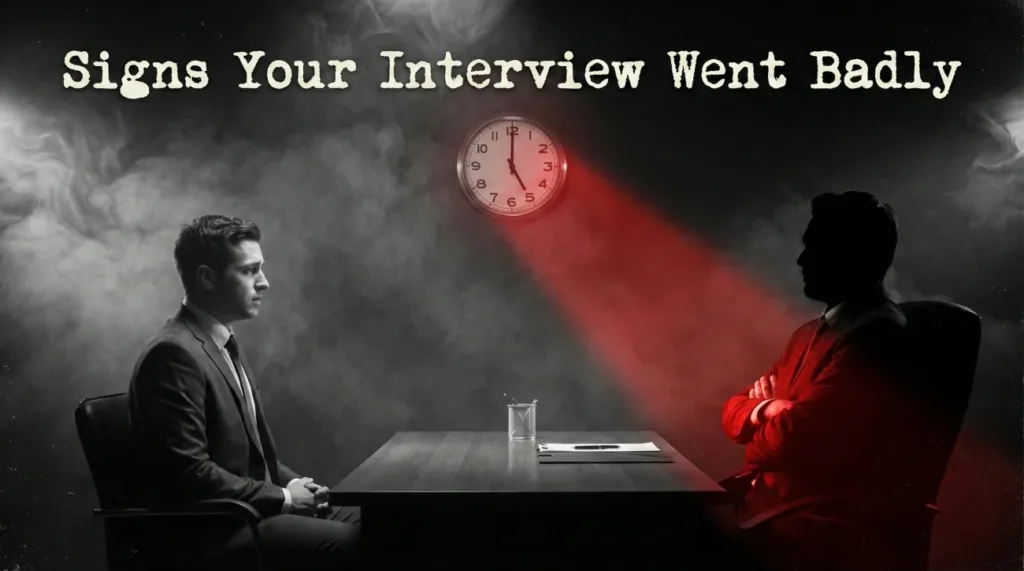
Your instincts are probably right. After sitting on both sides of hundreds of interviews, I can tell you: the signs of bad interview outcomes are usually visible within the first 15 minutes.
Expert Advice: An interview that runs short isn’t efficient. It’s a signal that the interviewer has already made their decision, and it’s not in your favor.
But here’s what most people don’t realize: recognizing these signs early gives you a chance to course-correct before walking out that door.
Timing Red Flags
How long the interview lasts tells you more than what was said during it.
The Unexpectedly Short Interview
A 30-minute slot that wraps in 15? That’s not because you were so impressive they learned everything quickly. Interested interviewers dig deeper, ask follow-ups, explore tangents. Disengaged interviewers check boxes and end early.
| Scheduled Time | Actual Duration | What It Usually Means |
|---|---|---|
| 60 minutes | 60+ minutes | Strong interest, good conversation flow |
| 60 minutes | 45-55 minutes | Neutral to positive, normal variation |
| 60 minutes | 30-40 minutes | Concern signal, possibly decided already |
| 60 minutes | Under 25 minutes | Strong negative signal unless logistics prevented more |
One candidate told me her interview ended after 20 minutes because the interviewer “had everything they needed.” She didn’t get the job. The interviewer had decided within 10 minutes and spent the remaining time on polite small talk.
Body Language Warning Signs
What interviewers don’t say speaks loudest.
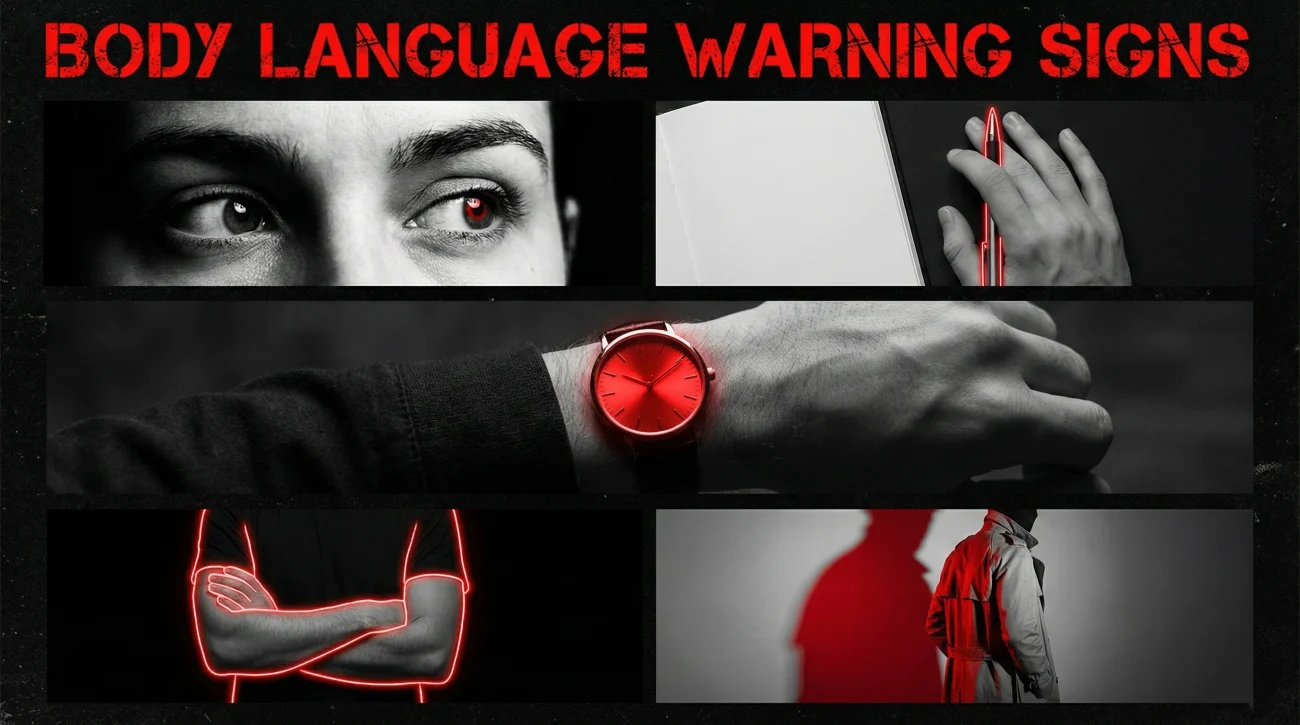
Disengagement Signals
- 👀 No eye contact: Looking at notes or screen more than at you
- ✍️ No note-taking: Interested interviewers write things down
- ⏰ Clock watching: Repeatedly glancing at watch or phone
- 😐 Flat responses: “Okay” and “I see” instead of follow-up questions
- 🚪 Physical distance: Leaning back, crossed arms, turning away
Note: Some interviewers are naturally reserved. Look for changes in their behavior, not just the behaviors themselves.
Good Versus Bad Engagement
An engaged interviewer leans in when you speak. They nod. They interrupt with questions because your answer sparked curiosity. They share relevant context about the team or role.
“I knew the interview was going badly when the hiring manager stopped writing halfway through. For my first interview, she filled three pages. For the second, barely one paragraph. Different interviewers don’t explain that pattern.”
Conversation Red Flags
Certain phrases and patterns signal declining interest.
Phrases That Should Worry You
“We’re talking to several other candidates”
When interviewers want you, they sell the opportunity. When they don’t, they manage expectations. Emphasizing competition signals you’re not the frontrunner.
“Do you have questions for me?”
This question is neutral on its own. But when it comes very early, before any meaningful discussion of the role, it often means the interviewer is ready to wrap up.
“We’ll let you know”
Vague timeline language without specifics suggests low priority. Compare it to: “We’re making decisions by Friday, and you’ll hear from Sarah directly.” Specific next steps indicate genuine interest.
Strong interview preparation helps you recognize these patterns and respond strategically in the moment.
Recovery Tactics (During the Interview)
Sensing a bad interview doesn’t mean accepting defeat. You have options.
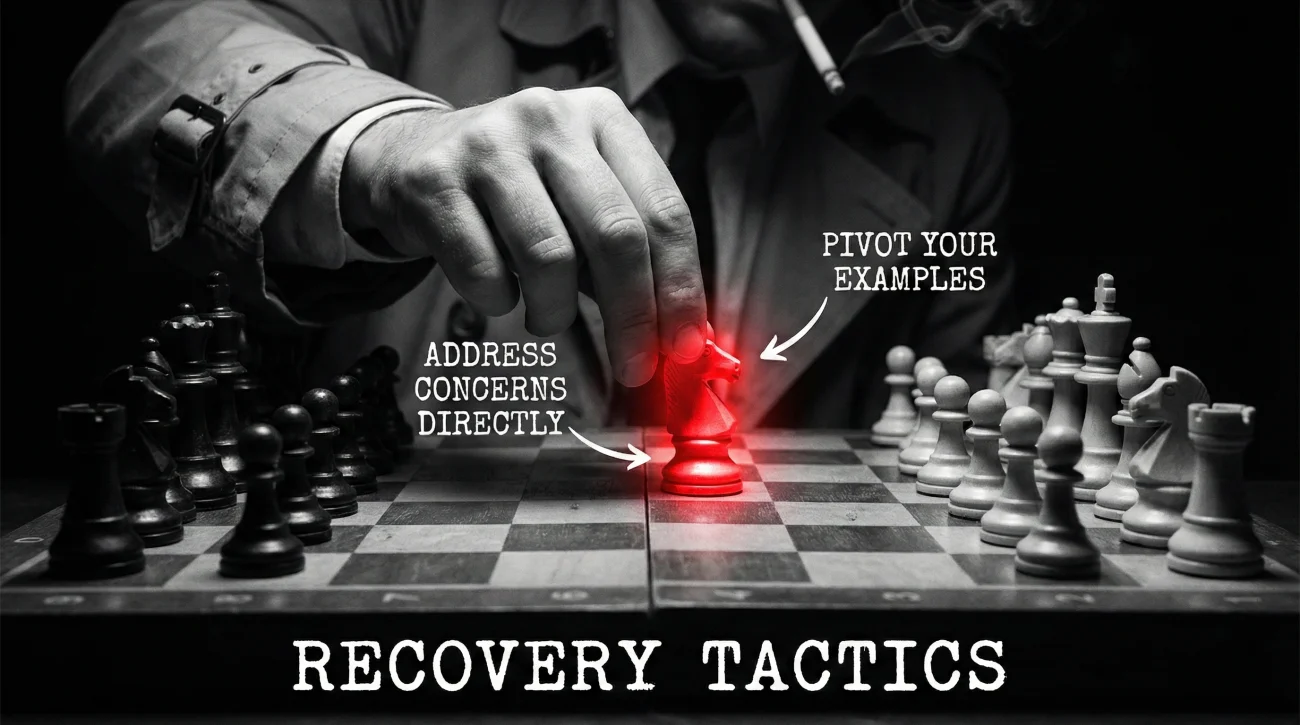
Address Concerns Directly
If you notice disengagement, try this approach:
“I want to make sure I’m addressing what matters most for this role. Is there anything specific about my background you’d like me to elaborate on, or any concerns I can address directly?”
This gives the interviewer permission to voice doubts, which gives you a chance to counter them. Some candidates turn interviews around completely with this single question.
Pivot Your Examples
If your answers aren’t landing, change your approach. Switch from theoretical to concrete. Offer specific metrics. Name recognizable companies or projects. Sometimes the interviewer needs different evidence, not more of the same.
Expert Advice: An interview going badly is better than one that went badly. Present tense means you still have time to change the trajectory.
What to Do After a Bad Interview
The interview ended poorly. Now what?
Strategic Follow-Up
Send a thank-you email within 24 hours. But make it work harder than a standard thank-you. Address something specific that seemed to concern the interviewer. Provide an example or resource you didn’t mention. Show continued interest despite sensing their hesitation.
💡 Pro Tip: If you know you fumbled a specific question, briefly address it in your follow-up. “I wanted to add to my earlier response about X…” shows self-awareness and recovery ability.
Learn for Next Time
Document what went wrong while it’s fresh. What questions caught you off guard? Where did you notice disengagement starting? What would you say differently? This reflection converts a bad experience into preparation for the next opportunity.
❓ FAQ
🤔 Could I be misreading the signs?
Absolutely. Some interviewers have neutral personalities. Some companies have strict time limits. One bad signal doesn’t guarantee rejection, but multiple signals together rarely mislead.
📧 Should I ask for feedback after rejection?
You can ask, but most companies won’t provide detailed feedback due to legal concerns. A general inquiry is fine, but don’t expect specifics or push if they decline.
🔄 Can I reapply after a bad interview?
Yes, usually after 6-12 months. Address what went wrong, gain relevant experience, and apply for a different role if possible. Companies do hire previous rejects who improved.
😰 Should I mention I sensed the interview went badly?
Never in the moment or follow-up. It sounds insecure and gives the interviewer permission to agree. Act confident even when you don’t feel it.
⏰ How long should I wait before moving on mentally?
Continue applying to other opportunities immediately. Never pause your job search waiting for one company’s decision, especially after a concerning interview.
Final Thoughts
Recognizing signs of bad interview performance isn’t pessimism. It’s awareness that empowers action. The sooner you notice disengagement, the more time you have to re-engage.
Some interviews can’t be saved. The fit simply isn’t there. But many can be turned around with the right question at the right moment. Train yourself to read the room, and you’ll recover from more bad starts than you’ll need to accept.
⚠️ Disclaimer: The interview strategies, sample answers, and negotiation tips provided in this guide are for educational purposes only. Hiring decisions are subjective and vary by company and industry. While these strategies are based on professional HR standards, they do not guarantee a specific job offer or result.