This Is a Marathon, Not a Sprint
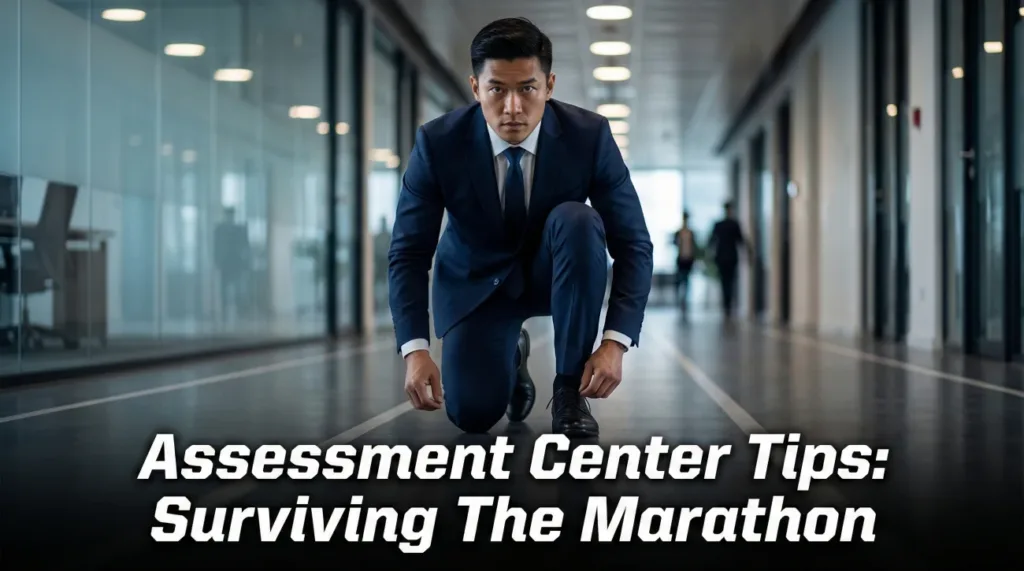
An assessment center is not an interview. It is an endurance test disguised as a recruitment event. You will spend six to eight hours being evaluated through aptitude tests, group exercises, presentations, role plays, and one-on-one interviews. By hour six, most candidates are running on fumes. The ones who still look sharp are the ones who get offers.
I have observed assessment centers from both sides: as a candidate who nearly crashed at hour five, and as an HR professional designing them. The dirty secret is that we are partly testing how you perform when tired. Anyone can impress for thirty minutes. Maintaining quality across an entire day reveals your true capacity.
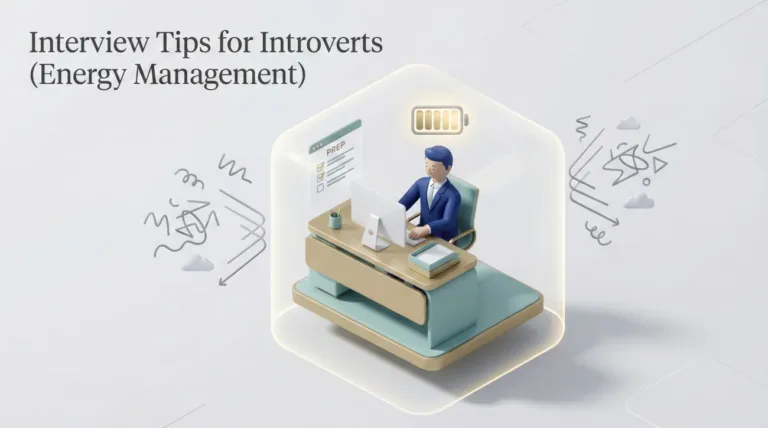
The best assessment center tips focus on energy management, not just task performance. You need strategies for staying mentally fresh when your brain wants to shut down and your smile muscles are exhausted.
What a Typical Day Looks Like
Assessment centers vary by company, but most follow a similar structure. Knowing what is coming helps you pace yourself.
| Time | Activity | Energy Demand |
|---|---|---|
| 8:30 – 9:00 | Registration, welcome, coffee | Low – save energy here |
| 9:00 – 10:30 | Aptitude tests (numerical, verbal, logical) | High – peak concentration needed |
| 10:30 – 10:45 | Break | Recovery window |
| 10:45 – 12:15 | Group exercise | Very high – performance mode |
| 12:15 – 13:00 | Lunch with assessors | Medium – still being watched |
| 13:00 – 14:30 | Individual presentation or case study | High – post-lunch slump danger |
| 14:30 – 14:45 | Break | Critical recovery |
| 14:45 – 16:00 | One-on-one interviews | High – final push |
| 16:00 – 16:30 | Closing, Q&A | Medium – still being observed |
Notice the pattern: high-demand activities are stacked throughout the day with minimal recovery time. The post-lunch presentation slot is particularly brutal because your body naturally wants to rest after eating.
Energy Management Strategies
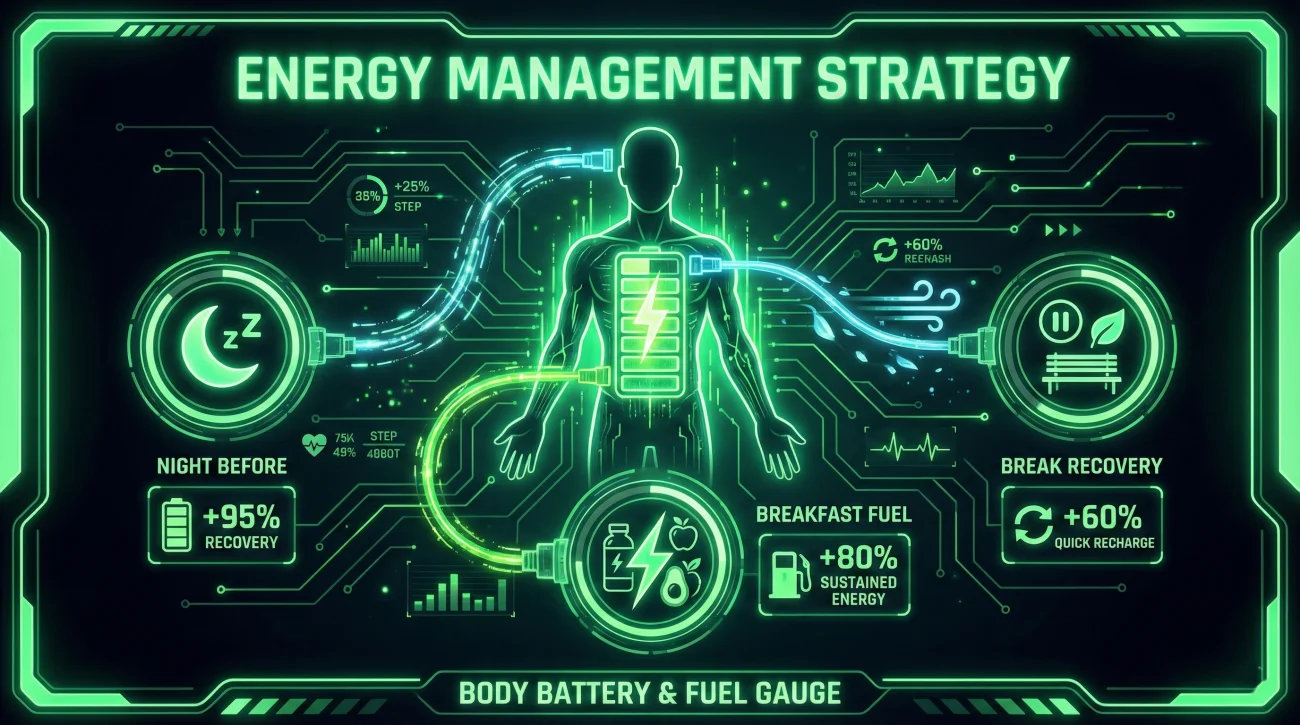
The Night Before
Sleep matters more than last-minute preparation. Your brain needs rest to perform cognitive tasks at peak level. Cramming company facts until midnight guarantees you will be foggy during the aptitude tests when sharpness counts most.
Lay out everything you need: outfit, documents, directions. Eliminate morning decisions that drain mental energy before you even arrive.
Fuel Strategy
Eat a substantial breakfast with protein and complex carbs. You need sustained energy, not a sugar spike that crashes mid-morning. Avoid anything that might upset your stomach when you are already nervous.
Bring snacks for breaks: nuts, fruit, granola bars. Assessment centers sometimes provide refreshments, but relying on what they offer is risky. A small chocolate bar before the afternoon session can provide a genuine mental boost when your glucose is depleted.
Expert Advice: “I watched a candidate’s performance visibly decline after lunch because he ate a huge meal from the buffet. His afternoon interview was noticeably slower than his morning group exercise. Eat enough to function, not enough to feel sleepy.”
Using Breaks Wisely
Breaks are not social hour. Yes, assessors sometimes observe informal interactions, but your primary goal during breaks is recovery. Find a quiet corner, drink water, use the bathroom, and breathe. Save the networking energy for when you are being formally evaluated.
💡 Pro Tip: Step outside for fresh air if possible. Even two minutes of daylight and movement can reset your mental state for the next activity.
Surviving Group Exercises
Group exercises reveal how you collaborate under pressure. Assessors track specific behaviors: do you contribute ideas, build on others’ suggestions, keep the group on track, and include quieter members?
Common Formats
- Desert survival: Rank items for survival after a plane crash. Tests prioritization and reasoning.
- Budget allocation: Divide limited resources among competing priorities. Tests negotiation and logic.
- Business case: Develop a strategy or solution as a team. Tests collaboration and commercial thinking.
Mistakes That Sink Candidates
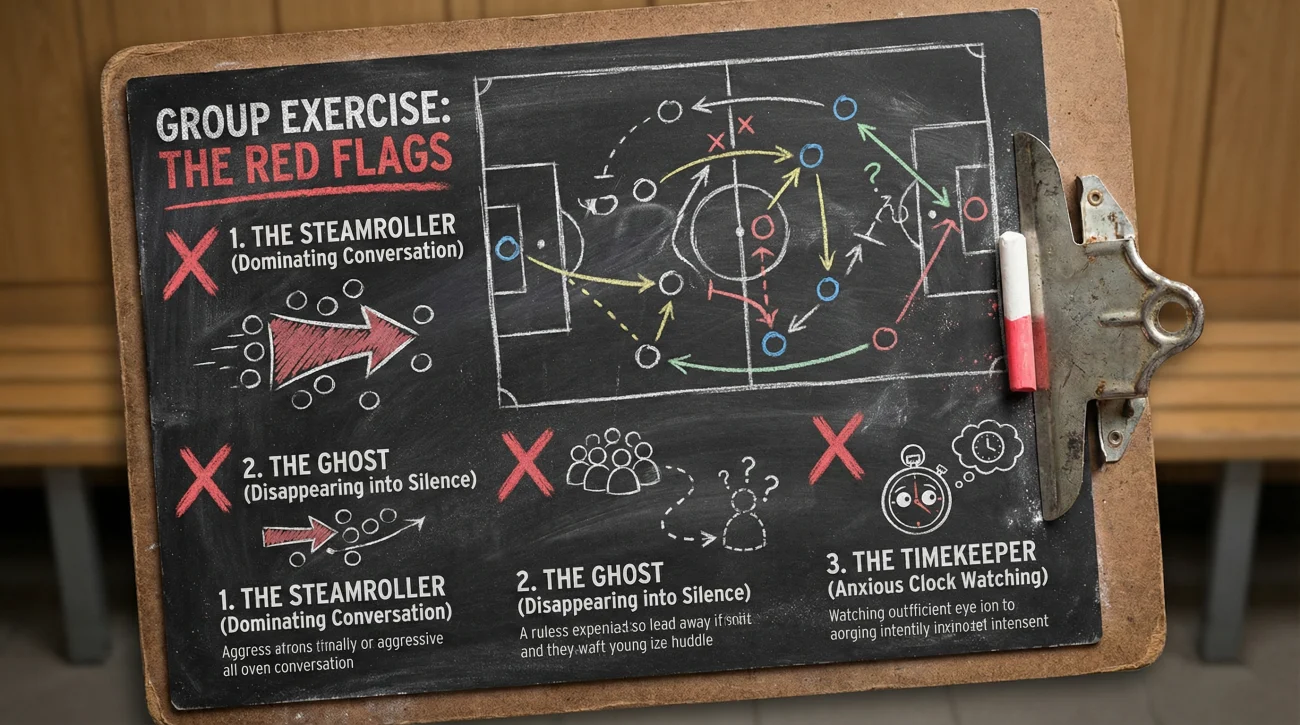
Dominating the conversation
Talking the most does not mean contributing the most. Assessors notice candidates who steamroll others. Leadership means enabling the group, not controlling it.
Disappearing into silence
The opposite problem: candidates who barely speak because they are intimidated or tired. Force yourself to contribute at least once every few minutes, even if just to support someone else’s idea.
Watching the clock obsessively
Someone needs to manage time, but doing it anxiously every thirty seconds makes you look stressed rather than organized. Calm time checks are fine; panicked countdowns are not.
Individual Presentations and Case Studies
These tasks test your ability to analyze information quickly and present findings clearly. You typically receive materials, get twenty to thirty minutes to prepare, then present for ten minutes followed by questions.
Using Prep Time Effectively
Do not try to absorb every detail. Skim for key facts, identify the core question, and structure a clear argument. A simple framework delivered confidently beats a complex analysis delivered nervously.
Allocate your prep time roughly: five minutes reading, ten minutes structuring, five minutes practicing your opening and closing out loud.
Beating the Afternoon Slump
If your presentation falls in the dreaded post-lunch slot, take extra steps to stay alert. Stand during your prep time rather than sitting. Splash cold water on your face during the break. Speak slightly louder than feels natural to compensate for energy dip.
Expert Advice: “A candidate once told me she did jumping jacks in the bathroom before her afternoon presentation. I thought she was joking until I saw how energetic she was compared to the sluggish candidates before her. Whatever works.”
The Interview Portion
Most assessment centers include one-on-one interviews, often scheduled in the afternoon when fatigue peaks. These interviews are typically competency-based, meaning interviewers want specific examples of past behavior.
Preparing Your Stories
Before the assessment day, prepare five to seven stories from your experience covering common competencies: teamwork, leadership, problem-solving, handling pressure, dealing with conflict. Having these ready means you can retrieve them even when tired.
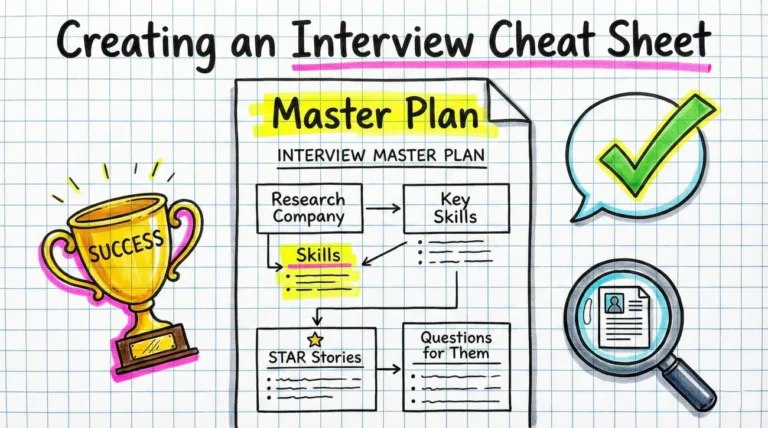
Use the STAR format: Situation, Task, Action, Result. Practice telling each story in under two minutes. When your brain is exhausted, having rehearsed structures to fall back on prevents rambling.
Maintaining Energy Late in the Day
Your final interview may be your most important, yet it comes when you feel worst. Combat this by:
- Visiting the bathroom to splash water on your face and reset
- Taking three deep breaths before walking into the room
- Standing and stretching during the previous break
- Smiling consciously to trigger energy even when forced
❓ FAQ
😴 I am not a morning person. Am I doomed?
Start adjusting your sleep schedule a week before. Go to bed and wake up progressively earlier. Your body can adapt if you give it time. Relying on caffeine alone will backfire when you crash mid-afternoon.
🤝 Should I be friendly with other candidates or treat them as competition?
Friendly, absolutely. Assessors watch how you interact. Treating others as threats makes you look insecure. Besides, you might end up working with these people if multiple candidates get offers.
📊 I bombed the aptitude test. Is the rest of the day pointless?
No. Assessment centers evaluate multiple competencies. Strong performance in group exercises and interviews can compensate for weaker test scores. Do not let one bad segment tank your energy for the rest.
🍽️ Lunch is with assessors. Is this part of the evaluation?
Officially, maybe not. Practically, yes. Your table manners, conversation skills, and how you treat catering staff all register. Stay professional even when the setting feels relaxed.
⏰ It is 4pm and I can barely function. How do I push through?
Physical movement helps: stand straighter, gesture more, make eye contact deliberately. Your body language can trick your brain into alertness. Also remember: everyone else is equally exhausted. Whoever pushes through wins.
Final Thoughts
An assessment center is designed to push you past your comfort zone and see what emerges. The candidates who succeed are not necessarily the smartest or most polished. They are the ones who manage their energy across the entire day, contribute consistently in group settings, and maintain composure when fatigue sets in.
These assessment center tips matter because the day is a simulation of actual work life. Companies want to see how you perform under sustained pressure, not just during a thirty-minute interview where anyone can fake enthusiasm. Pace yourself, fuel properly, use breaks strategically, and remember that hour seven matters as much as hour one. For more comprehensive interview strategies, explore our full interview preparation guide.
⚠️ Disclaimer: The interview strategies, sample answers, and negotiation tips provided in this guide are for educational purposes only. Hiring decisions are subjective and vary by company and industry. While these strategies are based on professional HR standards, they do not guarantee a specific job offer or result.