Why Memorizing Questions Fails
Most candidates approach behavioral interviews backward. They download lists of 50 or 100 possible questions and try to prepare individual answers for each. This approach creates anxiety, wastes time, and still leaves them scrambling when interviewers ask something unexpected. Building a behavioral interview story bank flips this strategy entirely.
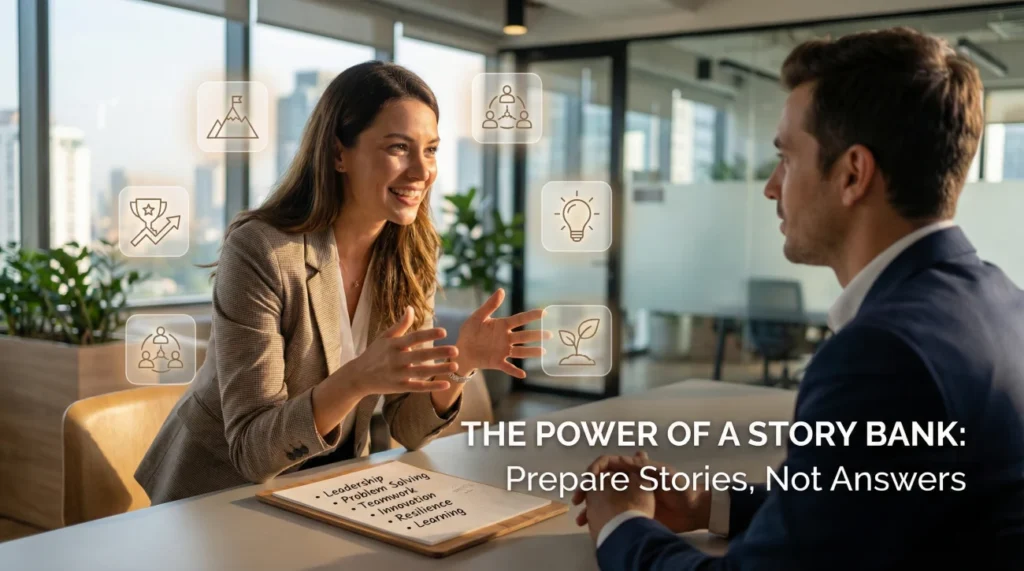
Instead of preparing for questions, prepare your stories. A well-chosen collection of five to eight versatile stories can answer virtually any behavioral question thrown at you. The key is selecting experiences that demonstrate multiple competencies and practicing how to adapt each story to different prompts.
The Five Story Strategy
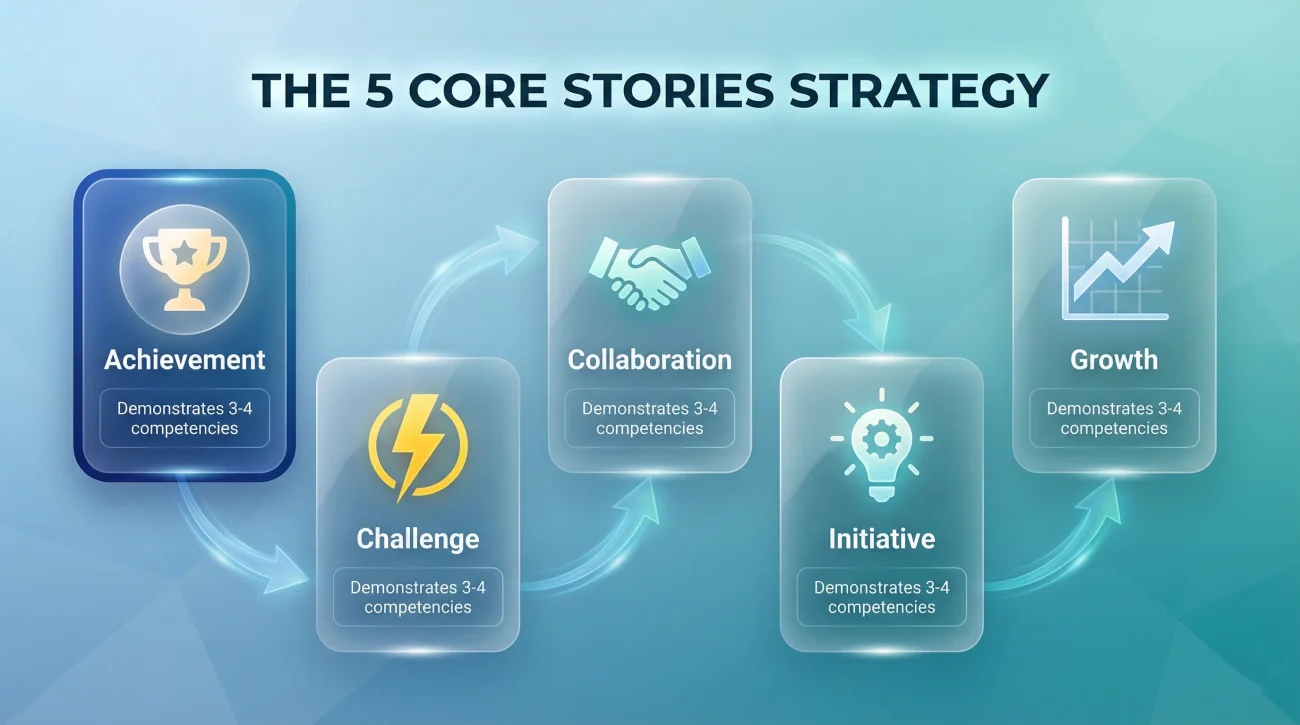
Rather than memorizing dozens of specific answers, focus on developing five core stories that together cover the competencies interviewers assess. Each story should demonstrate at least three to four different skills, giving you flexibility to emphasize different elements depending on the question.
Essential Story Categories
- 🏆 Achievement Story: A project where you exceeded expectations with measurable results
- ⚡ Challenge Story: A significant obstacle you overcame through persistence and creativity
- 🤝 Collaboration Story: Working effectively with others, especially across different perspectives
- 💡 Initiative Story: Taking action without being asked, identifying and solving problems proactively
- 📈 Growth Story: Learning from failure or feedback and improving your approach
Each category addresses core competencies that appear in virtually every job description: leadership, teamwork, problem solving, communication, adaptability, and drive. With these five foundations covered, you can handle questions about conflict, pressure, prioritization, influence, and learning without scrambling for examples.
Making Stories Versatile
The power of a strong story bank comes from versatility. Your achievement story might answer questions about leadership, deadline pressure, technical skills, and stakeholder management depending on which elements you emphasize. When building your bank, test each story against multiple question types.
A single well-developed story should answer at least four different behavioral questions.
How Story Banks Work in Real Interviews
After twelve years of conducting behavioral interviews, I can immediately tell who prepared a story bank versus who memorized individual answers. Here are real examples that illustrate the difference.
The Candidate With Five Perfect Stories
A product manager named Angela came to her interview at a tech company with exactly six stories prepared. I know this because I asked her about it afterward when I extended the offer. She told me her approach: one story for each major competency area, plus one backup.
During the interview, I asked seven different behavioral questions. She used only four stories, but each time she adapted the emphasis. When I asked about handling conflict, she told me about a product launch where engineering and sales disagreed on priorities. When I asked about working under pressure, she used the same story but focused on the compressed timeline and how she managed competing demands.
The transitions were seamless. She never said “I already mentioned this, but…” She simply highlighted different aspects. By the third question, I realized I was watching a master class in interview preparation. She got the job and later told me that same story bank got her offers from three other companies.
The Candidate Who Tried to Memorize Everything
Contrast that with a candidate who had clearly prepared for specific questions but not built a story bank. When I asked about leadership, he gave a polished answer about leading a team through a system migration. When I asked about handling failure, he paused for almost thirty seconds, visibly searching his memory for a different prepared answer.
The problem was not that he lacked experience. The problem was that his leadership story included failure elements he could have emphasized. The migration hit serious obstacles. The timeline slipped. He had to make difficult decisions about scope. But he had mentally filed that as his “leadership story” and could not adapt it to a failure question on the fly.
He was qualified for the role but did not get the offer because his interview performance did not reflect his actual capabilities. Memorizing answers instead of developing versatile stories cost him.
The Pivot That Saved an Interview
One of my favorite interview moments came from a candidate named Marcus who got asked a question he had not anticipated: “Tell me about a time you had to deliver bad news to a senior stakeholder.”
Marcus did not have a specific story prepared for that exact question. But he had a strong achievement story about launching a new analytics platform. He quickly realized that story included a moment where he had to tell the VP of Sales that their requested features would not make the first release.
He said: “I have a story that addresses this, though the bad news was part of a larger success.” Then he told the story, spending extra time on the difficult conversation with the VP, how he prepared for it, how he framed the message, and how he offered alternatives. The interviewer was satisfied because Marcus demonstrated the competency, even though the context was broader.
This is what story bank preparation enables. Marcus knew his stories well enough to find the relevant element in real time rather than panicking when the exact question was not on his prep list.
Building Your Story Collection
Mining Your Experience
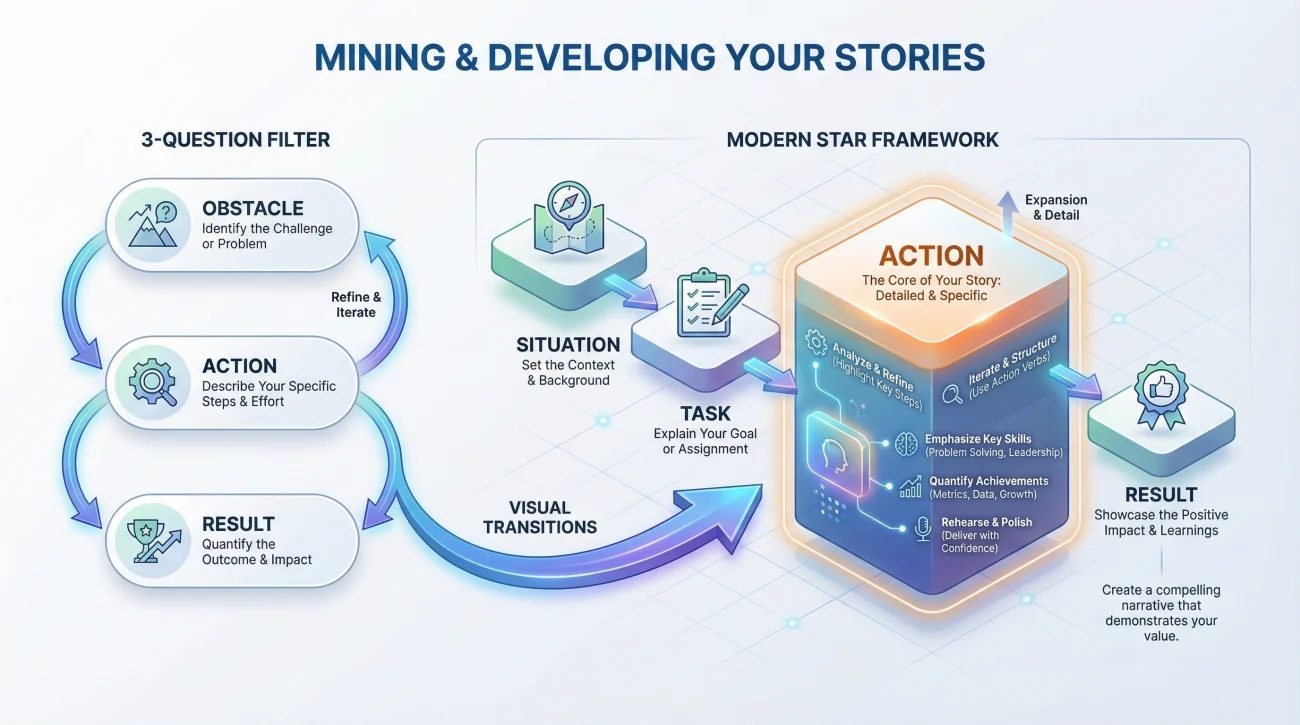
Start by listing significant projects, challenges, and accomplishments from your past three to five positions. Do not filter yet. Include situations that felt difficult at the time, projects with unexpected turns, and moments where you learned something important. The best behavioral stories often come from challenges rather than smooth successes.
For each potential story, ask three questions: What obstacle did I face? What specific actions did I take? What measurable result did I achieve? If you can answer all three clearly, you have viable story material.
Selection Criteria
Not every experience makes a strong interview story. Prioritize situations that are:
- Recent enough to remember details clearly
- Complex enough to demonstrate real problem solving
- Complete with clear outcomes you can quantify
- Relevant to the roles you are targeting
- Showcasing your individual contribution, not just team results
Avoid stories where the solution was obvious, someone else solved the problem, or you cannot articulate specific actions you personally took. Interviewers listen for the pronoun you use. Too many instances of “we” without clear “I” statements weaken your answers.
Developing Each Story
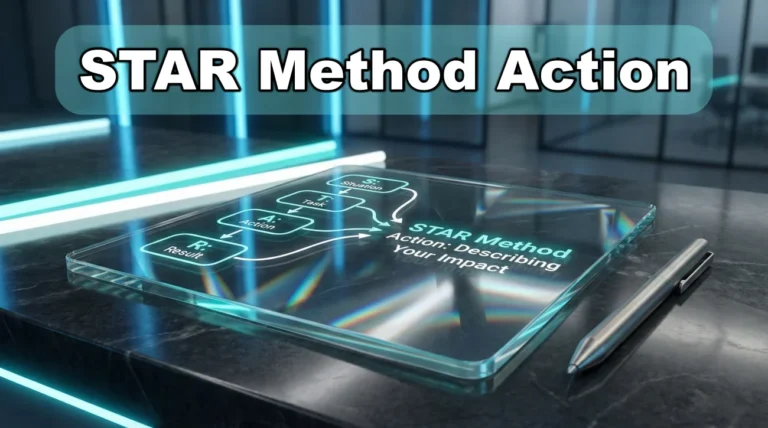
Once you have selected your core stories, develop each using the STAR framework but with strategic depth. Your situation should be concise, two to three sentences establishing context. Your task clarifies your specific responsibility. Your action section should be the longest, detailing the specific steps you took and why. Your result should include quantifiable outcomes whenever possible.
Write bullet points for each story rather than full scripts. You want to remember key details and transitions, not memorize word for word. Scripted answers sound rehearsed and prevent natural adaptation to specific questions.
Mapping Stories to Questions
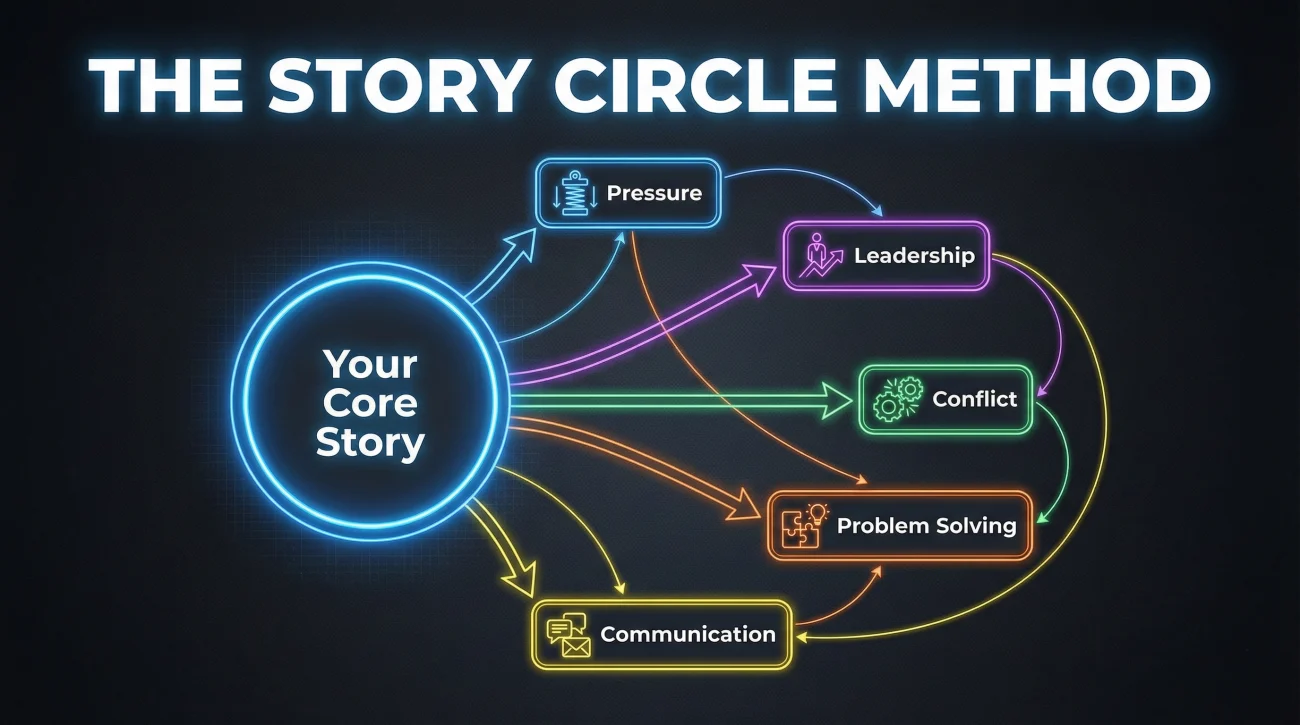
The story circle method helps you visualize how each story connects to multiple question types. Draw a circle with your story name in the center. Around the edges, write every behavioral question this story could answer. A strong story should connect to five or more questions.
| Story | Potential Questions It Answers |
|---|---|
| Product Launch Under Deadline | Working under pressure, leading without authority, handling competing priorities, communicating with stakeholders, adapting to change |
| Cross-Functional Conflict Resolution | Handling disagreement, influencing others, collaboration challenges, communication breakdown, relationship building |
| Failed Project Recovery | Learning from failure, taking ownership, problem solving, resilience, process improvement |
Review your mapped stories together. Look for gaps where no story addresses a common question type. If you lack examples for conflict resolution or failure recovery, either find additional stories or examine whether existing stories have elements you have not fully developed.
Practice and Adaptation
Adapting Stories to Questions
The same story told three different ways can answer three different questions. When asked about leadership, emphasize how you guided team direction and motivated others. When asked about problem solving, focus on your analytical process and the obstacles you navigated. When asked about communication, highlight how you aligned stakeholders and managed expectations.
Practice by having someone ask random behavioral questions and selecting which story fits best, then delivering it with emphasis on the relevant aspects. This builds the mental flexibility to adapt in real time during interviews.
Effective Rehearsal
Record yourself telling each story and play it back. Listen for filler words, vague language, and missing details. Time your responses. Most behavioral interview answers should run ninety seconds to two minutes. Shorter answers lack depth while longer answers lose listener attention.
Practice with different people if possible. Each mock interviewer will ask follow up questions that reveal gaps in your story development. Refine your answers based on where you stumble or where listeners seem confused.
Expert advice: Write only story titles on a notepad you can reference during interviews. Seeing the title triggers the full story without needing a script.
❓ FAQ
🎯 How many stories should I prepare?
Five to eight well-developed stories cover most interviews. Quality matters more than quantity. Each story should answer multiple question types, giving you fifteen to twenty five potential responses from your core collection.
💼 Can I use the same story for multiple questions?
Yes, but emphasize different aspects each time. If you already used a story focusing on leadership, you can reference it again for a teamwork question by highlighting collaboration elements. Avoid repeating the exact same telling.
⏰ How recent should my stories be?
Prioritize stories from the past three to five years when details remain fresh and relevant. Older stories work for unique situations but should not dominate your collection. Recent examples demonstrate current capabilities.
📋 What if I lack experience in a key area?
Look beyond traditional work experience. Volunteer projects, academic work, personal initiatives, and community involvement provide valid behavioral examples. Focus on transferable skills demonstrated regardless of context.
✨ Should I memorize my stories word for word?
No. Memorize key points and transitions but deliver naturally. Scripted answers sound robotic and prevent adaptation. Know your story well enough to tell it conversationally while hitting essential details.
Your Stories Are Your Advantage
A strong behavioral interview story bank transforms interview preparation from anxiety inducing memorization into confident storytelling. When you walk into interviews knowing you have five versatile stories ready to adapt to any question, you project the calm competence interviewers want to see. Start building your collection today, and you will never be caught scrambling for an example again.
⚠️ Disclaimer: The interview strategies, sample answers, and negotiation tips provided in this guide are for educational purposes only. Hiring decisions are subjective and vary by company and industry. While these strategies are based on professional HR standards, they do not guarantee a specific job offer or result.