Shaping Stories Behind the Scenes
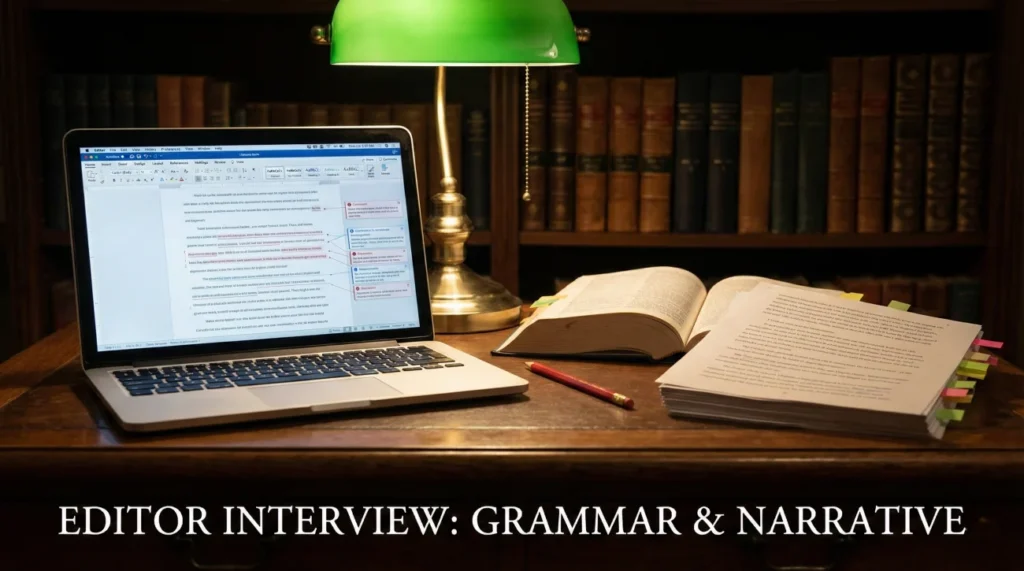
Editor interview questions evaluate your ability to transform manuscripts into polished publications while preserving the author’s voice. You are not the writer, but you are essential to the writing. You catch errors others miss, strengthen narrative structure, verify facts, and guide writers toward their best work. The invisible hand of a skilled editor makes the difference between good writing and great publications.
Hiring managers want editors who combine technical precision with creative judgment. You need impeccable grammar and style knowledge, but also the sensitivity to know when rules should bend for voice or effect. You must identify structural problems in narratives, verify factual claims, and deliver honest feedback that helps writers improve without crushing their confidence.
This guide covers grammar and style expertise, narrative structure and developmental editing, fact-checking and accuracy, working collaboratively with writers, and managing the editorial workflow from manuscript to publication.
Grammar & Style
Q: How do you ensure consistency in grammar, punctuation, and style across a manuscript?
I create and maintain a style sheet for each project, documenting decisions about spelling variations, hyphenation, capitalization, and stylistic choices specific to that work. This ensures consistency as I work through the manuscript and provides a reference for any editor who touches the project later. For recurring publications, I follow established house style guides.
I am thoroughly familiar with standard style guides including Chicago Manual of Style and AP Stylebook, understanding not just rules but the reasoning behind them. I apply the appropriate guide consistently while noting when project-specific decisions override general rules. Systematic editing, working in passes that focus on different elements, catches inconsistencies that casual reading misses.
Q: When do you follow grammar rules strictly versus allowing flexibility?
I follow rules strictly when violations create confusion, undermine credibility, or distract readers. Subject-verb agreement, pronoun clarity, and punctuation that affects meaning require precision. Professional publications cannot afford errors that make readers question competence or misunderstand content.
I allow flexibility when strict rules conflict with voice, rhythm, or intentional effect. Sentence fragments can create emphasis. Unconventional punctuation can establish distinctive style. Dialogue often breaks rules because people do not speak in grammatically perfect sentences. The key is distinguishing intentional choices from errors, which requires discussing questionable passages with writers when intent is unclear.
Q: Describe your approach to copy editing versus developmental editing.
Copy editing focuses on surface-level correctness: grammar, punctuation, spelling, consistency, and adherence to style guides. I work line by line, ensuring every sentence is technically correct and clearly expressed. Copy editing happens after structural decisions are finalized, polishing prose that is already well-organized.
Developmental editing addresses big-picture concerns: narrative structure, pacing, character development, argument logic, and overall organization. I evaluate whether the work accomplishes its goals and identify where it falls short. This editing happens earlier, shaping content before detailed polish makes sense. Different projects require different balances of these approaches.
Q: How do you handle manuscripts with significant quality issues?
I assess whether issues are fixable through editing or whether the manuscript needs more substantial revision. I provide honest feedback to the writer or acquisitions editor about what level of editing is realistic within timeline and budget. Some manuscripts need multiple rounds of developmental feedback before copy editing is appropriate.
I prioritize my feedback, focusing on the most important issues first. Overwhelming a writer with hundreds of corrections discourages rather than helps. I explain problems clearly and suggest solutions rather than just marking errors. For manuscripts with serious issues, I may recommend developmental editing, additional revision time, or honest conversations about publication viability.
Narrative Structure
Q: How do you evaluate and improve narrative structure?
I read first for overall experience, noting where attention wanders, confusion arises, or pacing feels wrong. These reactions often signal structural problems. Then I analyze deliberately: does the opening hook readers, does tension build appropriately, do revelations come at the right moments, does the ending satisfy? I map the structure to understand what exists before suggesting changes.
I provide concrete feedback about structural issues and possible solutions. If the middle sags, I might suggest cutting certain sections, reordering events, or adding stakes. I explain why changes would help rather than just prescribing them. The writer must ultimately execute revisions, so they need to understand the reasoning to make good decisions.
Q: How do you approach editing fiction versus nonfiction?
Fiction editing prioritizes story elements: character development, plot coherence, dialogue authenticity, and emotional arc. I evaluate whether readers will care about characters, whether conflicts feel meaningful, and whether the resolution satisfies. Voice and style matter enormously because fiction succeeds through how it tells as much as what it tells.
Nonfiction editing prioritizes clarity, accuracy, and argument strength. I verify that claims are supported, logic holds, and complex information is accessible to the target audience. Structure should guide readers through ideas efficiently. Voice still matters, but accuracy and usefulness often take priority over stylistic flourish. Each genre has distinct success criteria that shape editorial focus.
Q: How do you maintain author voice while improving clarity?
I study the author’s voice before making changes, identifying signature elements: sentence rhythm, word choice patterns, tone, and stylistic quirks. These elements make writing distinctive and should be preserved even as I improve clarity. I make changes that sound like the author, not like me rewriting them.
When clarity requires changes that might affect voice, I discuss options with the author. I might offer alternative phrasings that maintain their style while resolving confusion. I query rather than override when voice is at stake. The goal is the author’s best work, not my interpretation of their writing. Preserving voice while editing requires restraint and respect.
Q: Describe a challenging manuscript you edited and how you approached it.
I edited a memoir where the author’s powerful story was buried under disorganized structure and overwritten prose. The emotional core was compelling, but readers would give up before reaching it. The challenge was significant restructuring without losing the authentic voice that made the story meaningful.
I provided detailed developmental feedback with a suggested reorganization, explaining the reasoning behind each proposed change. I worked with the author through multiple revisions, each time preserving what worked while addressing what did not. The final manuscript told the same story but with dramatically improved clarity and pacing. The author later said the editing process taught them more about writing than any class ever had.
Fact-Checking & Accuracy
Explain your fact-checking process.
I verify factual claims against reliable sources, cross-referencing when possible. I check dates, names, statistics, quotations, and any specific claims that could be wrong. I consult primary sources when available rather than relying on secondary interpretations. I flag anything I cannot verify and query the author for sources.
I maintain healthy skepticism even for plausible-sounding facts. I know that errors propagate when sources copy each other, so I trace claims back to origins. I use credible databases, academic sources, and authoritative references rather than accepting whatever appears first in a search. Fact-checking is methodical work that cannot be rushed.
How do you handle content outside your area of expertise?
I research enough to edit intelligently, learning the subject matter, terminology, and conventions of the field. I consult subject-matter experts when technical accuracy requires specialized knowledge beyond my capacity to verify. I am honest about the limits of my expertise and seek appropriate review rather than guessing.
I focus on what I can verify and improve: clarity of explanation, logical coherence, and accessibility to the intended audience. Even without deep subject expertise, I can identify passages that will confuse readers or claims that lack supporting evidence. I query the author when technical content raises questions I cannot answer through research.
What do you do when you discover factual errors in a manuscript?
I document the error clearly, providing the correct information and source when possible. I query the author rather than silently correcting, since they may have access to sources I do not, or the error may indicate a larger problem requiring their attention. I distinguish between clear errors and matters of interpretation where reasonable disagreement exists.
For significant errors that affect credibility or could cause harm, I escalate to the appropriate editorial decision-maker. Minor errors can be corrected in editing; major factual problems may require substantial revision or publication decisions. I treat accuracy as non-negotiable because published errors damage both author and publisher credibility.
Working with Writers
Q: How do you give constructive feedback to writers?
I balance honesty with encouragement, recognizing that writing is personal and criticism feels vulnerable. I lead with what works well before addressing problems. I frame feedback in terms of reader experience rather than personal preference: “readers may lose track of the timeline here” rather than “I found this confusing.”
I provide specific, actionable feedback rather than vague criticism. Instead of saying the middle is slow, I identify which passages drag and suggest why. I offer solutions when possible, not just problems. I adjust tone and detail based on the writer’s experience level and our working relationship. The goal is helping writers improve their work, not demonstrating my editorial expertise.
Q: How do you handle disagreements with writers about edits?
I listen to the writer’s perspective and reasoning. Sometimes they have information I lack, or they are protecting something important that I misunderstood. I explain my reasoning clearly, helping them understand why I suggested the change. Disagreement often reveals opportunities for solutions neither of us initially imagined.
I distinguish between essential changes and preferences. Grammar errors and factual mistakes are non-negotiable. Style choices and subjective judgments allow more flexibility. When we cannot agree, I defer to the writer on matters of voice and preference while advocating firmly for changes that affect accuracy or clarity. Ultimately, it is their work; my role is to help them succeed, not impose my vision.
Q: How do you build productive relationships with writers?
I establish trust through competence and respect. I demonstrate that I understand their work and goals, that my feedback aims to help them succeed, and that I respect their voice and vision. I communicate clearly about process, timeline, and expectations so there are no surprises. I follow through on commitments.
I adapt my approach to different writers. Some want detailed feedback on every element; others prefer high-level guidance. Some collaborate closely; others prefer independence with check-ins. I ask about preferences and observe responses to calibrate my approach. Good editor-writer relationships produce better work and make the process more enjoyable for everyone.
Q: How do you handle freelance writers who submit unsatisfactory work?
I provide clear, specific feedback about what needs improvement and why. I explain publication standards and how the submission falls short. I offer guidance on revision if the piece is salvageable and time permits. I am direct but not harsh; the goal is improvement, not punishment.
For recurring issues, I address patterns rather than just individual problems. If a writer consistently misses deadlines or submits work requiring excessive editing, I have honest conversations about expectations and whether the relationship is working. Sometimes the fit is wrong and parting ways serves everyone better than continuing frustration.
Editing Knowledge Quiz
20 Practice Questions
1. A style sheet in editing serves to:
- Replace standard style guides
- Document project-specific decisions for consistency
- Record word counts
- Track author communications
2. Developmental editing focuses on:
- Grammar and punctuation
- Narrative structure, pacing, and overall organization
- Typos only
- Final proofreading
3. When maintaining author voice, editors should:
- Rewrite in their own style
- Preserve signature elements while improving clarity
- Eliminate all distinctive stylistic choices
- Ignore voice entirely
4. Fact-checking should verify claims against:
- Whatever appears first in search results
- Reliable primary sources, cross-referenced when possible
- Author assertion alone
- Wikipedia exclusively
5. Constructive feedback to writers should:
- Focus only on problems
- Balance honesty with encouragement and provide actionable specifics
- Avoid any criticism
- Demonstrate editorial superiority
6. Copy editing occurs:
- Before any other editing
- After structural decisions are finalized
- Only for newspapers
- Instead of developmental editing
7. Grammar rules should be flexible when:
- The editor is unsure
- Strict rules conflict with voice, rhythm, or intentional effect
- The writer prefers breaking them
- Never, rules are absolute
8. When disagreeing with a writer about edits:
- Insist on all changes
- Explain reasoning, listen to their perspective, and distinguish essential from preferential
- Withdraw all suggestions
- Escalate to management immediately
9. For content outside your expertise:
- Edit as if you are an expert
- Research, consult experts, and focus on what you can verify
- Refuse the assignment
- Skip fact-checking entirely
10. Editing fiction prioritizes:
- Only grammatical correctness
- Character, plot, dialogue, and emotional arc
- Word count targets
- Academic citation style
11. Style guides like Chicago Manual of Style:
- Are suggestions only
- Provide standards for consistency while allowing project-specific overrides
- Apply only to academic writing
- Are outdated
12. Manuscripts with significant quality issues require:
- Immediate rejection
- Honest assessment of what editing can realistically accomplish
- Silent correction of everything
- Publishing as-is
13. Building productive writer relationships requires:
- Maintaining distance
- Trust, competence, clear communication, and adapted approaches
- Always agreeing with writers
- Imposing editorial vision
14. When factual errors are discovered:
- Ignore minor ones
- Document clearly, query the author, and escalate significant issues
- Silently correct without comment
- Reject the manuscript entirely
15. Evaluating narrative structure involves:
- Counting words per chapter
- Assessing pacing, tension, revelations, and overall reader experience
- Grammar checking only
- Comparing to other books
16. Editing nonfiction prioritizes:
- Stylistic flourish above all
- Clarity, accuracy, and argument strength
- Entertainment value only
- Author preference exclusively
17. Freelancers submitting unsatisfactory work should receive:
- No feedback
- Clear, specific feedback about standards and needed improvements
- Immediate termination without explanation
- Publication regardless
18. Multiple editing passes focus on:
- The same elements each time
- Different elements each pass to catch what single readings miss
- Speed over thoroughness
- Author preferences only
19. Sentence fragments in editing are:
- Always errors to correct
- Sometimes intentional for emphasis and acceptable in context
- Required in modern writing
- Only acceptable in dialogue
20. The goal of editorial feedback is:
- Demonstrating editor expertise
- Helping writers improve their work
- Rewriting in editor’s style
- Finding maximum errors
❓ FAQ
🎓 What qualifications do editors need?
Most editors have degrees in English, journalism, communications, or related fields. Strong grammar knowledge, demonstrated editing skill, and familiarity with style guides matter more than specific degrees. Many start as editorial assistants or freelance proofreaders and advance through experience.
📚 What is the difference between editor types?
Developmental editors work on structure and content. Copy editors focus on grammar, style, and consistency. Proofreaders catch final errors before publication. Managing editors oversee workflow and staff. Acquisitions editors select manuscripts for publication. Roles vary by organization size and type.
💼 How is editing different from copywriting?
Editors improve existing content created by others, focusing on clarity, accuracy, and quality. Copywriters create original persuasive content for marketing and advertising. While both require strong writing skills, the roles, outputs, and success metrics differ significantly.
📈 What career paths exist for editors?
Paths include specialization by genre or content type, advancement to senior editor or managing editor roles, transition to acquisitions or publishing management, or freelance editing. Some editors become literary agents, writing coaches, or publishers themselves.
🖥️ How has digital publishing changed editing?
Digital tools enable collaborative editing, version tracking, and remote work. Online publishing creates demand for web-optimized content and SEO awareness. Faster publication cycles increase deadline pressure. Core editorial skills remain essential, but tool proficiency and adaptability matter more than ever.
Final Thoughts
Success with editor interview questions requires demonstrating both technical precision and creative sensitivity. Show that you command grammar and style while respecting author voice, that you can strengthen narrative structure while preserving what makes writing distinctive, and that you deliver feedback that helps writers improve. Your invisible work makes published writing shine.
The best editors combine meticulous attention to detail with genuine care for writers and their work. Highlight your fact-checking rigor, your collaborative approach to feedback, and your judgment about when rules should bend. Employers want editors who improve everything they touch while building productive relationships that make the editorial process effective and sustainable.
⚠️ Disclaimer: The interview strategies, sample answers, and negotiation tips provided in this guide are for educational purposes only. Hiring decisions are subjective and vary by company and industry. While these strategies are based on professional HR standards, they do not guarantee a specific job offer or result.