Mastering High-Conflict Customer Scenarios
While anyone can deliver exceptional service during a pleasant interaction, the true test of a professional lies in their ability to navigate hostility. The moment a customer raises their voice is the moment most untrained employees crumble, which is exactly why I always ask candidates about handling angry customers.
I am not looking for someone who simply follows a script; I am looking for emotional maturity. A VP of Operations once told me that he specifically hires individuals who can “lower the temperature in the room” simply by being there. If you can demonstrate that you remain the calmest person in a chaotic situation, you prove yourself to be an irreplaceable asset to any team.
Core Tactics for Conflict Resolution
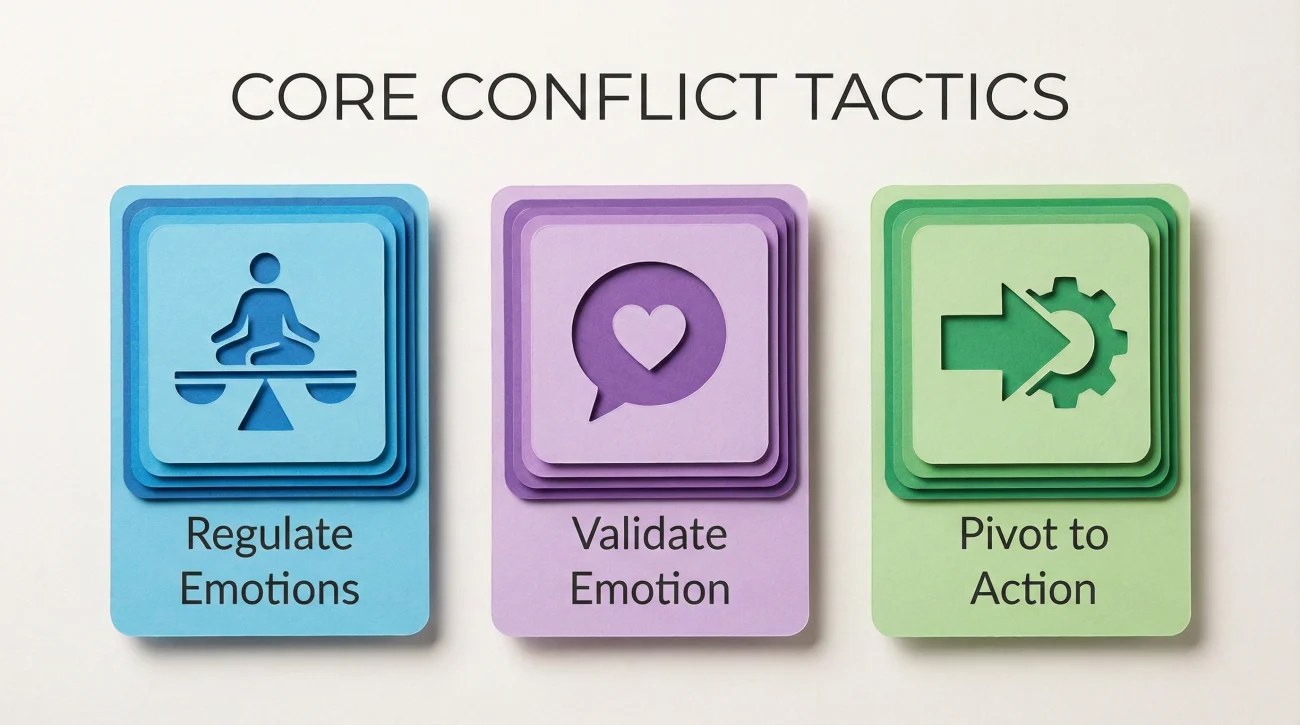
Regulate Your Own Emotions First
The absolute foundation of effective de-escalation is the ability to override your natural defensive instincts. When a customer yells, your biological response is often to fight back or shut down, but a professional must consciously choose to remain steady. Your answer needs to show that you can act as the “adult in the room” – stable, unshakeable, and in control of your own reactions regardless of the provocation.
Composure is a professional skill. It demonstrates that you are in control of the interaction, rather than allowing the customer’s emotions to dictate the outcome.
Validate the Emotion, Not the Abuse
It is important to remember that an angry person is often just a frightened or frustrated person who feels powerless. They will not be receptive to logic or solutions until they feel their distress has been acknowledged. Strong candidates describe how they use “verbal nodding” and empathetic validation to drain the adrenaline out of the conversation before attempting to fix the technical issue.
Sarah, a candidate for a luxury concierge role, shared a story about a VIP guest screaming because his suit wasn’t pressed in time. “I didn’t interrupt him,” she explained. “I waited for him to take a breath, looked him in the eye, and said, ‘Mr. Smith, this is a disaster and you have every right to be furious. I am going to fix this immediately.’ By validating his anger completely, I took the fight out of him, turning us from enemies into partners solving a problem.”
Using phrases like “I can hear how upsetting this is for you” is not an admission of fault; it is an admission of humanity that bridges the gap between you and the customer.
Pivot to Action
While empathy buys you time, only competence can solve the problem. Once the customer stops yelling, you must immediately shift into solution mode to restore their confidence. Your story should demonstrate decisiveness, because an angry customer doesn’t want vague options; they want a leader who knows exactly what steps to take to make the pain go away.
Battle-Tested: Stories That Impressed Me
In over a decade of interviewing, the most memorable answers I have heard aren’t about happy customers. They are about the situations that nearly went off the rails – and how the candidate steered them back on track.
The Agent Who Disarmed a Screaming Passenger
I once interviewed a former airline supervisor named David who described a harrowing situation where a flight was canceled due to weather. A passenger was literally pounding on the counter, screaming profanities and threatening David’s job, causing other agents to retreat in fear.
David told me: “I deliberately lowered my voice so he had to stop screaming just to hear me. I said, ‘Sir, I want to get you home to your family. I am the only person here who can do that right now, but I can’t help you if you’re yelling at me. Please work with me.’ It was a firm boundary wrapped in a genuine offer of help. The passenger froze, apologized, and allowed David to rebook him. David didn’t just survive the interaction; he took command of it.”
That is the level of quiet confidence I hire immediately, as it shows he respects himself just as much as he respects the customer.
The Account Manager Who Saved a Cancelled Contract
Elena, a Customer Success Manager, told me about a client who called her “incompetent” and demanded to cancel a $50k contract because of a recurring software bug. The client wasn’t just loud; he was personally insulting and aggressive.
Elena didn’t take the bait. “I realized his anger wasn’t really about me,” she explained. “It was about him looking bad to his own boss because our software failed. I said, ‘You’re right. We let you down, and I understand why you want to leave. But if you walk away now, you still have the problem. Give me 48 hours to patch this manually. If it’s not perfect, I will process your cancellation myself.'”
She pivoted the conversation from “blame” to “rescue,” worked with engineering to fix the bug, and the client stayed for three more years. Elena proved she could separate her ego from the outcome to achieve the business goal.
The Manager Who Refused to Be Bullied
Sometimes, the “win” is not retaining the customer, but protecting the team and company policy. Marcus, a retail manager, shared a story about a customer demanding a cash refund for a stolen item without a receipt. When refused, the customer began throwing merchandise.
Marcus remained calm but firm, stating: “I am asking you to leave the store. We can discuss this via customer service later, but your behavior is unsafe for my staff.” He didn’t scream back, nor did he cave in; he simply escorted the customer out and filed a report.
I hired Marcus because he knew the difference between service and servitude. Knowing when to say “no” to an abusive customer is a critical skill for senior-level roles.
The HEAT Framework
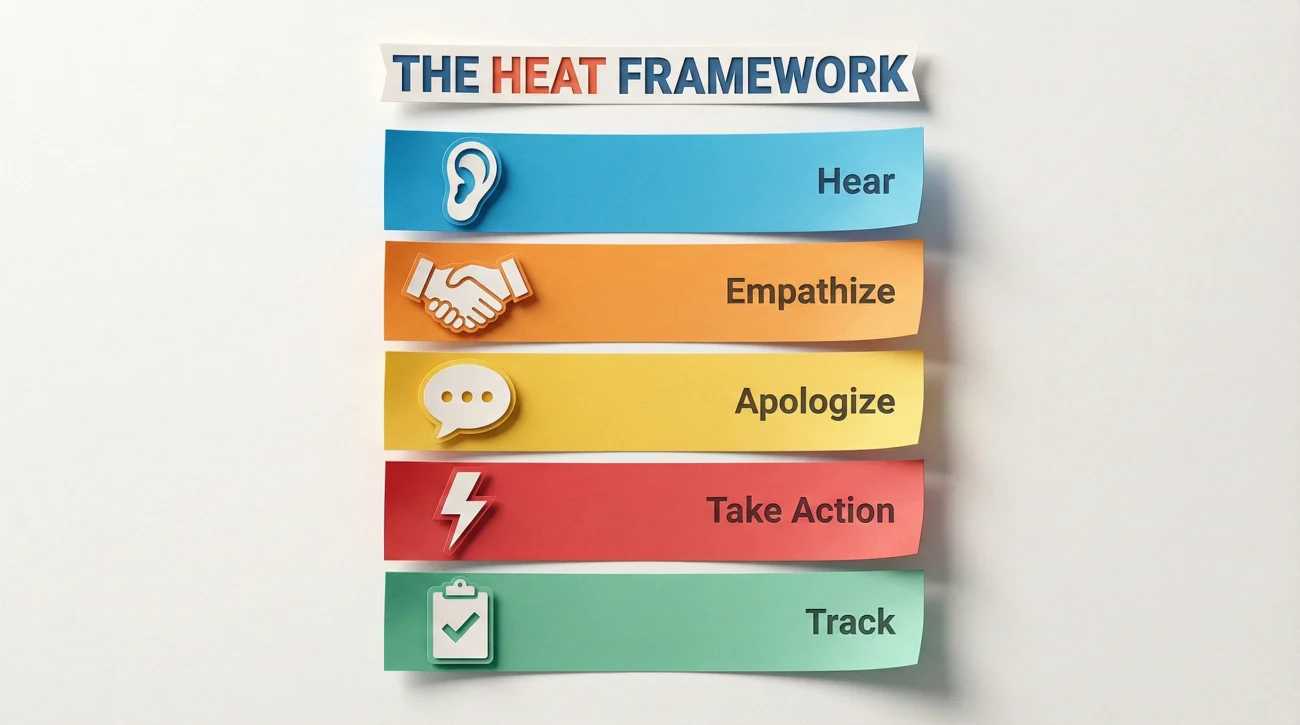
- 👂 Hear: Listen without interrupting, even if they are wrong.
- 🤝 Empathize: Validate their feelings (“I would be upset too”).
- 🙏 Apologize: Own the impact of the issue, regardless of fault.
- ⚡ Take Action: Solve the problem or offer the best alternative immediately.
- 📝 Track: Document the incident to protect yourself and the company.
Using a structured acronym like this (or HEARD, LAST) proves to me that you have a professional methodology for conflict resolution, rather than just reacting emotionally in the heat of the moment.
Sample Answer: The “Impossible” Client
Situation
I was managing a high-net-worth client portfolio when a client called furious because a time-sensitive transaction hadn’t cleared. He used abusive language and threatened to transfer his entire $2M portfolio immediately.
Task
I needed to de-escalate the situation quickly to protect the bank relationship, while also resolving the transaction issue before he initiated a full transfer.
Action
I let him vent for about two minutes without interrupting and avoided making excuses. When he paused, I lowered my voice and acknowledged the situation directly: “Mr. X, I completely understand why you’re furious. This is unacceptable service, and I’m looking at the transaction right now.” I focused on validating the impact rather than defending the bank.
While staying calm and professional, I pulled up the transaction details, identified the hold, and used my authority to manually override it. I stayed on the line while the system updated and asked him to confirm the funds had cleared on his side, so the call didn’t end until the problem was fully resolved.
After the immediate issue was fixed, I set expectations for follow-up and documented what had happened, so we could prevent repeat holds for similar time-sensitive transactions.
Result
Once the funds cleared, his tone shifted immediately and he even apologized for his language. I followed up with a written explanation of why the hold occurred and what we would do to avoid it in the future.
He kept his portfolio with us and referred a colleague a month later. The experience reinforced that, in high-stress moments, clients mainly want to know someone is taking ownership and actively fighting to solve the problem.
Distinguishing Anger from Abuse
There is a fine line between a frustrated customer and an abusive one, and acknowledging this distinction in your interview is powerful. You might say, “I have a high tolerance for frustration, but I draw the line at personal attacks or threats.”
Employers want resilience, but we also want to know you have healthy boundaries. Describing how you politely but firmly warned a customer about their language (“I want to help you, but I cannot do that if you are swearing at me”) shows high self-esteem and professional seniority.
For more strategies on mastering difficult behavioral questions, check out our full interview preparation guide.
❓ FAQ
🔥 What if I lost my cool in the story?
Do not tell that story. If you don’t have a perfect success story, tell one where you stayed calm but the customer stayed angry. The “win” in an interview is your professional behavior, not necessarily the customer’s reaction.
🤐 Should I tell the interviewer the customer was wrong?
Be careful with this approach. If you spend your answer blaming the customer (“he was crazy,” “she was irrational”), you risk looking judgmental. Focus on their *behavior* (“he was raising his voice”) rather than attacking their character.
😨 What if I’ve never had a customer yell at me?
You can substitute this with a conflict involving a coworker, a professor, or a team member. The underlying skill is the same: managing high emotions in a professional setting. Just make sure to clarify the context first.
📜 Is “The customer is always right” a good answer?
Rarely. Modern companies prefer the mindset that “The customer needs to be heard.” Saying they are “always right” suggests you might break policy or accept abuse just to please them, whereas nuance is preferred.
🛑 How do I end a story where the customer left?
Focus on the integrity of your actions. You can say, “Although they chose to leave, I remained professional, followed all protocols, and ensured they had the information they needed.” That is still considered a success.
The Bottom Line on Hostility
When I ask about handling angry customers, I am essentially testing your breaking point. Can you handle the heat without getting burned? If you can show me that you view conflict not as a personal attack, but as a professional puzzle to be solved with empathy and logic, you are exactly the kind of candidate I want on my team.
📌 Remember: You cannot control the customer’s mood, but you are 100% in control of your reaction.
⚠️ Disclaimer: The interview strategies, sample answers, and negotiation tips provided in this guide are for educational purposes only. Hiring decisions are subjective and vary by company and industry. While these strategies are based on professional HR standards, they do not guarantee a specific job offer or result.