- Why Feedback Matters: Creative careers reward people who can take critique without getting defensive, because collaboration and growth matter as much as talent.
- Good Critique vs Bad Criticism: Constructive feedback is specific, tied to goals and users, respectful, and offers rationale, while destructive criticism is vague, personal, and ignores context.
- Filter Input Smartly: Weigh feedback by source credibility and patterns across multiple reviewers, then extract the useful truth even from poorly delivered comments.
- Receive Feedback Like A Pro: Pause, manage emotions, listen fully, restate what you heard, and ask clarifying questions before you explain or defend a decision.
- Incorporate Without Losing Vision: Test suggestions against objectives and constraints, choose between conflicting inputs with clear rationale, and stand firm when changes would hurt the work.
Why Feedback Response Defines Creative Careers
The ability to receive, evaluate, and incorporate feedback separates thriving creative professionals from talented individuals who struggle despite technical skills. Understanding handling design feedback requires recognizing that defensive reactions to critique, inability to distinguish valuable input from misguided opinions, or blindly accepting every suggestion without discernment all undermine both work quality and professional relationships. Creative work inherently involves subjective judgment, making feedback navigation more complex than fields with objective correctness standards.
Strong designers develop sophisticated feedback processing skills that preserve creative vision while remaining genuinely open to improvement. During job interviews, committees specifically assess feedback receptiveness through portfolio discussions and critique scenarios because collaboration capability matters as much as individual talent. The professionals who advance consistently demonstrate balanced approaches that neither dismiss legitimate concerns defensively nor capitulate to every opinion regardless of merit or source credibility.
Distinguishing Critique From Destructive Criticism
Effective design critique strategies begin with recognizing fundamental differences between constructive critique advancing your work and destructive criticism serving other agendas or reflecting poor understanding.
Characteristics of Valuable Critique
Constructive feedback addresses specific design elements with clear rationale, connects observations to user needs or business objectives, suggests potential improvements or alternatives, and maintains respectful tone focused on work rather than attacking you personally. The critic demonstrates understanding of design context, constraints, and goals before offering input. Even when disagreeing with your choices, valuable critique acknowledges legitimate decision-making while proposing alternative approaches worth considering seriously.
| Constructive Critique | Destructive Criticism |
|---|---|
| Specific observations with rationale | Vague dismissals without explanation |
| Focuses on work, not person | Personal attacks or condescension |
| Connects to goals, users, constraints | Ignores context and objectives |
| Suggests alternatives or improvements | Only identifies problems without solutions |
| Respectful tone, collaborative framing | Dismissive, superior, or hostile delivery |
| Demonstrates design understanding | Reveals lack of context or expertise |
Recognizing Unhelpful Criticism
Destructive criticism offers vague complaints without specifics, attacks you personally rather than addressing work objectively, ignores project context or constraints, reflects personal aesthetic preferences without strategic grounding, or comes from sources lacking relevant expertise or understanding. While all feedback deserves initial consideration, you need not incorporate input that serves ego gratification, political agendas, or misunderstanding rather than genuinely improving your work quality or strategic effectiveness.
Evaluating Feedback Source Credibility
Consider feedback source when weighing input value. Experienced designers, target users, project stakeholders, and subject matter experts generally provide more valuable critique than random opinions from people lacking context or expertise. However, don’t automatically dismiss input from unexpected sources; sometimes fresh perspectives reveal blindspots invisible to experts too close to work. Balance appropriate deference to expertise with openness to insights from diverse viewpoints that might illuminate unconsidered angles.
Expert advice: The most valuable feedback processing skill involves extracting kernels of truth from poorly articulated critique while discarding unhelpful wrapper; even awkwardly delivered input sometimes contains legitimate concerns worth addressing once you parse past delivery problems.
Strategic Feedback Reception
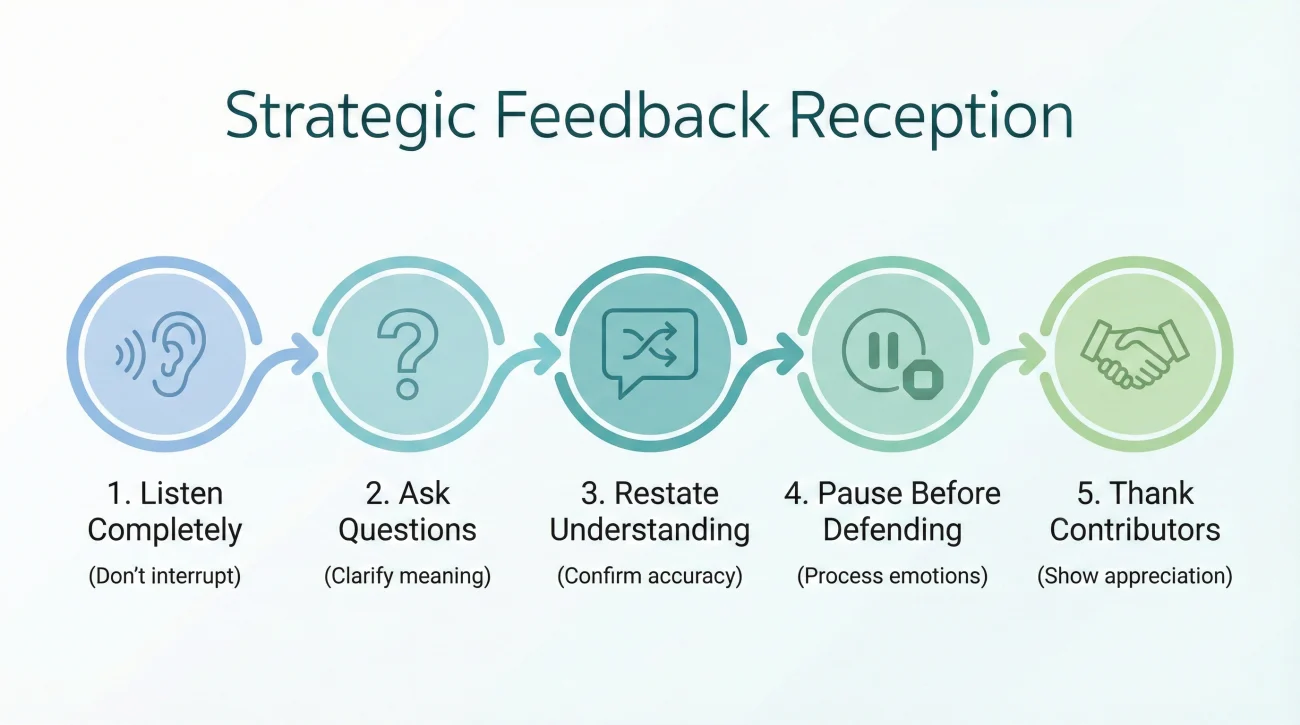
Strong receiving creative feedback practices require managing emotional reactions, asking clarifying questions, and creating conditions where honest input can emerge rather than being suppressed by defensiveness.
Managing Defensive Reactions
Creative work feels personal because it represents your thinking, taste, and problem-solving capability, making criticism trigger defensive responses that sabotage learning opportunities. When receiving feedback, pause before responding, breathe through initial emotional reactions, and consciously shift from defending decisions toward understanding perspectives. Remember that critique addresses work quality, not your personal worth, and that even harsh feedback often contains improvement opportunities if you can move past hurt feelings toward objective evaluation.
Practicing Active Listening
Listen fully to complete feedback before formulating responses or rebuttals. Ask clarifying questions ensuring you understand concerns accurately rather than reacting to your interpretation of vague comments. Restate feedback in your own words confirming comprehension before defending choices or explaining rationale. This active listening demonstrates respect for input while preventing misunderstandings that waste everyone’s time arguing about miscommunications rather than substantive design questions.
- 👂 Listen completely: Don’t interrupt or formulate defenses while others speak
- ❓ Ask questions: Clarify vague feedback, understand underlying concerns
- 🔄 Restate understanding: Confirm accurate comprehension before responding
<li⏸️ Pause before defending: Process emotional reactions before articulating responses
- 🤝 Thank contributors: Appreciate time invested even when disagreeing with input
Asking Productive Questions
When feedback seems unclear or contradictory, ask questions revealing underlying concerns rather than immediately dismissing input as confused. “Can you help me understand what problem you’re seeing?” proves more productive than “That doesn’t make sense.” Questions like “What would success look like from your perspective?” or “Which specific element concerns you most?” help clarify vague discomfort into actionable guidance you can address through iteration.
💡 Pro tip: After receiving difficult feedback, take 24 hours before responding substantively; this cooling period prevents defensive reactions while allowing objective evaluation distinguishing legitimate concerns from initial emotional resistance to any criticism.
Strategic Feedback Incorporation
Understanding feedback incorporation techniques means developing systematic approaches for deciding which input to implement, how to balance competing suggestions, and when to maintain creative direction despite pressure to change.
Evaluating Feedback Against Criteria
Not all feedback deserves equal weight or implementation. Evaluate input against project objectives, user needs, technical constraints, and strategic goals rather than treating every opinion as equally valid. Ask whether suggested changes actually improve work toward stated goals or merely reflect personal preferences disconnected from success criteria. Prioritize feedback addressing genuine problems over suggestions representing alternative aesthetic choices that don’t necessarily improve functionality or effectiveness.
| Evaluation Question | Implementation Decision |
|---|---|
| Does it serve project goals and user needs? | High priority for incorporation |
| Addresses actual problems vs aesthetic preference? | Problems warrant changes, preferences less urgent |
| Comes from credible, informed source? | Weight expertise appropriately |
| Multiple people identify same issue? | Pattern suggests legitimate concern |
| Aligns with constraints and resources? | Feasibility affects implementation priority |
Balancing Competing Feedback
When receiving contradictory suggestions, resist temptation to please everyone through compromises that dilute design integrity. Instead, evaluate which feedback better serves project objectives, aligns with target user needs, or addresses more critical problems. Sometimes the wisest response involves explaining why you’re implementing one suggestion over another with clear strategic rationale rather than trying to incorporate incompatible recommendations simultaneously creating confused results satisfying no one.
Preserving Creative Vision
Receptiveness to feedback doesn’t mean abandoning design vision or capitulating to every suggestion. Strong designers incorporate valuable input while maintaining coherent creative direction grounded in strategic thinking. When feedback conflicts with fundamental design principles or project goals, explain your reasoning respectfully, offer alternatives addressing underlying concerns differently, or stand firm when appropriate with clear rationale. This balanced approach demonstrates both collaborative flexibility and professional conviction that thoughtful creative decisions warrant defending when challenged inappropriately.
Providing Effective Feedback to Others
Understanding managing design criticism includes learning to give constructive feedback that helps colleagues improve rather than damaging relationships or confidence through poorly delivered critique.
Delivering Helpful Critique
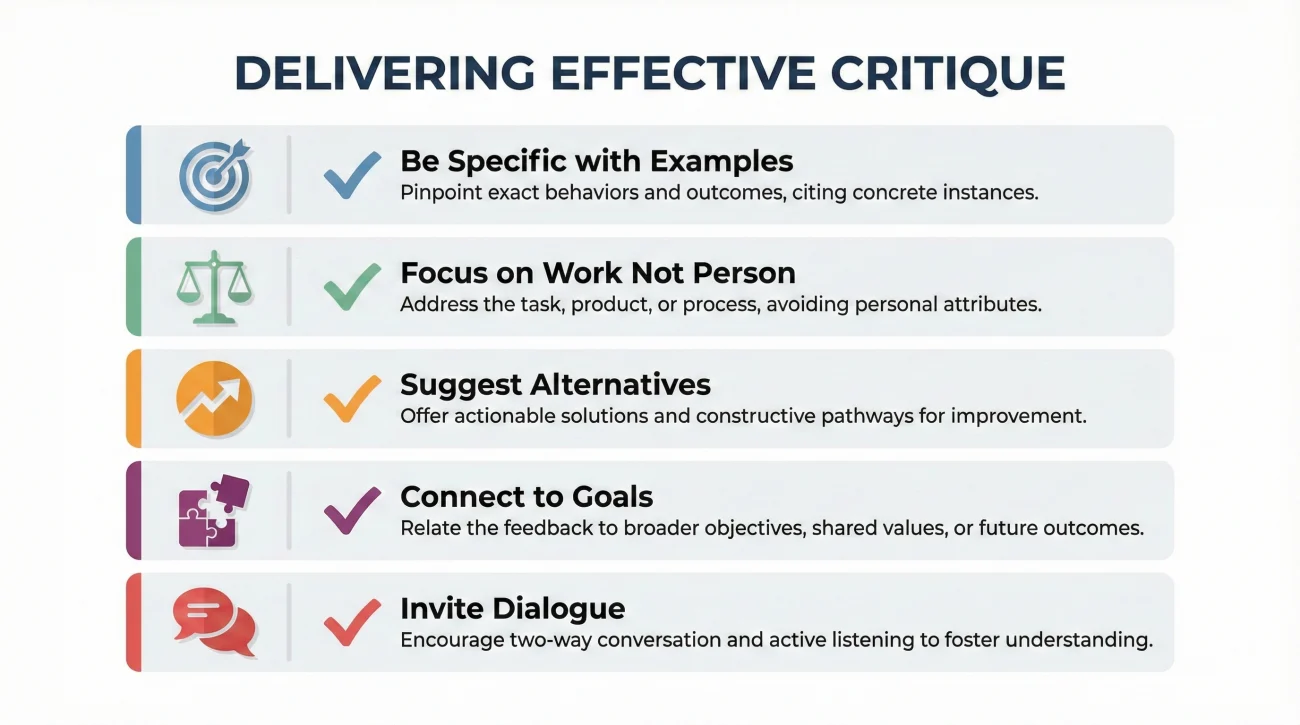
Frame feedback around work improvement rather than highlighting your superior judgment. Be specific about concerns with clear examples, suggest alternatives or improvements rather than only identifying problems, connect observations to project goals and user needs, and maintain respectful collaborative tone. Remember that critique serves helping others succeed, not proving your expertise or taste superiority. The best feedback leaves recipients feeling challenged yet supported rather than attacked or diminished.
Beyond the Feedback Sandwich
The traditional “feedback sandwich” (positive, negative, positive) often feels manipulative once people recognize the pattern. Instead, provide genuine balanced assessment addressing both strengths and growth areas naturally without forced structure. Lead with authentic appreciation for strong elements, discuss concerns with clear rationale and suggestions, and maintain respectful tone throughout rather than trying to soften legitimate critique through artificial praise bookending.
- Be specific with examples rather than vague general impressions
- Focus on work not person, maintaining objective professional distance
- Suggest improvements or alternatives, not just problem identification
- Connect feedback to goals, users, constraints providing strategic context
- Acknowledge what works well before addressing improvement areas
- Invite dialogue rather than delivering verdict requiring acceptance
Never deliver feedback publicly that could embarrass recipients or damage their professional credibility; save substantive critique for private conversations where constructive discussion can occur without audience pressure or face-saving concerns.
Cultivating Feedback Growth Mindset
Long-term creative success requires viewing feedback as growth opportunity rather than threat to ego or evidence of inadequacy.
Reframing Feedback as Learning
Strong designers actively seek critique understanding that improvement requires identifying blindspots invisible from your limited perspective. Reframe feedback from judgment on your capabilities to data informing better decisions. Even harsh critique contains information about how your work lands with others, revealing gaps between intent and reception worth understanding regardless of whether you ultimately agree with specific suggestions offered.
Developing Discernment
Growth mindset doesn’t mean accepting every suggestion uncritically but rather developing sophisticated judgment about which feedback serves your development and which reflects misunderstanding, incompatible aesthetics, or limited context. This discernment improves with experience as you learn to distinguish valuable pattern feedback from outlier opinions, expert guidance from uninformed preferences, and strategic concerns from purely subjective reactions you can respectfully decline incorporating without damage to professional relationships or work quality.
❓ FAQ
🎯 How do I handle feedback I completely disagree with?
Listen fully, ask clarifying questions understanding the concern, then explain your rationale calmly if you maintain your position. Sometimes implementing alternative solutions addressing underlying concerns differently proves more productive than defending original choices or blindly accepting suggestions you believe harm work quality.
💼 What if feedback contradicts itself from different sources?
Evaluate competing feedback against project goals and user needs rather than trying to please everyone. Explain decisions with strategic rationale when implementing one suggestion over another. Sometimes the wisest response accepts you cannot satisfy all stakeholders simultaneously with single solution.
⏰ Should I incorporate feedback immediately or wait?
For substantial critique, take time processing before responding or implementing changes. Immediate reactions often reflect defensive emotions rather than objective evaluation. Allow 24 hours cooling period for significant feedback, enabling rational assessment distinguishing valuable input from initial resistance to any criticism.
📋 How do I give feedback without damaging relationships?
Focus on work not person, be specific with examples, suggest improvements rather than only identifying problems, and maintain respectful collaborative tone. Frame feedback as helping them succeed rather than demonstrating your superior judgment. Deliver substantive critique privately, not publicly where embarrassment damages professional credibility.
✨ What if someone gets defensive when I give feedback?
Acknowledge their feelings, clarify you’re addressing work not them personally, and offer to discuss later if emotions run high. Sometimes people need time processing critique before engaging productively. Your calm professional demeanor often de-escalates defensive reactions better than arguing or retreating completely from honest assessment.
Final Thoughts
Creative career success depends as much on feedback processing skills as design talent because collaboration capability, growth mindset, and professional maturity all manifest through how you receive, evaluate, and incorporate critique. The designers who thrive develop sophisticated approaches distinguishing constructive feedback advancing their work from destructive criticism serving other agendas, maintaining creative vision while genuinely remaining open to valuable input, and balancing receptiveness with discernment that prevents capitulating to every opinion regardless of merit.
Mastering handling design feedback requires conscious skill development beyond natural defensive reactions that sabotage learning opportunities. Practice active listening without formulating rebuttals while others speak, ask clarifying questions ensuring accurate understanding before responding, take time processing significant critique before implementing changes, and develop evaluation frameworks distinguishing valuable input from misguided suggestions you can respectfully decline. This systematic approach to feedback transforms potentially threatening critique into growth catalyst that accelerates professional development while building collaborative relationships essential for creative career advancement and project success requiring diverse perspectives beyond your individual limitations.
⚠️ Disclaimer: The interview strategies, sample answers, and negotiation tips provided in this guide are for educational purposes only. Hiring decisions are subjective and vary by company and industry. While these strategies are based on professional HR standards, they do not guarantee a specific job offer or result.