- First impressions: Guests decide “professional or not” in seconds, so grooming directly shapes trust in your service before you even speak.
- Non-negotiables: Clean body, fresh breath, clean hands and hair, and minimal or no fragrance matter because close contact, food, and allergies make small issues feel huge.
- Uniform and dress code: Clean, wrinkle-free, well-fitting clothing and polished shoes signal standards, and being slightly overdressed is safer than underdressed when rules are unclear.
- Details people notice: Hair, nails, and jewelry should be neat and low-risk for hygiene and safety, with stricter limits in food service than in front-desk or sales roles.
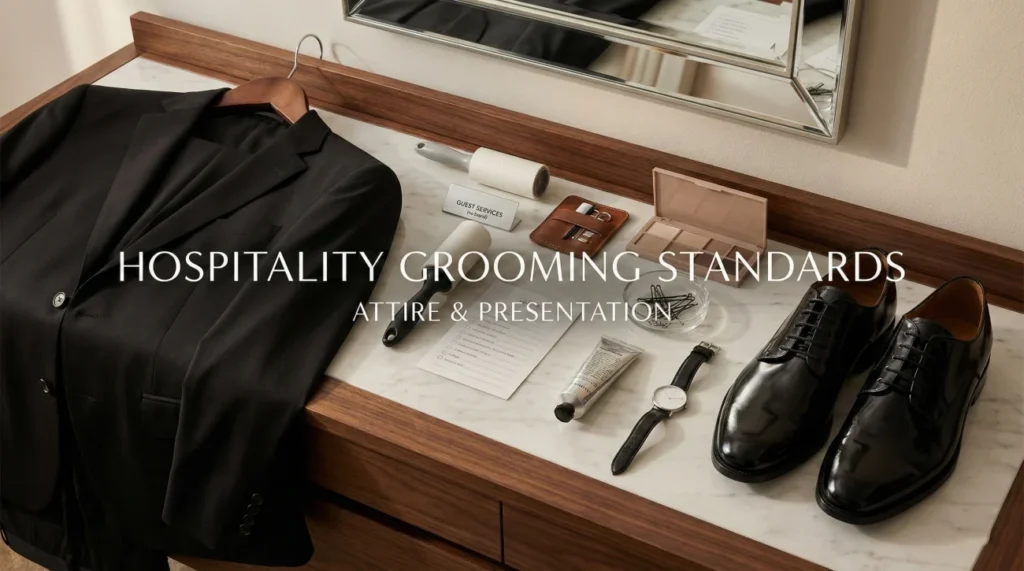
- How to sustain it: Prep the night before, do quick mid-shift checks, keep a small emergency kit, and treat grooming as a professional tool that supports performance and advancement.
The Power of First Visual Impressions
Guests form judgments about service quality within seconds of visual contact, often before you speak a word. Professional hospitality grooming standards recognize this reality. Your appearance communicates competence, cleanliness, attention to detail, and respect for guests. Impeccable grooming doesn’t guarantee excellent service, but poor presentation undermines credibility regardless of actual capability. Guests subconsciously question whether someone with unkempt hair or wrinkled uniform maintains high standards in less visible aspects of service.
The challenge is that grooming requirements feel personal because they involve your body, style preferences, cultural expressions, and comfort. Yet hospitality roles exist in public-facing contexts where appearance affects brand perception and guest comfort. Standards that seem excessive in other industries prove necessary in environments where visual presentation directly impacts customer experience. Understanding why standards exist helps you meet them without resentment while maintaining authentic self-expression within professional boundaries.
This guide establishes comprehensive grooming and presentation expectations across hospitality sectors. You’ll learn hygiene fundamentals affecting guest perception, professional attire requirements by role type, grooming specifics for hair, nails, and accessories, and strategies for maintaining standards sustainably throughout long shifts.
Personal Hygiene Fundamentals
Basic hygiene forms the non-negotiable foundation of professional appearance hospitality across all guest-facing roles.
Essential Hygiene Standards
These requirements apply universally regardless of specific role or organizational brand standards.
| Hygiene Area | Professional Standard | Why It Matters |
|---|---|---|
| Daily bathing | Shower/bath before each shift, fresh deodorant application | Prevents body odor in close guest proximity, hot kitchens, or long shifts |
| Oral hygiene | Brushed teeth, fresh breath, no visible food particles | Face-to-face service requires conversation without offensive breath |
| Hand cleanliness | Clean nails, no visible dirt, frequent washing throughout shift | Hands touch food, beverages, and guest items, so visible cleanliness is essential |
| Hair cleanliness | Freshly washed, styled appropriately, no visible dandruff or greasiness | Hair frames face in guest view, affects overall presentation perception |
| Fragrance moderation | Light or no cologne/perfume, unscented products preferred | Strong scents trigger allergies, interfere with food/wine service, overwhelm guests |
Many hospitality environments prohibit fragrances entirely due to guest sensitivities and food service requirements. Even “nice” cologne becomes overwhelming in close quarters or when guests are eating. Use unscented deodorant and hygiene products, relying on cleanliness rather than scent-masking.
Health and Wellness Impact
Certain health conditions require special attention to maintain professional presentation standards.
- 💊 Illness management: Stay home when contagious, manage symptoms discreetly if working while recovering
- 🤧 Allergies: Control symptoms before shift, keep tissues/medication accessible but out of guest view
- 💦 Perspiration: Use clinical-strength antiperspirant, have backup uniform if sweating excessively
- 🦷 Dental issues: Address promptly because visible dental problems or breath issues undermine professionalism
Expert advice: Invest in quality hygiene products supporting long shifts: clinical-strength deodorant for 12-hour days, comfortable shoes preventing foot odor, breath mints for after meals. Consider these professional tools, not personal luxuries. The cost is minimal compared to career impact of poor hygiene reputation. Colleagues notice and remember hygiene issues, affecting advancement opportunities beyond guest interactions.
Professional Attire Requirements
Dress code requirements vary significantly by hospitality sector, brand positioning, and specific role within organization.
Uniform Standards and Care
Many hospitality roles require specific uniforms ensuring consistent brand presentation.
| Uniform Element | Standard | Maintenance Requirements |
|---|---|---|
| Cleanliness | Spotless, no stains, fresh laundering before each shift | Wash after every use, pre-treat stains immediately, multiple uniforms enable rotation |
| Fit | Proper sizing, neither too tight nor baggy, professional silhouette | Tailor if needed, replace when worn or sizing changes, size up rather than too tight |
| Condition | No wrinkles, tears, fraying, missing buttons, fading | Iron/steam before shifts, repair minor damage immediately, replace when worn |
| Completeness | All required elements worn properly (no rolled sleeves unless permitted) | Organize uniforms completely, check before leaving for shift, have backup items |
| Personalization limits | Name tags only where designated, no unauthorized pins/modifications | Follow brand guidelines exactly, resist urge to customize uniform |
Non-Uniformed Role Standards
Roles without prescribed uniforms still require adherence to professional dress codes appropriate to brand and position.
- Business professional (hotel management, sales): Suits or blazers, dress pants/skirts, dress shoes, conservative colors
- Business casual (tour guides, travel agents): Slacks/khakis, collared shirts/blouses, closed-toe shoes, no denim
- Smart casual (boutique hotels, trendy restaurants): Clean jeans acceptable if upscale, fashionable but professional, brand-appropriate style
- Kitchen/BOH roles: Chef coats, checked pants, non-slip shoes, aprons, head covering in food prep
💡 Pro tip: When dress code is ambiguous, observe what successful senior employees wear and match their level of formality. If uncertain, err toward more formal; being overdressed is better than underdressed for hospitality roles. First week on new job, dress conservatively until you understand unwritten standards beyond official policy.
Footwear and Practical Considerations
Shoes must balance professional appearance with comfort and safety for long shifts on feet.
- 👞 Professional appearance: Closed-toe, polished/clean, appropriate formality level for role
- 🛡️ Safety requirements: Non-slip soles for kitchens/bars, closed-toe for liability, sturdy construction
- 🏃 Comfort for long shifts: Proper arch support, cushioning, room for feet to swell during shift
- 🧼 Maintenance: Regular cleaning, polish leather shoes, replace when worn, rotate pairs for longevity
Hair, Nails, and Accessories
Detailed personal hygiene guidelines extend beyond clothing to every visible aspect of appearance.
Hair Grooming Standards
Hair styling requirements balance professional appearance with food safety and brand image considerations.
| Hair Aspect | Standard Requirements | Sector-Specific Notes |
|---|---|---|
| Length management | Long hair secured away from face, tied back in most roles | Food service: must be fully restrained; Front desk: neat pulled-back acceptable; Salon: styled showcasing skills |
| Cleanliness | Freshly washed, no visible oil or dandruff, healthy appearance | Universal across all hospitality roles |
| Color | Natural tones preferred, conservative if colored, well-maintained without roots | Varies by brand. Luxury hotels are more conservative, while trendy venues are more flexible |
| Styling | Neat, professional, secured to prevent touching/adjusting during service | Avoid styles requiring constant adjustment or covering face |
| Facial hair (men) | Neatly trimmed, clean edges, no food particles, well-maintained | Some brands prohibit entirely; others allow if impeccably groomed |
Nail and Hand Presentation
Hands are constantly visible in service work, requiring particular attention to cleanliness and professional appearance.
- Length: Short to moderate, not extending far beyond fingertip because long nails are impractical and unsanitary
- Cleanliness: No visible dirt under nails, frequent hand washing, cuticles maintained
- Polish (if worn): Neutral colors, no chips or wear, completely removed if damaged
- Food service specifics: Many require no polish at all due to chip risk in food, natural nails only
- Artificial nails: Often prohibited in food service, acceptable in front desk/sales if conservative and maintained
Jewelry and Accessory Guidelines
Minimal, professional accessories avoid safety hazards, sanitation concerns, and distraction from service focus.
- 💍 Acceptable jewelry: Small earrings (studs or small hoops), simple necklace, watch, wedding/engagement rings
- 🚫 Typically prohibited: Dangling earrings, facial piercings beyond small nose studs, excessive rings, noisy bracelets
- 👔 Required accessories: Name tags worn correctly, role-specific items (server aprons, concierge pins)
- ⚠️ Safety considerations: Nothing that catches on equipment, hangs into food, or presents injury risk
Expert advice: Conservative grooming standards feel restrictive, but they serve legitimate purposes: food safety, brand consistency, guest comfort, and professionalism. View them as costume for professional role rather than personal expression constraints. Save creative expression for personal time while maintaining professional presentation at work. This separation protects your employment while preserving authentic self-expression outside work context.
For comprehensive guidance on professional presentation in interview contexts, explore interview preparation resources covering appearance standards and first impression strategies.
Sustaining Standards Through Shifts
Meeting grooming standards at shift start is insufficient; professional presentation requires maintenance throughout demanding workdays.
Pre-Shift Preparation Checklist
Systematic preparation prevents grooming failures during service.
| Preparation Area | Actions | Timing |
|---|---|---|
| Uniform readiness | Laid out night before, inspected for damage, backup available | Evening before shift |
| Personal hygiene | Shower, teeth brushed, deodorant, minimal fragrance | Within 2 hours of shift start |
| Hair styling | Styled appropriately, secured if needed, grooming products set | 30-60 minutes before shift |
| Final check | Full-length mirror review, lint removal, shoe polish, accessories correct | Before leaving for work |
Mid-Shift Maintenance Strategies
Professional appearance degrades during shifts without conscious maintenance effort.
- Quick bathroom checks during natural breaks to fix hair, check uniform, and freshen breath
- Keep emergency kit in locker: breath mints, deodorant, stain remover, bobby pins, backup hosiery
- Change into fresh uniform if significantly soiled during shift
- Reapply minimal makeup if worn (women), ensure no food in facial hair (men)
- Wash hands frequently, especially before returning to guest-facing areas after breaks
💡 Pro tip: Build grooming maintenance into natural workflow: check appearance in restroom mirror when washing hands, freshen breath before returning to floor after meals, smooth uniform and hair after break. These micro-adjustments prevent appearance degradation without requiring special maintenance trips. Professional presentation becomes habit rather than conscious effort.
❓ FAQ
🎯 What if grooming standards conflict with my personal style or culture?
Research company standards before applying to assess compatibility with your values and expression needs. Some organizations offer more flexibility than others. If standards conflict with religious or cultural practices (head coverings, facial hair, etc.), discuss accommodation options with HR; many legal protections exist for legitimate religious/cultural expression. However, purely stylistic preferences (fashion choices, trendy hair colors) typically don’t warrant exceptions. Decide whether trade-off between personal expression and employment opportunity aligns with your priorities.
💼 How strict are grooming standards really enforced?
Enforcement varies by organization, management, and visibility of role. Guest-facing positions face stricter scrutiny than back-of-house roles. Luxury brands enforce more rigorously than casual establishments. However, don’t assume lax enforcement means standards don’t matter; managers notice even if not formally disciplining. Poor grooming affects advancement opportunities, shift assignments, and professional reputation even without explicit correction. Maintain high standards regardless of visible enforcement.
⏰ How should I handle grooming emergencies during shifts?
Address immediately if guest-visible (food stain, torn clothing, hair falling out of style). Quickly inform supervisor, visit bathroom to fix or change into backup uniform. Keep emergency supplies accessible: stain remover, extra uniform items, grooming products. For minor issues not immediately visible to guests (small stain on back), address at next natural break. Never ignore appearance problems hoping they’re not noticeable; guests and coworkers definitely notice.
📋 Can I wear makeup, and how much is appropriate?
Makeup policies vary by brand and role. Generally, natural makeup enhancing appearance without being dramatic is acceptable for women in guest-facing roles. Avoid heavy makeup, dramatic colors, or obvious falseness. Some luxury hotels actually expect polished makeup as part of professional presentation. Men wearing makeup (beyond correcting blemishes) remains controversial in many hospitality contexts. When uncertain, observe what successful colleagues wear and match conservatism level.
✨ How do I demonstrate grooming awareness during interviews?
Your interview appearance provides direct evidence of grooming standards understanding. Dress slightly more formally than role requires, such as suits for management interviews and business casual for server positions. Ensure impeccable hygiene: fresh breath, clean nails, neat hair. Minimal fragrance or none. Conservative jewelry and accessories. Ask about grooming policies during interview, which demonstrates awareness that appearance matters in hospitality. Your question signals professionalism rather than vanity, showing you understand visual presentation affects guest experience.
Final Thoughts
Professional hospitality grooming standards exist because visual presentation directly affects guest perception of service quality and brand value. Within seconds of visual contact, guests form judgments about your competence, the establishment’s standards, and expected service quality. Impeccable grooming doesn’t guarantee excellent service, but poor presentation undermines credibility regardless of actual capability. Meeting these standards requires viewing professional appearance as essential job requirement rather than optional enhancement or personal constraint.
The challenge is sustaining high grooming standards throughout demanding shifts when exhaustion, stress, and physical activity degrade appearance. Success requires systematic preparation before shifts, conscious maintenance during service, and emergency readiness for appearance failures. Strong hospitality professionals develop grooming habits requiring minimal conscious effort: automatic checks, organized preparation routines, and reliable maintenance practices integrated into workflow.
Invest in quality grooming products supporting long shifts, maintain multiple uniform sets enabling proper rotation and laundering, build pre-shift preparation routines ensuring consistent professional presentation, and create mid-shift maintenance habits preventing appearance degradation. These practices distinguish professionals who understand appearance’s role in guest experience from those viewing grooming as superficial vanity, positioning you for advancement in industries where visual presentation creates immediate brand impressions affecting business success.
⚠️ Disclaimer: The interview strategies, sample answers, and negotiation tips provided in this guide are for educational purposes only. Hiring decisions are subjective and vary by company and industry. While these strategies are based on professional HR standards, they do not guarantee a specific job offer or result.