- Hidden toxicity: Toxic workplaces often look polished in interviews, so you must read what they avoid saying and treat the interview as mutual evaluation.
- Main categories: Toxicity usually shows up as leadership dysfunction (micromanagers, ghost managers, volatile leaders, credit theft) or cultural dysfunction (blame, politics, burnout, no boundaries).
- Questions that expose reality: Ask about turnover history, why the role is open, autonomy and 1:1 cadence, typical week and after-hours expectations, and how mistakes or disagreements are handled.
- Signals to watch live: Vague platitudes, deflection, defensiveness, and contradictions between interviewers matter, plus process red flags like reschedules, lateness, unprepared interviewers, and pressure tactics.
- Validate before you decide: Cross-check with reviews and LinkedIn tenure patterns, capture your immediate gut notes, and avoid desperation choices that trap you in a short, damaging stint.
Why Toxic Environments Hide in Plain Sight
Toxic workplaces rarely advertise dysfunction during interviews. Instead, they present polished facades while concealing management chaos, unsustainable workloads, or dysfunctional team dynamics. Identifying toxic work environment requires reading between the lines of what interviewers say, noticing what they avoid saying, and asking strategic questions that reveal reality beneath corporate messaging.
Most candidates focus on landing the offer rather than evaluating whether they should accept it. This approach leads to accepting roles in environments that burn them out within months. The cost of joining a toxic workplace extends beyond immediate misery – it damages your resume, confidence, and career trajectory. Understanding how to ask the right questions to ask in an interview helps you spot problems before they become your daily reality.
Categories of Workplace Toxicity
Understanding toxic workplace red flags requires recognizing different dysfunction types. Some workplaces suffer from leadership problems, others from cultural issues, and many from systemic organizational chaos.
Leadership and Management Dysfunction
Toxic managers create toxic environments. Micromanagers destroy autonomy and trust. Absentee managers leave teams directionless. Volatile managers create fear-based cultures where people avoid taking risks or sharing bad news.
- 🚫 Micromanagement: Excessive oversight that suffocates independence
- 👻 Ghost Managers: Unavailable leadership that leaves teams rudderless
- 💥 Volatile Leadership: Unpredictable reactions that create fear
- 🎭 Credit Theft: Managers who claim team achievements as personal wins
Managers who struggle to describe their management style or become defensive about oversight questions often lack self-awareness about problematic behaviors.
Cultural and Team Toxicity
Beyond individual managers, entire cultures can be toxic. High turnover, internal politics, blame cultures, and unsustainable expectations signal systemic problems that individual contributors cannot fix.
| Toxicity Type | Manifestation | Impact |
|---|---|---|
| Blame Culture | Focus on who made mistakes rather than how to fix them | Fear-based decision making, lack of innovation |
| Internal Politics | Success depends on alliances rather than performance | Energy diverted from productive work to navigation |
| Burnout Culture | Unsustainable hours glorified as commitment | Physical and mental health deterioration |
| No Boundaries | Constant availability expected regardless of hours | Work-life balance impossible to maintain |
Strategic Questions That Reveal Toxicity
Learning how to identify toxic boss and dysfunctional teams requires asking questions that invite honest responses while reading between the lines of what you hear.

Questions About Turnover and Retention
High turnover is the clearest red flag. People flee toxic environments. Strategic questions about retention reveal whether the role is a revolving door or stable opportunity.
- “What does retention look like for this role over the past two years?”
- “Is this a new position or am I replacing someone?”
- “If replacing someone, what led to their departure?”
- “How long does the average person stay in this role?”
💡 Pro tip: Listen for vague answers like “people move on to new opportunities” without specifics about whether they were promoted internally, left for competitors, or fled dysfunction.
Management Style and Oversight Questions
Toxic managers often lack self-awareness about their problematic behaviors. Questions about management style, decision-making autonomy, and feedback frequency expose whether you’ll have a supportive leader or destructive boss.
Expert advice: Ask “Tell me about a time when someone on your team made a mistake. How did you handle it?” The response reveals whether they coach through problems or assign blame and create fear.
- 🎯 “How would you describe your management style?” – Self-aware managers articulate their approach clearly
- 📊 “How much autonomy do team members have in their work?” – Reveals micromanagement tendencies
- 💬 “How often do you meet one-on-one with team members?” – Shows investment in development
- 🔄 “What decisions can I make independently versus needing approval?” – Exposes trust levels
Workload and Boundary Questions
Burnout cultures disguise unrealistic expectations as “high performance” or “moving fast.” Questions about typical hours, crunch time frequency, and after-hours expectations reveal whether work-life balance exists or is just recruiting propaganda.
| Question | Healthy Response | Red Flag Response |
|---|---|---|
| “What does a typical work week look like?” | Specific hours with acknowledgment of occasional flexibility | “We work hard and play hard” (vague glorification) |
| “How does the team handle after-hours issues?” | Clear on-call rotation or emergency protocols | “We’re always available for each other” |
| “When was the last time someone took vacation?” | Recent examples with names and timeframes | Hesitation or jokes about vacation being myth |
Conflict and Challenge Questions
How organizations handle disagreements, mistakes, and conflicts reveals their true culture. Healthy workplaces navigate tension constructively. Toxic ones suppress dissent or let conflicts fester.
- “How does the team handle disagreements about priorities or approaches?”
- “Tell me about a recent challenge the team faced and how you worked through it”
- “What happens when someone misses a deadline or makes a mistake?”
- “How does leadership respond to bad news or unexpected problems?”
Responses focused on “accountability” without mentioning support, learning, or process improvement signal blame cultures where mistakes get punished rather than addressed constructively.
Reading Between the Lines
Spotting red flags in interviews requires attention to how interviewers answer questions, not just what they say. Evasiveness, defensiveness, and corporate platitudes reveal what they’re hiding.

Evasive or Vague Responses
When interviewers dodge questions with generic answers or change subjects quickly, they’re avoiding uncomfortable truths. Healthy organizations answer direct questions directly.
- 🚩 Vague platitudes: “We’re like a family” or “Everyone wears multiple hats”
- 🚩 Subject changes: Pivoting away from your question without answering
- 🚩 Corporate speak: Buzzwords without concrete examples or specifics
- 🚩 Deflection: “Every company has challenges” without naming specific ones
Defensive or Hostile Reactions
Questions about turnover, workload, or management style are standard interview topics. Interviewers who become defensive or irritated by basic questions reveal cultures that don’t tolerate questioning or feedback.
Expert advice: Notice the interviewer’s tone and body language when you ask about challenges or problems. Healthy leaders acknowledge difficulties honestly. Toxic leaders dismiss concerns or get defensive.
Contradictions and Inconsistencies
When different interviewers give wildly different answers about team size, priorities, or expectations, it signals either communication breakdown or intentional misdirection. Both are serious red flags.
Take notes during interviews and compare answers from different people. Major inconsistencies about basic facts reveal organizational dysfunction.
Observable Red Flags During Interviews
Understanding spotting toxic work culture extends beyond questions to observing the interview environment, interviewer behavior, and how the process unfolds.
Physical Environment Observations
If interviewing on-site, observe the workspace. Are people engaged or looking miserable? Do they interact naturally or avoid each other? Is the space chaotic or organized? These observations provide context that questions alone cannot.
- Empty desks during normal hours suggest remote work or high turnover
- People working through lunch consistently hints at burnout culture
- Lack of interaction between team members signals dysfunction
- Visible stress or tension in the office atmosphere
Interview Process Red Flags
How companies conduct interviews reveals their respect for candidates and organizational competence. Disorganized, disrespectful, or unprofessional interview processes predict similar treatment as an employee.
| Process Issue | What It Signals |
|---|---|
| Interviewers unprepared or haven’t read resume | Disorganization or lack of respect for candidates |
| Multiple reschedules or last-minute cancellations | Chaos or deprioritization of hiring |
| Interviewers running late without apology | Cultural norm of disrespect for others’ time |
| Pressure tactics or rushed decisions | Desperation or manipulative culture |
| Refusing to answer reasonable questions | Lack of transparency or things to hide |
Interviewer Behavior and Attitude
How interviewers treat you during the process predicts how managers treat employees. Condescension, rudeness, or disrespect during interviews only intensifies after you’re hired and they have power over your career.
If interviewers are rude, dismissive, or unprofessional during the interview when they’re trying to impress you, imagine how they’ll behave once you work for them.
External Research and Validation
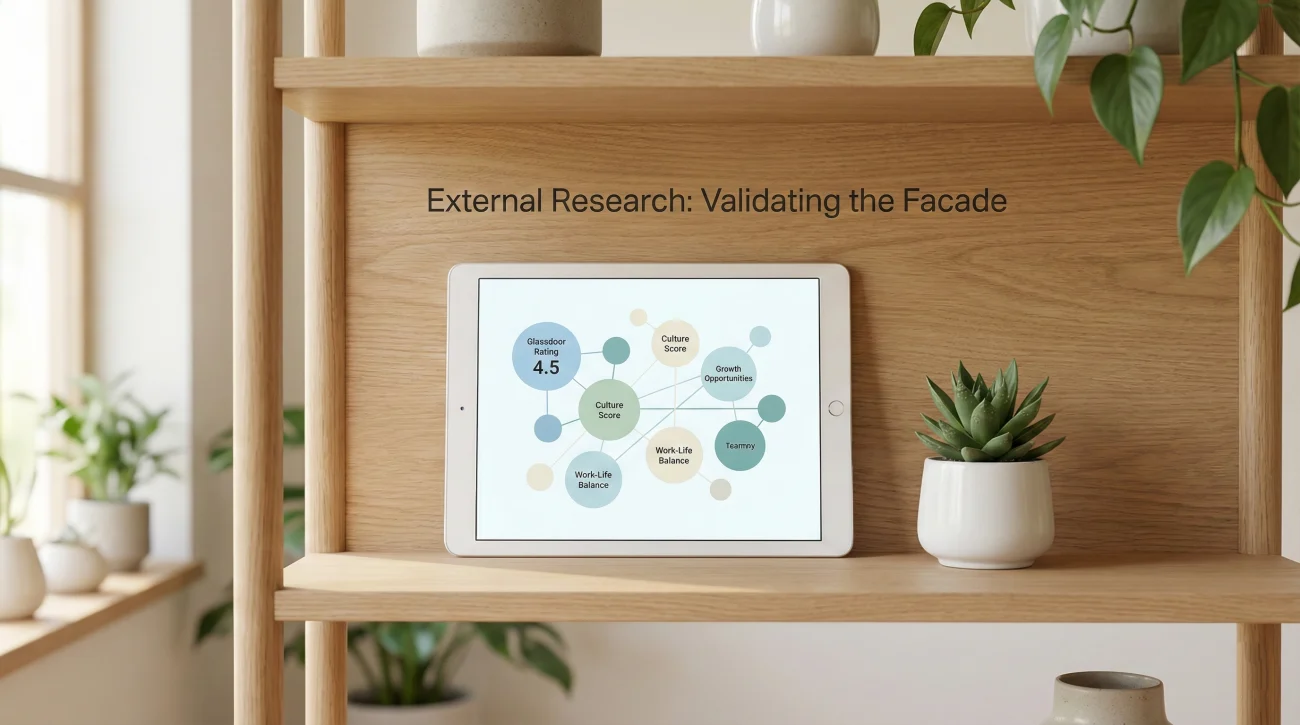
Your interview questions provide one data source. External research validates or contradicts what you hear directly.
Glassdoor and Review Sites
Read reviews critically – every company has some negative reviews. Look for patterns in complaints rather than isolated incidents. Multiple mentions of the same manager, consistent turnover complaints, or recurring themes about workload and culture deserve serious attention.
- 🔍 Pattern recognition: Same issues mentioned across multiple reviews
- 📅 Recent trends: Focus on reviews from the past 6-12 months
- ⚖️ Balance: No company is perfect – look for severity and frequency
- 📊 Response rates: Companies that respond professionally to criticism show accountability
LinkedIn and Network Intelligence
Check how long employees typically stay at the company. Track down people who left the role you’re considering and ask why they moved on. Former employees often share honest perspectives they couldn’t during employment.
Expert advice: When contacting former employees, lead with genuine curiosity rather than accusation. Ask “What surprised you most about working there?” to invite honest reflection without putting them on defense.
Trusting Your Instincts
Sometimes you can’t articulate specific red flags, but something feels wrong. Trust those instincts. Your subconscious processes subtle cues about dishonesty, tension, or dysfunction that conscious analysis misses.

When Gut Feelings Override Logic
If multiple aspects look good on paper but something feels off during interviews, investigate that feeling. Interview anxiety is normal, but persistent unease about the people, culture, or opportunity deserves exploration.
💡 Pro tip: After each interview, write down your immediate impressions before analyzing them. First reactions often capture important signals that later rationalization dismisses.
Avoiding Desperation-Driven Decisions
Financial pressure or extended job searches tempt candidates to ignore red flags. Remember that accepting a toxic job often makes your situation worse – you’ll be searching again in months but now dealing with a short tenure on your resume and depleted energy.
❓ FAQ
🎯 How many red flags are too many to accept an offer?
There’s no magic number, but even one serious red flag deserves careful consideration. Minor concerns might be manageable with the right compensation or growth opportunity. Major flags like abusive behavior, ethical concerns, or systematic dysfunction rarely improve and usually worsen. Trust your assessment of severity rather than counting flags.
💼 What if I’m already in a toxic environment – how do I avoid another one?
Use your current experience to inform better questions. Identify what specifically makes your current role toxic, then ask questions that would have revealed those issues earlier. Your experience gives you clearer standards and better instincts about warning signs. Don’t let desperation to leave rush you into similar dysfunction.
⏰ Can a toxic manager change or improve?
Rarely. Behavioral change requires self-awareness, motivation, and sustained effort. Toxic managers typically lack the self-awareness to recognize their impact or the motivation to change patterns that currently work for them. Don’t accept a role hoping to fix or change a problematic manager – focus on finding healthy leadership instead.
📋 Should I directly ask “Is this a toxic workplace?”
No. Direct confrontational questions put interviewers on defense and won’t yield honest answers. Instead, ask about specific behaviors and situations that indicate toxicity: turnover rates, conflict resolution, work-life balance, management style. Let their answers reveal the culture rather than asking them to self-diagnose as toxic.
✨ What if I discover toxicity after accepting but before starting?
You can decline an offer even after accepting it, though this should be rare. If you discover serious issues that weren’t disclosed during interviews – like lawsuits, mass departures, or ethical violations – withdrawing is reasonable. Be professional in your communication, but prioritize your wellbeing over awkwardness about backing out.
Final Thoughts
Learning identifying toxic work environment before accepting offers protects your career, health, and sanity. Toxic workplaces damage more than just your daily happiness – they affect your confidence, skills development, and long-term trajectory. Six months in a dysfunctional environment can take years to recover from professionally and emotionally.
Strategic questioning, careful observation, and external research combine to reveal what companies try to hide. Pay attention to evasive answers, defensive reactions, and inconsistencies. Trust your instincts when something feels wrong even if you can’t articulate exactly why. The best job on paper becomes the worst decision in reality if the environment destroys your wellbeing.
Remember that interviews are mutual evaluations. You’re not just convincing them to hire you – you’re deciding whether you want to work there. Use your questions strategically to uncover dysfunction before it becomes your daily reality. Declining a toxic offer is always better than accepting one and escaping months later with battle scars.
⚠️ Disclaimer: The interview strategies, sample answers, and negotiation tips provided in this guide are for educational purposes only. Hiring decisions are subjective and vary by company and industry. While these strategies are based on professional HR standards, they do not guarantee a specific job offer or result.