- Why This Matters: Bad questions can erase strong answers fast because they reveal priorities, professionalism, judgment, and whether you did basic research.
- Self-Centered Red Flags: Avoid leading with pay, perks, time off, remote flexibility, or side projects in early rounds because it signals you want benefits before proving value.
- Zero-Prep Signals: Never ask what the company does, what they sell, basic history, or role details already in the job post or already explained in the interview.
- Negative And Personal Boundaries: Don’t ask accusatory questions about turnover, micromanagement, promotions, or Glassdoor drama, and never cross into personal or biased territory.
- Ask Smart And Recover Well: Prepare 6–8 thoughtful questions, prioritize 2–3 if time is short, avoid obviously copied list questions, and if you slip, reframe quickly and move on.
Why Bad Questions Kill Good Candidacies
Strong answers and impressive resumes mean nothing if you ask questions that signal red flags to interviewers. The questions not to ask in interview reveal more about your priorities, professionalism, and judgment than you realize. A single poorly timed or self-centered question can transform a hiring manager’s enthusiastic recommendation into hesitation or outright rejection.
Interviewers evaluate your questions as carefully as your answers. Questions expose what you value, how you think, and whether you’ve done basic research. Asking about vacation days before discussing contributions suggests you’re already thinking about time off rather than value creation. Asking what the company does reveals you didn’t bother with five minutes of preparation. Understanding which questions to ask in an interview requires first knowing which ones to avoid completely.
Self-Centered Questions That Raise Red Flags
The most damaging bad interview questions to ask focus exclusively on what you’ll get rather than what you’ll contribute. Early-stage interviews require demonstrating your value before negotiating benefits or discussing perks.
Premature Compensation Questions
Asking about salary, bonuses, raises, or stock options during initial interviews signals misplaced priorities. While compensation matters, leading with it suggests you care more about extracting value than creating it. Companies want candidates excited about the work and the opportunity, not just the paycheck.
| Bad Question | Why It Fails | Better Approach |
|---|---|---|
| “What’s the salary range?” | Premature focus on compensation | Wait for offer stage or let them raise it first |
| “When can I expect a raise?” | Thinking about more money before proving value | “What does the career progression look like for high performers?” |
| “What’s the bonus structure?” | Focused on rewards, not contributions | Save for later discussions with HR or during offer |
| “Do you offer stock options?” | Prioritizing equity over role fit | Research compensation structure before applying |
Exception: If they explicitly ask about salary expectations early, answer professionally and move conversation back to role fit and your qualifications.
Time Off and Flexibility Questions
Asking about vacation days, work-from-home policies, or schedule flexibility before establishing your value suggests you’re already planning your absence. While these factors matter for work-life balance, leading with them signals you prioritize time away over time invested.
- ❌ “How much vacation do I get?” – Sounds like you’re already planning time off
- ❌ “Can I work from home?” – Asks for flexibility before proving reliability
- ❌ “What are the work hours?” – Implies you’re watching the clock
- ❌ “Do you allow side projects?” – Suggests divided attention and commitment
Expert advice: Wait until the offer stage to discuss work arrangements, or let the interviewer bring up these topics first. If flexibility is essential, research company policy before applying rather than asking during interviews.
Premature Advancement Questions
Asking about promotion timelines or career progression before understanding the current role suggests you’re already looking past the job you’re interviewing for. While ambition is positive, obsessing over the next step before starting the current one raises questions about your focus and commitment.
Asking “When can I get promoted?” in a first interview signals you view this role as a stepping stone rather than an opportunity to excel.
Questions That Expose Zero Preparation
Some what not to ask in interview questions reveal you couldn’t spend five minutes researching the company. These questions eliminate you faster than weak technical skills because they demonstrate laziness and disrespect for the interviewer’s time.
Basic Company Information
Anything easily found on the company website, About page, or Wikipedia entry is off-limits. Asking these questions proves you didn’t bother with basic preparation.
- “What does your company do?” – Most damaging question possible
- “How long has the company been around?” – Easily Googleable
- “Who are your competitors?” – Basic industry knowledge
- “What products do you sell?” – Listed on their website
- “Where are you headquartered?” – Contact page information
💡 Pro tip: Transform basic questions into strategic ones by adding research context. Instead of “What does your company do?” ask “I noticed you recently expanded into healthcare – how does this role support that growth?”
Role Basics Already Covered
Asking questions answered in the job description or during the interview discussion signals you weren’t paying attention. This includes questions about responsibilities clearly outlined in the posting or topics the interviewer just explained.
| Situation | Bad Question | Why It Fails |
|---|---|---|
| Job description lists required skills | “What skills are you looking for?” | Shows you didn’t read the posting |
| Interviewer just explained team structure | “Who will I be working with?” | Proves you weren’t listening |
| Role clearly states remote/hybrid | “Is this a remote position?” | Didn’t read basic job details |
| Manager explained reporting structure | “Who would I report to?” | Missed information already provided |
Negative or Confrontational Questions
Some inappropriate interview questions put interviewers on the defensive or reveal negative assumptions about the company. Even if your concerns are valid, hostile or accusatory questions eliminate you from consideration.
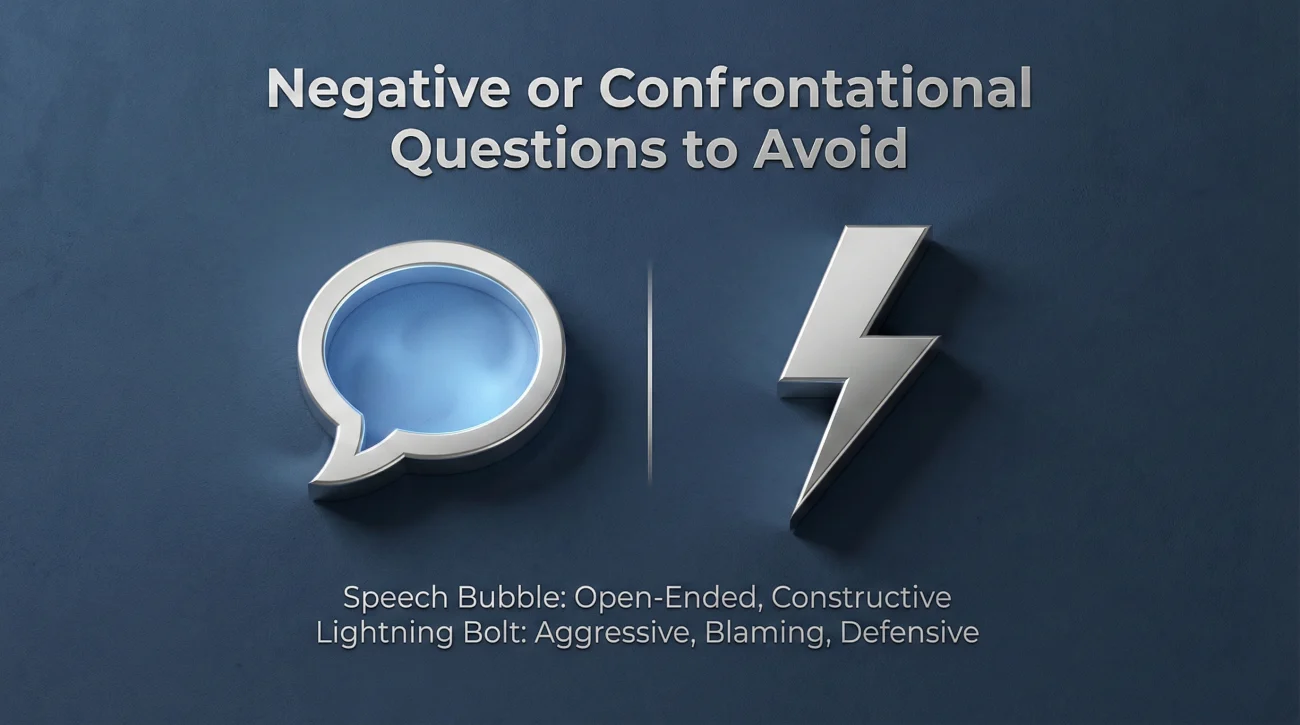
Aggressive or Accusatory Framing
Questions that assume dysfunction, challenge the interviewer’s integrity, or imply the company has problems you’ve already decided exist damage rapport instantly. You can probe for red flags without being confrontational.
- 🚫 “Why is turnover so high here?” – Assumes facts not in evidence and sounds accusatory
- 🚫 “Are you a micromanager?” – Puts interviewer on defensive immediately
- 🚫 “Do people actually get promoted or is it just talk?” – Implies dishonesty
- 🚫 “Why do you have so many negative Glassdoor reviews?” – Confrontational and predetermined judgment
Better versions probe for the same information diplomatically. Instead of “Why is turnover so high?” ask “What does your typical retention look like for this role?” Instead of “Are you a micromanager?” ask “How would you describe your management style and level of oversight?”
Complaints About Previous Employers
Using questions as opportunities to complain about past jobs, managers, or companies raises massive red flags. Interviewers assume you’ll speak about them the same way eventually. Even if your previous situation was genuinely toxic, leading with complaints signals inability to be professional about difficult experiences.
Expert advice: If asked about previous roles, frame challenges diplomatically and focus on what you learned rather than what was wrong. Never volunteer complaints unprompted.
Inappropriate Personal Questions
Questions that cross professional boundaries make interviewers uncomfortable and raise concerns about your judgment and workplace behavior.

Personal Questions About the Interviewer
While building rapport is important, crossing into overly personal territory makes interviewers uncomfortable. Professional boundaries exist even in casual company cultures.
- Questions about marital status, children, or family planning
- Religious or political affiliation inquiries
- Personal health or medical information
- Dating status or romantic life
- Personal wealth or financial situation
Even in companies with casual cultures, maintain professional boundaries during interviews. You can be friendly without being invasive.
Questions That Reveal Bias
Questions that signal concerns about working with certain demographics, ages, or backgrounds expose biases that make you legally risky to hire. Even if you think you’re asking innocently, these questions reveal problematic thinking.
Examples include asking about team demographics in ways that suggest preference or concern about certain groups, questioning whether you’ll work with people of specific backgrounds, or expressing surprise about manager age, gender, or other protected characteristics.
Tactical Question Mistakes
Beyond content, certain tactical approaches to questions damage your candidacy regardless of what you’re actually asking.
Asking No Questions at All
When interviewers ask “Do you have any questions?” answering “No, you covered everything” signals lack of genuine interest. Engaged candidates always have questions because they’re evaluating whether this opportunity aligns with their goals.
Saying “No questions” is worse than asking mediocre questions. It suggests you’re not seriously considering the role or don’t care enough to engage deeply.
Asking Too Many or Too Few Questions
Balance matters. Two questions seem disengaged. Twenty questions exhaust the interviewer and suggest you don’t respect time constraints. Prepare 6-8 thoughtful questions but read the room – if the interviewer seems rushed or you’ve already had extensive conversation, prioritize your top 2-3.
Obviously Googled Questions
Reading questions verbatim from generic “interview questions” lists sounds robotic and reveals you’re following a script rather than thinking critically. Interviewers recognize common question lists and notice when candidates ask identical questions they’ve heard dozens of times.
| Generic Question | Why It Fails | Strategic Alternative |
|---|---|---|
| “What’s a typical day like?” | Heard it a hundred times, reveals nothing | “Walk me through what a challenging week looked like recently” |
| “What’s the culture like?” | Vague, invites corporate platitudes | “How does the team handle disagreements or conflicting priorities?” |
| “What do you like about working here?” | Generic, every candidate asks this | “What surprised you most after joining, compared to your expectations?” |
Recovering from Question Mistakes
If you realize you’ve asked a problematic question, acknowledge it professionally rather than doubling down or getting defensive.
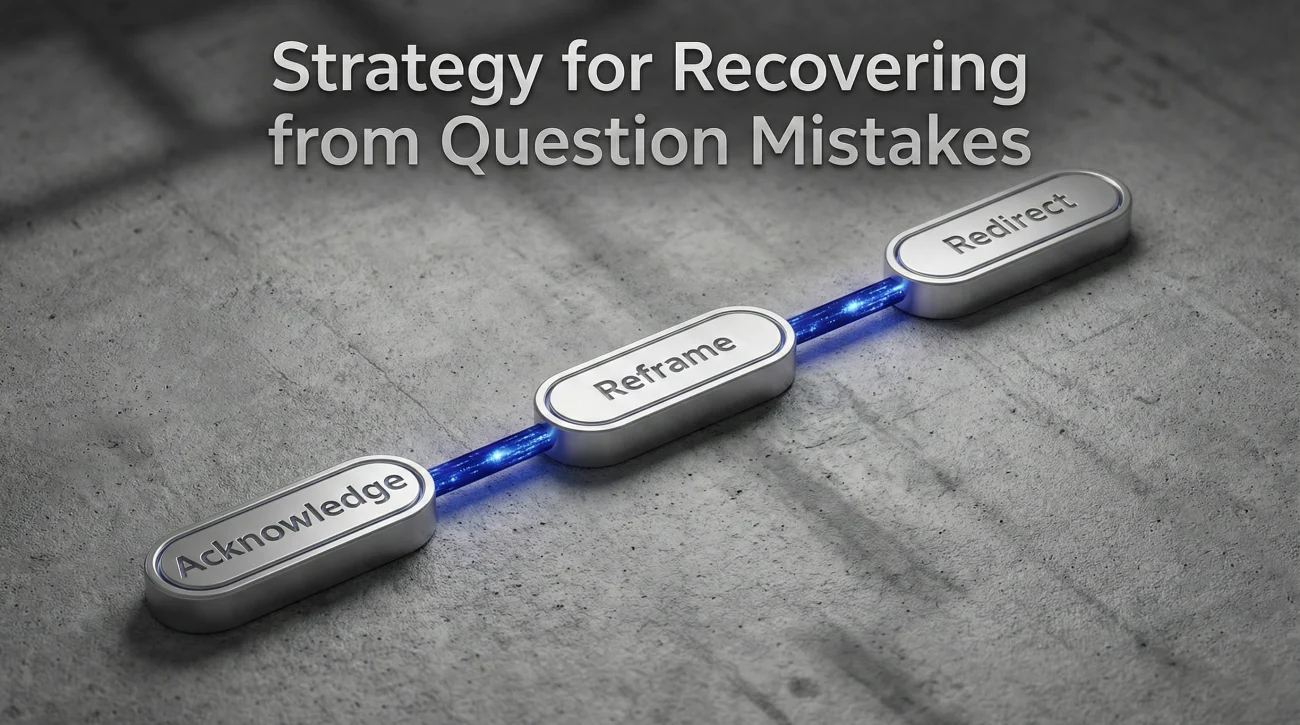
Acknowledge and Reframe
If you catch yourself mid-question or notice the interviewer’s reaction, acknowledge and reframe immediately. For example, if you accidentally ask about salary too early, say “Actually, let me rephrase that – I’m more interested in understanding the growth opportunities and how success is measured in this role.”
Learn and Move On
One bad question rarely kills your entire candidacy unless it reveals serious judgment issues or bias. Don’t dwell on the mistake or apologize excessively. Ask a strong follow-up question to redirect the conversation and demonstrate you can recover professionally from minor missteps.
💡 Pro tip: If you’re unsure whether a question is appropriate, you can test it by saying “I’m curious about X, but I want to be respectful of the interview context – is that something you’re comfortable discussing now?”
❓ FAQ
🎯 What if the salary question comes up naturally in conversation?
If the interviewer raises compensation first, answer professionally and transparently. The problem isn’t discussing salary – it’s candidates leading with it before demonstrating value. When they bring it up, they’re ready to discuss it. Provide your range based on research and emphasize your flexibility if the role and opportunity align well.
💼 Can I ask about work-life balance without raising red flags?
Yes, but frame it around team norms and culture rather than personal time off. Ask “How does the team approach work-life balance?” or “What does a typical work week look like during busy periods versus slower times?” This shows you care about sustainability without sounding like you’re already planning to minimize hours.
⏰ When is it appropriate to ask about benefits and perks?
Wait until you have an offer or are in final-stage conversations with HR. Early interviews focus on mutual fit and your qualifications. Once they’ve decided they want you, benefits discussions become appropriate. Most companies provide benefits information proactively during offer stage anyway.
📋 How do I probe for red flags without sounding negative?
Frame questions around learning and understanding rather than accusations. Instead of “Do you have high turnover?” ask “What does retention typically look like for this role?” Instead of “Is this a toxic environment?” ask “How does the team handle conflicts or disagreements?” The information revealed is similar but the tone is professional.
✨ What if I genuinely have no questions because they covered everything?
This rarely happens if you prepared thoughtfully. If it does, acknowledge the comprehensive conversation while still asking at least one or two questions. Try “You’ve been very thorough – the one thing I’m still curious about is…” This shows engagement while respecting that they’ve been detailed in their explanations.
Final Thoughts

Avoiding damaging questions matters as much as asking strategic ones. Poor questions expose laziness, self-centeredness, negativity, or lack of professional judgment. Any of these perceptions can eliminate you from consideration regardless of your qualifications or interview performance.
Understanding questions not to ask in interview helps you navigate the question phase professionally. Focus on demonstrating value before discussing benefits. Research thoroughly before asking basic questions. Frame concerns diplomatically rather than confrontationally. Maintain professional boundaries even in casual cultures.
The questions you ask reveal what you value, how you think, and whether you’re someone the team wants to work with daily. Make sure your questions position you as thoughtful, prepared, and focused on mutual success rather than red flags that make hiring managers hesitate.
⚠️ Disclaimer: The interview strategies, sample answers, and negotiation tips provided in this guide are for educational purposes only. Hiring decisions are subjective and vary by company and industry. While these strategies are based on professional HR standards, they do not guarantee a specific job offer or result.