
- What it is: Imposter syndrome is persistent self doubt that makes you discount real skill, and it can wreck interviews even when you are genuinely qualified.
- Why tech gets hit: Rapid change, comparison culture, and gatekeeping stories keep the bar feeling impossible, so normal knowledge gaps start to feel like “proof” you do not belong.
- How it shows up in interviews: Anxiety hijacks working memory, blocks recall, and triggers unhelpful behaviors like over apologizing, rushing, going silent, or bluffing when unsure.
- What helps right away: Build an evidence file of wins, reframe luck into earned skill, and use simple in the moment tools like breathing, grounding, and naming the thought so it does not run the room.
- Make it stick long term: Prepare with a small story bank, practice realistic interview reps, focus on progress over comparisons, and treat rejection as signal not identity while you keep building skills on purpose.
Imposter Syndrome in Tech (Overcoming Anxiety)
The accomplished senior developer freezes during a technical screen, unable to explain concepts they teach daily. The computer science graduate with a 3.9 GPA convinces themselves they got lucky on every exam and don’t deserve interview callbacks. The engineer who shipped production systems to millions of users panics when asked to reverse a linked list on a whiteboard.
Imposter syndrome in tech destroys interview performance regardless of actual skill level. You might solve complex distributed systems problems at work but fail coding challenges because your brain screams you’re a fraud. The technical knowledge exists – anxiety blocks access to it. This psychological barrier costs talented engineers opportunities they’re fully qualified for.
Understanding the mechanics of imposter syndrome separates those who overcome it from those who let it derail careers. The feeling never completely disappears, but you can develop tools to prevent it from sabotaging your performance when stakes are high.
Understanding Imposter Syndrome
Imposter syndrome manifests as persistent self-doubt despite evidence of competence. You attribute success to luck, timing, or fooling others rather than acknowledging actual skill. Every accomplishment feels fraudulent – you’re just waiting for someone to expose you as the incompetent person you secretly believe yourself to be.
Why Tech Professionals Are Especially Vulnerable
Technology changes rapidly, creating constant learning pressure. Yesterday’s expert becomes today’s beginner when frameworks shift or new paradigms emerge. This perpetual knowledge gap feeds imposter feelings – there’s always something you don’t know, always someone who seems more current.
Tech culture glorifies prodigies and early achievers. Stories of teenage founders and self-taught geniuses create unrealistic comparison points. You judge your entire career against someone else’s highlight reel, ignoring the years of work and failure that success required.
| Imposter Syndrome Trigger | Why It Hits Tech Hard |
|---|---|
| Constant learning demands | Technology evolves rapidly; mastery feels impossible to maintain |
| Comparison culture | Open source profiles and social media showcase everyone’s best work |
| Abstract problem-solving | Hard to measure “good enough” when solutions vary infinitely |
| Gatekeeping narratives | “Real programmers” use X language or started coding at age 12 |
| Interview hazing culture | LeetCode hard problems unrelated to daily work seed self-doubt |
| Intellectual performance focus | Intelligence as identity makes mistakes feel like fundamental flaws |
Recognizing Imposter Thought Patterns
- 🎭 Attributing success to luck: “I only got this job because they were desperate” or “That project succeeded despite my contributions, not because of them.”
- 📊 Discounting achievements: “Anyone could have done that” or “It wasn’t really that impressive” when receiving praise.
- 🔍 Magnifying mistakes: Minor bugs become evidence of fundamental incompetence while successes are dismissed as expected baseline.
- ⚖️ Comparing internals to externals: You know your struggles but only see others’ polished outputs, making them seem naturally talented.
- 🎯 Perfectionism as defense: “If I just prepare more, study harder, work longer, then I’ll be ready” becomes endless procrastination.
These patterns become self-reinforcing. Attributing success to luck prevents building confidence from achievements. Perfectionism creates anxiety that undermines performance, which then “confirms” you’re not good enough. Breaking the cycle requires conscious pattern interruption.
How Imposter Syndrome Sabotages Interviews
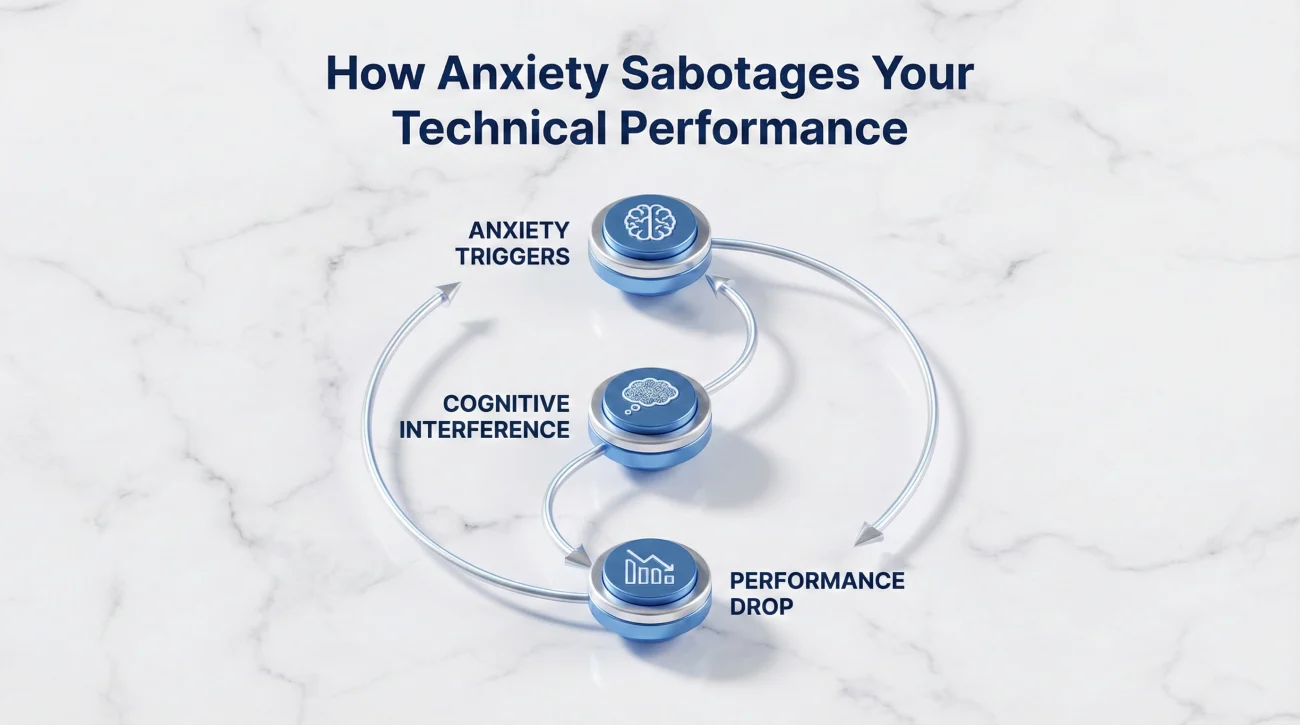
Tech interview anxiety creates a vicious cycle. Anxiety impairs cognitive function, making you perform worse, which reinforces the belief you’re inadequate. Understanding these mechanisms helps you interrupt the pattern.
Cognitive Interference Under Stress
Your working memory shrinks when anxious. The brain resources normally used for problem-solving get consumed by anxiety management. You literally have less mental capacity available for technical thinking when convinced you’re about to be exposed as a fraud.
This explains why you can solve problems easily at home but freeze during interviews. The knowledge exists – anxiety blocks retrieval. You know data structures and algorithms, but self-doubt floods your mind with “I should know this, why am I blanking, they think I’m incompetent” instead of letting you focus on the actual problem.
Expert insight: Imposter syndrome creates a double bind – the more you care about performing well, the more anxiety interferes with performance. Breaking this requires accepting that some nervousness is normal and doesn’t indicate inadequacy.
Behavioral Manifestations
Overcoming self doubt becomes harder when anxiety triggers counterproductive behaviors. You might talk too fast, trying to prove competence through verbal volume. Or go silent, afraid anything you say will expose ignorance. Neither builds interviewer confidence.
Apologizing excessively signals insecurity. “Sorry, I’m not sure” or “Sorry, this is probably obvious” undermines credibility even when your answer is correct.
Some candidates overcompensate with false confidence, making assertions they’re not certain about rather than admitting knowledge gaps. This backfires when interviewers probe deeper. Genuine confidence includes comfort saying “I’m not familiar with that framework, but here’s how I’d approach learning it.”
Building Psychological Resilience
You can’t eliminate imposter feelings entirely, but you can prevent them from controlling your behavior. These strategies help manage developer confidence issues systematically.

Reframing Your Success Narrative
Keep an “evidence file” documenting accomplishments. When imposter thoughts surface, review concrete proof of competence – pull requests that shipped, problems you solved, positive feedback from colleagues. Your brain lies when it says you’ve never done anything worthwhile. External evidence counteracts internal distortion.
Practice attributing success to skill rather than luck. When you solve a problem, instead of “I got lucky the solution was obvious,” try “I recognized the pattern because I’ve practiced similar problems.” Small reframes compound over time, building more accurate self-assessment.
💡 Pro tip: After each interview, document what went well alongside areas for improvement. Imposter syndrome focuses exclusively on mistakes. Balanced reflection builds realistic self-awareness.
Adopting Growth Mindset Principles
Shift from fixed to growth mindset. “I’m not good at algorithms” becomes “I’m building algorithm skills through practice.” The difference seems subtle but fundamentally changes how you respond to challenges. Fixed mindset sees failure as proof of inadequacy. Growth mindset sees failure as information guiding improvement.
Recognize that senior engineers Google basic syntax regularly. Everyone forgets details – it’s why documentation exists. Not remembering a specific API method doesn’t mean you’re unqualified; it means you’re human. Competence includes knowing how to find information, not memorizing everything.
Making Realistic Comparisons
You compare your behind-the-scenes struggles to everyone else’s highlight reel. Of course you feel inadequate – you see your rough drafts against their final polished work. That senior engineer who seems to code effortlessly struggled for years building that fluency. You’re witnessing their current state, not their entire journey.
Expert insight: Most experienced developers experience imposter syndrome regularly. The difference is they’ve learned to recognize it as a feeling, not a fact, and continue performing despite the discomfort.
Compare yourself to past versions of yourself, not to others. Can you solve problems today that would have stumped you six months ago? That’s growth. Focusing on personal progress rather than arbitrary external benchmarks builds sustainable confidence.
Interview-Specific Strategies
Preparation helps, but interview mental blocks require psychological strategies alongside technical study. These tactics help you perform closer to your actual ability level rather than anxiety-impaired capacity.
Pre-Interview Mental Preparation
Develop calming rituals that signal your brain it’s safe. Some candidates exercise before interviews to burn nervous energy. Others use breathing exercises or listen to specific music. The content matters less than consistency – your brain learns “when I do this routine, interview mode begins” which reduces unpredictable anxiety spikes.
Reframe the interview in your mind. Instead of “They’re testing whether I’m good enough,” try “We’re exploring whether this is mutual fit.” Removes the power dynamic where interviewers judge from above. You’re also evaluating them – would you enjoy working here? This mental shift reduces performance anxiety.
| Anxiety Trigger | Reframe Strategy |
|---|---|
| “I need to impress them” | “I’m showing them how I actually think and work” |
| “They’ll discover I’m not qualified” | “My resume got me here; they already think I might be a fit” |
| “Everyone else is more prepared” | “I’ve prepared systematically; I’m as ready as I can be” |
| “One mistake will disqualify me” | “They’re evaluating problem-solving process, not perfection” |
| “I don’t deserve to be here” | “Multiple people reviewed my background and wanted to talk” |
Managing Anxiety During Interviews
Notice when imposter thoughts arise without judgment. “I’m having the thought that I’m not good enough.” Labeling thoughts as thoughts, not facts, creates psychological distance. The anxious voice still speaks, but you don’t have to believe everything it says.
Use physical grounding techniques when panic rises. Press your feet firmly into the floor. Take three slow breaths. These interrupt the anxiety spiral by giving your nervous system something concrete to focus on besides imagined disaster.
💡 Pro tip: When stuck on a problem, verbalize your thinking process even if incomplete. “I’m considering a hash map approach but working through the edge cases” keeps you engaged and gives interviewers visibility into your reasoning.
Post-Interview Recovery
Avoid catastrophizing after interviews. Your brain will replay every awkward moment and ignore everything that went well. This is normal but unhelpful. Write down what you think went badly immediately after the interview, then set it aside for 24 hours. Anxious assessments made while still flooded with cortisol rarely match reality.
Process rejection as information, not judgment. Companies reject strong candidates constantly – hiring needs changed, another candidate had niche experience, budget constraints emerged. Rejection doesn’t mean you’re incompetent. It means this particular fit didn’t work out this particular time.
Long-Term Confidence Building
Addressing fear of inadequacy requires sustained effort beyond interview preparation. These practices build genuine confidence that carries through high-pressure situations.
Validating Your Competence
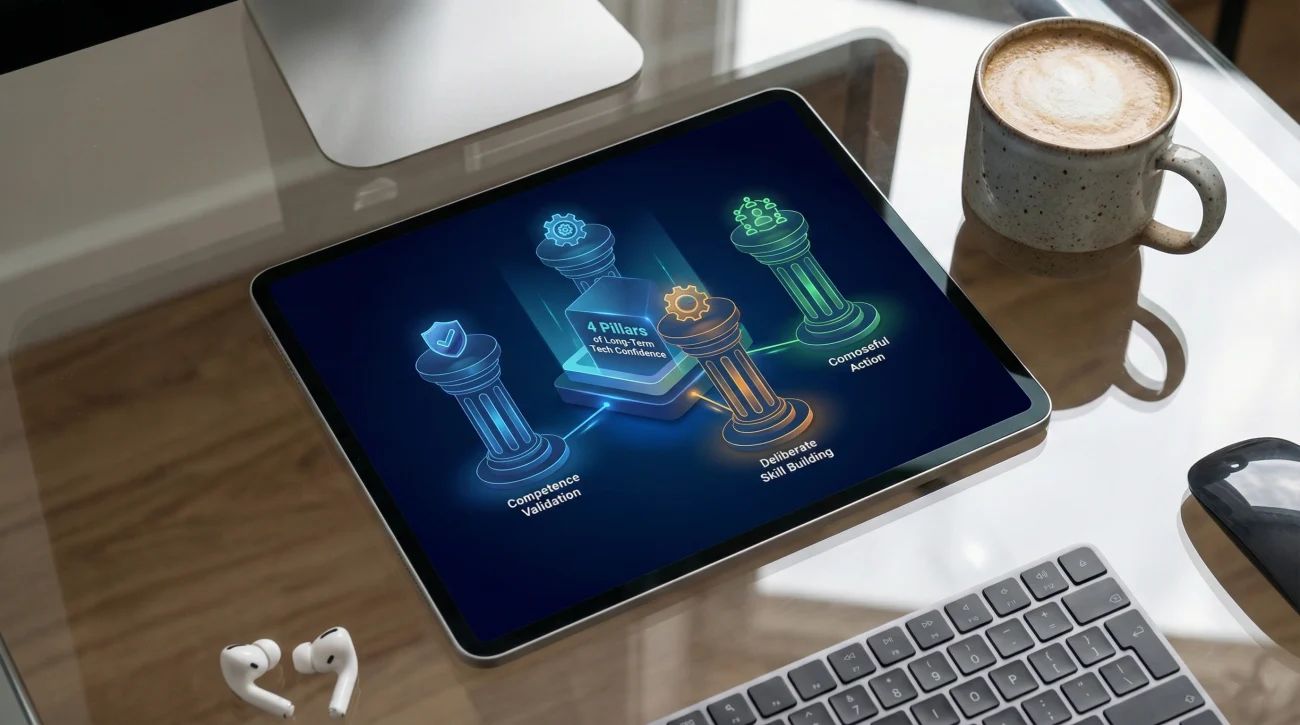
Take inventory of actual skills. List technologies you’ve worked with, problems you’ve solved, projects you’ve shipped. When imposter syndrome says “I don’t know anything,” review concrete evidence proving otherwise. You might not know everything, but you demonstrably know something substantial.
Seek structured feedback from colleagues and mentors. Ask specific questions: “What technical strengths do you see in my work?” rather than “Am I doing okay?” Specific feedback provides evidence your brain can’t dismiss as politeness. Multiple people identifying the same strengths makes patterns harder to ignore.
Building Skills Deliberately
Imposter syndrome often contains a kernel of truth – there ARE knowledge gaps. The solution isn’t pretending they don’t exist, but systematically addressing them. Identify specific weaknesses, then build targeted practice plans. Action converts vague anxiety into concrete improvement.
Celebrate small wins explicitly. Solved a problem that stumped you yesterday? That’s progress. Explained a complex concept clearly to a junior developer? That’s evidence of understanding. Your brain ignores these moments unless you consciously mark them as meaningful.
Browse our complete collection of preparation guides for role-specific practice that builds genuine competence alongside confidence. Systematic skill development provides the foundation for sustainable self-assurance.
Finding Community Support
Talk openly about imposter syndrome with other developers. You’ll discover even highly accomplished engineers struggle with similar feelings. This normalization helps – you’re not uniquely deficient, you’re experiencing a common response to working in a demanding field.
Consider professional support if anxiety significantly impairs functioning. Therapists specializing in performance anxiety or cognitive behavioral therapy can provide tools specific to your situation. There’s no shame in getting help managing psychological barriers to career success.
❓ FAQ
🎯 Does everyone in tech experience imposter syndrome?
Not everyone, but research suggests 70%+ of people experience imposter feelings at some point. It affects developers at all levels, from juniors questioning basic competence to seniors doubting they deserve leadership roles. Recognition doesn’t eliminate the feeling but helps normalize it as common rather than evidence of actual inadequacy.
💼 Will imposter syndrome go away as I gain experience?
Not automatically. Many senior engineers still experience it, just in different forms. Early career worries about technical competence shift to concerns about leadership ability or strategic thinking. The difference is experienced professionals have developed coping strategies and evidence of past success to counteract the feelings.
⏰ How do I stop comparing myself to other developers?
You can’t stop entirely, but you can make comparisons more realistic. Remember you see others’ final work, not their struggle. Compare your progress against past versions of yourself rather than arbitrary external standards. Ask “Am I growing?” not “Am I the best?” Focus on personal trajectory, not relative ranking.
📋 Should I fake confidence during interviews?
No. Genuine confidence includes admitting knowledge gaps honestly. “I haven’t worked with that framework but here’s how I’d approach learning it” sounds more credible than false assertions that collapse under questioning. Project calm competence, not performative certainty about everything.
✨ Is some self-doubt actually helpful?
Yes, in moderation. Healthy self-awareness prevents overconfidence and motivates continuous learning. The key is distinguishing productive self-reflection from destructive self-doubt. “I need to improve my system design skills” drives growth. “I’m a fraud who doesn’t deserve this job” paralyzes action.
Final Thoughts

Imposter syndrome isn’t a character flaw or proof of inadequacy – it’s a common psychological response to working in a challenging field where learning never ends. The feeling that you’re not good enough doesn’t mean you actually aren’t good enough. It means your brain is trying to protect you from perceived social threat through hypervigilance about competence.
You can’t eliminate imposter feelings entirely, but you can prevent them from sabotaging your career. Build evidence files documenting actual accomplishments. Reframe success as earned rather than lucky. Practice self-compassion when you struggle. Develop coping strategies for anxiety that arises during high-stakes moments like interviews.
Remember that imposter syndrome in tech affects brilliant engineers regularly. Those senior developers you admire likely battled similar doubts on their journey. The difference isn’t that they never feel like imposters – it’s that they’ve learned to perform effectively despite the feeling. You can develop the same resilience. Start by recognizing that your anxiety about competence doesn’t reflect your actual competence. Then build skills, gather evidence, and trust that preparation plus genuine effort creates results, regardless of whether you feel worthy in the moment.
⚠️ Disclaimer: The interview strategies, sample answers, and negotiation tips provided in this guide are for educational purposes only. Hiring decisions are subjective and vary by company and industry. While these strategies are based on professional HR standards, they do not guarantee a specific job offer or result.