- Main idea: Technical interviews have different stages that test different skills, so you prepare better by matching your practice to the next gate instead of grinding everything equally.
- Pipeline logic: Most processes move from recruiter screen to technical phone to coding rounds to system design, with seniority shifting the focus from fundamentals to architecture and leadership impact.
- Phone screens: Recruiter calls reward a crisp story and clear communication, while technical screens reward structured thinking, talking through your approach, and solving 1 to 2 medium problems cleanly.
- Coding and design: Coding rounds favor readable solutions, steady testing, and calm recovery from mistakes, while system design favors clarifying requirements, sketching data flow, and explaining trade-offs with real constraints.
- Prep plan: Reduce anxiety with realistic practice, build a small bank of reusable stories, assess your weak spots honestly, and allocate study time based on your level and timeline so progress compounds.
Technical Interview Preparation (The Ultimate Process Guide)
Treating every interview stage the same guarantees failure. Phone screens demand different preparation than whiteboard sessions. System design rounds test architectural thinking, not coding speed. Most candidates waste preparation time practicing everything equally instead of matching their study to each specific gate.
Effective technical interview preparation means understanding the distinct purpose behind each round and tailoring your approach accordingly. Companies design multi-stage processes to evaluate different competencies – communication clarity in phone screens, problem-solving mechanics in coding rounds, and scalability thinking in architecture discussions. This guide breaks down what happens at each checkpoint and how to prepare strategically.
The interview pipeline isn’t random hazing. Each stage filters for specific signals that predict job performance. Learning to recognize these patterns transforms preparation from anxious cramming into focused skill-building.
Understanding the Interview Pipeline
Technical hiring follows a predictable progression, though companies adjust stage order and emphasis based on role requirements. Recognizing the overall flow helps you allocate preparation time effectively.
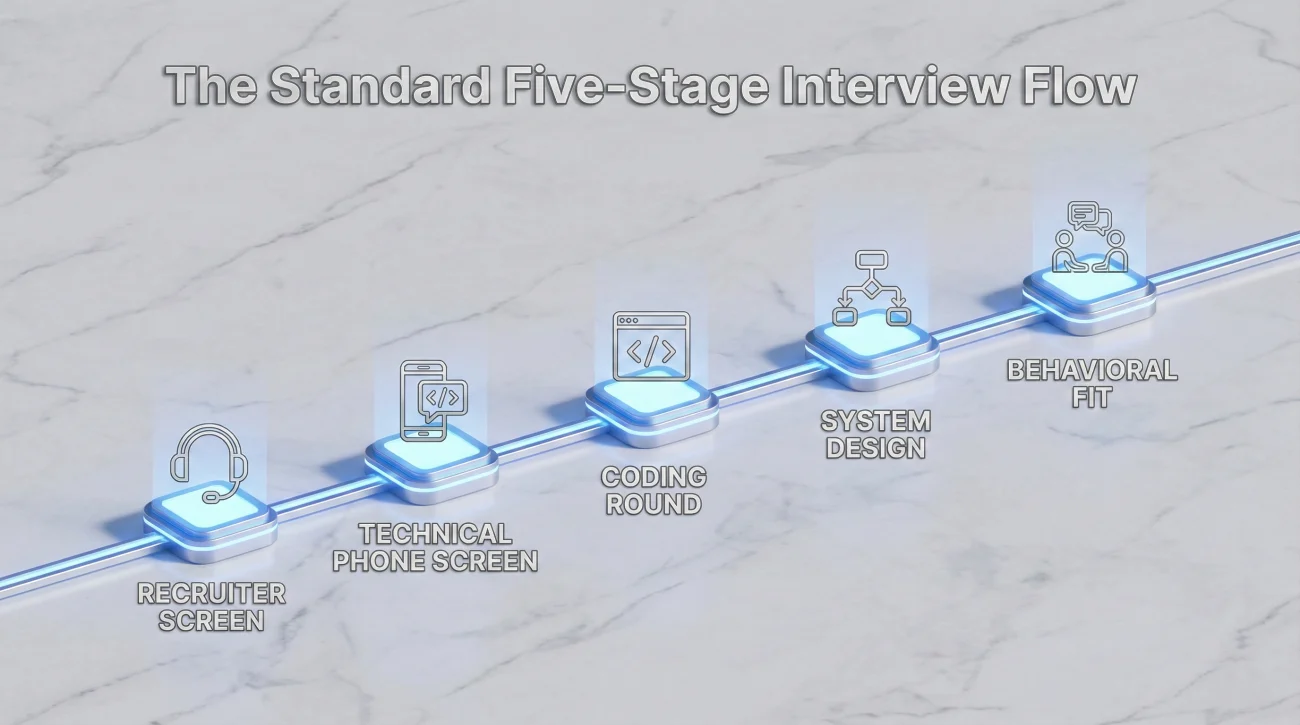
The Standard Five-Stage Flow
Most organizations structure interview process stages around increasing technical depth and time investment. Initial conversations filter broadly – can this person communicate clearly and meet baseline qualifications? Later rounds dive deep into specialized skills, testing whether candidates can actually perform the work.
The recruiter screen validates basic fit before engineering teams invest time. Technical phone screens check fundamental competency without requiring candidates to travel or take full days off work. Onsite rounds combine multiple evaluation dimensions – coding ability, system thinking, collaboration style, and cultural alignment. Some companies add take-home assignments between phone and onsite stages, while others skip straight to full-day interviews after phone validation.
Understanding this structure prevents mismatched preparation. Candidates who drill complex algorithms for recruiter calls waste energy, while those who skip behavioral preparation fail final rounds despite strong technical skills. Match your study to the upcoming stage, not some imagined comprehensive interview.
How Role Level Changes the Process
Junior positions emphasize coding fundamentals and learning potential. Interviewers probe computer science basics, data structures, and problem-solving approach. They’re assessing whether you can grow into the role with mentorship.
Senior roles add architecture evaluation. You’ll face system design discussions testing scalability thinking, technology trade-off judgment, and leadership communication. Behavioral questions shift from “tell me about a challenging bug” to “describe how you influenced technical direction across teams.”
Staff and principal levels evaluate organizational impact. Expect questions about technical strategy, engineering culture, and cross-functional influence. Coding ability becomes table stakes – the real assessment focuses on how you multiply team effectiveness and drive technical vision.
Phone Screen Preparation
Phone screens serve as qualification gates, not deep technical tests. Recruiters verify you meet role requirements and assess communication clarity. Engineers conducting technical phone screens validate fundamental competency through focused problems.
The Recruiter Conversation
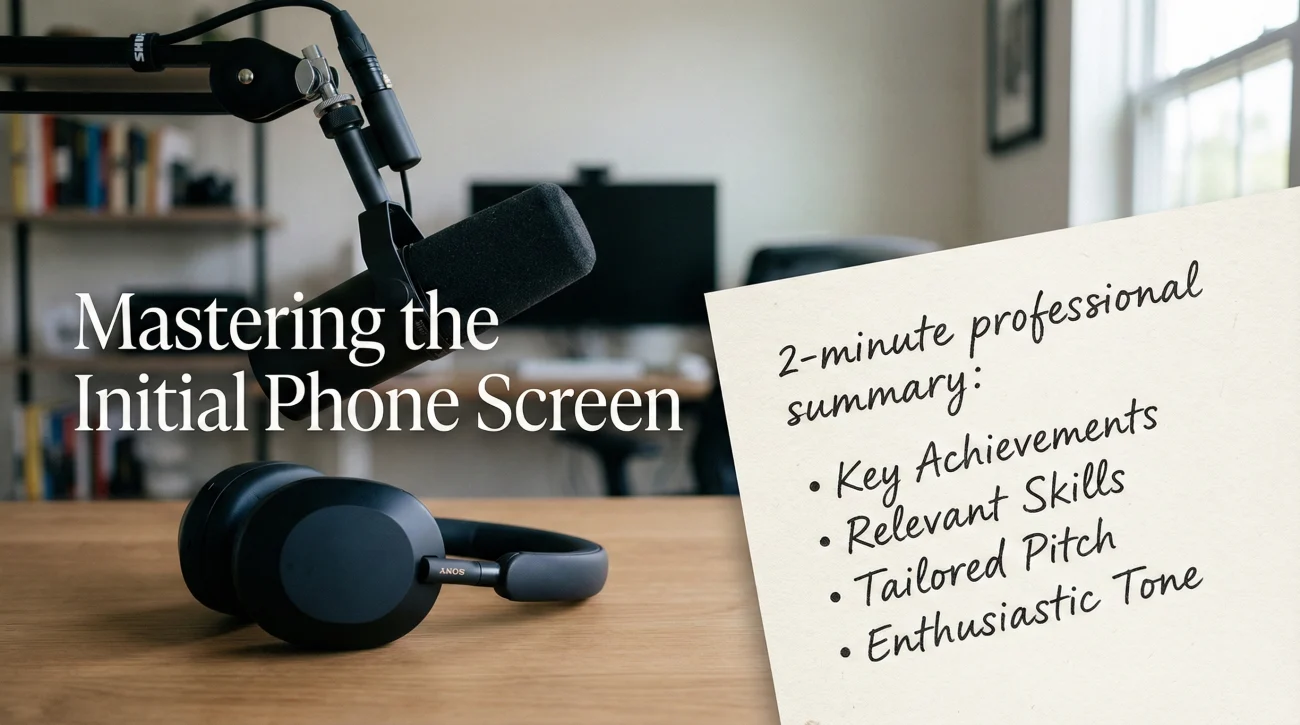
Phone screen preparation for recruiter calls emphasizes storytelling over technical depth. Prepare a crisp 2-minute professional summary covering current role, relevant experience, and motivation for the position. Practice explaining career transitions or employment gaps matter-of-factly without defensiveness.
Recruiters assess communication style and cultural signals during these calls. Can you articulate technical work to non-technical audiences? Do you ask thoughtful questions about the role and team? Does your timeline align with their hiring urgency? Treat this conversation as mutual exploration, not interrogation.
Have 3-4 questions ready about team structure, engineering culture, or growth opportunities to demonstrate genuine interest.
Technical Phone Screens
Technical phone screens typically last 45-60 minutes and focus on 1-2 coding problems. Interviewers evaluate problem-solving approach, code quality, and communication skills through shared coding environments or video calls.
Preparation should emphasize medium-difficulty algorithm questions – not the hardest problems you can find. Practice explaining your thinking aloud while coding. Get comfortable with collaborative debugging when your first approach doesn’t work. Phone screens reward clear communication and structured thinking more than optimal solutions.
Test your home setup beforehand. Verify screen sharing works smoothly, audio quality sounds professional, and your internet connection remains stable. Technical difficulties waste precious interview time and create unnecessary stress.
Whiteboard and Coding Interview Preparation
Coding rounds form the core of most technical interviews. Whether on whiteboards, laptops, or online editors, these sessions test algorithmic thinking, implementation skill, and problem-solving communication.
Mastering Whiteboard Sessions
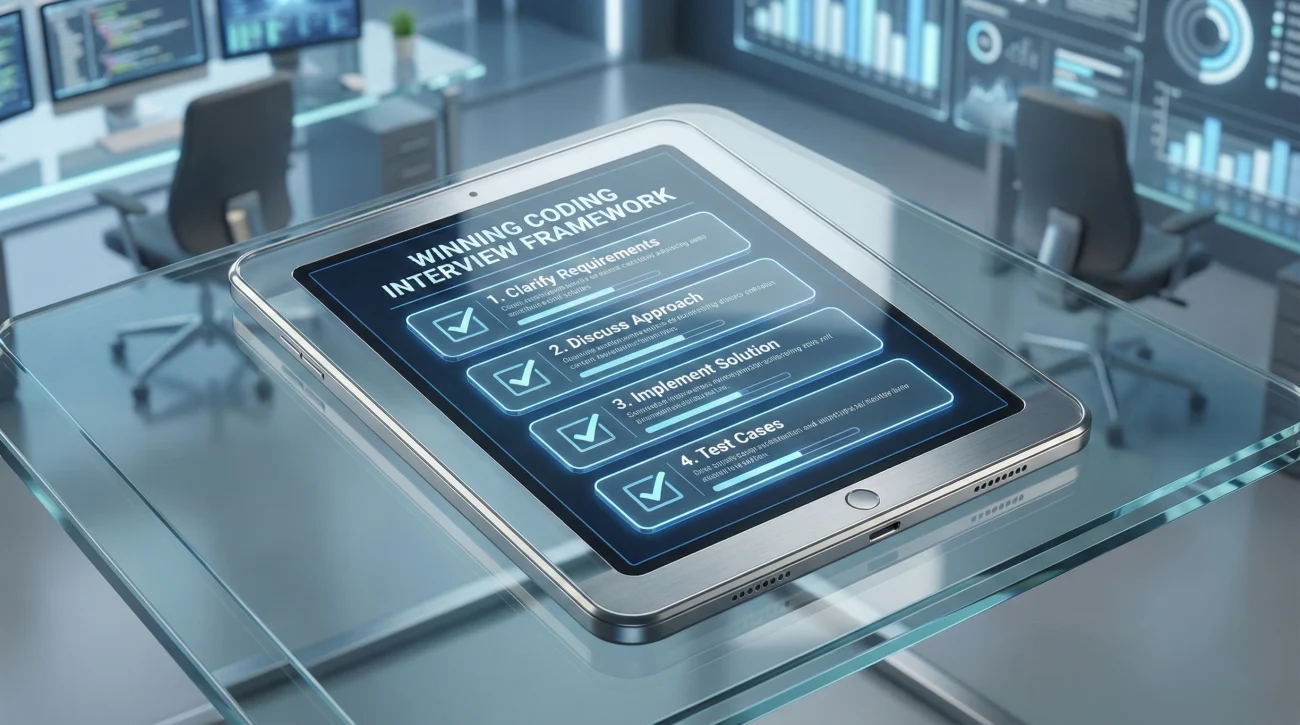
Whiteboard interview tips center on structured communication rather than perfect syntax. Start by clarifying requirements and constraints before touching the board. Discuss your approach aloud, explaining trade-offs between different solutions. Write clean, readable pseudocode that demonstrates logical thinking.
Interviewers evaluate how you handle ambiguity and recover from mistakes. When stuck, verbalize your thought process. Ask clarifying questions that reveal problem structure. Propose multiple approaches with different complexity trade-offs. The goal isn’t flawless code – it’s demonstrating how you think through technical challenges collaboratively.
Practice on actual whiteboards or paper to build comfort with the medium. Coding without autocomplete or syntax highlighting feels unnatural initially. Write larger than normal so interviewers can read your work from across the room. Leave space for modifications as you refine your approach.
Live Coding Environments
Many companies use online coding platforms like CoderPad or HackerRank during interviews. These environments provide syntax highlighting and basic testing but lack the IDE features you use daily.
Familiarize yourself with common interview platforms beforehand. Practice typing without autocomplete suggestions. Learn keyboard shortcuts for the editor you’ll use. Test your code incrementally rather than writing everything then debugging – interviewers want to see your testing thought process.
Optimize for readability over cleverness. Clear variable names and simple logic beat dense one-liners. Interviewers need to follow your thinking quickly, and you’ll likely extend your code as they add requirements.
System Design Round Preparation
System design interviews evaluate architectural thinking, scalability judgment, and technology trade-off reasoning. These open-ended discussions test whether you can build production systems, not just solve algorithmic puzzles.

Structuring Design Discussions
System design preparation requires understanding common architecture patterns and practicing structured problem decomposition. Begin design questions by clarifying requirements, constraints, and scale expectations. Discuss user needs before diving into technical implementation.
Sketch high-level architecture first, showing major components and data flow. Explain technology choices with trade-off reasoning – why PostgreSQL over MongoDB, when to introduce caching, how to handle traffic spikes. Interviewers want to see how you balance competing priorities like consistency versus availability, latency versus throughput.
Depth matters more than breadth. Pick one or two components to explore thoroughly rather than superficially covering everything. Discuss database schema design, API contracts, or scaling strategies with specific technical details. Show you understand not just what to build, but how it works under the hood.
Essential Architecture Patterns
Study distributed system fundamentals that appear across design questions. Load balancing strategies, caching layers, database sharding, message queues, and CDN usage form the building blocks of scalable architectures.
Understand when to apply each pattern and the trade-offs involved. Caching improves read performance but complicates data consistency. Database replication increases availability but may serve stale data. Message queues enable async processing but add operational complexity. Strong answers explain why you choose specific approaches for given requirements.
Practice with realistic constraints. Design for 100 requests per second versus 100,000 requests per second demands different solutions. Discussing scale forces you to think about bottlenecks, failure modes, and operational considerations that production systems face.
Psychological Preparation Strategies
Interview mental preparation receives less attention than technical study but often determines success more directly. Anxiety undermines performance regardless of skill level. Building mental resilience matters as much as algorithm practice.
Managing Interview Anxiety
Recognize that nervousness serves an evolutionary purpose but harms interview performance. Your brain perceives evaluation as social threat, triggering fight-or-flight responses that impair complex reasoning. Acknowledging this physiological reality helps you develop counterstrategies.
Practice stress inoculation through mock interviews with strangers or interview prep platforms. The first time answering hard questions under pressure shouldn’t be during actual interviews. Exposure builds tolerance – what feels terrifying initially becomes manageable with repetition.
Develop pre-interview rituals that promote calm focus. Some candidates exercise beforehand to burn nervous energy. Others practice breathing exercises or listen to specific music. Find what helps you enter a composed, alert mental state.
Maintaining Growth Perspective
Interview outcomes don’t define your worth as an engineer. Companies reject strong candidates for countless reasons – hiring needs changed, another candidate had niche experience, budget got cut. Failure provides learning opportunities, not evidence of inadequacy.
After each interview, document what went well and what you’d improve. Did you struggle with specific algorithm types? Did system design discussions reveal knowledge gaps? Use rejection as diagnostic information guiding future preparation.
Remember that interviewing is a distinct skill from engineering. Being excellent at building software doesn’t automatically make you excellent at coding under observation. Treat interview skills as learnable through deliberate practice, not innate talent you either have or lack.
Creating Your Preparation Timeline
Effective preparation requires strategic time allocation based on your current skill level and target timeline. Random practice wastes effort – structured planning compounds results.
Self-Assessment First
Before building a study plan, honestly evaluate your current abilities. Can you solve medium LeetCode problems in 30 minutes? Do you understand common data structures and their performance characteristics? Have you designed distributed systems in past work?
Identify specific weaknesses rather than generic “get better at coding.” Pinpoint knowledge gaps like “struggle with graph algorithms” or “unfamiliar with database scaling patterns.” Targeted study addresses actual deficiencies instead of reinforcing existing strengths.
Take diagnostic assessments or attempt problems in each category to baseline your skills. This reveals where to focus preparation time for maximum improvement.
Allocating Study Time
Entry-level candidates typically need 2-3 months emphasizing fundamentals – data structures, algorithms, and problem-solving patterns. Spend 70% of time on coding problems, 20% on behavioral preparation, and 10% on system design basics.
Experienced engineers targeting senior roles should allocate 4-6 weeks with balanced focus. Split time evenly between coding practice, system design study, and behavioral story preparation. Your experience provides advantage in design discussions if you invest time organizing that knowledge.
Consistency matters more than intensity. Daily 90-minute sessions outperform weekend marathons. Spaced repetition helps cement patterns and prevents burnout from grinding. Browse our complete collection of preparation guides to find resources matching your target role and timeline.
❓ FAQ
🎯 How long before interviews should I start preparing?
Start 2-3 months early for entry-level positions focusing on fundamentals. Experienced engineers need 4-6 weeks for balanced preparation across coding, system design, and behavioral areas. Adjust based on your current skill level and how rusty you are with technical interviews.
💼 Should I prepare differently for FAANG versus startup interviews?
Large tech companies emphasize algorithmic rigor and structured processes. Startups often focus more on practical building ability and cultural fit. Both require solid fundamentals, but adjust depth in algorithms versus breadth in technologies based on company size and stage.
⏰ What if I have a full-time job while preparing?
Consistency beats volume when time-constrained. Commit to 60-90 minutes daily rather than sporadic weekend marathons. Focus on high-yield activities – solving new problems, reviewing mistakes, and practicing communication. Quality preparation with limited time outperforms unfocused grinding.
📋 How many practice problems should I complete?
Focus on understanding patterns rather than hitting arbitrary numbers. Solving 100 problems deeply beats rushing through 500 superficially. Aim for comfort with common patterns across data structures – arrays, strings, trees, graphs, dynamic programming. When new problems feel familiar, you’re ready.
✨ Is it worth hiring an interview coach?
Coaches provide value through personalized feedback and accountability, especially for behavioral rounds and system design practice. They’re most helpful when you’ve done foundational preparation but struggle with specific areas. Free resources and peer practice work well for many candidates – assess whether coaching addresses your actual blockers.
Final Thoughts
Interview preparation feels overwhelming because the process evaluates multiple distinct skills simultaneously. But breaking down preparation by interview stage transforms chaos into manageable steps. Each round tests specific competencies that you can practice deliberately.
Success comes from matching your study to upcoming challenges rather than generic grinding. Phone screens reward clear communication and fundamental knowledge. Coding rounds test structured problem-solving and implementation quality. System design discussions evaluate architectural judgment and trade-off reasoning.
Remember that technical interview preparation builds a distinct skillset from day-to-day engineering. You’re not demonstrating everything you know – you’re proving you can think clearly under pressure, communicate technical concepts effectively, and solve problems collaboratively. Prepare systematically, focus on your actual weaknesses, and trust that consistent practice compounds into interview readiness.
⚠️ Disclaimer: The interview strategies, sample answers, and negotiation tips provided in this guide are for educational purposes only. Hiring decisions are subjective and vary by company and industry. While these strategies are based on professional HR standards, they do not guarantee a specific job offer or result.