Your Body Speaks Before You Do
Here’s something most candidates don’t realize: interviewers form their first impression within seven seconds of meeting you. And most of that impression comes from your interview body language mistakes, not your words.
I’ve been interviewing candidates for over twelve years. Last month, I watched a highly qualified software engineer lose a senior position in the first two minutes. His resume was impressive. His technical skills were solid. But the moment he sat down, he crossed his arms, avoided eye contact, and kept bouncing his knee. The hiring manager later told me she couldn’t imagine him presenting to clients.
The frustrating part? He had no idea. Nobody had ever told him.
The Silent Killers of First Impressions
Non-verbal signals account for roughly 55% of communication during face-to-face interactions. In an interview setting, where interviewers actively look for reasons to screen out candidates, that percentage might be even higher.
Crossed Arms and Defensive Posture
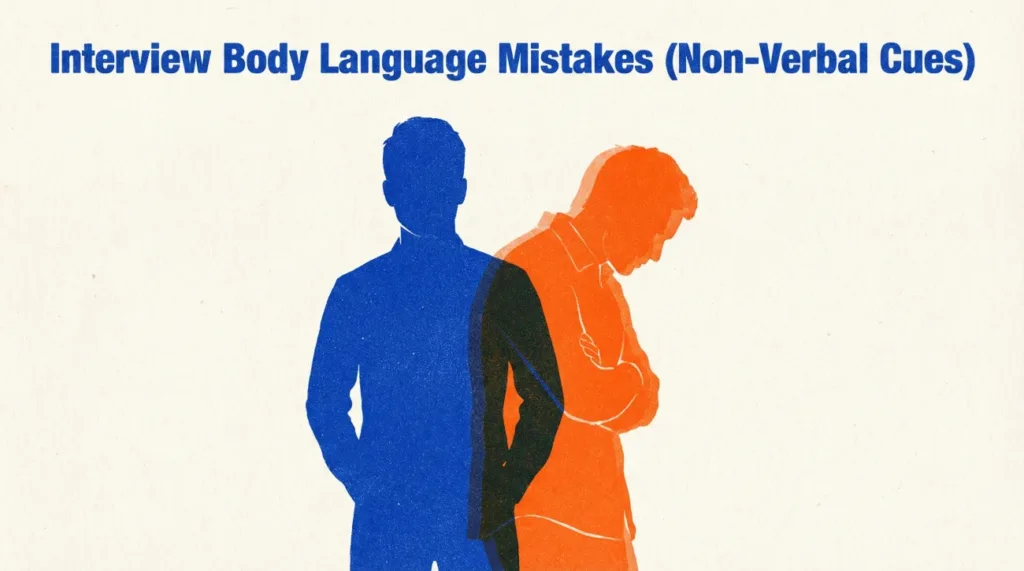
Crossing your arms creates a physical barrier between you and the interviewer. Even if you’re simply cold or it feels comfortable, the interviewer reads it as defensiveness or resistance. I’ve seen candidates cross their arms when asked challenging questions, completely unaware they just signaled discomfort with the topic.
Expert Advice: Keep your hands visible on the table or armrests. When you hide your hands, people subconsciously perceive you as hiding something else too.
The Nervous Habits That Scream Anxiety
Bouncing legs. Clicking pens. Playing with hair. Touching your face repeatedly. These habits feel invisible to you, but they dominate the interviewer’s attention.
A colleague of mine, Sarah, who runs talent acquisition at a Fortune 500 company, shared this observation:
“I interviewed a marketing director candidate who kept touching her necklace every time I asked about her previous role. By the fifth time, I was convinced something went wrong at her last job. Turned out she was just nervous, but I couldn’t unhear that alarm bell.”
Warning: Repetitive movements draw more attention than you think, especially when they coincide with difficult questions.
The Eye Contact Balance
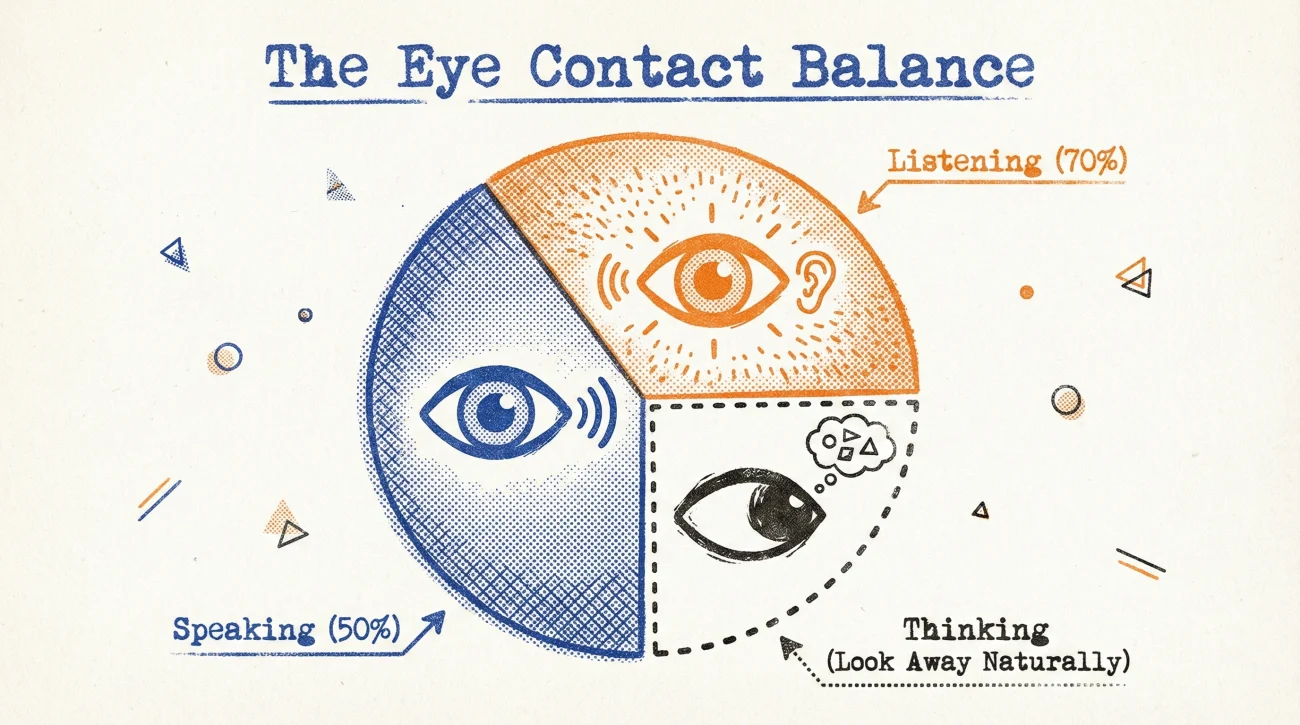
Too little eye contact makes you seem untrustworthy or disinterested. Too much makes you seem aggressive or socially awkward. Finding the right balance requires understanding what natural eye contact actually looks like.
Most people maintain eye contact in interviews for about 50-60% of the conversation. That means looking away is normal and expected. The key is when and how you break eye contact.
- 👁️ When speaking: Maintain eye contact about 50% of the time, looking away naturally when gathering thoughts
- 👂 When listening: Maintain eye contact about 70% of the time to show engagement
- 🤔 When thinking: Looking up or to the side appears natural; looking down can seem evasive
In panel interviews, distribute your eye contact. Start your answer looking at the person who asked the question, then include others as you continue speaking. Return to the original questioner as you conclude.
💡 Pro Tips: Focus on the triangle between the interviewer’s eyes and mouth rather than staring directly into their eyes, which can feel intense.
Posture Speaks Volumes
Your interview posture tips start with how you sit the moment you enter the room. Slouching suggests low energy or disinterest. Sitting too rigidly makes you appear tense and uncomfortable.
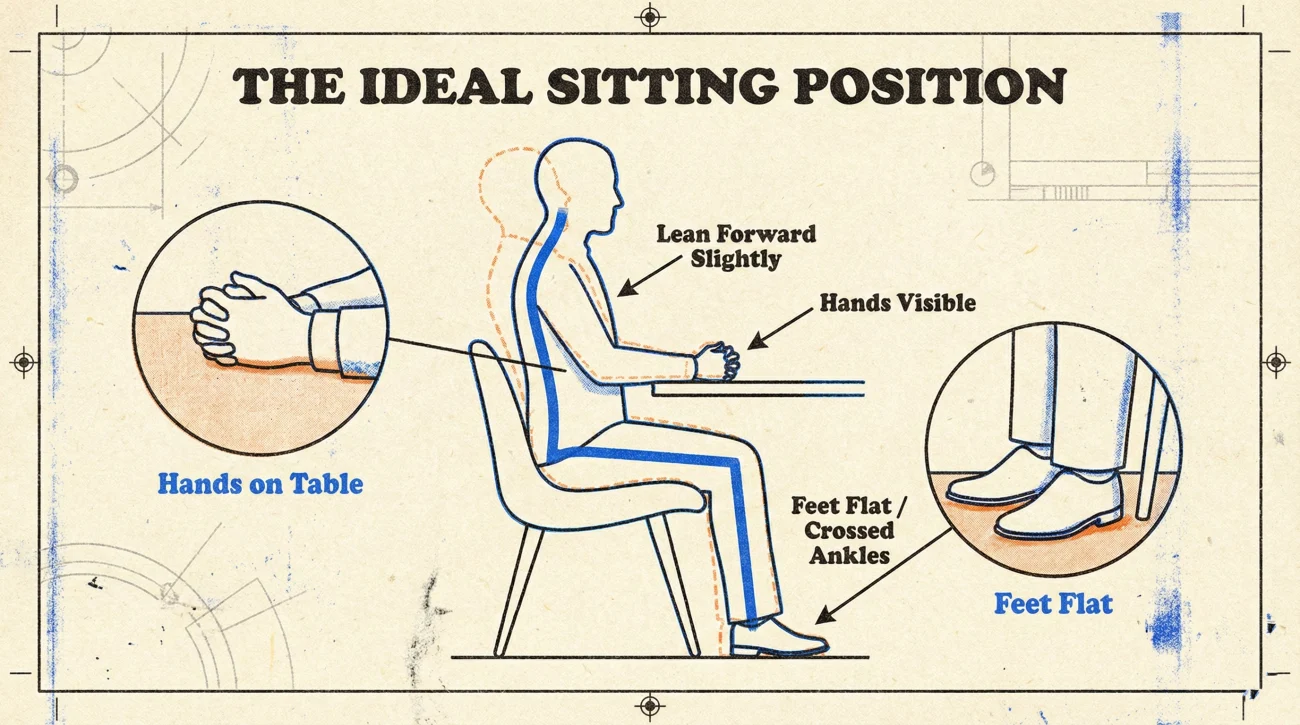
The Ideal Sitting Position
Sit with your back against the chair but lean slightly forward when engaged in conversation. Keep your feet flat on the floor or crossed at the ankles. Avoid crossing your legs at the knee if you’re prone to bouncing.
I remember interviewing a candidate who sat so far forward on his chair that he looked like he might fall off. His eagerness was obvious, but it came across as desperation rather than enthusiasm. Balance matters.
What to Do With Your Hands
Rest them on the table or armrests. Use natural gestures when speaking, but keep them controlled. Avoid pointing, which can seem aggressive, and excessive hand movements, which distract from your words.
Some candidates bring a notebook and pen. This gives your hands something to do and shows you came prepared. Just don’t spend the entire interview writing instead of engaging.
The Overlooked Moments: Entrance and Exit
Many candidates focus entirely on the interview itself, forgetting that non-verbal interview mistakes often happen before and after the formal conversation.
Walking Into the Room
Walk at a measured pace with your shoulders back. Rushing suggests anxiety. Shuffling suggests low energy. A firm handshake at an appropriate distance sets the tone.
How firm should your handshake be?
Match the interviewer’s pressure. Too weak seems timid. Too strong seems like you’re overcompensating. Two to three pumps, then release.
The Waiting Area Matters
Receptionists and other employees often share their observations with hiring managers. Sit attentively, avoid scrolling mindlessly on your phone, and be polite to everyone you encounter. I’ve personally rejected candidates based on how they treated our front desk staff.
Expert Advice: The interview starts when you enter the building, not when you enter the interview room.
Virtual Interview Body Language
Video interviews introduce unique challenges. Your camera angle, lighting, and background all contribute to non-verbal impressions.
Position your camera at eye level. Looking down at a laptop camera makes you appear disengaged or superior. Looking up from a low angle is unflattering and distracting.
- Maintain eye contact by looking at the camera, not the screen
- Nod slightly to show you’re listening since verbal cues like “uh-huh” can cause audio overlap
- Keep hand gestures within the frame so they don’t appear and disappear randomly
- Sit close enough that your face and upper torso fill most of the frame
A friend who transitioned from in-person to remote hiring told me that candidates who mastered virtual presence stood out dramatically. Most people treated video calls as phone calls with cameras, missing the opportunity to demonstrate engagement visually.
Recovering From Body Language Mistakes
What if you catch yourself making one of these mistakes mid-interview? The good news is that awareness allows correction.
If you notice you’ve crossed your arms, simply uncross them while transitioning to a new thought. If you’ve been avoiding eye contact, make a conscious effort to reconnect when you make an important point. If you’ve been fidgeting, place your hands deliberately on the table.
The interviewer likely noticed, but showing self-awareness and adaptability can partially redeem the moment. Humans are forgiving of occasional nervous habits when the overall impression is positive.
For more guidance on presenting yourself effectively, explore our smart preparation strategies that cover both verbal and non-verbal communication.
How to Practice Better Body Language
Self-awareness requires external feedback. Record yourself answering common interview questions and watch the playback with the sound off. You’ll notice habits you never knew you had.
Practice with a friend or family member who will give honest feedback. Ask them specifically about eye contact, posture, and nervous habits. What feels normal to you might look very different to an observer.
| Behavior | What Interviewers See | What to Do Instead |
|---|---|---|
| Crossed arms | Defensive, closed off | Hands on table or armrests |
| Bouncing leg | Nervous, impatient | Feet flat on floor |
| Avoiding eye contact | Untrustworthy, disinterested | 50-60% eye contact when speaking |
| Slouching | Low energy, unprofessional | Back against chair, slight forward lean |
| Excessive nodding | Over-eager, not listening | Natural, occasional nods |
❓ FAQ
🎯 What’s the worst body language mistake in interviews?
Avoiding eye contact consistently ranks as the most damaging mistake. It makes you appear untrustworthy regardless of how qualified you are.
💼 Can body language override a strong resume?
Yes. Hiring managers often trust their gut feelings about candidates, and those feelings are heavily influenced by non-verbal cues. A strong resume gets you the interview, but body language helps you win it.
⏰ How long does it take to fix bad body language habits?
Most people can show noticeable improvement after two to three weeks of conscious practice. Recording yourself during mock interviews accelerates the process.
📋 Should I mirror the interviewer’s body language?
Subtle mirroring builds rapport naturally. Match their energy level and general posture, but don’t copy specific movements, which can appear mocking.
✨ Does body language matter as much in phone interviews?
Your physical state affects your voice. Sitting up straight and smiling produces a more confident, energetic tone than slouching. Body language still matters even when unseen.
Final Thoughts
Your interview body language tells a story whether you intend it to or not. The candidates who succeed are those who ensure their non-verbal communication reinforces rather than undermines their qualifications.
Start paying attention to how you sit, where you look, and what your hands do when you’re nervous. These small adjustments can transform how interviewers perceive you from the moment you walk through the door until you shake hands goodbye.
⚠️ Disclaimer: The interview strategies, sample answers, and negotiation tips provided in this guide are for educational purposes only. Hiring decisions are subjective and vary by company and industry. While these strategies are based on professional HR standards, they do not guarantee a specific job offer or result.