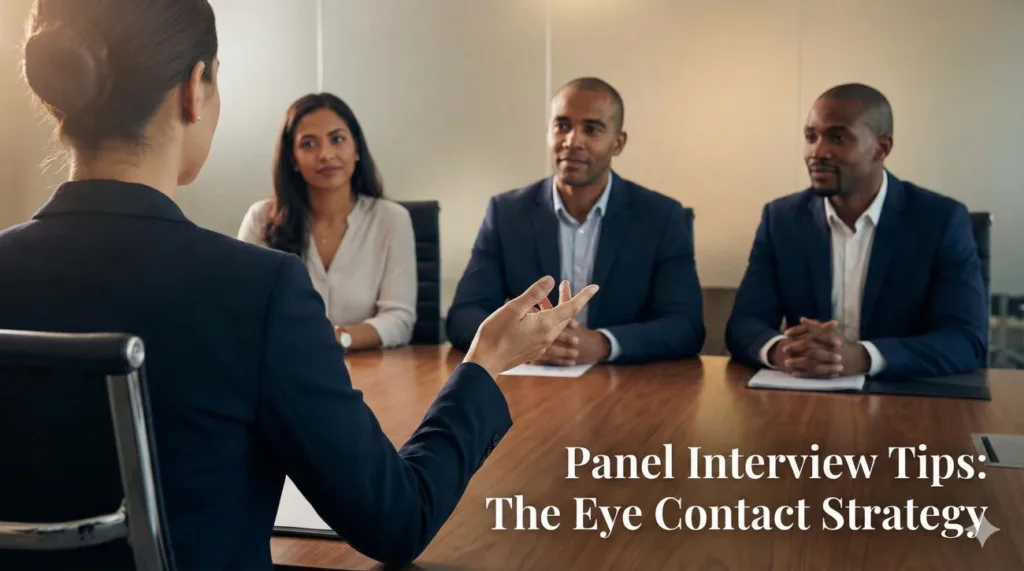
Three Sets of Eyes, Three Different Agendas
A panel interview is not one interview with extra people watching. It is three or four separate interviews happening simultaneously, each panelist evaluating you through their own lens. The HR representative cares about culture fit. The department manager cares about technical skills. The senior executive cares about long-term potential. One answer must satisfy all of them.
This is the core challenge of panel interview tips: you cannot tailor your response to one person without potentially alienating another. The candidate who impresses the technical interviewer with jargon-heavy answers may bore the executive who wanted big-picture thinking.
I have sat on dozens of hiring panels over my career. The candidates who succeed understand that a panel is not an audience but a collection of individual decision-makers, each with veto power. Miss one of them, and your candidacy dies regardless of how well you connected with the others.
The Eye Contact Triangle
Your eyes tell panelists whether you are talking to them or at them. Get this wrong, and you will leave someone feeling ignored, even if your answer was perfect.
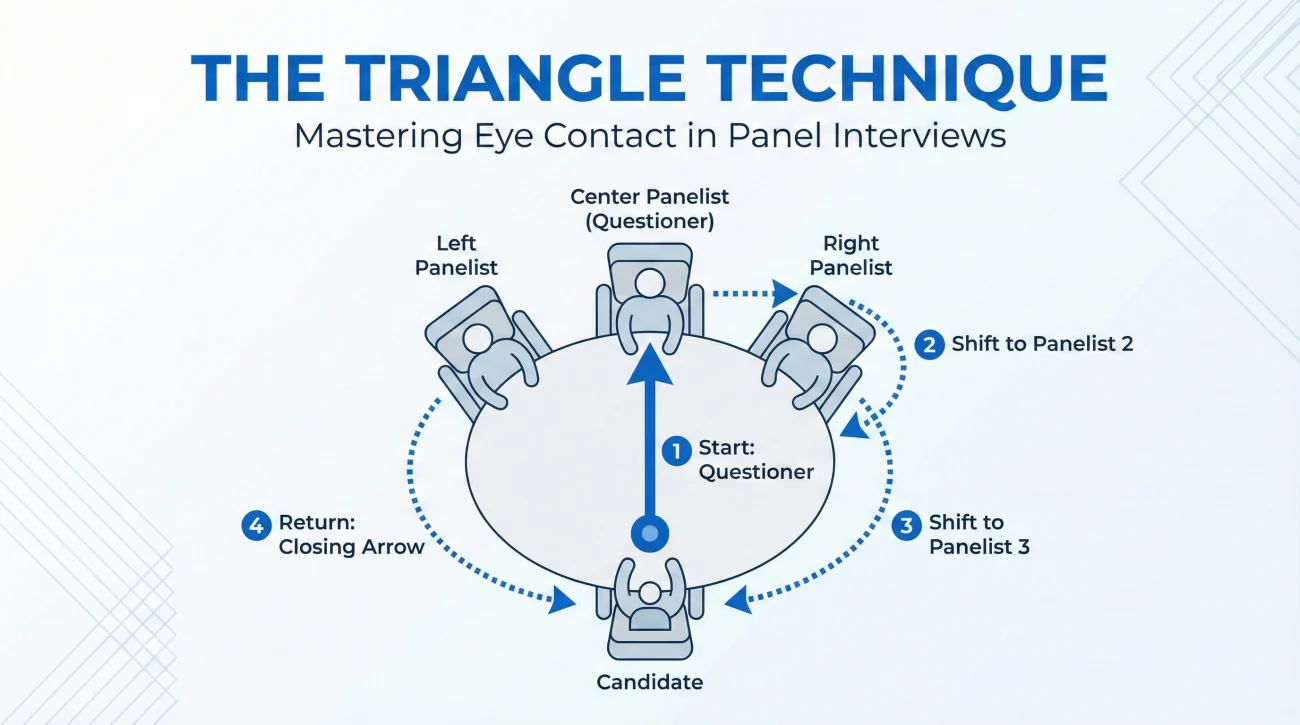
The Triangle Technique
When answering a question, start by looking at the person who asked it. After your opening sentence, shift your gaze to another panelist for a few seconds. Then move to the third. Keep rotating through this triangle as you speak, returning to the questioner for your closing point.
This sounds mechanical on paper but becomes natural with practice. The goal is ensuring every panelist feels included in your answer, not just the one who happened to ask.
“I watched a candidate completely ignore me for thirty minutes. Every answer went to the hiring manager, even when I asked the question. By the end, I had already decided no. It did not matter how qualified he was. He made me feel invisible, and that told me everything about how he would treat colleagues he considered unimportant.”
Reading Panel Cues
Watch how panelists interact with each other. Quick glances between them often signal something: agreement, skepticism, time pressure, or a desire to dig deeper. If you see a panelist nodding while you speak, give them a moment of direct eye contact to acknowledge the connection. If someone looks confused or skeptical, you might address them directly: “I notice this might warrant more detail. Let me clarify…”
💡 Pro Tip: Before the interview, research each panelist on LinkedIn. Knowing their roles helps you anticipate their concerns and tailor examples accordingly.
Finding the Real Decision Maker
Not all panelists carry equal weight. One person usually has final say, while others provide input. Identifying who holds the real power helps you prioritize without neglecting anyone.
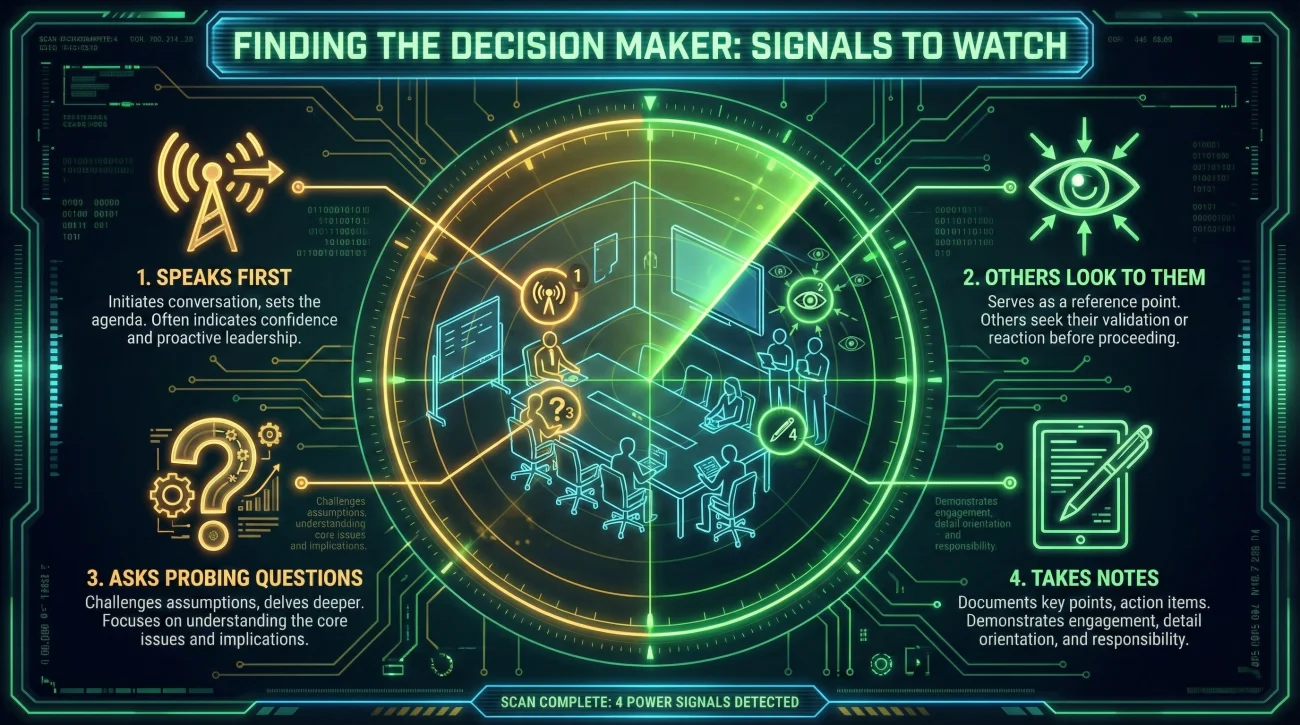
Signals to Watch
- Who speaks first and sets the agenda for the interview?
- Who do other panelists look at when deciding whether to move on?
- Who asks the most probing follow-up questions?
- Who takes the most notes?
- Whose questions seem most focused on the job’s core challenges?
The person displaying these behaviors is likely the primary decision maker. Give them slightly more eye contact and ensure your strongest points land when addressing them, but never obviously favor one panelist over others.
The Hidden Influencer
Sometimes the quietest panelist has the most influence. A senior executive may say little but hold veto power. An HR representative may seem peripheral but can block candidates on culture concerns.
Expert Advice: “In one panel interview, I almost ignored the woman who barely spoke. She turned out to be the CEO’s executive assistant with twenty years at the company. Her opinion carried more weight than anyone else’s. Never assume the quiet person is unimportant.”
Structuring Answers for Multiple Listeners
Different panelists want different things from your answers. A technical manager wants specifics. An executive wants strategic thinking. HR wants evidence of soft skills. The best answers layer these elements together.
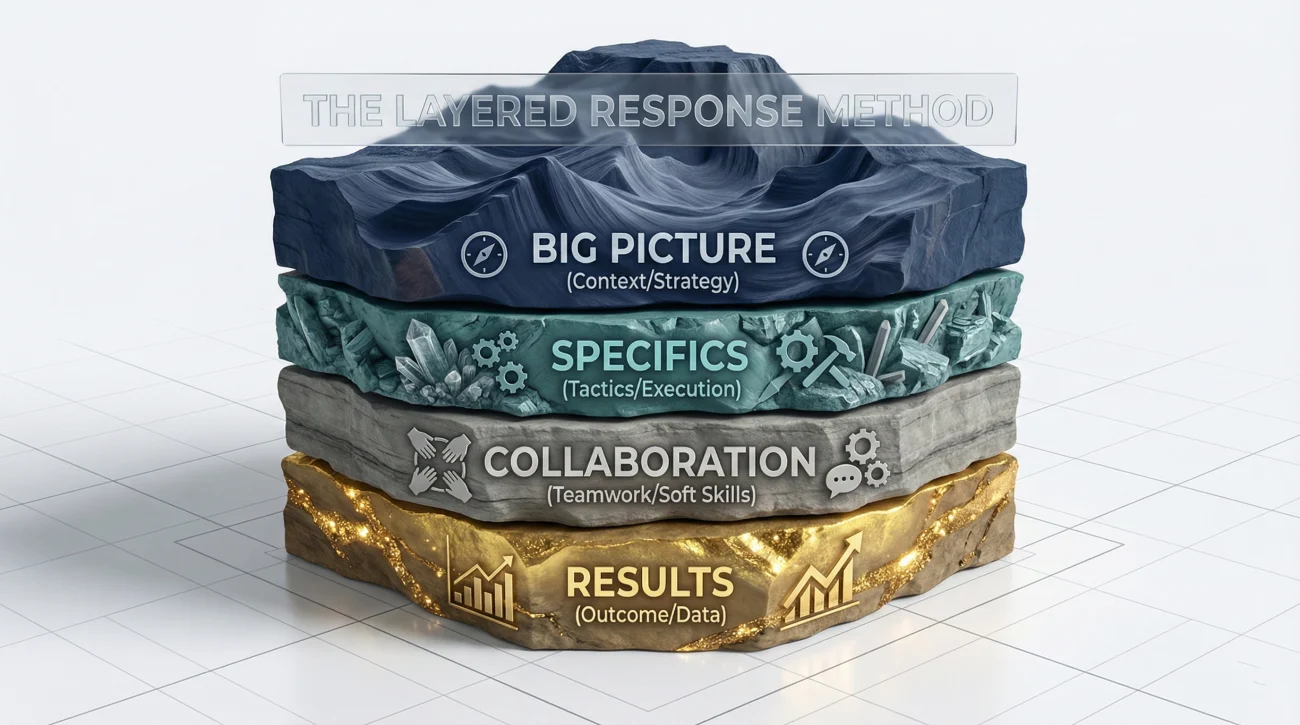
The Layered Response Method
Structure your answer to hit multiple concerns in sequence:
- 📊 Open with the big picture: What was the situation and what was at stake? (Satisfies executives)
- 🔧 Dive into specifics: What exactly did you do and how? (Satisfies technical interviewers)
- 🤝 Highlight collaboration: Who did you work with and how did you handle challenges? (Satisfies HR)
- 📈 Close with results: What was the measurable outcome? (Satisfies everyone)
This structure ensures no panelist feels their concerns were skipped, even in a single answer.
Why the Question Origin Matters
Pay attention to which panelist asks each question. Their role tells you what angle they want emphasized. A question from HR about conflict resolution wants interpersonal focus. The same question from a manager wants operational focus. Tailor your emphasis accordingly while still hitting all the layers.
Mistakes That Sink Panel Interviews
Panel interviews amplify normal interview mistakes because multiple people witness them simultaneously.
Locking onto one panelist
The most common mistake is directing all answers to one person, usually the most senior or most engaged panelist. Other panelists notice immediately and feel dismissed. Even if the person you focused on loves you, the others may veto your candidacy.
Treating it as a presentation
Some candidates respond to panel pressure by becoming overly formal, delivering rehearsed answers like a keynote speech. This creates distance instead of connection. Panels want conversation, not performance.
Failing to ask individual questions
When given the chance to ask questions, address specific panelists by name: “Maria, you mentioned the team restructured recently. How has that affected…” This demonstrates attentiveness and creates individual connections.
Warning: Never ask about salary, benefits, or vacation in a panel interview. Save those conversations for HR alone after you have an offer.
Virtual Panel Interviews
Panel interviews over video call add another layer of complexity. Eye contact becomes harder, reading body language is limited, and technical issues can derail your momentum.
The Camera Problem
In video calls, looking at the camera creates eye contact, but looking at the camera means you cannot see panelists’ reactions. The compromise is this: look at the camera when making key points, but glance at the screen to read reactions between statements. Position the video window as close to your camera as possible to minimize the visual disconnect.
Gallery View Strategy
Use gallery view to see all panelists simultaneously. Speaker view that jumps between faces makes it hard to track who is reacting to what. With gallery view, you can notice a panelist nodding or looking skeptical even when someone else is speaking.
Note: Test your technology before a virtual panel interview. Technical problems in front of one interviewer are awkward. Technical problems in front of four are catastrophic and hard to recover from.
❓ FAQ
👋 Four people are staring at me. How do I even start?
Walk in, smile, and shake hands with each person while saying their name if you know it. If introductions blur together, ask at the start: “Could everyone remind me of their names and roles?” Nobody minds, and using names throughout shows respect.
🎯 One panelist asked a question, but someone else seems more senior. Who do I look at?
Start with whoever asked. Then rotate your eye contact to include everyone, spending slightly more time on the senior person. Never ignore the questioner entirely, but do not lock onto them for the full answer either.
⚔️ Two panelists seem to disagree with each other. Whose side do I take?
Neither. Acknowledge both perspectives: “Those are both valid considerations. In my experience, it depends on…” Taking sides risks alienating half the panel. Diplomatic answers win.
😤 The VP looks bored. Am I bombing this?
Maybe not. Some senior people deliberately show minimal reaction to test how you handle perceived indifference. Keep your energy up and do not let one stone-faced panelist throw you off. They might be your biggest advocate in the debrief.
✉️ Five panelists means five thank-you emails?
Ideally yes, each personalized. Reference something specific each person said. If you cannot find all their emails, send one to your main contact and ask them to pass along your thanks to the team.
Final Thoughts
A panel interview is not harder than a one-on-one interview. It is different. The challenge shifts from building rapport with one person to building rapport with several simultaneously, each judging you through their own priorities. Master the eye contact triangle, identify the real decision maker without ignoring others, and structure answers that satisfy multiple concerns at once.
These panel interview tips work because they address the unique dynamics of being evaluated by a group. Every panelist must leave feeling heard and included. Miss one, and you risk a veto no matter how well the others received you. For more interview format strategies and preparation techniques, explore our full collection of interview guides.
⚠️ Disclaimer: The interview strategies, sample answers, and negotiation tips provided in this guide are for educational purposes only. Hiring decisions are subjective and vary by company and industry. While these strategies are based on professional HR standards, they do not guarantee a specific job offer or result.