- What it is: A personal branding statement explains what makes you different from other qualified candidates by naming your specific value and the problems you solve.
- What makes it strong: Specific expertise plus a distinctive approach plus proven results beats generic claims like “passionate” or “results-oriented.”
- How to find your USP: Look for repeatable patterns in feedback, projects, and impact, then compare your outcomes and approach to peers to spot real differentiators.
- How to write it: Use a clear 1 to 2 sentence structure like “I [distinct capability] for [audience] to [outcome],” then test if a stranger can repeat it back accurately.
- How to use it: Back every claim with proof points, weave it into interviews and LinkedIn naturally, refine it as your career changes, and avoid being too broad or making unsupported claims.
Beyond Generic Qualifications
A personal branding statement answers the question every hiring manager silently asks: “What makes you different from the other qualified candidates?” It’s not enough to be competent. Dozens of applicants have similar degrees, comparable experience, and adequate skills. Your branding statement articulates the specific value you bring that others don’t.
This isn’t marketing fluff or self-promotion for its own sake. Your unique selling point career positioning solves a practical problem: helping decision-makers understand why they should choose you over alternatives. When your differentiators are clear, hiring decisions become easier. When they’re vague, you blend into the crowd regardless of actual capabilities.
Effective personal branding doesn’t mean inventing qualities you don’t possess. It means identifying what genuinely distinguishes you and communicating it clearly enough that others immediately recognize your distinctive value.
What Makes a Strong USP
Your professional value proposition needs three elements: specificity about what you do, evidence that you do it exceptionally well, and clarity about the problems you solve. Vague claims about being “results-oriented” or “passionate” don’t differentiate because everyone makes them.
Core Components
Strong unique selling points combine domain expertise with distinctive approach or proven results. You’re not just “a software engineer” – you’re “a backend engineer who specializes in optimizing database performance for high-traffic applications.” The specificity creates differentiation.
- 🎯 Specific expertise: What particular area do you know deeply?
- 💡 Distinctive approach: How do you solve problems differently?
- 📊 Proven results: What track record validates your claims?
- 🔧 Problem focus: What specific challenges do you address?
| Weak USP (Generic) | Strong USP (Specific) | Why It Works |
|---|---|---|
| “I’m passionate about marketing” | “I help B2B SaaS companies reduce CAC through content-driven demand generation” | Names industry, metric, and method |
| “I’m a hard-working project manager” | “I specialize in turning around failing enterprise software implementations” | Defines specific challenge addressed |
| “I have strong technical skills” | “I build scalable ML infrastructure that reduces model training time by 60%+” | Quantifies specific technical impact |
| “I’m a team player with leadership experience” | “I’ve built and scaled three engineering teams from 5 to 30+ people” | Demonstrates repeatable pattern |
| “I’m detail-oriented and analytical” | “I find revenue leaks in pricing models that finance teams miss” | Shows unique perspective/capability |
Expert advice: The strongest USPs solve problems that companies actively struggle with. “I increase conversion rates” is weaker than “I fix abandoned cart issues in e-commerce checkouts” because the second identifies a specific, common pain point.
Discovering Your Differentiators
Most people struggle to identify their unique value because they’re too close to their own experience. What feels ordinary to you might be distinctive to others. The career differentiation statement requires objective analysis of your actual patterns and results.

Pattern Recognition
Look across your career for repeated themes. What problems do people consistently ask you to solve? What challenges do you gravitate toward? What outcomes do you deliver more reliably than peers? These patterns reveal your distinctive strengths.
- Review performance feedback for repeated praise on specific capabilities
- Identify projects where you were specifically requested versus randomly assigned
- Note what colleagues ask your advice about most frequently
- Examine which of your achievements had the biggest organizational impact
Comparative Analysis
Compare yourself to peers with similar experience levels. Where do your results or approaches differ? Maybe you deliver projects 20% faster. Maybe your solutions require less maintenance. Maybe you bridge technical and business discussions better. These gaps indicate potential differentiators.
💡 Pro tip: Ask three former colleagues or managers what they would highlight if referring you for a role. Their outside perspective often identifies strengths you take for granted.
Crafting Your Statement
Once you’ve identified your differentiators, you need to articulate them clearly. Your defining professional identity should compress into one to two sentences that someone could repeat back accurately after hearing once.
Statement Formula
Effective personal branding statements follow predictable structures that communicate clearly without sounding formulaic. The most versatile format: “I [distinctive capability] for [specific audience] to [valuable outcome].”
| Career Stage | Sample Statement | Key Elements |
|---|---|---|
| Entry-level | “I’m a data analyst who translates complex datasets into executive-ready insights for healthcare companies.” | Role + skill + industry |
| Early professional | “I help SaaS companies optimize their pricing models through behavioral analysis and A/B testing.” | Problem + method + niche |
| Mid-career | “I specialize in launching zero-to-one products in regulated industries where compliance and innovation must coexist.” | Specialty + challenge + differentiator |
| Senior IC | “I architect distributed systems that handle billion-event scale while maintaining sub-100ms latency.” | Technical depth + scale + performance |
| Manager | “I build high-performing engineering teams in early-stage startups by balancing rapid delivery with sustainable practices.” | Leadership + context + approach |
| Executive | “I’ve led three successful turnarounds in manufacturing companies by rebuilding operations around lean principles and data-driven decision-making.” | Pattern + results + methodology |
Testing Your Statement
Your statement should pass the “stranger test”: someone hearing it for the first time should be able to repeat back what you do, who you help, and why it matters. If they can’t, you need more clarity or less jargon.
Statements packed with buzzwords fail the clarity test. “I leverage synergistic methodologies to drive transformational outcomes” sounds impressive but communicates nothing specific.
Supporting Your Claims
A branding statement creates expectations you must deliver on. The gap between claimed expertise and demonstrated capability destroys credibility faster than having no branding at all.
Building Proof Points
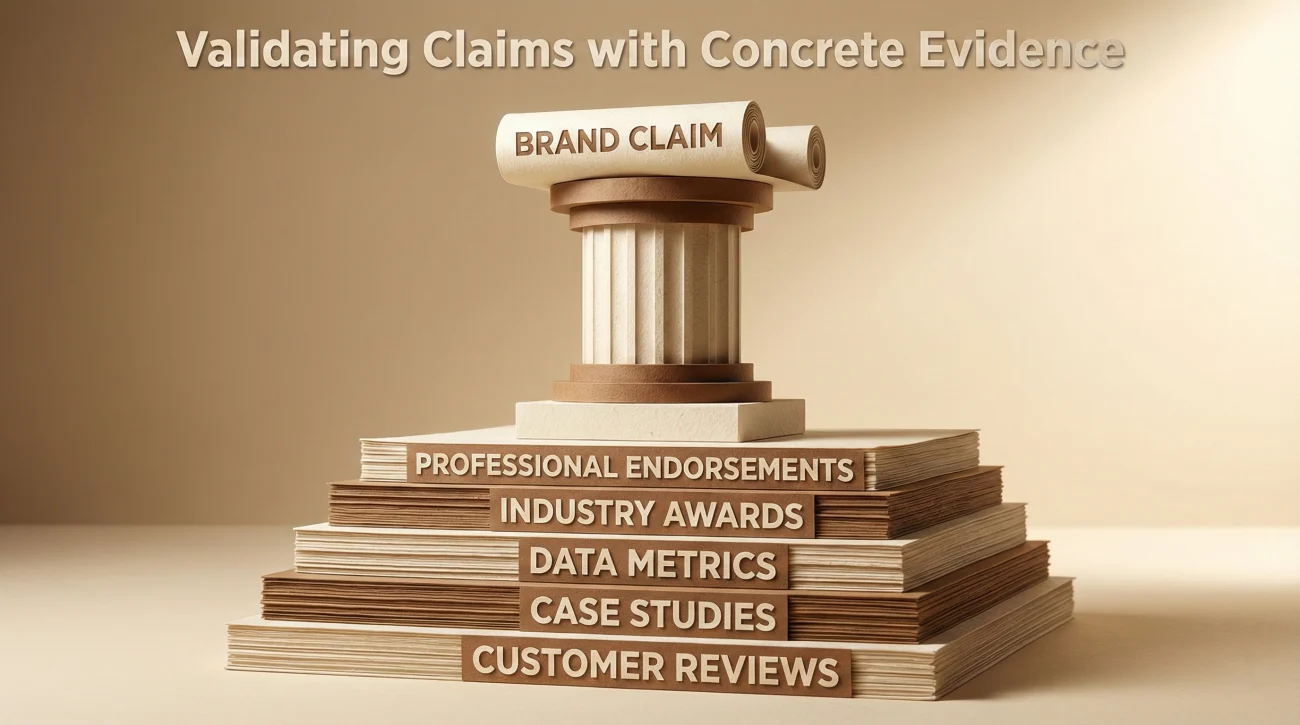
For each element of your branding statement, you need concrete examples that validate the claim. If you say you “specialize in turnarounds,” you should have two to three specific turnaround stories ready with clear before-and-after metrics.
- 📊 Quantified results: Specific metrics that demonstrate impact
- 🎯 Repeated patterns: Multiple instances showing consistency
- 💼 Recognized expertise: Awards, speaking engagements, published work
- 👥 External validation: Testimonials, recommendations, referrals
Expert advice: Your branding statement acts as a thesis statement for your career narrative. Every story you tell in interviews should reinforce at least one element of your USP. This creates consistent, memorable positioning.
Using Your Statement Strategically
Personal branding statements work across multiple professional contexts, but each application requires slight adaptation. The core remains constant while framing adjusts.
Interview Integration
Your branding statement should appear naturally in your interview introduction. It’s not a separate declaration – it’s woven into how you describe your current role and past achievements. For comprehensive guidance on structuring your interview introduction, your USP should integrate seamlessly with the Present-Past-Future framework.
LinkedIn and Professional Bios
Your LinkedIn headline and summary should clearly communicate your branding statement. The headline gets 220 characters to capture your USP. The summary expands with evidence and context. Both should align with your verbal positioning.
If you want help crafting a scroll-stopping Linkedin Headline, start with a clear role + outcome + proof.
Networking Conversations
In networking contexts, your branding statement becomes your elevator pitch foundation. When someone asks “What do you do?”, your USP gives them a memorable, specific answer that creates natural follow-up questions.
| Context | How to Apply | Key Adjustment |
|---|---|---|
| Interview Introduction | Embed in Present component | Connect to role requirements |
| LinkedIn Headline | Lead with core USP | Optimize for search keywords |
| Cover Letter Opening | First paragraph hook | Tie to company needs |
| Networking Event | 30-second response | Make it conversational |
| Performance Review | Frame achievements | Show USP delivery |
Evolving Your Brand
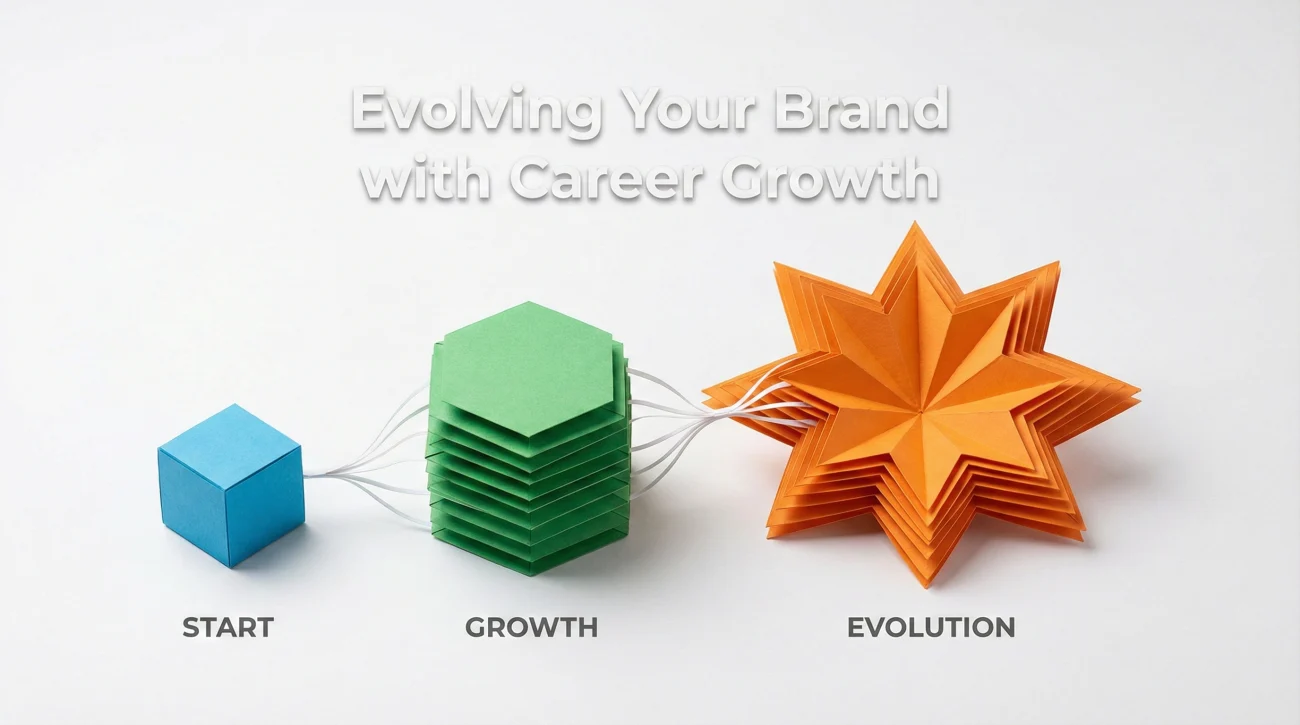
Personal branding isn’t static. As your career progresses, your differentiators shift. What made you unique as an individual contributor differs from what distinguishes you as a manager. Periodic reassessment ensures your statement stays current.
Key Transition Points
Major career changes demand branding reassessment. Moving from IC to management, changing industries, or pivoting specializations all require rethinking your unique value. Your core strengths may transfer, but how you position them must evolve.
- Promotion to leadership requires shifting from personal output to team outcomes
- Industry changes need reframing transferable skills for new context
- Deepening specialization allows narrower, more powerful positioning
- Broadening scope requires identifying new cross-functional differentiators
💡 Pro tip: Review your branding statement annually or after any major career change. What differentiated you three years ago might be table stakes today.
Balancing Consistency and Growth
While your statement should evolve, radical shifts every six months create confusion. Aim for evolution, not revolution. Your core expertise areas should show progression and deepening, not random pivots.
Branding Mistakes to Avoid
Even well-intentioned branding efforts fail when candidates make predictable errors that undermine their positioning.
Being Too Broad
The most common mistake is trying to appeal to everyone by being general. “I help companies grow” applies to thousands of roles. “I help SaaS companies reduce churn through customer success automation” identifies a specific, valuable niche.
- ❌ Too broad: “I’m good at solving problems”
- ✅ Specific: “I debug production issues in distributed systems”
- ❌ Too broad: “I’m a creative marketer”
- ✅ Specific: “I create viral content for D2C beauty brands”
- ❌ Too broad: “I excel at operations”
- ✅ Specific: “I streamline supply chains for fast-growing e-commerce companies”
Claiming you’re “a strategic thinker with strong execution skills” describes every successful professional. It’s not a differentiator.
Making Unsupported Claims
Your branding statement creates expectations. If you claim expertise in “enterprise sales” but your largest deal was $50K, the mismatch becomes obvious quickly. Align your statement with actual track record, not aspirations.
Differentiating in Crowded Markets
Some roles have intense competition where many candidates have similar qualifications. In these scenarios, finding your differentiator requires deeper analysis of subtle distinctions.
Carving Your Niche
When broad positioning doesn’t differentiate, narrow your focus. Instead of “software engineer,” become “the person who optimizes checkout flows for mobile commerce.” Instead of “HR generalist,” position as “the talent acquisition specialist for engineering roles in fintech.”
Narrowing feels risky – won’t it limit opportunities? Actually, it increases them. Hiring managers remember the specific specialist when that specific need arises. They forget the generalist who could maybe help with anything.
Combining Uncommon Strengths
Sometimes differentiation comes from combining skills rarely found together. Technical depth plus business acumen. Creative vision plus analytical rigor. Domain expertise plus cross-cultural fluency. These combinations create unique value.
❓ FAQ
🎯 How specific should my personal branding statement be?
Specific enough that someone could understand your unique selling point career positioning after one hearing, but not so narrow that you exclude adjacent opportunities. “I help SaaS companies” is better than “I help companies” but less restrictive than “I help Series B SaaS companies in healthcare.”
💼 What if I don’t have enough experience to claim expertise?
Early career professionals focus on demonstrated potential rather than deep expertise. Your statement might be “I’m building expertise in X through Y” or “I specialize in Z for entry-level roles.” Authenticity matters more than false claims of mastery.
⏰ Can my branding statement change between applications?
Your core USP should stay consistent, but emphasis can shift. When applying for technical roles, emphasize technical depth. For management positions, highlight leadership patterns. The underlying truth remains constant while framing adjusts to audience.
📋 Should I mention my branding statement explicitly in interviews?
No. Weave it naturally into your introduction and stories. Don’t say “My personal brand is…” Just demonstrate the differentiators through how you describe your role and achievements. The interviewer should understand your USP without you declaring it.
✨ What if competitors have similar branding?
Get more specific or identify a different differentiator. If “I optimize SaaS pricing” is common in your market, drill deeper: “I optimize usage-based pricing for developer tools” or find a different angle like “I combine pricing strategy with customer psychology research.”
Final Thoughts
Your personal branding statement shouldn’t feel like marketing copy. It should feel like clear, honest communication about what you do distinctively well. The best branding statements don’t exaggerate or fabricate – they identify and articulate real differentiators that hiring managers value.
Effective positioning requires self-awareness about your actual strengths, market awareness about what employers need, and communication clarity about how you solve specific problems. This combination transforms you from “another qualified candidate” into “the person who does X better than alternatives.”
Invest time discovering your genuine differentiators. Test your statement with people who know your work. Refine until it’s specific, credible, and memorable. Then deliver on the promises you make. That’s how personal branding creates career advantage.
⚠️ Disclaimer: The interview strategies, sample answers, and negotiation tips provided in this guide are for educational purposes only. Hiring decisions are subjective and vary by company and industry. While these strategies are based on professional HR standards, they do not guarantee a specific job offer or result.