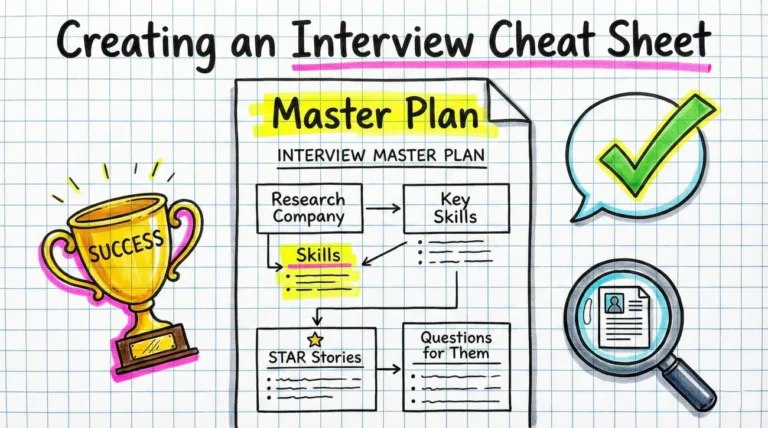
Flip the Conversation
Most candidates walk into interviews thinking about themselves. Their experience. Their qualifications. Their career goals. They answer questions from the perspective of someone seeking a job.
The consultative approach flips that entirely. You walk in thinking about the employer’s problems. Their challenges. Their goals. You position yourself as someone who solves specific types of problems, and you’ve come to understand whether your capabilities match what they need.
A problem solver interview introduction opens with the value you create rather than the roles you’ve held. It establishes you as a potential solution before the interviewer has to figure out whether you fit. Done well, it transforms the dynamic from interrogation to strategic conversation.
Why This Approach Works
Employers don’t create jobs for fun. They create jobs because they have problems they can’t solve with current resources. Every open role represents a gap between where the organization is and where it needs to be.
When you lead with the problems you solve, you speak directly to why the role exists. You demonstrate that you understand the situation rather than just wanting a job. This positions you as a strategic thinker who might actually help rather than just another candidate to evaluate.
| Traditional Opening | Problem Solver Opening |
|---|---|
| “I’m a marketing manager with 8 years of experience…” | “I help companies figure out why their marketing spend isn’t converting…” |
| “I’ve worked in operations at three companies…” | “I fix the operational bottlenecks that slow down growing companies…” |
| “I’m a software engineer specializing in backend…” | “I build the systems that let products scale without breaking…” |
Notice how the problem solver versions create immediate relevance. The interviewer thinks: “Do we have that problem? Yes. Tell me more.”
The Consultative Script

Opening: The Problem You Solve
"I help [type of organization] solve [specific problem or achieve specific outcome]."
Examples:
- “I help B2B companies shorten their sales cycles by fixing the handoff between marketing and sales.”
- “I help growing startups build finance functions that can scale beyond their founder-run phase.”
- “I help product teams figure out which features actually matter to users before they waste engineering resources.”
Middle: How You Do It
"The way I typically approach this is [your method or framework]. For example, at [company], I [specific action] which resulted in [measurable outcome]."
Example:
“The way I typically approach this is by mapping the entire customer journey to find where leads are getting stuck. At my last company, I discovered that seventy percent of our qualified leads were going cold because sales didn’t have the right information to follow up quickly. I built an automated handoff system that cut our average response time from four days to four hours, which increased our close rate by twenty-three percent.”
Pattern: Establish Track Record
"I've solved similar problems at [other contexts]. At [company], the challenge was [brief problem description], and I [what you did and achieved]."
Example:
“I’ve solved similar problems at two other companies. At a healthcare startup, the challenge was that sales and clinical teams weren’t communicating, which meant we were promising things we couldn’t deliver. I created a shared qualification framework that both teams bought into, which reduced implementation failures by half.”
Close: Connect to Their Situation
"Based on what I've learned about [their company], it sounds like you might be facing [their likely challenge]. I'd be interested to understand more about [specific question about their situation]."
Example:
“Based on what I’ve read about your growth trajectory, it sounds like you might be hitting some of these same scaling challenges with your sales process. I’d be interested to understand how your marketing and sales teams are currently working together.”
Complete Script Examples
Operations Leader
“I fix the operational problems that emerge when companies grow faster than their systems can handle. The symptoms usually look like missed deadlines, quality issues, or teams that are working incredibly hard but not getting proportional results.
The way I approach these situations is by finding the two or three leverage points where small changes create disproportionate improvement. At my most recent company, we were struggling to fulfill orders as volume increased. Rather than just adding headcount, I mapped our entire fulfillment process and found that seventy percent of delays came from three specific handoff points. Fixing those handoffs increased our throughput by forty percent without adding any staff.
I’ve done similar work at two other growing companies. The specific problems vary but the pattern is consistent: rapid growth exposes operational weaknesses that were invisible when you were smaller.
From what I understand about your situation, you’ve grown significantly over the past year and you’re building out your operations team. I’d be curious to hear where you’re feeling the most strain in your current processes.”
Product Manager
“I help product teams stop building features nobody wants. It sounds simple, but most companies I’ve worked with were spending significant engineering resources on capabilities that didn’t move their metrics because they weren’t validating assumptions before building.
My approach is embedding lightweight research into every stage of the product development process. At my current company, I implemented a validation framework that requires testing key assumptions before any feature gets engineering resources. In the first year, we killed about thirty percent of proposed features before they consumed development time, and the features we did build had significantly better adoption rates.
Before that, I worked at a company where we’d already built a lot of unused features. I led the effort to sunset capabilities that were costing us maintenance resources without providing value. We reduced our codebase complexity by about twenty percent, which made everything else faster.
I’m interested in this role because it sounds like you’re at a stage where you need to be more strategic about what you build. I’d like to understand how you’re currently deciding what makes it onto your roadmap.”
For additional introduction formats, see our comprehensive introduction guide.
Identifying Your Problem Statement
The hardest part of this approach is figuring out what problem you actually solve. Most people have never thought about their work this way.
Ask Yourself
- When companies hire someone like me, what are they usually struggling with?
- What situations trigger the need for my role to exist?
- What gets better when I do my job well?
- What do my best accomplishments have in common?
Get Specific
“I help companies with their marketing” is too vague. “I help companies figure out which customer segments are worth pursuing” is specific enough to be meaningful.
The problem you solve should be narrow enough that not everyone solves it, but broad enough that multiple companies have it.
Test Your Statement
A good problem statement makes people immediately think of someone who has that problem. If your statement doesn’t trigger that recognition, it’s probably too vague or too unusual.
Good test: If you said your problem statement at a dinner party, would someone say “Oh, my friend’s company needs exactly that”?
Researching Their Problems
The consultative approach requires knowing something about the company’s situation before you walk in.

Where to Look
- Job description language about challenges and goals
- Recent news about company growth, changes, or initiatives
- Glassdoor reviews mentioning operational challenges
- LinkedIn posts from company leaders about their priorities
- Earnings calls or investor presentations for public companies
- Industry analysis about common challenges at their stage
Reading Between the Lines
Job descriptions often hint at problems without stating them directly. “Looking for someone to bring structure to our process” suggests current chaos. “Need to scale our team rapidly” suggests growing pains coming. Learn to translate job requirements into underlying challenges.
❓ FAQ
🎯 What if I solve multiple types of problems?
Pick the one most relevant to this specific role. You can mention versatility later, but your opening should be focused. Trying to cover everything dilutes your message.
💼 What if I’m early in my career without many case studies?
Use examples from internships, class projects, or personal initiatives. The structure works even with smaller examples. You can also frame yourself around problems you’re trained to solve rather than problems you’ve already solved.
⏰ How long should this introduction be?
Sixty to ninety seconds for the core script, ending with a question that invites them to talk about their situation. The goal is starting a conversation, not delivering a monologue.
📋 What if my research about their problems is wrong?
Frame your assumptions as hypotheses, not certainties. “Based on what I’ve read, it sounds like you might be facing X” invites correction rather than creating awkwardness if you’re off base.
✨ Is this approach too aggressive for some cultures?
Adjust your tone for the context. The core principle of focusing on their needs rather than your credentials works everywhere. The specific language can be softened for more formal or hierarchical environments.
Solutions, Not Credentials
The problem solver interview introduction positions you as a potential answer to challenges the organization faces. Lead with the problem you solve. Demonstrate your approach with specific examples. Establish a pattern of results across multiple contexts. Then connect to their situation with informed questions.
This approach works because it aligns your interests with theirs from the first moment. You’re not asking for a job. You’re exploring whether you can help. That shift changes everything about how the conversation unfolds.
⚠️ Disclaimer: The interview strategies, sample answers, and negotiation tips provided in this guide are for educational purposes only. Hiring decisions are subjective and vary by company and industry. While these strategies are based on professional HR standards, they do not guarantee a specific job offer or result.