Thirty Seconds Changes Everything
The recruiter at the career fair booth looks up. There are fifteen people waiting behind you. You have maybe thirty seconds before their attention shifts to the next candidate. What do you say?
Most people fumble this moment. They ramble about their major. They list coursework. They ask what positions are available without giving any reason to care. And then they’re forgotten before they’ve left the booth.
Strong elevator pitch examples share one quality: they deliver a complete, memorable impression in the time it takes to ride a short elevator. Not a condensed resume. Not a list of qualifications. A snapshot that makes someone want to continue the conversation.
What follows are five complete scripts for different situations. Copy the structure. Fill in your details. Practice until you can deliver it naturally in thirty seconds flat.
What Makes Thirty Seconds Work
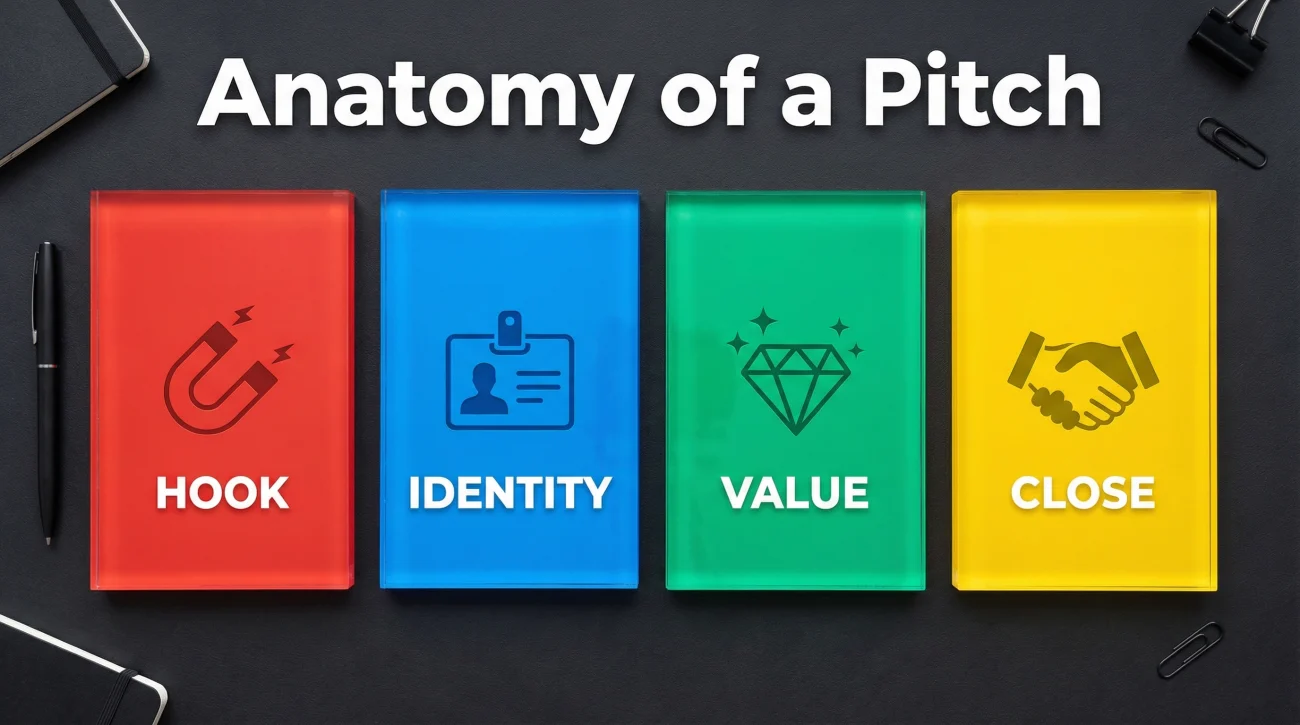
A half-minute pitch needs to accomplish three things: identify who you are, establish one clear value proposition, and prompt a next step. That’s it. Everything else is filler that dilutes your message.
| Element | Time | Purpose |
|---|---|---|
| Hook | 5 seconds | Grab attention with something specific |
| Identity | 5 seconds | Establish who you are professionally |
| Value | 15 seconds | One clear capability or achievement |
| Close | 5 seconds | What you want or what happens next |
Notice how tight that timing is. There’s no room for throat-clearing, context-setting, or comprehensive background. You pick one thing that makes you interesting and let that represent you.
Script One: College Student at Career Fair
Career fairs are overwhelming for both sides. Recruiters meet hundreds of students saying nearly identical things. Your pitch needs to stand out without sounding rehearsed or gimmicky.
“I built a machine learning model that predicts which students will drop out of my university, and the admissions office is actually using it now. I’m a junior studying data science, and I’m looking for internships where I can apply that kind of predictive work to real business problems. Is that something your data team works on?”
👉 Why it works: Opens with a concrete, impressive achievement rather than “I’m a data science major.” The question at the end invites conversation rather than forcing the recruiter to figure out what to say next.
💡 Customize it: Replace the project with your most impressive relevant work. If you don’t have a standout project, lead with a specific skill and what you’ve done with it.
Script Two: Career Changer at Networking Event
Career changers often struggle with pitches because they feel caught between two identities. The solution is leading with where you’re going, not where you’ve been.
“I spent ten years managing restaurant operations, and now I’m moving into supply chain management because I realized the logistics side was always what I found most interesting. I’m particularly good at finding inefficiencies in complex systems and I’m looking to connect with people who work in food distribution or manufacturing logistics.”
👉 Why it works: Acknowledges the transition honestly while emphasizing transferable skills. The specific focus on food distribution shows this person has done their homework rather than just applying randomly.
💡 Customize it: Name your specific target area. Generic networking rarely produces results. The more specific you are about what you’re looking for, the more likely people can help.
Script Three: Experienced Professional at Industry Conference
When you have substantial experience, the challenge is selection. You could talk for hours about your background. The pitch forces you to choose what matters most for this context.
“I run product for a fintech company that serves small businesses. We just crossed a million users last quarter, and I’m here because I want to learn how other companies in this space are thinking about embedded finance. What’s your take on where that’s heading?”
👉 Why it works: Establishes credibility fast with the user number. Shows genuine intellectual curiosity rather than just looking for a job. Ends with a question that starts a real conversation.
💡 Customize it: Pick your single most impressive credential or achievement. At senior levels, people want to know your scope of impact, not a list of responsibilities.
Script Four: Sales Professional at Client Event
Sales pitches need to focus on client outcomes, not your own capabilities. The best salespeople talk about problems they solve, not products they sell.
“I work with manufacturing companies that are struggling with inventory costs. Most of my clients have cut their carrying costs by twenty to thirty percent within the first year. If that’s something your company deals with, I’d love to learn more about your situation and see if there might be a fit.”
👉 Why it works: Leads with the problem and the result, not the product or company. The specific percentage gives credibility without sounding like a commercial. The close is low-pressure and genuine.
💡 Customize it: Focus on one specific problem you solve and one specific result you deliver. Generalists sound forgettable. Specialists sound valuable.
Script Five: Creative Professional at Portfolio Review
Creative fields often resist formulaic pitches, but structure still helps. The goal is establishing your perspective and style, not listing software skills.
“I’m a brand designer who specializes in helping startups look established before they actually are. My last three clients all got funded within six months of their rebrand, which I’d like to think wasn’t a coincidence. I’m looking to connect with founders who are past the MVP stage and ready to invest in how they present themselves.”
👉 Why it works: Describes an approach, not just a skill set. The funding correlation is memorable and suggests real business impact. The target client description is specific enough to be useful.
💡 Customize it: Name your specific angle or specialty. What makes your creative approach different from someone else with similar technical skills?
For longer introduction formats, see our complete self-introduction guide.
Adapting on the Fly
No single pitch works for every situation. Once you have a solid base version, practice modifying it based on who you’re talking to.
When They’re Technical
Include more specific details about methods, tools, or approaches. Technical audiences appreciate precision and can tell when you’re faking expertise.
When They’re Executive
Lead with business impact and outcomes. Executives care about results and scale, not the details of how you did something.
When They’re Peers
Be more casual and focus on genuine connection. Peer networking works best when you’re looking for mutual exchange rather than just pitching yourself.
When You Have Even Less Time
Cut to the hook and one sentence of value. “I’m the person who built the fraud detection system at [Company] that saves them about ten million a year. I’m looking for my next challenge in fintech.” That’s under ten seconds and still memorable.
Practice Until It Disappears
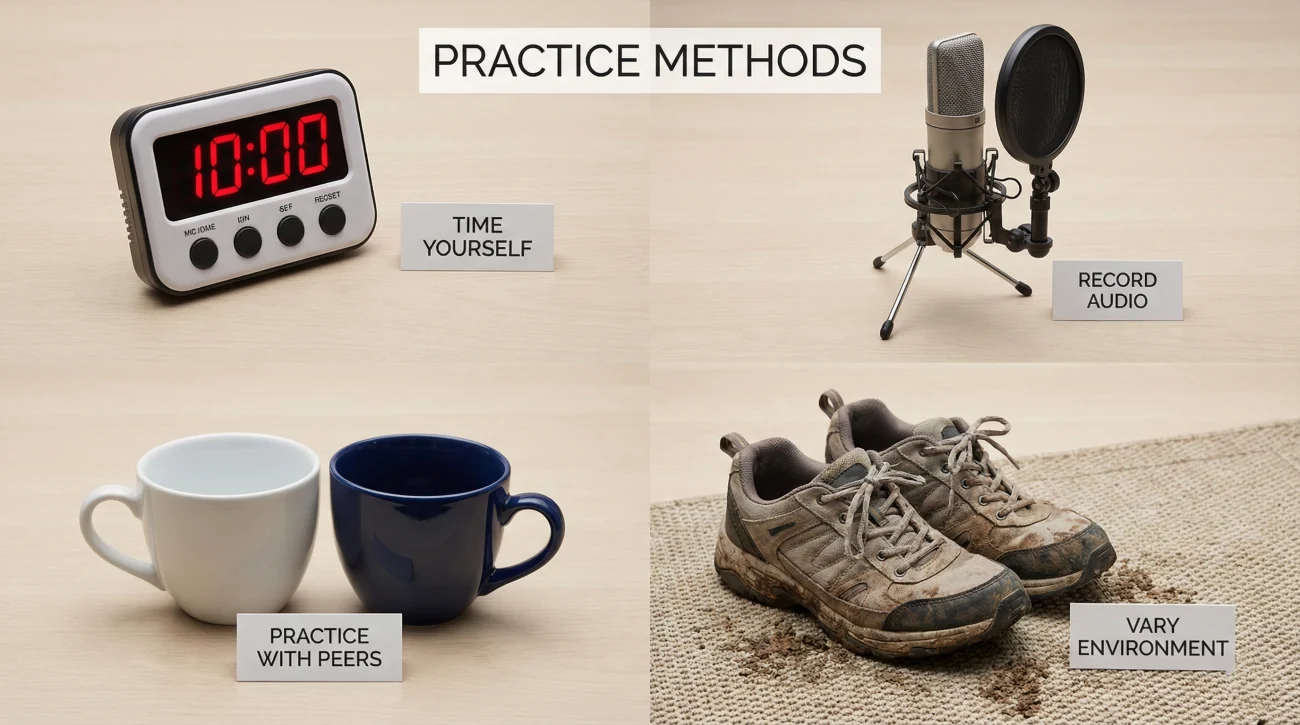
The goal of practice is making the pitch sound completely natural, like you just thought of it in the moment.
- 🎯 Time yourself: Use a stopwatch until you consistently hit 25 to 35 seconds
- 📱 Record yourself: Watch for filler words, rushing, or unnatural pauses
- 👥 Practice with people: Their reactions tell you what lands and what falls flat
- 🔄 Vary the delivery: Practice sitting, standing, in noisy environments, and while walking
You’re ready when you can deliver your pitch while simultaneously shaking someone’s hand, making eye contact, and dealing with background noise.
❓ FAQ
🎯 What if someone asks me to elaborate after my pitch?
That’s the goal. Have a longer version ready that expands on the same core message. A pitch that leads to questions is working exactly as intended.
💼 Should I memorize it word for word?
Memorize the structure and key points, but be flexible with exact wording. If you sound like you’re reciting, you’ve over-memorized. It should feel like natural speech, not performance.
⏰ Is thirty seconds really enough?
For initial contact, yes. Your goal isn’t to tell your whole story. It’s to create enough interest for a longer conversation. Thirty seconds is plenty for that if you use it well.
📋 What if I don’t have impressive achievements to mention?
Focus on problems you can solve or skills you bring rather than past accomplishments. Everyone has something valuable to offer. Find your angle and lead with that.
✨ How do I end without being awkward?
End with a question or clear next step. Asking about their work, requesting a card, or suggesting you connect on LinkedIn all provide natural closings that move the conversation forward.
Thirty Seconds, Fully Prepared
You now have five complete elevator pitch examples covering different career stages and contexts. Pick the one closest to your situation, customize the blanks, and start practicing. The career fair, networking event, or chance encounter where you need this pitch is coming. When it arrives, you’ll have something worth saying and the confidence to say it clearly.
⚠️ Disclaimer: The interview strategies, sample answers, and negotiation tips provided in this guide are for educational purposes only. Hiring decisions are subjective and vary by company and industry. While these strategies are based on professional HR standards, they do not guarantee a specific job offer or result.