Beyond Just Fitting In
Cultural fit used to mean hiring people who seemed similar to existing employees. Same backgrounds, same communication styles, same references. Companies ended up with homogeneous teams that thought alike and missed obvious blind spots.
Smart organizations now talk about culture add instead of culture fit. They want people who align with core values but bring something new. Different perspectives. Fresh approaches. Experiences that expand what the team can see and do.
Strong cultural fit interview answers demonstrate that you share essential values while also contributing something the team doesn’t currently have. You’re not trying to blend in perfectly. You’re showing how you’ll strengthen the culture by being authentically yourself within it.
Understanding What They Value
Before you can demonstrate alignment, you need to understand what the company actually values. Not the aspirational values on their website, but the real values that drive daily decisions.
Stated Values
Check the company website, employee handbook, and any published culture documents. These tell you what leadership wants the culture to be, even if reality differs.
Revealed Values
Look at what the company actually does. How do they treat employees during difficult times? What behaviors get rewarded? What do current and former employees say on Glassdoor? Actions reveal values more honestly than statements.
Interview Signals
Pay attention to how interviewers talk about their work. What makes them proud? What frustrates them? These emotional cues reveal what actually matters in the day-to-day culture.
| What They Say | What It Might Mean |
|---|---|
| “We move fast” | Values speed, tolerates some chaos, may sacrifice process |
| “We’re data-driven” | Expect evidence for decisions, may resist intuition |
| “We’re like a family” | Close relationships, but may blur work-life boundaries |
| “We have high standards” | Quality matters, but may be demanding or perfectionist |
| “We value transparency” | Open communication, but may require thick skin for feedback |
The Culture Add Script
This script structure weaves values alignment into your introduction naturally rather than making it a separate topic.

Demonstrating Alignment
"One thing that drew me to [company] is [specific value or cultural element]. In my own work, I've always [how you've lived that value]."
Example:
“One thing that drew me to this company is your emphasis on direct feedback. In my own work, I’ve always preferred environments where people say what they think rather than being polite but unclear. At my current company, I actually pushed to implement a more direct feedback culture because I saw how much time we were wasting on miscommunication.”
Showing What You Add
"At the same time, I'd bring [perspective or approach] that might be different from what you currently have. My background in [different context] taught me [valuable perspective]."
Example:
“At the same time, I’d bring a perspective from working in regulated industries that might be different from a startup environment. My background in healthcare taught me how to move fast within constraints, which might be valuable as you start dealing with enterprise clients who have compliance requirements.”
Integrating Both
"I think that combination of [shared value] with [what you add] would let me [specific contribution]."
Example:
“I think that combination of valuing speed with understanding compliance would let me help you build processes that are fast but also sustainable as you scale into more regulated markets.”
Complete Examples
Joining a Fast-Paced Startup
“What attracts me to your culture is the emphasis on ownership and moving quickly. I’ve always been someone who’d rather ask forgiveness than permission, and I work best in environments where I can make decisions and course-correct rather than waiting for approval chains.
At my current company, I was often frustrated by how long it took to get things done. I found myself constantly pushing to ship faster and iterate. That’s actually part of why I’m looking to move to a startup environment.
What I’d add is experience with what happens when you scale. I’ve seen companies grow from startup chaos into something more structured, and I know where the pain points usually emerge. I can help you move fast now while also thinking about what systems you’ll need later.
That combination feels right to me because I want the energy and pace of a startup, but I can also help you avoid some of the growing pains I’ve seen other companies struggle with.”
Joining a Collaborative Culture
“I was drawn to apply here because of your emphasis on collaboration and cross-functional work. I genuinely believe the best solutions come from diverse perspectives working together, and I’ve structured my career around finding those environments.
At my current role, I’m known as someone who pulls in perspectives from other teams even when it’s not required. My best projects have all involved partnerships with people who see problems differently than I do.
What I’d add is a willingness to be the person who asks uncomfortable questions. In collaborative environments, there can sometimes be pressure to maintain consensus. I’ve learned how to respectfully push back when I think the group is missing something, which I think actually makes collaboration stronger rather than weaker.
I want to be somewhere that values teamwork, and I want to contribute by helping the team think more rigorously, not just agreeing with whatever direction emerges.”
For more introduction formats, see our comprehensive introduction guide.
Staying Authentic
The biggest mistake candidates make with cultural fit questions is pretending to be something they’re not. This backfires in two ways: you might get hired into an environment where you’ll be miserable, or you come across as inauthentic and don’t get hired at all.
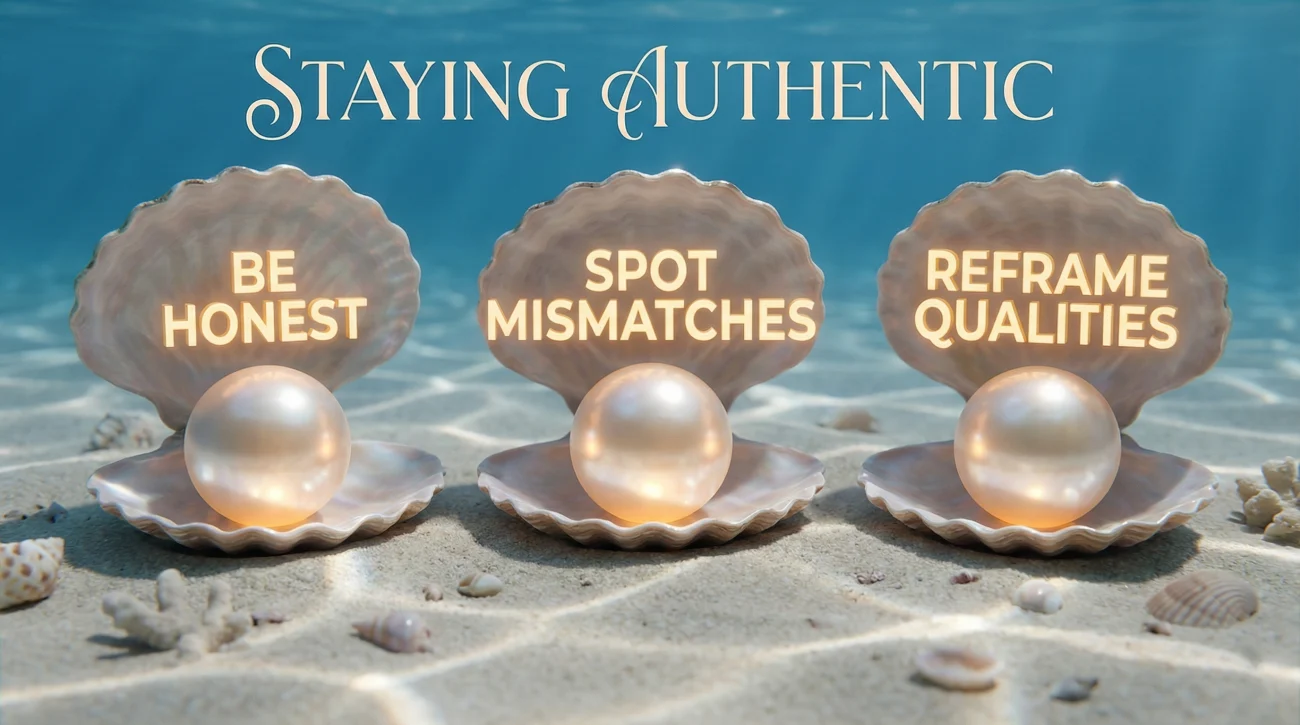
Be Honest About Who You Are
If you’re introverted, don’t pretend to be a social butterfly. If you prefer structure, don’t claim to thrive in chaos. Find ways to frame your authentic preferences as strengths for the environment you’re entering.
Recognize Real Mismatches
Sometimes cultural fit concerns are legitimate signals that this isn’t the right place for you. If everything about the culture sounds wrong, that’s valuable information. Not every culture is right for every person.
Reframe Rather Than Fake
Instead of pretending to have qualities you lack, reframe your real qualities as assets for their environment.
- ✅ “I’m more thoughtful than impulsive, which helps me catch problems before they become expensive.”
- ❌ “I love moving fast and breaking things!” (when you don’t)
- ✅ “I prefer working independently but I communicate proactively to keep teams aligned.”
- ❌ “I’m super collaborative and love being around people all day!” (when you don’t)
❓ FAQ
🎯 What if their culture sounds terrible to me?
Trust that reaction. Cultural mismatch leads to misery even if you can get through the interview. It’s better to continue your search than to join somewhere you’ll hate. Not every company is right for every person.
💼 How do I research culture before the interview?
Glassdoor reviews, LinkedIn posts from employees, company blog and social media, news articles about the company. Talk to current or former employees if you can find connections. The interview itself is also a chance to observe culture in action.
⏰ Should I ask about culture during the interview?
Yes, but ask specific questions rather than generic ones. “What’s the culture like?” gets rehearsed answers. “Tell me about a time when there was disagreement about priorities. How was it resolved?” reveals real dynamics.
📋 What if I’m asked directly about cultural fit?
Use the structure above: demonstrate alignment with their core values, then explain what you’d add. Be specific with examples rather than just claiming you’d be a great fit.
✨ How much should I adapt my personality in interviews?
Show your professional best, but don’t pretend to be someone you’re not. Minor adaptation is normal and fine. Pretending to have a completely different personality is exhausting and unsustainable.
Add, Don’t Just Fit
Strong cultural fit interview answers demonstrate genuine alignment with core values while showing what unique perspective you contribute. Research the culture thoroughly. Identify shared values you can speak to authentically. Articulate what you’d add that the team doesn’t currently have. Stay honest about who you are rather than pretending to be someone else.
The best cultural matches aren’t people who blend in perfectly. They’re people who share fundamental values while bringing something new that makes the culture stronger. Position yourself as that kind of addition.
⚠️ Disclaimer: The interview strategies, sample answers, and negotiation tips provided in this guide are for educational purposes only. Hiring decisions are subjective and vary by company and industry. While these strategies are based on professional HR standards, they do not guarantee a specific job offer or result.