This Is Not an Apology
Too many people returning to work after a career break open with something like: “I know I’ve been out of the workforce for a while, but…” That word “but” signals that you see your break as a problem to overcome rather than a chapter in your story.
The returning to work interview script you need starts from a different place entirely. You made choices. Those choices were right for you at the time. Now you’re making a new choice, and you’re bringing capabilities that never disappeared plus perspective that only comes from stepping away.
What follows is a template for introducing yourself confidently after a career break, whether you took time for family, health, education, or any other reason. The structure works regardless of how long you’ve been away or why you left.
Reframing the Break
Before crafting your script, shift how you think about the time you were away.
| Apologetic Framing | Confident Framing |
|---|---|
| I’ve been out of the workforce | I stepped away to focus on family |
| I have a gap in my resume | I took a planned career break |
| I haven’t worked in years | I’m returning after a chapter focused on other priorities |
| I’m worried my skills are outdated | I’ve updated my skills specifically for this return |
| I hope you’ll consider me despite… | I’m ready to bring my experience and fresh energy to… |
The confident framing isn’t denial or spin. It’s recognizing that career breaks are normal, that your reasons were valid, and that you have genuine value to offer now.
The Comeback Script
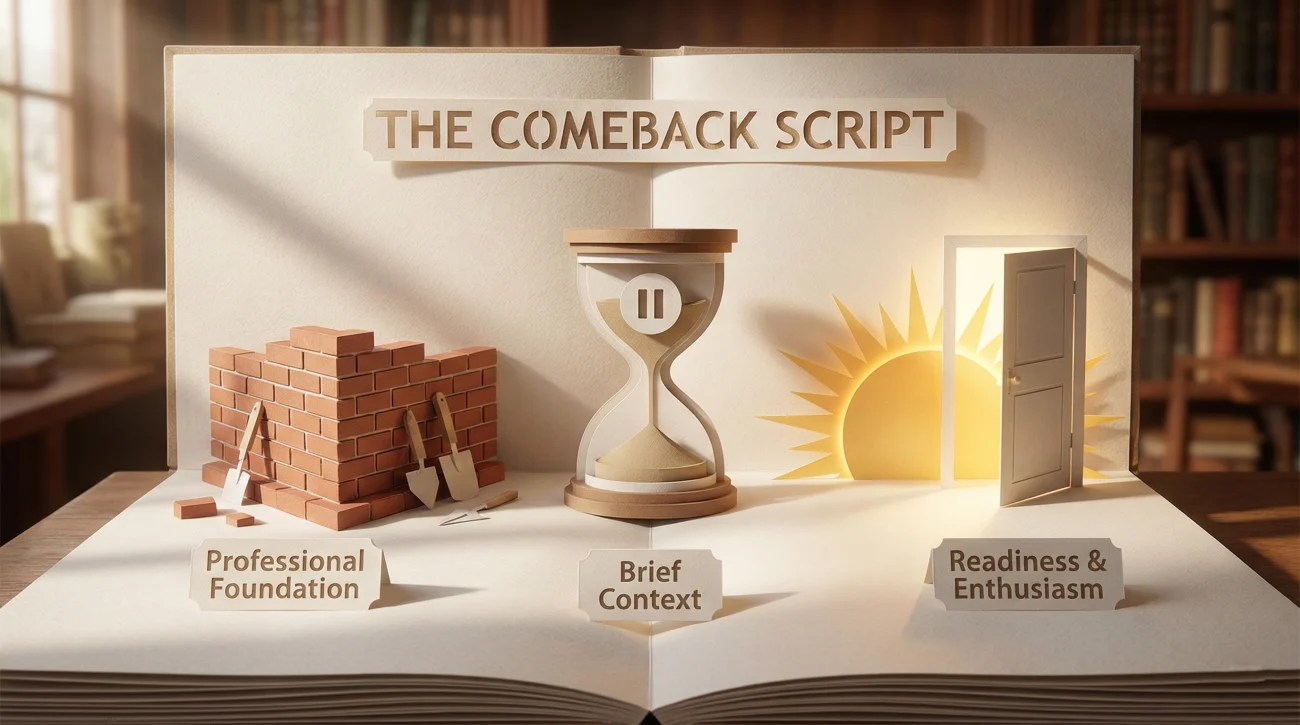
Before: Your Professional Foundation
"Before my career break, I spent [timeframe] in [field or role], where I [key achievement or responsibility]."
Example:
“Before my career break, I spent twelve years in marketing, most recently as a senior manager leading brand strategy for a consumer products company. I led the relaunch of our flagship brand, which reversed a three-year decline in market share.”
During: Brief Context Without Over-Explaining
"I stepped away for [timeframe] to [brief reason]. During that time, I [any relevant activity]."
Example:
“I stepped away for four years to raise my children during their early years. During that time, I stayed connected to marketing through freelance consulting projects and completed a certification in digital marketing to ensure my skills remained current.”
Now: Your Readiness and Enthusiasm
"Now that [situation that enables return], I'm excited to return to [field] and bring [what you offer]. I'm particularly interested in [this opportunity] because [specific reason]."
Example:
“Now that my youngest is in school full-time and we have reliable childcare, I’m excited to return to marketing and bring both my experience and fresh perspective. I’m particularly interested in this role because you’re building a brand in a space I genuinely care about, and your emphasis on digital channels aligns with where I’ve been focusing my recent learning.”
Complete Script Examples
After Parenting Break
“I spent eight years as a project manager in healthcare IT, leading implementation teams for hospital system deployments. My last major project was a system rollout across seventeen facilities that came in on time and under budget.
I stepped away five years ago when I had my second child. During that time, I managed a household, coordinated care for my parents, and frankly developed project management skills that no formal job could teach. I also stayed current with PMP certification renewals and completed coursework in agile methodologies.
My kids are now in school, and I have the capacity and enthusiasm to return to full-time professional work. I’m looking for a role where I can apply my project management experience in a company that values both structured process and flexibility. This position interests me because your hybrid approach to project methodology matches how I think about getting complex work done.”
After Health Break
“Before my break, I worked for six years in financial analysis, rising to senior analyst at a regional bank. I was particularly strong at building models that helped leadership understand risk exposure across our portfolio.
I took about eighteen months away to address a health situation that required my full attention. That situation is now completely resolved, and I’ve been cleared to return to full-time work without any restrictions.
I used part of that time to update my technical skills, completing certifications in Python and advanced Excel that I hadn’t had time to pursue while working. I’m coming back with more technical capability than when I left, plus a renewed appreciation for work that I find genuinely engaging.
I’m interested in this role because it combines the analytical depth I enjoy with the industry focus I find most interesting.”
For additional introduction formats and strategies, see our comprehensive introduction guide.
Addressing Concerns Proactively
Employers have predictable concerns about candidates returning from breaks. Address these directly rather than hoping they won’t come up.
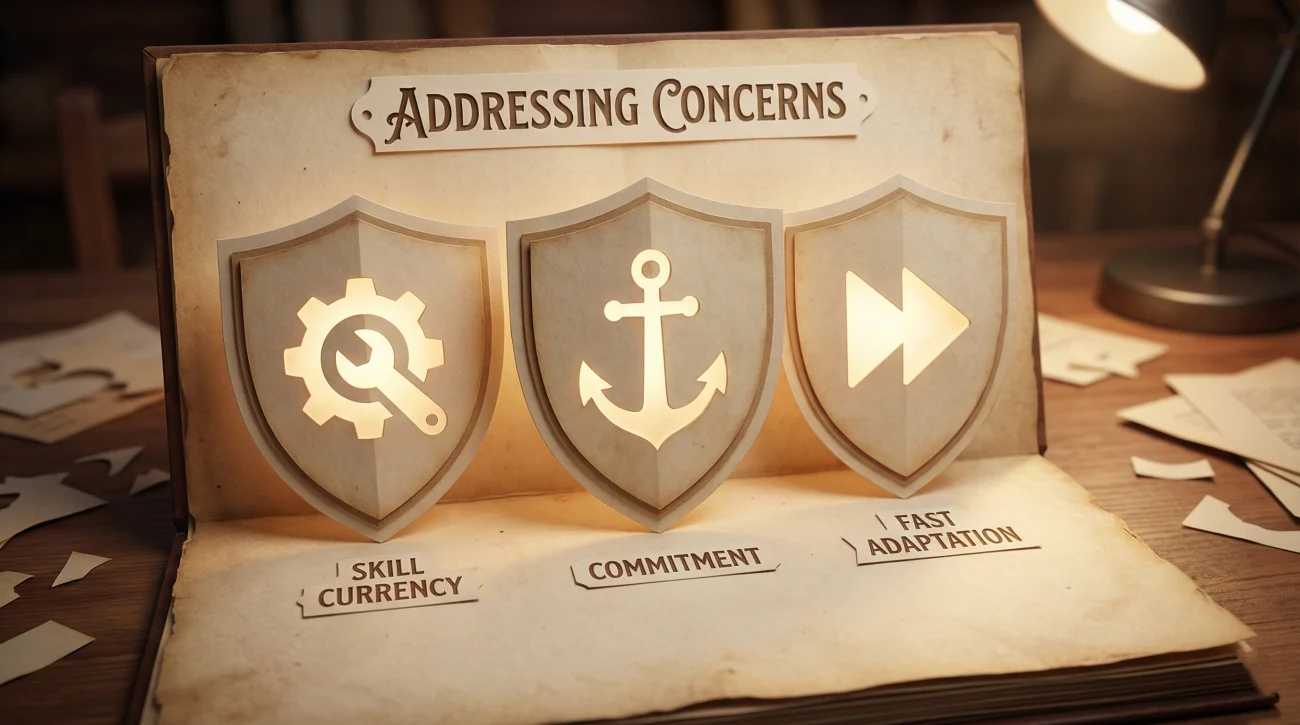
Skill Currency
Show what you’ve done to stay current. Certifications, courses, freelance work, volunteer projects, or self-study all demonstrate you haven’t just been waiting to return.
“I completed Google’s digital marketing certification last month specifically to ensure my skills match what employers need today.”
Commitment to Staying
Explain why this return is sustainable. What’s changed that makes full-time work feasible now? Childcare arrangements, health resolution, or other life changes that support your return.
“My children are both in full-time school now, and we have backup care arrangements that mean I can commit fully to my professional responsibilities.”
Possible Rustiness
Acknowledge the adjustment period without undermining your candidacy. Show confidence that you’ll regain full speed quickly.
“I expect to have a brief adjustment period getting back up to full speed, but based on my track record of learning quickly and my recent preparation work, I’m confident I’ll be fully productive within the first month or two.”
Building Your Confidence
The hardest part of returning to work is often internal. You may feel like an imposter or worry that you’ve fallen behind permanently. Here’s how to rebuild professional confidence.
Practice Extensively
Rehearse your introduction until you can deliver it without hesitation or apology. Practice with friends, family, or a career coach until the words feel natural and your body language projects confidence.
Remind Yourself of Past Success
Review your pre-break accomplishments. Write them down. Remember that you achieved real things and developed real capabilities that don’t disappear because of time away.
Rebuild Professional Connections
Reconnect with former colleagues. Attend industry events. Each professional conversation reminds you that you belong in professional spaces and rebuilds the identity that may have faded during your break.
❓ FAQ
🎯 How much detail should I give about why I was away?
Minimal detail is usually best. “I stepped away to care for family” or “I addressed a personal health situation” is sufficient. You’re not required to share details, and most interviewers won’t push for more.
💼 What if I didn’t do anything professional during my break?
Focus on recent preparation for your return rather than what you did during the entire break. A few months of active skill-building shows current readiness even if the years before were focused entirely elsewhere.
⏰ Should I accept a lower position to get back in?
Sometimes stepping down one level makes sense, especially for longer breaks. But don’t accept a position dramatically below your capabilities. Consider returnship programs specifically designed for career reentry at appropriate levels.
📋 How do I explain a break that was partly involuntary?
Focus on the forward-looking elements. Whatever led to the break, you’re now choosing to return and you’re prepared to contribute. Frame the situation in the most honest way that also projects forward momentum.
✨ What if I’m not sure I’m ready?
Consider starting with smaller steps: freelance projects, part-time work, or volunteer roles in your field. These rebuild confidence while testing your readiness without the pressure of a full-time commitment.
Your Chapter Continues
Your returning to work interview script tells a story of intentional choices, not gaps to explain. Establish your pre-break foundation. Provide brief context for your break without over-explaining. Demonstrate what you’ve done to prepare for return. Express genuine enthusiasm for this next chapter.
Career breaks are increasingly common and increasingly accepted. The candidates who reenter successfully are those who present their return confidently, showing that their time away was a chapter in an ongoing story rather than a detour they’re apologizing for.
⚠️ Disclaimer: The interview strategies, sample answers, and negotiation tips provided in this guide are for educational purposes only. Hiring decisions are subjective and vary by company and industry. While these strategies are based on professional HR standards, they do not guarantee a specific job offer or result.