A Script You Can Actually Use
You don’t need another article explaining why first impressions matter. You need words you can say tomorrow morning when the interviewer looks at you expectantly and asks that inevitable opening question.
This tell me about yourself template gives you exactly that. A complete script with blanks to fill in, options to choose from, and examples showing how real professionals have customized it. The structure works for roughly eighty percent of interview situations because it answers the three questions every interviewer has: Who are you now? How did you get here? Why do you want this?
Read through once to understand the logic. Then grab your resume, fill in the blanks, and practice until it sounds like you’re having a conversation rather than reciting a script.
How the Template Works
The Present-Past-Future structure moves through time in a way that feels natural to listeners. You start with who you are today, explain the background that shaped you, then connect everything to why you’re pursuing this opportunity.
| Section | Duration | What You Cover |
|---|---|---|
| Present | 30 to 40 seconds | Current role, main focus, one notable achievement |
| Past | 30 to 40 seconds | Relevant experience, skills developed, career progression |
| Future | 20 to 30 seconds | Why this role, what excites you, how you’ll contribute |
Total time lands between ninety seconds and two minutes. That’s enough to establish credibility without losing attention. Practice with a timer until you hit this range comfortably.
Part One: Present
Open with who you are professionally right now. This grounds the conversation immediately and gives context for everything that follows.
The Script
"I'm currently [your title] at [company or company type], where I [your main responsibility]. One thing I'm particularly proud of is [specific achievement with results]."
Filled Examples
Operations Manager: “I’m currently an operations manager at a mid-size logistics company, where I oversee our distribution network across the Southeast region. One thing I’m particularly proud of is redesigning our routing system, which cut delivery times by about eighteen percent while reducing fuel costs.”
Software Developer: “I’m a senior developer at a healthcare tech startup, where I lead our mobile team. One thing I’m particularly proud of is building the patient portal app that now has over two hundred thousand active users and a 4.8 rating in the app store.”
Recent Graduate: “I just finished my marketing degree at State University, where I concentrated on digital strategy. One thing I’m particularly proud of is running the social media for our student business organization and growing our following from about five hundred to over eight thousand in two years.”
Alternative Openings
The template above works for most people, but here are variations if your situation doesn’t fit neatly:
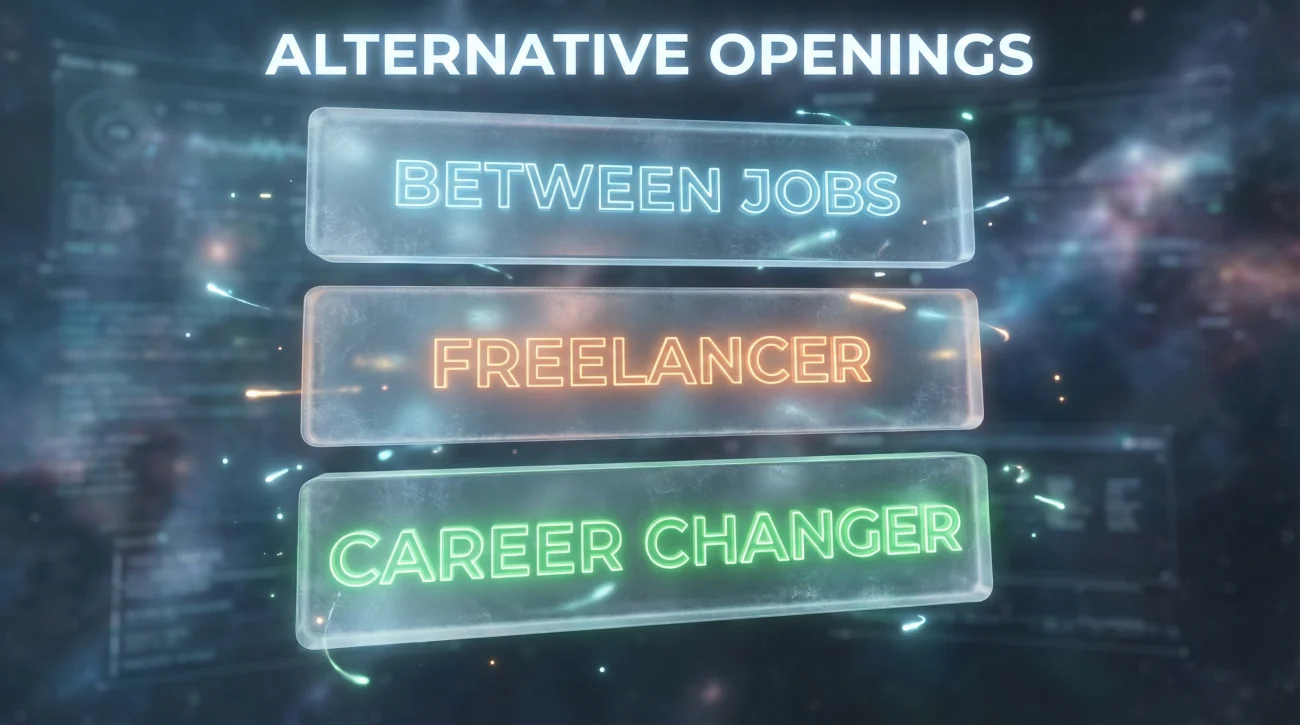
- Between jobs: “Most recently, I was [title] at [company], where I [responsibility]…”
- Freelancer: “I run an independent [specialty] practice, working primarily with [client type]…”
- Career changer: “I’m transitioning from [old field] into [new field], bringing [years] of experience in [transferable skill]…”
Lead with your professional identity, not your name. They already know who you are from your resume.
Part Two: Past
Now explain how you developed the capabilities you just described. This isn’t your complete career history. It’s the relevant background that makes your current expertise credible.
The Script
"I got into this field [how you entered or what drew you]. Before my current role, I [relevant previous experience], which is where I developed [key skill that matters for target role]."
Filled Examples
Operations Manager: “I got into operations almost by accident. I started in customer service and kept getting pulled into process improvement projects because I couldn’t stop noticing inefficiencies. Before my current role, I spent three years at a manufacturing company streamlining their order fulfillment process, which is where I learned to use data to identify bottlenecks.”
Software Developer: “I’ve been coding since high school, but I got serious about it as a career after an internship at a small startup where I saw how directly my work affected users. Before joining my current company, I worked at an enterprise software firm where I learned how to build systems that scale and don’t break under pressure.”
Recent Graduate: “I got interested in marketing through a part-time job at a local business where I ended up running their Instagram because nobody else wanted to. That experience showed me how much I enjoy the analytical side of figuring out what content actually drives results. My internship last summer at an agency gave me exposure to working with real clients and managing multiple campaigns.”
Choosing What to Include
You don’t need to mention every job. Select past experiences based on:
- Direct relevance to the role you’re interviewing for
- Skills or knowledge that differentiate you from other candidates
- Progression that shows growth and increasing responsibility
- Story elements that make you memorable
For guidance on handling career gaps or transitions in this section, see our complete introduction guide.
Part Three: Future
Close by connecting your trajectory to this specific opportunity. This is where you show genuine interest in the role rather than just needing a job.
The Script
"What I'm looking for now is [what you want in your next role]. This position caught my attention because [specific reason related to role, company, or opportunity]. I'm excited about the chance to [how you'd contribute]."
Filled Examples
Operations Manager: “What I’m looking for now is a role where I can take on broader strategic responsibility rather than just optimizing existing processes. This position caught my attention because you’re building out your West Coast distribution network from scratch, which is exactly the kind of challenge I want. I’m excited about the chance to design systems the right way from the beginning.”
Software Developer: “What I’m looking for now is a place where I can work on products that matter and grow into a technical leadership role. This position caught my attention because your team is tackling problems in education technology that I genuinely care about. I’m excited about the chance to bring my experience with scalable mobile apps to something with real social impact.”
Recent Graduate: “What I’m looking for now is a place where I can learn from experienced marketers while contributing real work from day one. This position caught my attention because your agency works with brands I actually use and admire. I’m excited about the chance to apply the analytical approach I developed in school to real client challenges.”
Avoid generic closings like “I’m excited about this opportunity.” Name something specific about the role or company that genuinely interests you.
Complete Script Example
Here’s how all three parts flow together for a product manager interviewing at a fintech company:
“I’m currently a product manager at a B2B software company, where I own our analytics dashboard product. One thing I’m particularly proud of is leading the redesign that increased user engagement by about forty percent and reduced support tickets by half.
I got into product management through an unusual path. I started as a data analyst, and I kept finding myself more interested in what we should build than in just reporting on what existed. Before my current role, I was at a smaller startup where I learned to ship fast and iterate based on user feedback rather than waiting for perfect specifications.
What I’m looking for now is a product role in fintech specifically, because financial tools have such direct impact on people’s lives. This position caught my attention because you’re building products for small business owners, which is a user base I understand well from my family’s business. I’m excited about the chance to bring my analytics background to products where data really matters to users.”
That runs about ninety seconds when spoken at a natural pace. It covers present, past, and future while showing genuine interest in the specific role.
Making It Sound Like You
A template only works if it sounds natural when you say it. Here’s how to customize without losing the structure.
Match Your Speaking Style
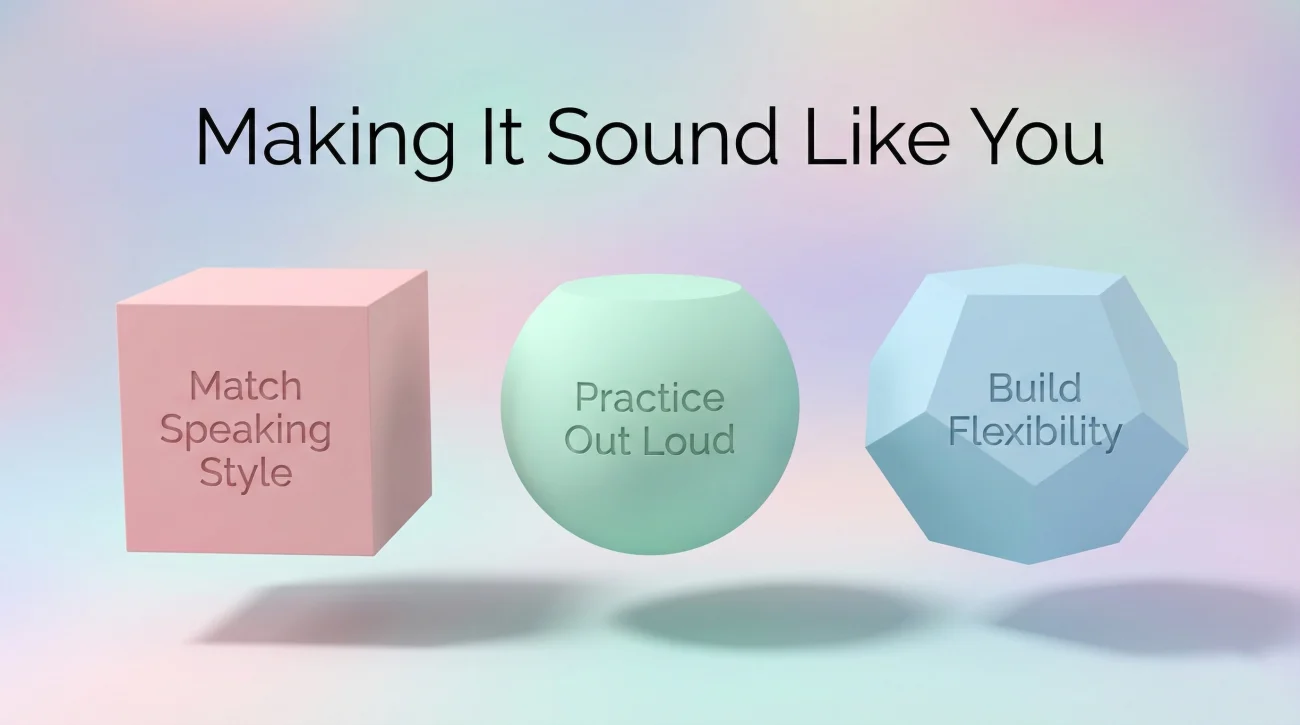
If you normally use casual language, don’t suddenly sound formal. If you’re naturally precise, don’t force yourself to sound breezy. The best version of this script sounds like you having a good conversation, not you reading from a teleprompter.
Practice Out Loud
Reading silently doesn’t prepare you for speaking. Say your script out loud at least ten times. Record yourself and listen back. Notice where you stumble or sound unnatural. Those spots need rewording until they flow.
Build In Flexibility
Memorize the structure and key points, not every word. You want to hit the same content each time without sounding rehearsed. Think of it like knowing the route home but not reciting turn-by-turn directions.
Practice until you can deliver your introduction while walking around the room. If you need to stand still and concentrate, you’re not ready yet.
❓ FAQ
🎯 What if my career doesn’t follow a clear progression?
Focus on skills rather than titles. Find the thread that connects your experiences, even if they look unrelated on paper. Highlight how each role developed capabilities relevant to what you’re pursuing now.
💼 Should I mention personal details?
Only if they’re relevant. A personal detail that connects to the role or explains your motivation can be memorable. Random personal information just wastes time and feels awkward.
⏰ What if they ask for a shorter version?
Have a thirty-second version ready that covers just Present and Future. Cut the Past section entirely rather than rushing through everything. You can always expand if they ask follow-up questions.
📋 Do I need a different script for every interview?
The structure stays the same. Customize the Future section for each role, emphasizing why you want that specific job. The Present and Past sections usually need only minor adjustments.
✨ What if I go blank during the interview?
If you’ve practiced enough, your brain will find the next point even if you lose your place. Pause, take a breath, and pick up wherever makes sense. Interviewers rarely notice brief pauses as much as you think they do.
Your Script Starts Now
You have the structure. You have the templates. You have examples showing how other professionals filled them in. Now it’s your turn.
Open a document, copy the tell me about yourself template sections, and fill in your own details. Say it out loud. Adjust what sounds awkward. Practice until you can deliver it while making eye contact with an imaginary interviewer. The whole process takes an hour or two and prepares you for an opening question you’ll face in virtually every interview for the rest of your career.
⚠️ Disclaimer: The interview strategies, sample answers, and negotiation tips provided in this guide are for educational purposes only. Hiring decisions are subjective and vary by company and industry. While these strategies are based on professional HR standards, they do not guarantee a specific job offer or result.