Don’t Read Your Resume Out Loud
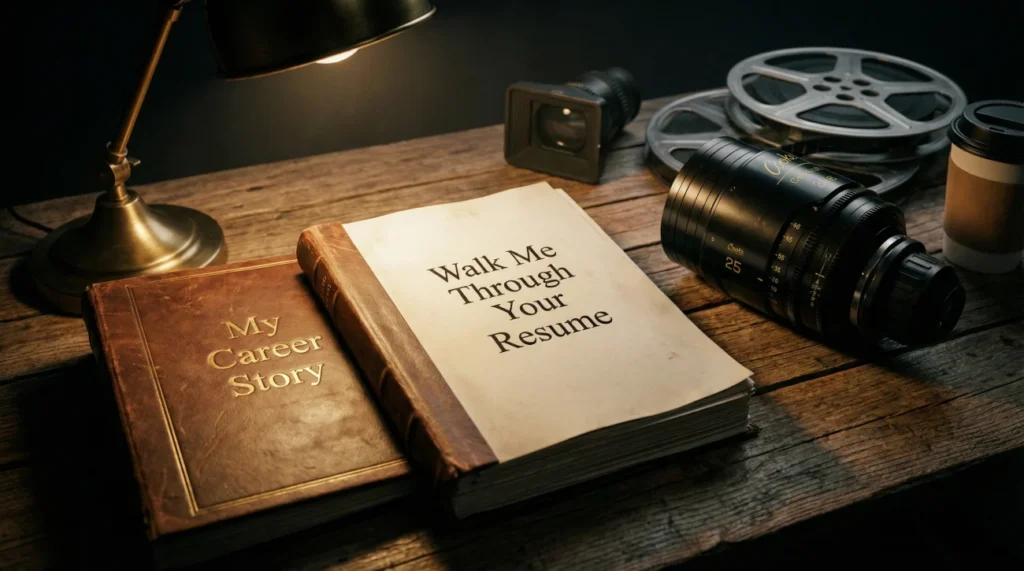
The interviewer has your resume in front of them. They can read. When they ask you to walk them through it, they’re not asking for a verbal recitation of what they already see on paper.
What they actually want is context, connection, and narrative. Why did you make the moves you made? What’s the thread that connects your different roles? What did you learn and accomplish that doesn’t fit in resume bullet points?
A strong walk me through your resume script treats your career history as a highlight reel with commentary, not a comprehensive catalog. You touch the key milestones, explain what matters about each one, and show how they build toward where you are now and what you want next.
Resume Walkthrough vs. Tell Me About Yourself
These questions seem similar but require different answers.
| Tell Me About Yourself | Walk Me Through Your Resume |
|---|---|
| Present-Past-Future structure | Chronological structure |
| Start with who you are now | Start from the beginning |
| Selective focus on relevance | Touch each major role briefly |
| 60 to 90 seconds typical | 2 to 3 minutes typical |
| Theme or narrative focus | Progression and decisions focus |
The resume walkthrough follows your timeline. But following timeline doesn’t mean exhaustive coverage. You’re hitting highlights and explaining transitions, not describing every responsibility at every job.
The Highlight Reel Script

Starting Point
"I started my career at [first relevant role or company], where I [key learning or achievement]. That's where I developed [foundational skill]."
Example:
“I started my career in customer support at a software company, which might seem unrelated to product management, but that’s actually where I developed deep empathy for user problems. I talked to frustrated customers every day and learned to translate their complaints into specific issues the product team could address.”
Key Transitions
"I moved to [next role] because [reason for transition]. In that role, I [key accomplishment or development]."
Example:
“I moved into a product analyst role because I wanted to be closer to how product decisions got made. In that role, I built our first customer analytics dashboard, which became the main tool leadership used for roadmap decisions. That experience showed me I wanted to be the one making those decisions, not just informing them.”
Progression Milestones
"From there, I [next move or promotion], which let me [expanded responsibility or capability]. The biggest thing I accomplished there was [signature achievement]."
Example:
“From there, I moved into my first product manager role at a different company. I owned a smaller product initially, which let me learn the craft without too much risk. The biggest thing I accomplished there was turning around a feature that was about to be killed, finding a user segment that actually loved it and growing it into a meaningful revenue stream.”
Current State and Forward
"That leads me to where I am now at [current role], where I [current responsibilities and achievements]. I'm looking to move to [this opportunity] because [connection to next step]."
Example:
“That leads me to where I am now as a senior PM at a fintech company, where I own our payments product and lead a team of three other PMs. We’ve grown that product from about two million to over eight million in annual revenue. I’m looking to move to your company because I want to work on products with consumer impact, and your mission around financial accessibility genuinely excites me.”
Complete Script Example
“Happy to walk you through my background. I started in consulting right out of school, at a mid-size firm where I worked primarily on operational improvement projects. That foundation taught me how to analyze problems systematically and present recommendations to senior leaders. I stayed for four years and made it to manager level.
I left consulting because I wanted to own outcomes rather than just advise on them. I moved to an operations role at a growing logistics company, where I could actually implement the kinds of changes I’d been recommending to clients. In that role, I redesigned our fulfillment process and reduced order errors by about sixty percent.
After three years, I was recruited to my current company to lead operations for their West Coast distribution. I’ve been here for four years now, built a team of twelve, and we’ve scaled the operation from handling about five thousand orders a day to over twenty thousand while actually improving our service metrics.
The pattern you’ll see in my career is moving from advising to doing to leading. Each move gave me more direct ownership of results. I’m interested in this VP role because it’s the next step in that progression, and your company’s growth trajectory matches the kind of scaling challenges I find most engaging.”
For the shorter Present-Past-Future format, see our comprehensive introduction guide.
Timing and Pacing
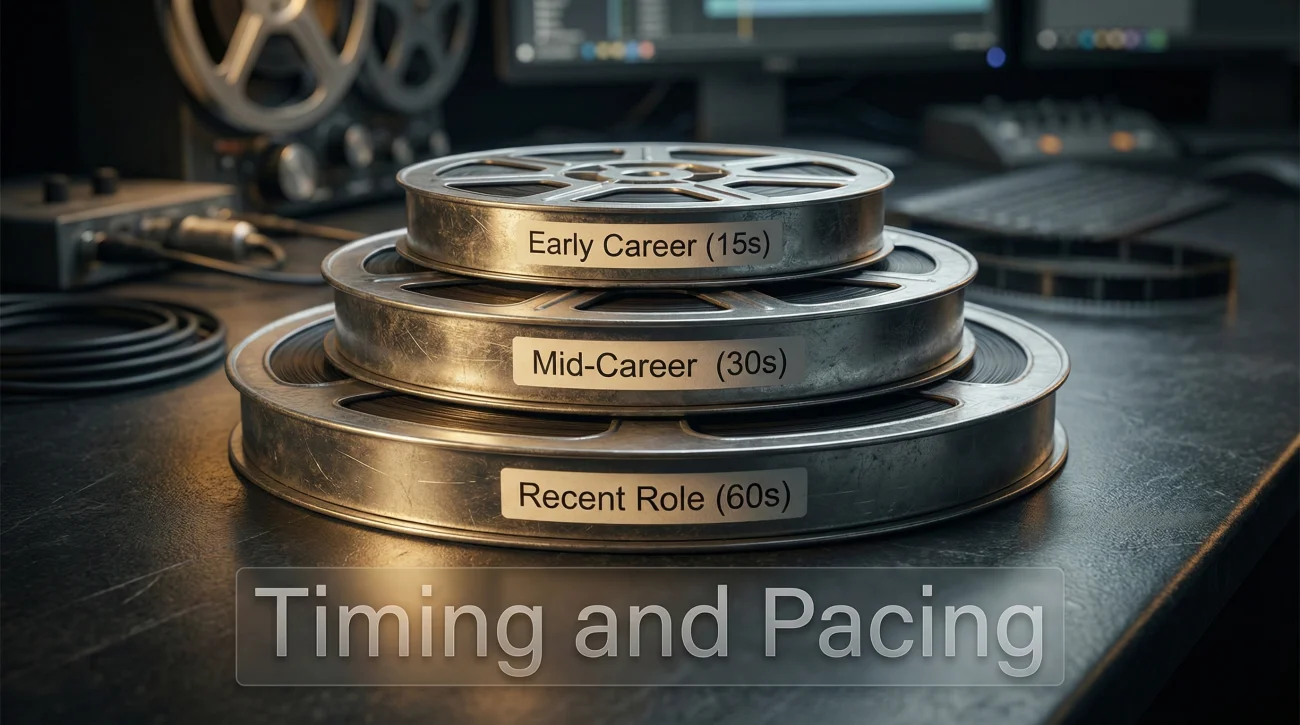
A resume walkthrough should take two to three minutes for a typical career. Adjust based on complexity.
- ⏱️ Early career roles: 15 to 20 seconds each
- ⏱️ Mid-career roles: 30 to 45 seconds each
- ⏱️ Recent and current roles: 45 to 60 seconds each
- ⏱️ Transitions: One sentence explaining each move
More recent experience deserves more time because it’s most relevant to your current capabilities. Don’t give equal weight to a job from fifteen years ago and your current role.
Watch the interviewer’s body language. If they’re leaning in with interest, you can expand. If they’re glancing at the clock, tighten up.
Finding Your Thread
The best resume walkthroughs have a unifying theme that makes the whole career make sense.
Skill Building
“You’ll notice each role added a new capability. I started with technical skills, then added management, then strategy. Each move was intentional about what I wanted to learn.”
Increasing Scope
“The through-line of my career is expanding scope. From individual contributor to team lead to department head. Each role prepared me for bigger responsibilities.”
Consistent Interest
“Even though I’ve worked in different industries, every role has involved helping people communicate more effectively. That’s been the consistent thread.”
Problem Type
“I keep gravitating toward scaling challenges. Every company I’ve joined was at that inflection point where systems needed to be rebuilt for growth.”
❓ FAQ
🎯 Should I mention every job on my resume?
Touch on each one at least briefly if it’s on your resume. But very brief is fine for older or less relevant roles. Focus your time on positions that matter most for this opportunity.
💼 What if my career path looks random?
Find the thread that connects them. There’s usually an underlying theme if you look for it. Skills, interests, values, or types of problems can all provide coherence to an unconventional path.
⏰ Should I start with education?
Only if your education is recent or highly relevant. For experienced professionals, start with your first relevant job and mention education only if it adds something important.
📋 What if they interrupt with questions?
Answer briefly, then offer to continue. “Good question, the short answer is… Should I continue with the walkthrough or would you like to explore that more?” Let them guide the depth.
✨ How do I handle multiple roles at the same company?
Group them together: “I was at Company X for six years, starting as an analyst and being promoted twice, ending as a senior manager. The most significant achievement during that time was…”
Your Career as a Story
A compelling walk me through your resume script transforms a list of jobs into a coherent career narrative. Hit the highlights rather than reading every line. Explain transitions so each move makes sense. Find the thread that connects different roles. Spend more time on recent experience than ancient history.
When you tell your career story well, the interviewer understands not just what you’ve done, but why you’ve done it and where you’re going next. That context is what they’re really asking for when they ask you to walk through your resume.
⚠️ Disclaimer: The interview strategies, sample answers, and negotiation tips provided in this guide are for educational purposes only. Hiring decisions are subjective and vary by company and industry. While these strategies are based on professional HR standards, they do not guarantee a specific job offer or result.