What Hiring Managers Actually Think
Here’s something most career advice won’t tell you: many hiring managers actively prefer candidates without industry experience for certain roles. Not because they’re cheaper. Because they’re trainable.
Experienced hires bring habits. Some are good, many are bad, and all need to be unlearned before new approaches can take hold. Entry-level candidates arrive as blank slates, ready to absorb the company’s methods rather than fighting to preserve old ones.
The challenge isn’t that you lack experience. The challenge is presenting what you do have in a way that makes your potential obvious. A good no experience interview script reframes inexperience as an advantage while demonstrating the raw capabilities that predict future success.
What follows is a complete framework for introducing yourself when your resume is thin but your potential is real.
Reframing the Conversation
Stop thinking about experience as something you lack. Start thinking about what you bring instead.
| What You Think You’re Missing | What You Actually Bring |
|---|---|
| Years of industry work | Fresh perspective uncontaminated by bad habits |
| Professional accomplishments | Academic achievements, projects, or personal wins |
| Track record with clients | Demonstrated ability to learn quickly |
| Industry connections | Energy and enthusiasm that veterans often lose |
| Sophisticated technical skills | Current knowledge of latest tools and methods |
Entry-level candidates who land great jobs don’t apologize for what they’re missing. They confidently present what they offer and let employers see the value in developing raw talent.
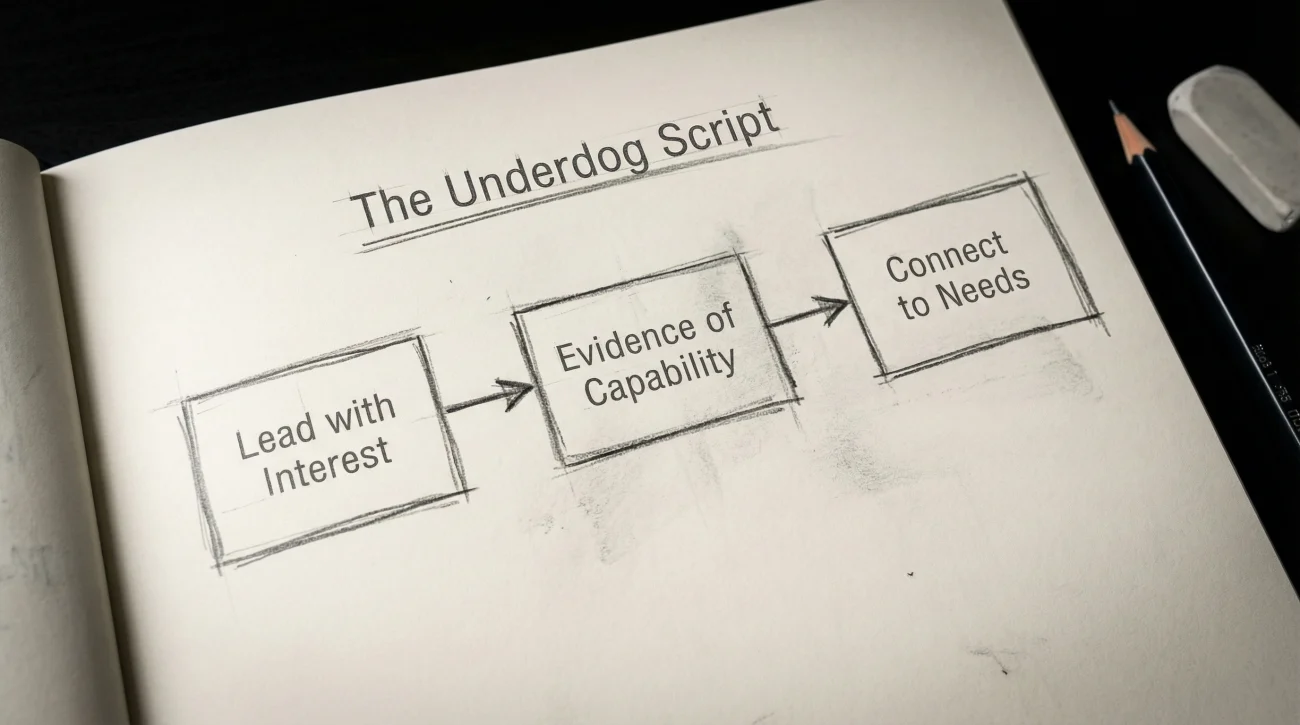
The Underdog Script
This script structure works when you’re applying for your first professional role or entering a new field where your previous experience doesn’t directly apply.
Opening: Lead with Interest, Not Apology
"I'm drawn to [field or role] because [genuine reason that shows thoughtfulness]. While I'm early in my career, I've already [relevant activity, project, or achievement that demonstrates capability]."
Example:
“I’m drawn to product management because I’m fascinated by how good products balance user needs with business constraints. While I’m early in my career, I’ve already led a team project that redesigned our university’s course registration system, which gave me hands-on experience with user research and prioritization.”
Middle: Evidence of Capability
"What I bring is [transferable skill or quality]. For example, [specific situation where you demonstrated this]. I'm also [second quality], which showed up when [brief evidence]."
Example:
“What I bring is the ability to learn complex systems quickly. For example, I taught myself SQL and Python over one summer and used them to build a data project that analyzed campus transportation patterns. I’m also someone who takes initiative without being asked, which showed up when I started a study group that eventually helped thirty students get through our hardest required course.”
Closing: Connect to Their Needs
"I know I'm at the beginning of my professional journey, but I'm ready to [specific contribution you can make]. I'm especially excited about [something specific about this role or company]."
Example:
“I know I’m at the beginning of my professional journey, but I’m ready to contribute real work while learning from experienced team members. I’m especially excited about your mentorship program because I want to develop my skills in an environment that invests in early-career growth.”
Complete Script Examples
Marketing Role
“I’m drawn to marketing because I’m genuinely curious about what makes people pay attention to some messages and ignore others. While I’m still in school, I’ve been running the social media for our business fraternity and grew our engagement by over three hundred percent by testing different content approaches and tracking what actually worked.
What I bring is a combination of creativity and analytical thinking. I don’t just come up with ideas; I want to know if they’re working. I also learn new tools fast. I taught myself Google Analytics and basic design software because I needed them for the social media work, and I’d do the same with whatever systems your team uses.
I know I’m at the start of my marketing career, but I’m ready to jump in on real projects and contribute while I’m learning. I’m especially interested in your agency because you work with consumer brands that I actually use and understand.”
Technical Role
“I’m pursuing software engineering because building things that work is deeply satisfying to me. I’ve been coding since high school, and my senior capstone project was a mobile app that helps students find study partners based on their courses and schedules. It’s actually being used by a few hundred students now.
What I bring is problem-solving persistence. When I hit bugs or challenges, I keep working until I figure them out. I also write cleaner code than most students because I actually care about readability and maintenance, not just getting something to run once.
I know I haven’t worked in a professional environment yet, but I’m ready to learn your systems and standards. I’m especially excited about your team’s focus on code quality because I want to develop habits that will make me a better engineer long-term.”
For guidance on expanding these scripts for longer conversations, see our complete introduction framework.
Finding Your Transferable Evidence
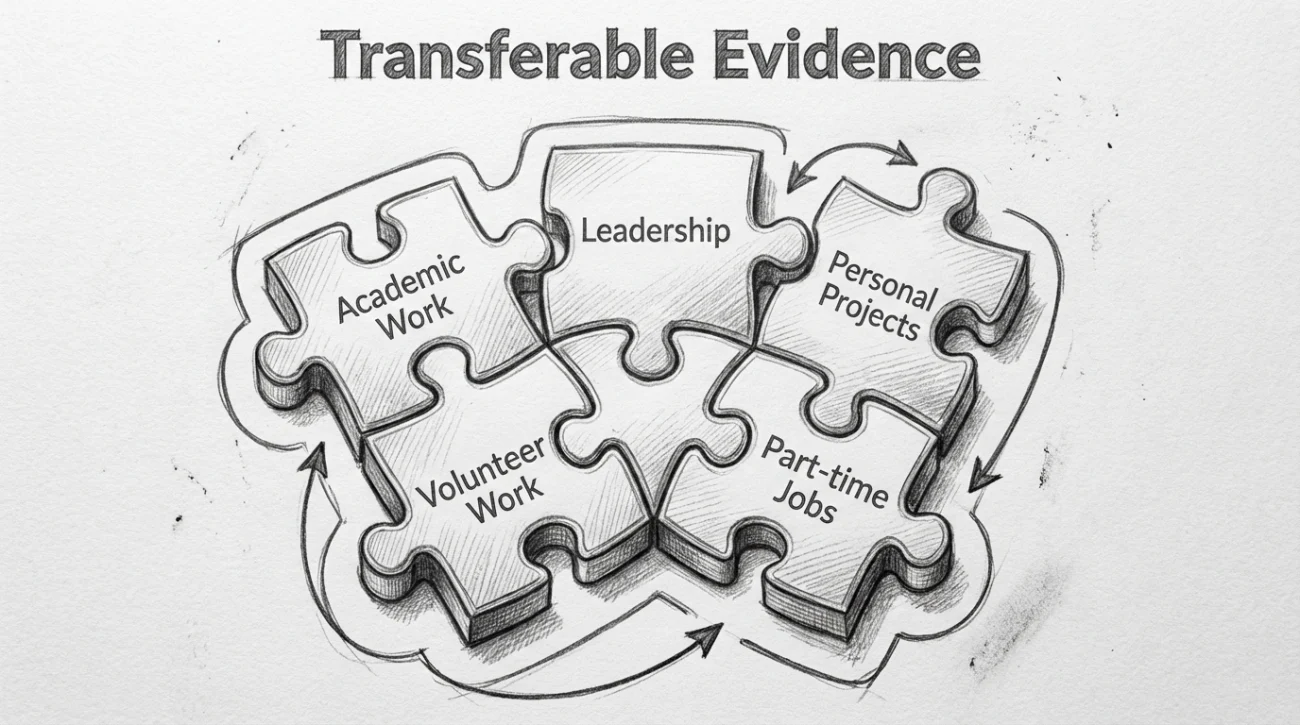
Even without formal work experience, you have evidence of capabilities. Here’s where to find it.
Academic Work
Class projects, research, capstone work, thesis projects. Pick the ones where you produced something tangible or learned something relevant. A finance major who built a stock screening model has a story to tell.
Extracurricular Leadership
Clubs, organizations, student government, sports teams. Any role where you organized people, managed resources, or achieved measurable results counts as leadership experience.
Non-Professional Work
Retail, food service, tutoring, campus jobs. These roles develop skills that transfer: customer service, time management, working under pressure, handling difficult people. Don’t dismiss them.
Personal Projects
Anything you built, created, or organized on your own. Starting a blog, building an app, organizing an event, learning a skill independently. Self-directed projects show initiative and follow-through.
Volunteer Work
Especially if you took on responsibilities beyond just showing up. Coordinating volunteers, managing logistics, or creating something for an organization all demonstrate professional-level capabilities.
- ✅ Good: “I organized a fundraiser that raised five thousand dollars for the local food bank.”
- ❌ Weak: “I volunteered at the food bank sometimes.”
What Not to Say
“I know I don’t have any real experience, but…”
This plants doubt in the interviewer’s mind before you’ve said anything positive. Never lead with weakness.
“I’m a fast learner and a hard worker.”
Everyone says this. It means nothing without evidence. Show learning speed through specific examples instead.
“I’m looking for any opportunity to get my foot in the door.”
This makes you sound desperate and undifferentiated. Express interest in this specific role, not just any job.
“I’ve always been passionate about [field] since I was young.”
Childhood dreams don’t prove current capability. Focus on recent evidence of engagement and skill development.
❓ FAQ
🎯 How do I compete with candidates who have experience?
Don’t try to compete on their terms. Emphasize what you offer that experienced candidates don’t: fresh perspective, current training, trainability, and energy. Some employers specifically value these qualities for entry-level roles.
💼 Should I mention I’m nervous about being inexperienced?
No. Project confidence in what you bring rather than anxiety about what you lack. Interviewers respond to the energy you project. Confident inexperience beats nervous inexperience every time.
⏰ What if they ask about experience I don’t have?
Acknowledge the gap honestly, then pivot to related experience or your ability to learn. “I haven’t used that specific tool, but I taught myself three similar platforms for my capstone project and I pick up new software quickly.”
📋 Is it okay to use college projects as examples?
Absolutely. Frame them as real work rather than homework. The project you built, the results you achieved, and the skills you developed are legitimate experience regardless of where they happened.
✨ How long should my introduction be?
Sixty to ninety seconds for a full introduction. You don’t need to compensate for lack of experience by talking more. A concise, confident introduction often impresses more than a long, rambling one.
Your Potential Is Real
The no experience interview script isn’t about pretending you have experience you don’t. It’s about honestly and confidently presenting what you do have: enthusiasm for the field, relevant capabilities developed through non-traditional paths, and the raw potential to grow into the role.
Every experienced professional started somewhere. The ones who accelerated their early careers were those who learned to present their potential convincingly while backing it up with genuine capability. Your turn starts now.
⚠️ Disclaimer: The interview strategies, sample answers, and negotiation tips provided in this guide are for educational purposes only. Hiring decisions are subjective and vary by company and industry. While these strategies are based on professional HR standards, they do not guarantee a specific job offer or result.