Before the Doors Open
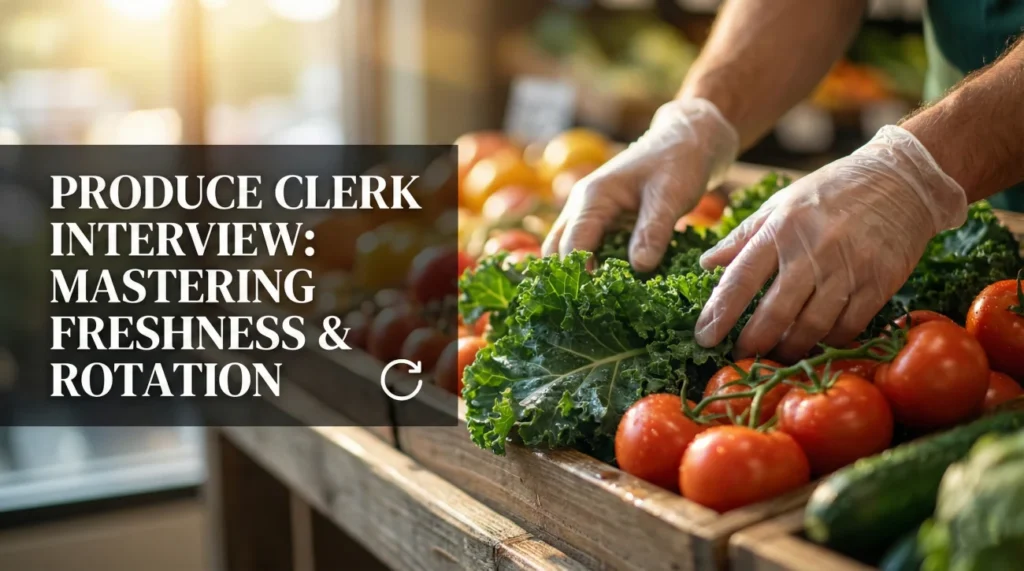
The produce department wakes up before customers do. You are breaking down cold pallets, wiping condensation, and checking fruit that looks fine until you turn it and see the soft spot. That is why produce clerk interview questions keep circling one theme: can you protect freshness all day, not just stock once and walk away?
Interviewers want to hear how you think with your hands and eyes. Do you notice bruising early, pull one moldy item before it spreads, and rotate gently so you do not damage what you are trying to save? They also want proof you understand storage basics, especially ripening behavior, ethylene, and temperature, because one bad pairing can quietly ruin an entire display.
This guide helps you talk through the daily reality: inspecting quality, rotating with FIFO discipline, keeping cold chain intact, and building displays that look abundant while still handling product with care.
Freshness & Quality Control
Q: How do you inspect incoming produce shipments?
I check multiple factors: visual appearance for bruising, discoloration, or mold; firmness appropriate for each item; smell for any off odors indicating spoilage; and temperature to ensure cold chain was maintained during transport. I verify quantities against invoices and note any discrepancies.
I reject or document items that do not meet quality standards. Accepting poor-quality produce means it will just become waste on our shelves. I communicate issues to supervisors so they can address problems with suppliers. Consistent inspection protects our department’s reputation for freshness.
Q: What signs indicate produce is past its prime?
Signs vary by product type. For leafy greens: wilting, yellowing, sliminess, or brown edges. For fruits: excessive softness, wrinkled skin, mold spots, or fermented smell. For root vegetables: soft spots, sprouting, or rubbery texture. For berries: mold, mushiness, or leaking juice.
I check produce multiple times daily, not just during stocking. Items deteriorate throughout the day, especially under store lighting and temperature fluctuations. Catching problems early means removing one bad item before it spreads mold to neighbors or turns customers away from the entire display.
Q: How do you handle produce that is still edible but not display quality?
I follow store policy, which typically includes several options. Items with minor cosmetic issues might be marked down for quick sale. Some stores have “imperfect produce” sections at reduced prices. Items unsuitable for sale but still safe might go to food donation programs or employee purchase at discount.
I never just throw away edible produce without checking options. Waste reduction matters environmentally and financially. But I also never leave questionable items on display hoping someone will buy them. That damages customer trust and our department’s reputation.
FIFO Rotation & Inventory
Q: Explain the FIFO method and how you apply it in produce.
FIFO means First In, First Out. Older stock moves to the front of displays where customers pick from first, while new deliveries go behind. This ensures items sell before they spoil and prevents the common mistake of burying older produce under fresh arrivals.
In produce, FIFO requires daily attention because shelf life is measured in days. When restocking, I pull everything forward, check dates and condition, remove anything past prime, then add new stock behind. It takes more time than just piling new on top, but it dramatically reduces waste.
Q: How do you track produce shelf life when items do not have expiration dates?
I use delivery dates as reference points and learn typical shelf life for each product. Berries might last two to three days; apples can go two weeks. I note when shipments arrive and monitor items based on their expected lifespan, not arbitrary dates.
Visual and tactile inspection matters more than calendars. A head of lettuce that looks fresh at five days stays on display; one that wilted at three days gets pulled. Experience teaches you what normal deterioration looks like versus problematic spoilage.
Q: A delivery arrives during peak shopping hours. How do you handle it?
I prioritize getting temperature-sensitive items into proper storage immediately to maintain cold chain. Berries, leafy greens, and cut produce cannot sit on a warm loading dock. I do a quick quality check while moving items to refrigeration.
Full stocking and rotation can wait until traffic slows, but perishables cannot wait for cooling. I communicate with coworkers to balance customer service with receiving duties. If I must choose, protecting product quality takes priority over immediate shelf stocking.
Q: How do you minimize waste in your department?
Prevention starts with proper ordering based on sales data and seasonal patterns. Overstocking creates waste. I monitor what sells quickly versus what lingers and adjust accordingly. Better to run out of an item than throw away cases of spoiled produce.
Daily rotation and inspection catch problems early. Markdown programs move items before they become unsellable. Donation partnerships handle edible but unsaleable produce. I track waste patterns to identify recurring problems, whether from supplier quality, ordering errors, or storage issues.
Storage & Temperature Control
Why is temperature control critical for produce, and what temperatures do different items require?
Temperature directly affects how quickly produce deteriorates. Cold slows bacterial growth and enzyme activity that causes spoilage. But too cold damages some items: tomatoes become mealy, bananas turn black, and tropical fruits lose flavor.
Most produce stores best between 32 and 40 degrees Fahrenheit with high humidity. Exceptions include tomatoes, bananas, and tropical fruits which prefer 50 to 55 degrees. I know which items go in refrigerated cases versus room-temperature displays and never mix them incorrectly.
What is ethylene gas and why does it matter for produce storage?
Ethylene is a natural gas some fruits produce that accelerates ripening in nearby items. High ethylene producers include apples, bananas, avocados, and tomatoes. Ethylene-sensitive items like lettuce, broccoli, and berries deteriorate faster when exposed to it.
I keep high producers separated from sensitive items in storage and displays. Bananas near lettuce will cause the lettuce to yellow and wilt prematurely. Understanding ethylene interactions prevents unnecessary spoilage and customer complaints about produce that went bad too quickly.
How do you care for delicate produce like berries and leafy greens?
Delicate items need gentle handling, proper humidity, and minimal time outside refrigeration. I never stack heavy items on berries. I keep leafy greens misted but not waterlogged. I handle with care because bruising from rough treatment shows up hours later as brown spots.
I check these items more frequently than sturdy produce because they deteriorate faster. One moldy strawberry can spread to an entire clamshell within hours. Removing problem items quickly protects the rest of the inventory and maintains customer confidence in our freshness.
Describe proper handling for cut or prepared produce.
Cut produce has shorter shelf life than whole items because cutting exposes flesh to bacteria and air. I ensure cut items stay refrigerated below 40 degrees at all times. I check dates carefully and pull items approaching expiration before they become unsafe.
When preparing cut fruit or vegetable trays, I use sanitized equipment, wear gloves, and work in clean conditions. Cross-contamination risks increase with cut produce. I never leave cut items at room temperature and monitor display case temperatures throughout my shift.
Customer Service & Product Knowledge
Q: A customer asks how to select a ripe avocado. How do you help them?
I explain the gentle squeeze test: a ripe avocado yields slightly to pressure but is not mushy. I show them the stem trick: if the small stem cap pops off and shows green underneath, it is ready to eat. Brown underneath means overripe. I ask when they plan to use it, because buying a firm one makes sense if they need it in three days.
I share storage tips: unripe avocados ripen faster in a paper bag with a banana. Ripe ones can go in the refrigerator to slow further ripening. Customers appreciate learning something useful, and knowledgeable service builds loyalty to our department.
Q: A customer complains that produce they bought last visit spoiled quickly at home. How do you respond?
I apologize for their disappointing experience and offer a replacement or refund without argument. Then I ask questions to understand what happened: how did they store it, when did they use it, was the packaging damaged? Sometimes the issue is home storage; sometimes it indicates a problem we need to investigate.
I thank them for telling us because feedback helps us improve. If multiple customers report similar issues, I alert my supervisor to check our storage, rotation, or supplier quality. One complaint might be isolated; a pattern indicates a systemic problem.
Q: A customer asks about an unfamiliar fruit or vegetable. How do you assist them?
I share what I know about the item: how it tastes, how to prepare it, what cuisines use it, and how to tell when it is ripe. If I do not know, I admit it honestly and offer to find information. Many stores have resources about specialty produce, or I can look it up for them.
I encourage trying new things by suggesting easy preparation methods. Someone curious about jicama might be intimidated if they do not know it can be eaten raw with lime and chili. Making unfamiliar produce approachable increases sales and customer satisfaction.
Q: How do you make produce recommendations to customers?
I ask about their needs: what recipe are they making, what flavors do they enjoy, any dietary restrictions? Then I suggest items that fit. If someone wants salad greens, I might recommend arugula for peppery flavor or butter lettuce for mild and tender leaves depending on their preference.
I highlight what is especially good right now: peak-season items, particularly fresh deliveries, or local produce we just received. Genuine enthusiasm about quality products is contagious. Customers trust recommendations from someone who clearly cares about produce.
Display & Department Maintenance
Q: What makes an effective produce display?
Effective displays look abundant, colorful, and fresh. I build height and fullness that draw the eye without overcrowding that causes bruising. I group complementary colors: red tomatoes next to green peppers, orange citrus near purple grapes. Visual appeal triggers impulse purchases.
I ensure clear signage with prices and any relevant information like organic certification or local sourcing. I keep displays neat throughout the day, not just at opening. A picked-over, messy display signals the end of the day even at noon.
Q: How do you maintain the department during your shift?
I do continuous maintenance rather than waiting for everything to pile up. I straighten displays, remove damaged items, and restock gaps throughout my shift. I sweep floors regularly because produce creates debris. I wipe down cases and bins, clean misting systems, and ensure refrigeration is functioning.
I walk through with customer eyes, noticing what looks sloppy or uninviting. The produce department sets the tone for the entire store since customers often encounter it first. A clean, well-maintained department builds confidence in store quality overall.
Q: How do you handle seasonal transitions in produce?
Seasonal transitions require adjusting displays, ordering, and customer communication. When stone fruits arrive in summer, I create prominent displays and prepare for high volume. When they end, I transition gracefully to fall items like apples and squash rather than clinging to out-of-season produce.
I educate customers about seasonality because many expect everything year-round. Explaining why local tomatoes taste better in summer builds appreciation and sets realistic expectations. Seasonal produce at peak ripeness sells itself once customers understand the difference.
Produce Knowledge Quiz
20 Practice Questions
1. FIFO in produce means:
- Fresh Items For Orders
- First In, First Out
- Final Inspection For Organics
- Fruits In, Fruits Out
2. Ethylene gas produced by some fruits:
- Preserves nearby produce
- Accelerates ripening in sensitive items
- Has no effect on other produce
- Only affects tropical fruits
3. Which produce item should NOT be refrigerated?
- Lettuce
- Berries
- Bananas and tomatoes
- Cut fruit
4. When inspecting incoming shipments, you should check:
- Only quantity
- Visual quality, temperature, smell, and quantities
- Only expiration dates
- Nothing until stocking
5. High ethylene producers include:
- Lettuce and broccoli
- Apples, bananas, and avocados
- Carrots and potatoes
- Berries only
6. Most produce stores best at temperatures between:
- 50 to 60 degrees F
- 32 to 40 degrees F
- 70 to 80 degrees F
- 20 to 30 degrees F
7. Signs of spoilage in leafy greens include:
- Crispness
- Wilting, yellowing, and sliminess
- Bright green color
- Firm texture
8. Cut produce requires:
- Room temperature storage
- Continuous refrigeration below 40 degrees F
- Same handling as whole produce
- No special considerations
9. A ripe avocado should:
- Be completely hard
- Yield slightly to gentle pressure
- Be very soft and mushy
- Have a bright green stem area
10. When a delivery arrives during peak hours:
- Leave it on the dock until slow period
- Get temperature-sensitive items into refrigeration immediately
- Stock everything right away regardless of customers
- Refuse the delivery
11. Produce waste is minimized by:
- Ordering maximum quantities
- Proper ordering, rotation, and markdown programs
- Hiding older items behind new
- Ignoring spoilage until obvious
12. Effective produce displays should be:
- Sparse to prevent bruising
- Abundant, colorful, and well-organized
- Unchanged regardless of season
- Built once and left alone
13. When a customer asks about unfamiliar produce, you should:
- Tell them to look it up online
- Share knowledge or find information for them
- Discourage them from buying it
- Ignore the question
14. Berries and delicate produce require:
- Less frequent checking
- Gentle handling and frequent inspection
- Room temperature storage
- Heavy items stacked on top
15. The stem test for avocado ripeness shows:
- Age of the fruit
- Green underneath means ripe; brown means overripe
- Origin of the fruit
- Nothing useful
16. Bananas should be stored:
- In the coldest refrigeration
- At room temperature, away from ethylene-sensitive items
- With lettuce and greens
- In the freezer
17. When produce has minor cosmetic damage:
- Throw it away immediately
- Consider markdown, donation, or imperfect produce programs
- Display it at full price
- Hide it under better items
18. Customer complaints about quick spoilage should be handled by:
- Blaming the customer’s storage
- Apologizing, offering replacement, and investigating the cause
- Refusing refunds
- Ignoring the complaint
19. Seasonal produce transitions require:
- Keeping the same displays year-round
- Adjusting displays, ordering, and customer education
- Forcing out-of-season items
- No changes to operations
20. Department maintenance should happen:
- Only at store opening
- Only at store closing
- Continuously throughout every shift
- Once per week
❓ FAQ
🔎 What is the quickest way to prove I can judge produce quality?
Explain a simple checklist: look for discoloration and bruising, feel for firmness appropriate to the item, smell for sour or fermented notes, and confirm temperature on sensitive products. Mention that you check more than once per shift, not only at receiving.
🧼 What should I do if I find mold or leaking berries on display?
Pull the affected package immediately and inspect nearby items. Mold spreads fast in clamshells, so you remove the source, clean the area if needed, and tighten your checks for the next few hours. Then follow store policy for markdown, donation, or disposal.
🍌 Why do produce interviews ask about ethylene gas?
Because it is a hidden spoilage multiplier. If you store high ethylene producers next to sensitive greens or berries, you shorten shelf life without realizing it. Calling this out shows you know how to prevent waste, not just react to it.
🧺 How do I rotate stock without bruising it?
Work in small sections, use two hands, and avoid dumping or overstacking. You pull older items forward, remove anything past prime, then place new stock behind with light pressure and stable stacking. Gentle handling is part of rotation, not optional extra.
🌡️ What if refrigeration goes down or a delivery arrives warm?
Protect the cold chain first. Move temperature-sensitive items to the right cooler, alert a supervisor, and document what you observed. If product integrity is questionable, you do not gamble by putting it on display. You escalate and follow the safety process.
Final Thoughts
When you answer produce clerk interview questions, do not sell yourself as a fast stocker. Sell yourself as someone who keeps the department looking fresh at 8 a.m. and still fresh at 8 p.m. That means inspection habits, careful rotation, and smart storage choices that prevent spoilage before customers see it.
If you can describe how you protect quality, reduce waste, and keep displays clean and inviting through constant small fixes, you will sound like the kind of produce clerk stores rely on every day.
⚠️ Disclaimer: The interview strategies, sample answers, and negotiation tips provided in this guide are for educational purposes only. Hiring decisions are subjective and vary by company and industry. While these strategies are based on professional HR standards, they do not guarantee a specific job offer or result.