
Fast Hands, Slow Mind
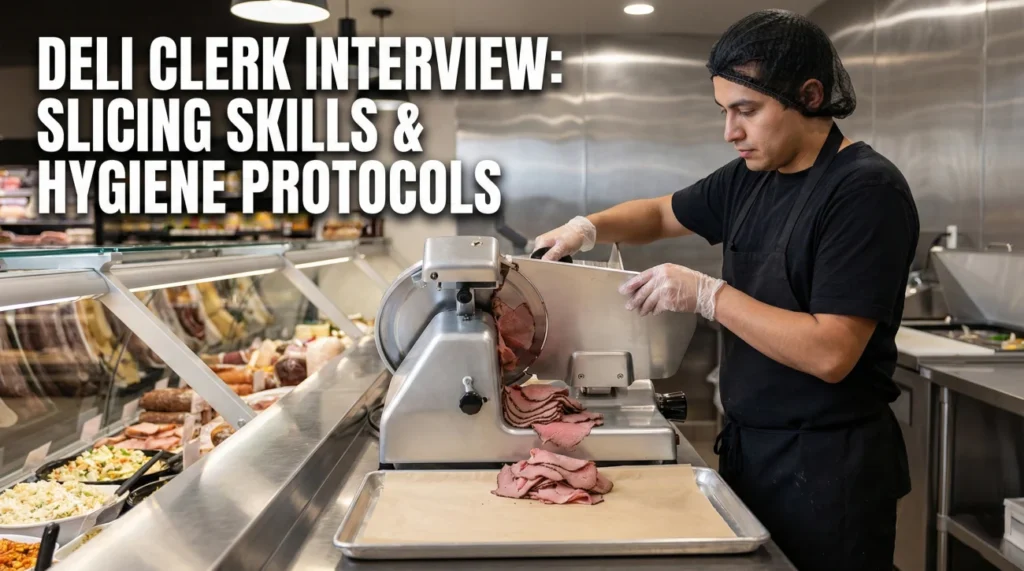
At the deli counter, you move quickly, but you think slowly. That is the discipline behind deli clerk interview questions. A slicer does not forgive distraction, and food safety does not forgive shortcuts.
Interviewers will push on your habits: how you clean between products, how you confirm thickness, and how you stay polite when the line is long and the customer is picky. Answer like you protect safety first and still respect the pace of service.
Slicing Techniques & Equipment
Q: Walk me through how you slice meat or cheese for a customer order.
First, I confirm the customer’s preference for thickness: paper-thin for sandwiches, thicker for charcuterie boards. I adjust the slicer blade to the appropriate setting. Before slicing their full order, I cut one test slice and show them to confirm it meets their expectation.
I position the product securely in the slicer carriage, engage the blade, and use smooth, controlled motions. I never rush because consistent pressure produces even slices. I stack slices neatly, weigh the order, and confirm the quantity with the customer before packaging. Throughout, I keep my fingers clear of the blade and maintain focus.
Q: How do you adjust slicing technique for different products?
Different products require different approaches. Delicate items like prosciutto need thin settings and gentle handling to achieve those translucent slices without tearing. Firmer meats like salami can handle slightly thicker settings and more pressure. Hard cheeses slice cleanly; soft cheeses require slower, gentler passes to prevent crumbling or sticking.
Temperature matters too. Products straight from refrigeration slice more cleanly than room-temperature items. I let the product guide my technique rather than forcing one approach for everything. Experience teaches you how each item behaves on the slicer.
Q: What safety precautions do you follow when operating a meat slicer?
Safety starts with focus. I never operate the slicer while distracted or rushed. I use the product holder and guard to keep hands away from the blade. I never reach across the blade or try to catch falling slices. I wear cut-resistant gloves when required by store policy.
Before operating, I verify the slicer is properly assembled and the blade guard is in place. After use, I set the blade thickness to zero before cleaning. I never clean the slicer while it is plugged in. The blade is dangerously sharp even when not spinning. These precautions are non-negotiable because slicer injuries are serious.
Q: Describe how you clean and sanitize a deli slicer.
I follow a strict protocol. First, I unplug the machine for safety. I set the blade to zero thickness. I remove all detachable parts: the blade guard, product tray, and any removable components. Each piece gets washed with hot soapy water, rinsed, and sanitized with approved food-safe sanitizer.
For the blade itself, I wipe carefully from the center outward, never toward the edge where I could cut myself. I clean the body of the slicer with sanitizer solution, reaching into crevices where food particles hide. Everything gets rinsed, dried thoroughly to prevent bacteria growth, and reassembled correctly. I clean after every product change and do a deep clean at shift end.
Food Safety & Hygiene
Q: How do you prevent cross-contamination in the deli?
Cross-contamination prevention requires constant vigilance. I clean the slicer between different products, especially between meats and cheeses or between different types of meat. I use separate cutting boards and utensils for different product categories. I change gloves frequently and wash hands before and after handling raw items.
I am especially careful with allergens. If a customer mentions an allergy, I use freshly cleaned equipment or dedicate specific tools to their order. Trace amounts of allergens from previous slicing can cause serious reactions. I never assume cleaning is good enough; I verify it.
Q: What temperature requirements apply to deli products?
Cold deli items must stay below 40 degrees Fahrenheit to prevent bacterial growth. Hot prepared foods must maintain 140 degrees or above. The danger zone between 40 and 140 degrees allows rapid bacteria multiplication, so minimizing time in that range is critical.
I monitor display case temperatures throughout my shift and report any issues immediately. When restocking, I do not leave products at room temperature longer than necessary. I understand that temperature abuse is invisible but dangerous. Products can look and smell fine while harboring harmful bacteria if they were mishandled.
Q: Describe your handwashing protocol.
I wash hands before starting work, after breaks, after touching my face or hair, after handling raw products, after cleaning, and whenever switching between tasks. Proper technique means washing with soap for at least 20 seconds, scrubbing all surfaces including between fingers and under nails, then rinsing and drying with clean towels.
Gloves supplement but do not replace handwashing. I change gloves frequently and always wash hands before putting on fresh gloves. Dirty hands contaminate gloves from inside. I treat handwashing as the foundation of food safety, not an inconvenience.
Q: How do you handle product rotation and expiration in the deli?
I follow FIFO: First In, First Out. When restocking display cases, older products move to the front. New items go behind. I check dates on everything and pull items approaching expiration for markdown or removal before they become unsellable or unsafe.
I pay attention to how long items have been in the display case, not just package dates. Sliced products deteriorate faster than whole items. I discard anything that looks or smells questionable regardless of the date. When in doubt, throw it out. No sale is worth making a customer sick.
Customer Service & Product Knowledge
A customer asks for a recommendation for a party platter. How do you help them?
I ask about the occasion, number of guests, and any dietary restrictions. I suggest a variety that balances flavors and textures: perhaps turkey and ham for mild options, salami or pepperoni for bold flavors, and a mix of cheeses from sharp cheddar to creamy brie. I recommend accompaniments like olives, crackers, or mustards if we carry them.
I explain portion guidelines: typically two to three ounces of meat and cheese per person for appetizers. I offer to slice everything to their preferred thickness and arrange it attractively. Personalized service turns a simple order into an experience that brings customers back.
A customer complains their sliced meat looks different from what they expected. How do you respond?
I apologize for the confusion and ask what they were expecting. Maybe they wanted thinner slices, or the product looks different than the sample in the case. I offer to reslice at their preferred thickness or show them alternatives that might better match what they had in mind.
If the product is genuinely not what they ordered, I replace it without argument. Customer satisfaction matters more than winning a dispute over a few slices of meat. I make sure they leave happy because a negative deli experience affects their perception of the entire store.
How do you handle a long line of waiting customers?
I acknowledge everyone waiting with eye contact or a quick “I’ll be right with you.” I work efficiently without rushing so much that I make errors or compromise safety. If possible, I call for backup to open another station. I take numbers or mental note of order so customers know they have not been forgotten.
I avoid extended conversations with the current customer when others are waiting, keeping interactions friendly but focused. I apologize briefly for the wait when I get to each customer. Staying calm and organized during rushes keeps the line moving and customers patient.
A customer asks about a specialty meat or cheese you are unfamiliar with. What do you do?
I admit honestly that I am not familiar with that specific item but offer to help find information. I check if we carry it, look at product descriptions or labels, or ask a more experienced coworker. If we do not carry it, I suggest alternatives that might be similar.
I use the interaction as a learning opportunity. After helping the customer, I take time to learn about that product so I can answer confidently next time. Product knowledge builds over time, and every question is a chance to expand what I know.
How do you handle a customer with food allergies?
I take allergies extremely seriously. I ask specifically what they are allergic to and check ingredients on products they are considering. I explain any cross-contamination risks from shared slicing equipment and offer to use freshly cleaned equipment or suggest pre-packaged alternatives that have not contacted allergens.
I never guess or assume something is safe. If I am uncertain whether a product contains an allergen, I check the label or decline to confirm rather than risk being wrong. An allergic reaction can be life-threatening, so caution always wins over convenience.
Department Operations
Q: How do you maintain an appealing deli display case?
I keep the case full and organized because sparse or messy displays suggest the deli is running low or not well-managed. I arrange products attractively with clear labels showing names and prices. I wipe down surfaces regularly to remove smudges and debris that accumulate throughout the day.
I rotate products so fresher items go behind and older items stay accessible. I remove anything that looks dried out, discolored, or past its prime. The display case is the first thing customers see, so it needs to look appetizing and fresh at all times, not just at opening.
Q: What prepared foods experience do you have?
Beyond slicing, I have experience with deli prepared items: assembling sandwiches, preparing salads, and plating hot foods like rotisserie chicken. I follow recipes and portion guidelines to ensure consistency. I understand that prepared foods have different handling requirements, especially temperature maintenance for hot items.
I treat prepared food production with the same hygiene standards as slicing. Clean workspace, proper handwashing, avoiding cross-contamination, and monitoring temperatures. Every item I prepare represents the deli’s quality, so I take pride in presentation and accuracy.
Q: How do you handle end-of-day closing procedures?
Closing involves thorough cleaning of all equipment, especially slicers and scales. I wrap and properly store remaining products, noting dates for rotation purposes. I clean display cases inside and out. I sweep and mop the floor, empty trash, and restock supplies for the next day.
I verify refrigeration temperatures are correct before leaving. I complete any required paperwork like temperature logs or waste records. I leave the department ready for opening shift because a clean handoff makes everyone’s job easier and maintains consistent standards.
Deli Safety & Operations Quiz
20 Practice Questions
1. Before cleaning a meat slicer, you should first:
- Spray it with sanitizer
- Unplug the machine and set blade to zero
- Remove the blade with bare hands
- Run it under water while plugged in
2. Cold deli products must be kept below:
- 50 degrees F
- 40 degrees F
- 60 degrees F
- 32 degrees F
3. Cross-contamination between products is prevented by:
- Slicing quickly
- Cleaning equipment between different products
- Using the same gloves all day
- Storing everything together
4. When slicing for a customer, you should first:
- Slice the entire order immediately
- Cut a test slice to confirm thickness preference
- Guess what they want
- Use the thickest setting
5. The food temperature danger zone is:
- 0 to 32 degrees F
- 40 to 140 degrees F
- 140 to 200 degrees F
- 32 to 50 degrees F
6. Proper handwashing requires scrubbing for at least:
- 5 seconds
- 20 seconds
- 60 seconds
- Rinsing is enough
7. Soft cheeses require slicing with:
- Maximum pressure and speed
- Slower, gentler passes to prevent crumbling
- The thinnest possible setting
- No adjustments from hard cheese
8. When a customer mentions a food allergy, you should:
- Assume your regular cleaning is adequate
- Use freshly cleaned equipment and verify ingredients
- Tell them allergies are not your responsibility
- Guess which products are safe
9. FIFO in deli product rotation means:
- Fresh Items For Orders
- First In, First Out
- Final Inspection For Offerings
- Food Inventory For Operations
10. Hot prepared deli foods must maintain temperature at or above:
- 100 degrees F
- 120 degrees F
- 140 degrees F
- 160 degrees F
11. When operating a slicer, hands should be:
- Near the blade for control
- Clear of the blade, using the product holder
- Catching slices as they fall
- Reaching across the blade
12. Gloves in the deli:
- Replace the need for handwashing
- Supplement handwashing but do not replace it
- Should be worn all day without changing
- Are optional
13. When cleaning the slicer blade, wipe:
- Toward the sharp edge
- From center outward, away from the edge
- With your bare hand
- Only once per week
14. A customer complaint about sliced product should be handled by:
- Arguing that you sliced it correctly
- Apologizing and offering to reslice or replace
- Ignoring the complaint
- Blaming the manufacturer
15. Display cases should be:
- Cleaned only at closing
- Maintained full, organized, and clean throughout the day
- Left sparse to reduce waste
- Ignored during busy periods
16. Temperature logs should be:
- Completed once per week
- Monitored and recorded throughout each shift
- Estimated without checking
- Optional paperwork
17. Prosciutto and other delicate meats require:
- Thick slicing settings
- Thin settings and gentle handling
- No special technique
- Room temperature before slicing
18. When you are unfamiliar with a product a customer asks about:
- Make up information
- Admit you do not know and find accurate information
- Tell them to look it up themselves
- Refuse to help
19. Products that look questionable should be:
- Sold at discount
- Left for another shift to handle
- Discarded regardless of the date
- Hidden behind fresher items
20. Closing procedures include:
- Quick wipe-down only
- Thorough equipment cleaning, proper storage, and temperature verification
- Leaving everything for opening shift
- Turning off refrigeration
❓ FAQ
🗡️ What should I say about slicer safety?
I keep focus on the blade, use the guard, and I never rush a cut. I follow store rules for cleaning, locking, and handling the machine, and I do not improvise.
🧽 When do you sanitize, only at close?
No. I sanitize throughout the shift, especially between product categories, after spills, and after handling raw items. Closing is deeper cleaning, but the day is continuous hygiene.
🥓 How do you avoid cross-contamination in a rush?
I separate tools by task, change gloves at the right moments, and I reset the station quickly instead of stacking messy steps. I would rather slow down for ten seconds than create a safety issue.
🧠 What do you do if you are unsure about a product?
I check labels and store notes, then confirm with a lead if needed. Guessing is how mistakes happen at a deli counter.
🧾 How do you handle a wrong order without tension?
I acknowledge, fix it fast, and keep the tone calm. I offer a test slice so the customer confirms thickness before I continue.
Final Thoughts
To win on deli clerk interview questions, sound like someone who respects the counter. Safety habits, clean sanitation, and calm customer handling are the core of the job.
Close with your routine, not your personality. Then send them to the main interview questions page and let your consistency be the final impression.
⚠️ Disclaimer: The interview strategies, sample answers, and negotiation tips provided in this guide are for educational purposes only. Hiring decisions are subjective and vary by company and industry. While these strategies are based on professional HR standards, they do not guarantee a specific job offer or result.